Rhiannon Giddens closes out U-M residency with a clear message about American music
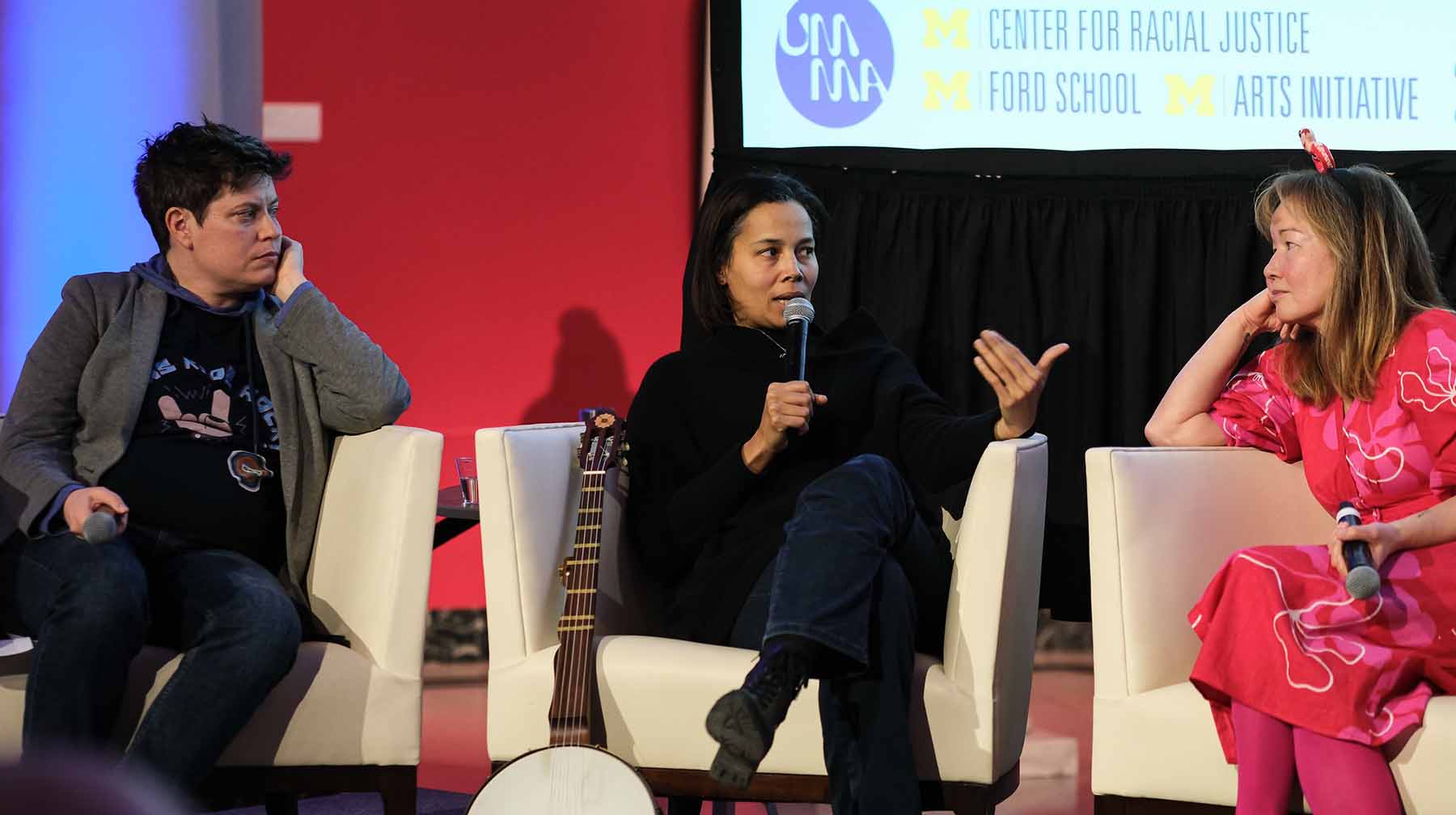
The University of Michigan’s inaugural artist-in-residence, multigenre folk musician and composer Rhiannon Giddens, is closing out her time on campus after a year of student engagements, performances and library research. Lots of library research.
And if there is one thing to know about the root of her research at the moment, it’s this: “American music is working-class, cross-cultural collaborative music.”
Spreading this message is paramount to her work: Helping audiences understand that you cannot have “American music” without the contributions of every unique demographic of people who came to the U.S. from around the world, and the influence of the circumstances which brought them here.
The Grammy Award-winning musician, MacArthur recipient and Pulitzer Prize winner has dedicated much of her career to exploring the contributions to American musical history by Black Americans and others who have been previously overlooked or erased.
Digging into primary source material, guided by librarians at the Clements Library, Giddens found she was “grounded more deeply in the idea that my art should come from a place of being both informed and emotionally connected. That balance is what makes the stories resonate.”
“I discovered so much material that doesn’t always get attention, and that reminded me how many stories are still waiting in the archives,” Giddens said. “It gave me new ways to think about history and how to tell it through my work.”
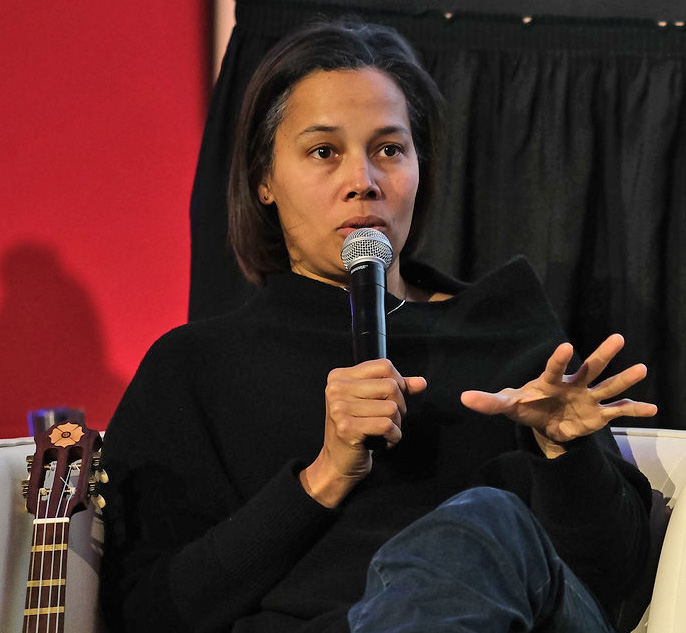
“It’s been so nice to have a place to come … as a traveling musician, you’re in a different place every night. You’re not exactly in spaces where anybody wants to hear about your revelations of, you know, 1835 and the development of the minstrel banjo. But here, I’m welcomed, and I can dive into things that really matter to me.
Rhiannon Giddens
And while she admits she is one to go down the rabbit hole of podcasts and other history-based mediums, there is nothing like “stumbling upon,” which is less likely to happen through targeted online searches and dedicated subject matter than at a library where each turn of a page might show you something you did not expect to see.
“I was reading a narrative from an enslaved person in South Carolina; they were remembering their enslaver threatening them, saying basically, ‘I’m going to put you in my pocket,'” Giddens said. “And what that meant was, ‘I’m going to sell you and put the money in my pocket.’ Right? That’s a song! The more you know what surrounds these moments of history, the more you can connect with it.”
With a history of touring through Ann Arbor over the years, the opportunity to work more closely with the U-M community and the U-M Arts Initiative was one Giddens could not pass up. She knows that U-M will be woven into the DNA of many of her upcoming works, from a musical she is crafting, to her forthcoming book, “When the World’s on Fire: How a Powerless Underclass Made the Powerful Music that Made America,” and potential new songs she has been inspired to write based on her research.
“It’s been so nice to have a place to come … as a traveling musician, you’re in a different place every night. You’re not exactly in spaces where anybody wants to hear about your revelations of, you know, 1835 and the development of the minstrel banjo. But here, I’m welcomed, and I can dive into things that really matter to me,” Giddens said.
“I totally love working with faculty and students, and the interactions that I’ve had have been really positive. They’re really curious, and the classroom visits were really curated and thought about … it felt like a nice intellectual home for me during this residency.”
Particularly in fraught political times, Giddens leans into using her music as a gentler way to reach people and to start a dialogue about potentially difficult topics.
“Music is a more neutral way into a very difficult history for a lot of people,” she said. “It’s easier to hear, ‘The banjo was invented through the African diaspora during the time of slavery,’ than ‘Key components of our American culture are the way they are because of the transatlantic slave trade.’
“That kind of thing is hard to deal with. But when you talk about the banjo being an instrument of survival, of creolization, of people coming together, it really focuses on how we get out of these difficult situations, which is what we need right now.”
Learn more about Giddens’ work and U-M residency at her Penny Stamps Speaker Series talk this evening at the Michigan Theater.