CFO Kasdin is watchdog on duty to assure U’s financial health
The University Record, July 19, 1999 By Jane R. Elgass
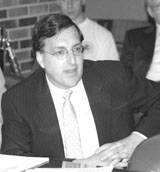
The University is in “excellent financial shape,” Robert Kasdin told the Regents at their July meeting. While he is not involved in allocation of funds—that responsibility rests with the provost, the executive vice president for medical affairs and the president—he has three responsibilities and uses these to evaluate the institution’s financial status:
Kasdin, who is executive vice president and chief financial officer, noted that the “collegiality and close collaboration” that has developed with Provost Nancy Cantor and Gilbert S. Omenn, executive vice president for medical affairs, has been a positive for the University.
“It is our responsibility to put to the best use the money that belongs to the University,” he said.
In his evaluation of the 1999–00 budgets that were presented to the Regents, Kasdin brought the Regents’ attention to several areas:
Susan Feagin, vice president for development, noted that an increase in contributions from individuals this past year is a good trend, as those gifts “are not usually restrictive.”
In 1998–99, 24 percent of gifts came from alumni, 9 percent from individuals, 18 percent through bequests and trusts, and 11 percent from private/family foundations, for a total of 62 percent of gifts overall. Twenty years ago, that figure was 40 percent.
The University is committed to renewal of its physical plant, Kasdin noted in his discussion, and said that most of the resources allocated to this area focus on renovation and maintenance of older facilities. “When you walk around the University, what do you see? We are strong in our current condition and need to continue to address these needs.”
“The operating budget is only one indicator of the University’s health,” Kasdin said, “but it is consistent with our goals and I recommend its approval. We will focus on improving processes and controlling costs.”
Kasdin noted that the M-Pathways project, which has stumbled at times, “overall has gone successfully and we continue to make progress. We are now under three weeks for processing accounts payable and are able to close the books on a month in 12 days. I don’t want to diminish the continuing pockets of pain,” he said, but did note that the project will make it possible “to develop and implement new reports and to put information at the fingertips of management.”
To ensure that the University is using the best processes and practices, Kasdin has asked William Elger, chief financial officer of the Medical School, to head an internal controls task force that will examine these two areas.
The decentralized nature of the University has “presented a host of complex challenges,” Kasdin acknowledged, “but implementation of the new system is a terrific opportunity to rethink how we run our business processes.”