U-M announces new Center for the Advancement of Behavioral and Social Science
The University is creating a new Center for the Advancement of Behavioral and Social Science (CABSS), designed to provide opportunities for U-M faculty to join with scholars and other non-academics from around the world to work on innovative, high-risk collaborative projects.
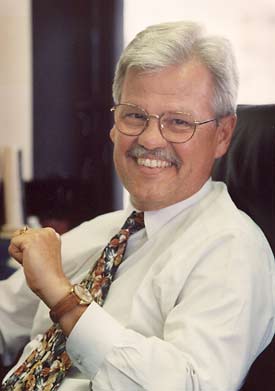
David L. Featherman, professor of sociology and psychology and director of the Institute for Social Research (ISR), will serve as the new center’s interim director.
“David’s background as former president of the Social Science Research Council, as former fellow and vice-chair of the Board of Directors of the Center for Advanced Study in the Behavioral Sciences at Stanford University, and as director of ISR gives him exactly the right experience to create an innovative center for the advancement of social science at Michigan,” Provost Paul N. Courant said in his announcement of the new center.
“I am delighted to lead this unique center that will provide the time, space and resources for collaborating scholars and intellectuals from the practical world to push the boundaries of what we currently know about important intellectual and practical topics,” Featherman says. “By organizing interdisciplinary teams from the social and behavioral sciences, humanities, and natural sciences around common themes and issues, the center will serve as an incubator of novel intellectual approaches and intellectual risk-taking that will reinforce Michigan’s preeminence in the social and behavioral sciences.”
While the themes of center projects are yet to be determined, Featherman says the possibilities include Information and Globalization; Environmental Change, Population and Sustainable Human Habitats; Cultural Expressions and the Human Spirit; and Life Science, Evolution and Society. Projects are expected to have lifetimes of three to five years or more, including a one-year residency phase when teams of core participants will work intensively on joint products and hold workshops and conferences to share their work with other faculty and advanced students.
“Another innovative dimension of this center is in creating ‘virtual collaboratories’ that facilitate the ongoing work of campus-based and non-Michigan participants between face-to-face meetings,” Featherman says. “Rather than a physical ‘cloister on the hill’ we hope to realize a virtual ‘collaboratory on the Diag’ as the center unfolds.”
At the direction of Courant, Rackham Dean Earl Lewis and Interim LSA Dean Terrence McDonald, Featherman has formed a faculty steering committee to oversee the center’s development and launch. During the current academic year, the committee will begin to solicit project proposals from the faculty, initiate external fund raising, and plan for the physical facility and residential and non-residential operation of the new center.
In addition to Featherman, members of the CABSS Steering Committee are Chris Achen, Department of Political Science; Huda Akil, co-director Mental Health Research Institute (MHRI), and Department of Psychiatry; Mary Corcoran, Ford School of Public Policy, Department of Political Science and School of Social Work; John Greden, chair Department of Psychiatry, and MHRI; Barbara Gutek, director Institute for Research on Women and Gender; Daniel Herwitz, director Institute for Humanities, and Department of Philosophy; June Howard, associate dean Horace H. Rackham School of Graduate Studies, American Culture and Women’s Studies, and Department of English; Sharon Kardia, Department of Epidemiology; Michael Kennedy, director International Institute, vice provost for international affairs, and Department of Sociology; Howard Kimeldorf, chair Department of Sociology; Richard Lempert, Law School, Life Sciences Initiative, ISR and Department of Sociology; Daniel Little, chancellor U-M-Dearborn, and Dearborn Philosophy Department; John Mitani, Department of Anthropology; Gary Olson, associate dean School of Information, and Department of Psychology; Sonya Rose, chair Department of History; Alan Saltiel, director Life Sciences Institute, and School of Medicine; Norbert Schwarz, Department of Psychology and Research Center for Group Dynamics (ISR); Gary Solon, Department of Economics; and Maris Vinovskis, Department of History, Center for Political Studies (ISR) and Ford School of Public Policy.