A tradition of excellenceat atomic resolution
When U-M researchers made a major advance in observing the motion of atoms in RNA molecules earlier this year, they were building on the University’s 20-year history of innovative biological applications for a technique known as NMR—a method similar to MRI, which hospitals use to get detailed, three-dimensional images of internal organs and structures. A symposium scheduled for June 5 will commemorate that history and celebrate the recent upgrade of one of U-M’s NMR instruments.
“We want to share with the University community the excitement that pervades this long-standing tradition of excellence, with the hope of keeping it excellent for many generations to come,” said symposium co-organizer Hashim Al-Hashimi, an assistant professor of chemistry and assistant research scientist in biophysics. The symposium—which will focus on using NMR to study the major molecules of life: proteins, DNA and RNA—will feature presentations by three of the world’s most prominent scientists in the field, along with talks by Al-Hashimi and biophysics and biochemistry professor Erik Zuiderweg. The event also will showcase key discoveries made at U-M, Al-Hashimi said.
“One of our speakers, Gerhard Wagner of Harvard University Medical School, was previously at U-M,” said Al-Hashimi. “During that time, he was first to measure the motion of nitrogen atoms in proteins. In fact, his very NMR magnet is still in use today by Erik Zuiderweg.”
Zuiderweg also has made pioneering contributions. In the 1990s, he was first to use NMR to observe the motion of individual carbon atoms in proteins, and he developed several key NMR experiments for determining the structure of proteins in solution (an environment similar to that of a living cell). Both Zuiderweg and Wagner studied under Kurt Wüthrich, who received the 2002 Nobel Prize in Chemistry for developing NMR methods for the determination of protein structure in solution, as an alternative to the better-known method of X-ray diffraction, which determines protein structure in a crystal.
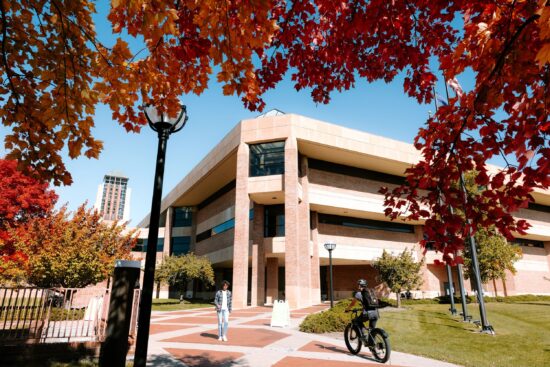
The symposium is organized at this time to celebrate the acquisition and installation of an accessory called a cryoprobe on U-M’s 800 MHz NMR instrument, which is housed in the Chemistry Building. The system initially was purchased with funds provided by the National Institutes of Health, the National Science Foundation, the W.M. Keck Foundation and Parke-Davis in an effort spearheaded by Zuiderweg.
“With this new NIH-funded probe, the instrument has become one of the most sensitive NMR instruments in the world, making it now possible to investigate the structure, dynamics and interactions of large biomolecular complexes,” Zuiderweg said. He currently is using the system to describe atomic structure and movements in chaperone proteins, which play a role in protein-folding diseases such as Alzheimer’s and Huntington’s.
Al-Hashimi’s research group used another new NMR instrument, acquired with the help of the Michigan Technology Tri-Corridor Fund, to observe atomic movements in RNA—an essential molecule that stores and relays genetic information, regulates gene expression and other important cellular processes and acts as a sort of sensor—detecting cellular signals and carrying out appropriate reactions in response.
Scientists want to know more about how proteins, RNA and DNA change shape in the process of carrying out their various roles in the cell, and NMR offers a way to capture such changes as they occur.
“These molecules may change shape for only one percent of the time, but oftentimes these ‘transient states’ are the functional forms—the ones that carry out all the important actions,” said Al-Hashimi. “You can’t see them with most techniques, but NMR can provide atomic-level details of these one-percent states. One of the most exciting prospects is the rapidly increasing ability of NMR to give us dynamic movies of these biomolecules in action, in addition to the still photos we are accustomed to.”
Glimpses into the inner workings of essential molecules are important not only for understanding how proteins, DNA and RNA work, but also for designing drugs to target misbehaving molecules that lead to disease.
The U-M NMR Symposium is sponsored by the Department of Biological Chemistry, the Department of Chemistry, the Biophysics Research Division, the Center for Computational Medicine & Biology and the Chemical Biology Ph.D. program. It will be held from 9:50 a.m. to 5 p.m. in the Great Lakes Room of Palmer Commons. In addition to Wagner, Zuiderweg and Al-Hashimi, speakers include Lewis Kay of the University of Toronto and Juli Feigon of the University of California, Los Angeles. The plenary session will be followed by a roundtable discussion of current and future NMR activities. A reception will be held at the end of the day, with a poster session highlighting NMR research in Southeast Michigan.
For more information or to register, contact Al-Hashimi at hashimi@umich.edu.