Michigan English
Last month we reflected on the word terroir. (It’s a shortening of the phrase gout de terroir, “taste of the earth.” It refers to the mysterious flavor that helps us to taste the difference between strawberries that come from Michigan and those that are imported from elsewhere.) Linguistic terroir is the stuff that lets us know where we are.
Now Michigan English is not all one thing, but there are surprising differences between the English used here and what you encounter in Ft. Wayne or London, Ontario, or Green Bay. We need to talk about probabilities. So if you say dennist for “dentist” or pellow for “pillow,” you are likely to be from here. If Trevor’s City and Traverse City sound pretty much the same, you’re probably a Michigander (and probably young and female too). If you say mango for “green pepper” or “bell pepper,” you’re probably from Ft. Wayne. If you say pickerel for “walleye,” you’re probably from Ontario. If you think a really big bottle of beer is a “picnic”, you’re probably from Green Bay.
People tend to think that broadcasting, education, and mobility have made English far more uniform than it used to be. Of course there are arguments on both sides, but it’s likely that differences in English are increasing rather than decreasing. We can discover differences for ourselves when we go somewhere else and encounter puzzled stares when we speak.
On its hunting website, the Michigan DNR includes this FAQ: “Q. When may I shine deer?” People in Michigan know just what this illegal hunting practice involves. (And they know in Wisconsin and Minnesota too.) But other Americans are puzzled by the question. “What do you mean shining deer?” In northern Michigan, the same practice is called headlighting.
Did you ever hear somebody exclaim “cry-eye!”? If you did, they were probably in Michigan. People more generally say criminy! with the same meaning. These words have a kind of exasperated quality to them: “Oh for cry-eye. Her again.”
How about “help the poor”? It’s what kids in southern Michigan used to say on Halloween. Nowadays, trick-or-treat seems to have taken over.
When I was in high school, boys had brush cuts. Turns out if you had one of these, you were likely a Michigander.
Oak openings are clusters of trees—usually burr oaks—where there tends not to be too much underbrush. These groves, when they were on good soil, made it easy for early settlers to prepare the ground for growing crops since there weren’t many stumps to remove. One view is that the Arbor in Ann Arbor was an oak opening. Nineteenth-century settlers in Michigan often wrote approvingly of oak openings.
Of course there are lots of Michigan expressions that people know are characteristic of our terroir. Paczkis, for instance, or Petoskey stones.
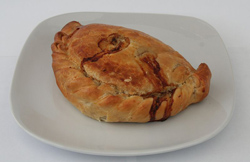
Michiganders know to rhyme pasty with “vastly” and not with “hasty.” We eat bagas and honey rocks and lunch rolls. We might hunt pats among the balm trees.
And we have a good time talking about things.