Grand Rabbits
Julia A. Moore was a remarkable nineteenth-century poet who penned poems of praise for western Michigan. Here’s the concluding stanza of her effusion on “Grand Rapids.”
When 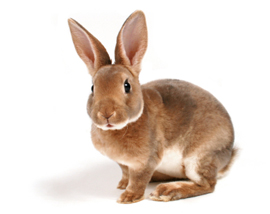 Campau came to the valley
No bridge was across the river;
Indians in their light canoes
Rowed them o’er the water.
Railroads now from every way
Run through the city, Grand Rapids;
The largest town in west Michigan
Is the city of Grand Rapids.
Moore was an eccentric poet but she continues to give delight.
Michiganders do two things to “Grand Rapids” that make it distinctive. One is to link the d to the r so the syllable break produces “Gran Drapids.” A resident of East Grand Rapids, a friend of mine, always used to shorten that down to “Drapids.”
Alternatively, the d may just disappear, (Gran Rapids) as it always does in Coldwater (“Colwater”).
The second thing changes the consonants in “Rapids.” As with other words, Michiganders tend to produce a voiced sound when the voiceless sound comes between vowels in the middles of words: habby for happy in “Happy Birthday”; budder for butter; and sagger for sacker. Hence “Rabids.”
A more general sound change (and not exclusive to Michigan) is to turn voiced final consonants into voiceless ones. Thus, lots of Michiganders (especially young ones) pronounce the consonants in bet and bed the same: bet. You can easily test this out by making those two words plural: bets and beds. If there is a z sound, the final consonants is voiced; if there is an s sound, the final consonant is voiceless. This process gives us the t in “Grand Rapits.”
A local Grand Rapids joke is to talk about the place as “the Rabbits,” and not so long ago there was an art contest putting a lot of tall rabbits downtown, painted or otherwise.
Do you hear any of these pronunciations? Let us know in the Comments section below.