Eight faculty vie for three SACUA seats
The Senate Assembly will elect three Senate Advisory Committee on University Affairs (SACUA) members at its meeting April 25.
The three top vote getters will win three-year terms. Additional candidates may announce intent to run up to the time of the election.
Biographical information and position statements supplied by candidates follow.
Barbara Garavaglia

Garavaglia
Appointment: Assistant director and librarian, U-M Law Library.
Education: Bachelor of Arts in political science, summa cum laude, SUNY at Buffalo, 1976; Juris Doctorate with honors, U-M Law School, 1980; Master of Library and Information Science, U-M School of Information and Library Science, 1982. Member of the State Bar of Michigan.
Faculty leadership: Government Relations Advisory Committee member 2002-05, chair 2006-11.
Statement of candidate: “I am acutely aware of the challenges facing the university, faculty and students in all disciplines as we work together to achieve excellence in the face of funding issues caused by the financial crisis facing the state and federal governments. It is imperative that we work together to maintain Michigan’s tradition of excellence by continuing to attract and retain the best and brightest faculty and students. We must work creatively and collaboratively to find ways to provide the kinds of resources necessary to support research and teaching at the highest levels. My expertise as a provider of legal and other information and my experience working with the diverse population of the university would be invaluable to SACUA.”
Haig
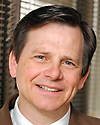
Dr. Andrew Haig
Faculty appointment: Professor, Department of Physical Medicine and Rehabilitation; specialty, general physical medicine and rehabilitation.
Education: Medical degree, 1983, Medical College of Wisconsin; residency, Rehabilitation Institute of Chicago (Northwestern University), 1983-86.
Professional fellowships: Fellow of the American Academy of Physical Medicine and Rehabilitation and Fellow of the American Association for Electrodiagnostic Medicine.
Statement of candidate: “Faculty come to Michigan for reasons that go beyond the great Ann Arbor lifestyle. We stay because of personal missions that go beyond the expectations of any employer. The force behind Michigan’s excellence, we must be heard if the institution is to flourish. My funded work spans social science, engineering, business and the arts, and I’m heavily into undergraduate education. Plus, as medical faculty, I have the privilege of hearing the private and public concerns held by many of you. My experience teaching leadership, building organizations and working with governments can help me represent you effectively through a strong SACUA.”
Hirshorn
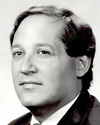
Seth Hirshorn
Appointment: Associate professor of political science.
Education: Bachelor of Science (political science), 1969, University of Wisconsin-Madison; Master of Public Administration, SUNY-Albany, 1971; Doctor of Philosophy in public administration, Maxwell School, Syracuse University, 1974.
Faculty leadership: Director at UM-Dearborn of the graduate MPA Program several times; president of the UM-Dearborn Senate and represented UM-Dearborn in the Senate Assembly for the past four years; chair of SACUA’s Budget Study Committee for three years; authored numerous papers, journal articles and government reports in public administration; elected to represent the Midwest on the American Society of Public Administration’s National Council; worked for the speakers of the NYS General Assembly and the Florida House of Representatives; elected, served on the Ann Arbor City Council and City Planning Commission in 1980s.
Statement of candidate: “As chair of the Budget Study Committee I have had the opportunity of working on issues that challenge all of us. The growth and intellectual richness of the university will continue to be a responsibility of the faculty, especially as our state and the national economy remain turbulent and as the university continues to adapt. It is the adaptation of the university to new challenges that will be our primary agenda over the next several years. The need for effective faculty governance could not be greater — students, retired faculty and administrators look to us in these difficult times. I look to you for your support. It would be an honor to represent you on SACUA.”

Holland
Dr. Rex Holland
Faculty appointment: Professor, Department of Cariology, Restorative Sciences and Endodontics, School of Dentistry; and professor in the Department of Cell & Developmental Biology, Faculty of Medicine.
Education: Bachelor of Science (with honors) 1968, Bachelor of Dental Surgery (with honors) 1971, Doctorate in Anatomy 1975, University of Bristol (U.K.); Specialty Certificate in Endodontics 1983, University of Iowa.
Faculty leadership: 1996-2002, School of Dentistry Multicultural Affairs Committee (chair 1999-2002); 2002-05, SACUA — Research Policy Committee; 2002-07, SACUA Tenure Committee (chair 2006-07); 2002-06, U-M Cognate Panel; 2002-06 U-M Grievance Panel (as school ombuds); 2002-04, Michigan Union Board of Representatives (faculty member); 2003-06, 2008-11, Senate Assembly representative, School of Dentistry; 2006, ad hoc committee “Dean misconduct in EC election”; 2005-08, government affairs committee; 2006-present, committee for a multicultural university (chair 2009-present); 2006-09, Civil Liberties Board (chair 2009).
Statement of candidate: “Faculty governance and the tenure system that supports it are the key characteristics of the University of Michigan that have allowed it to reach the level of distinction it has. Unfortunately both have been eroded for a decade or longer and the prospect if not the present is one of a much more autocratic form of governance. The divine right of deans has led them to be rulers rather than leaders. The current structure of faculty governance needs to be reviewed and enhanced to include more obviously the nontenure-stream faculty who contribute so much to the university’s stature, to educate faculty about the benefits and resources of faculty governance and to work with deans such that they more thoroughly appreciate and utilize faculty in management.”
Koopmann
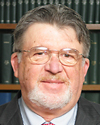
Dr. Charles Koopmann Jr.
Education: Bachelor of Science in medicine, Northwestern University; Medical Degree, Northwestern University; Master of Science, University of Iowa; and Master of Health Services Administration, School of Public Health.
Administrative leadership at U-M: Currently serving second term in Senate Assembly; past SACUA chair for two terms; past chair of U-M Tenure Committee; past chair of Academic Affairs Advisory Committee (AAAC); past member of the Advisory Committee for Intercollegiate Athletics with several years as chair of the Academic Performance Committee; associate chair, Department of Otolaryngology-Head & Neck Surgery, Medical School; chair, Promotions and Tenure Committee, Department of Otolaryngology-Head & Neck Surgery; past director of Physician Billing Services, Faculty Group Practice-Medical School; past physician compliance officer, Faculty Group Practice-Medical School; current member and past chair, Student Affairs Advisory Committee; current member Committee on Economic Status of the Faculty; past member of the Board of Directors, Faculty Group Practice, Medical School; Member Residency Selection Committee, Department of Otolaryngology- Head & Neck Surgery; past chief section of pediatric otolaryngology, Department of Otolaryngology-Head & Neck Surgery.
Statement of candidate: “The current environment is becoming more unfriendly and challenging not only to the educational system but also to tenure and to the financial security (retirement and health benefits) of our faculty and staff. My past service as chairperson of SACUA, AAAC, the Tenure Committee, SRAC and as a second-term member of the Senate Assembly, plus my current positions regionally and nationally, give me a broad view that can be translated into actions that should benefit our faculty in matters of tenure, educational, political and economic matters associated with their service at the University of Michigan.”

Masten
Scott Masten
Appointment: Professor of business economics and public policy, Stephen M. Ross School of Business.
Education: Bachelor of Arts, economics, Dartmouth College, 1977; Master of Arts, economics, University of Pennsylvania, 1979; Doctor of Philosophy, economics, University of Pennsylvania, 1982.
Faculty leadership: Committee on the Economic Status of the Faculty, member, 1992-99, chair, 1998-99; William H. Davidson Institute Strategic Mission Committee, member, 1992-93; William H. Davidson Institute Research Committee, chair, 1992-93; Ad Hoc Committee on New Pay, member, 1993-1994; Ross Strategic Planning Committee, member (elected), 1995-97; U-M American Association of University Professors Executive Committee, member (elected), 2001-04; Senate Assembly Rules Committee, chair, 2005-08; SACUA Task Force to Review Proposed Revisions to Rules Governing Senate Assembly, chair, 2005-06; SACUA Grievance Procedures Task Force, member, 2006-07; Administration Evaluation Committee, member, 2007-10; Senate Assembly Budget Study Committee, member, 2010-present; University Grievance Review Board Cognate Panel, member, 2010-present; International Society for New Institutional Economics, board of directors (elected), 1997-2001, 2006-09, president (elected), 2008-09.
Statement of candidate: “The role of faculty in the governance of universities derives from two essential functions: the application of faculty expertise in support of the research and educational mission of the university, and the protection of academic freedom. Consistent with this, the most successful universities historically have been those with the strongest tradition of and commitment to shared governance. If elected to SACUA, I will work to preserve the faculty’s voice in the governance of the university and to assure that the decisions and advice of the faculty on specific issues are well-reasoned and promote the broad interests of the university in its core academic mission.”

Stafford
Frank Stafford
Faculty appointment: Professor of economics, LSA; and research professor, Survey Research Center, Institute for Social Research
Education: Doctorate, University of Chicago (1968).
Administrative leadership: Chair of economics, director of graduate studies, Ph.D. placement officer; associate director and acting director, Institute for Social Research; chair, Senate Budget Committee (assessed the induced cost of adding university office and classroom space); member, Tenure Grievance Committee; chair and member, Committee on the Economic Status of the Faculty; chair, Provost’s Advisory Committee on University Budget.
Honors: Fellow, Society of Labor Economists; Who’s Who in Economics; National Academy of Sciences/CNSTAT Committee to Assess the Future of Social Surveys; Census Committee to Redesign the Consumer Expenditure Survey; Panel Study of Income Dynamics selected as the only social science project in the NSF Nifty Fifty/Sixty (2001, 2011); external grant support includes the National Science Foundation and National Institutes of Health support in connection with the Panel Study of Income Dynamics and the Michigan Retirement Research Center project to study the foreclosure crisis.
Candidate statement: “Based on a long and wide range of experience at the University of Michigan, I believe I can make a contribution to the operation of SACUA in the current environment of change. I have advised Harold Shapiro on the Michigan financial structure back on the early 1980s, based on a study he supported to educate legislators about the basics in Michigan economy. Under Gil Whittaker I served as chair of the Advisory Committee on University Budgets and have served as economics chair. I have run the largest social research project of the National Science Foundation for 15 years.”

Staller
Karen Staller
Appointment: Associate professor, School of Social Work (SSW)
Education: Bachelor of Arts, art history, Cornell University (1979); Juris Doctor, Cornell School of Law (1985); Doctor of Philosophy (Social Work) with distinction, Columbia University (1999).
Faculty leadership/governance experience: Secretary of the University Advisory Committee, (2010-present); Senate Assembly representative (elected, 2008-present); Model Faculty Grievance Procedure Task Force (provost appointment, 2009); ombudsman (elected, 2008-09); resolution officer, Office of Student Conflict Resolution (2002-06); SSW Executive Committee (elected, 2006-07; 2009-present); SSW Strategic Thinking Task Force (dean appointment, 2010-present); Student Services Committee (2008-09); SSW Academic Difficulty Committee (2003-06; 2007-08); SSW Children & Youth Curriculum Committee; Student Services; Recruitment, Admissions, Financial Aid (RAFA) (2001-03); faculty grievance officer (2001-03; 2005-06); SSW Student Service Committee (2004-06).
Professional practice experience: Attorney, JASA Legal Services for the Elderly in Queens (1985-88); director, Covenant House Under 21/N.Y. Legal Department (1988-91); project director, VOLS West Side Elderly Project (1991-92).
Candidate statement: “In ‘The Great American University,’ Cole argues research universities are indispensible but under threat. We are experiencing increasing corporatization, cost shifting, threats to faculty diversity, academic freedom and tenure among other things. These issues are central to attracting, protecting, sustaining and retaining the best and brightest faculty. Financial pressures are driving decisions that will shape the university community for decades. A strong representative voice is critical. SACUA plays important roles in articulating faculty concerns and balancing collective well-being with individual rights. If elected, I would be honored to represent U-M’s diverse and talented faculties during these exciting but challenging times.”