Feeling insecure

Pandemic, war, and famine, oh my
In April 2020, as we began to comprehend the impact of COVID-19, I predicted in Climate Blue that efforts to address climate change likely would slow down as the world focused on stopping a global pandemic.
My statement was motivated by articles I read, at the time, on how the economic shutdown had reduced many types of pollution, and we were on the course of record reductions in carbon dioxide. Some experts even suggested the pandemic offered a model of usable science we could apply to climate science. Neither of these assertions turned out to be true.I based my belief that the pandemic would slow rather than advance our responses to climate change on history and personal experience. Let’s look back on the history of industrial carbon dioxide emissions. There are only two types of events that have substantially disrupted the persistent rise in emissions of CO2: nation-state collapse and economic recession. In the first, I refer to the decline and dissolution of the Soviet Union. In the second. the most obvious example is the Great Recession that started in 2007. The COVID-19 recession is another example.
As a matter of policy, there is nothing appealing about global recession or nation-state collapse. Indeed, our most common reaction to such events is intervention — to assure jobs, food access, and energy access. We become very focused on the short term, which comes at the expense of the long term.
Deal me in
In one of my classes, I make up a deck of cards marked as Climate Change, Social Justice, Population, Wealth, and Standard of Living. Wild cards include National Security, Health Security, Economic Security, and Energy Security. I describe this game in detail in my video “Framing Climate Change Problem Solving.”

When these wild cards show up, they bring consequences. Short-term issues dominate the forefront and we relax environmental protection rules, and challenge valued principles of privacy, freedom of speech, and the right to assemble.
My experience is that these wild cards always trump climate change. And though we in the field might lament this devaluation of climate as a priority, we are better served to expect it. It is something we must manage, and it is an issue for which we need to develop specific strategies.
The devaluation of climate as a priority in these crises makes sense. It is difficult to imagine a tremendous disruption to our physical or economic security that does not evoke an emergency response. The need to address jobs, access to health care, food, and energy are matters of social justice, political viability, and societal stability.
When faced with crises, most of us resort to what we know will work, what we know we can afford. We fix what we can; we push longer-term projects and desires to the background. In our families, we often amend personal rules and behavior. Governments do the same.
Yanked around
In a crisis, we strive to maintain our standard of living. In the absence of crisis, we strive to increase our standard of living. Currently, our economy and standard of living are based on energy consumption in the form of fossil fuels. And so much of our collective experience and entrenched political and economic power structures are aligned with fossil fuels that it’s as though society is attached to an immense spring. We are trying to pull away, but every societal disruption yanks us back.At the core of our vision to address the problems of climate change is the move to renewable energy. Associated with this vision is “energy independence,” which, in principle, weakens our dependence on trade, relations with rival nations, and the use of energy as an instrument of power and conflict. Indeed, along with the lamentations of the climate community about setbacks with each crisis, some claim if we relied more on wind and solar power, we would not face so many security challenges. The argument has merit. Getting there is not easy.
Wild cards
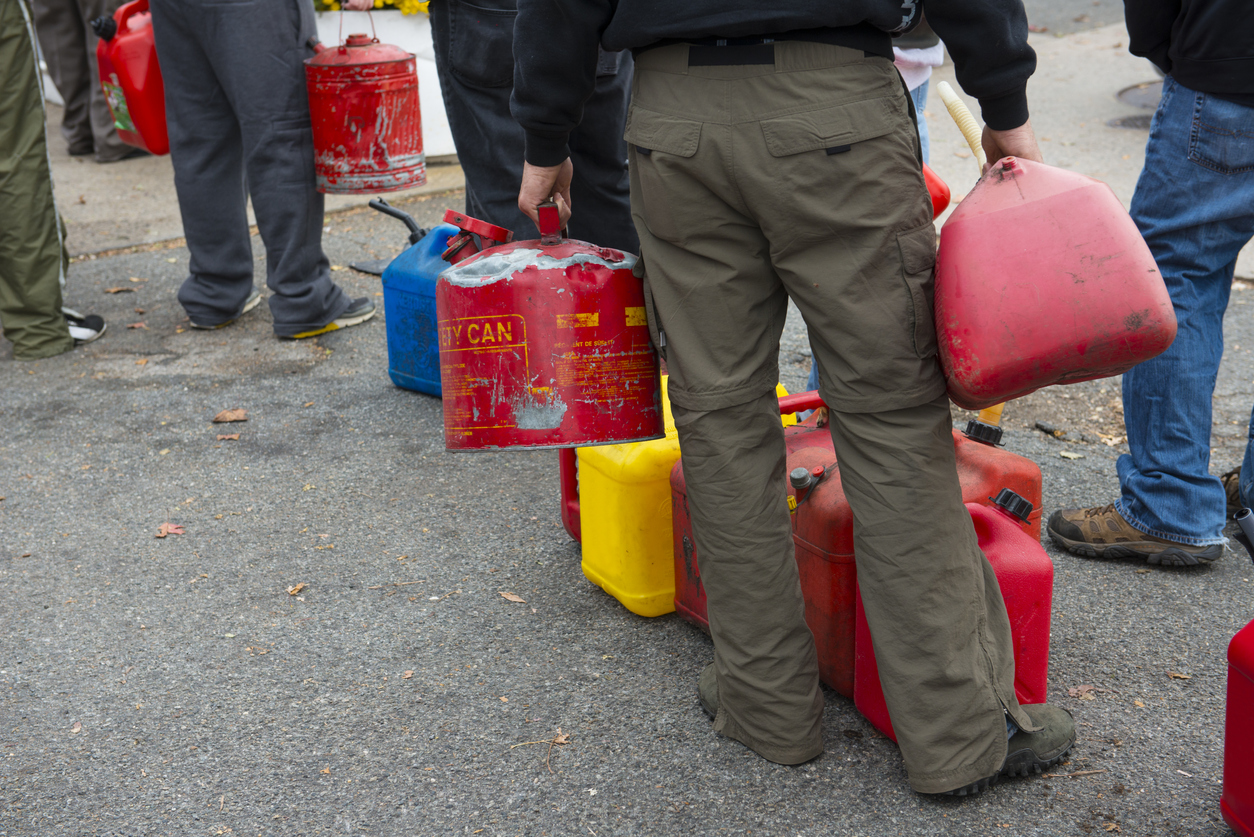
Over my life, I’ve experienced such wild cards as the Cuban Missile Crisis, the 9/11 attacks on New York, multiple pandemics, multiple economic crises, the 1973 oil embargo, and more. This casual list shows that the wild cards of national security, health security, economic security, and energy security are always in play. Indeed, sometimes they are played deliberately. Even those with the best intentions facilitate our reliance on fossil fuels by releasing oil reserves and easing barriers on the production and trade of fossil fuels. It is difficult to imagine doing otherwise.
This reality tells us that we must play a strategic long game to address climate change. This is one reason I object to the persistent and pervasive message that we have less than eight years to reduce our fossil fuel emissions to avoid the worst consequences of climate change. And I soundly object to the false choice of “10-years-to-do-something” versus “existential crisis.”
It is a daunting challenge to elevate climate change to national security, health security, economic security, and energy security. It will not be done abstractly or by decree. It will not be done because it is “right.” For years, my students have concluded that we will pay attention only when climate change is realized through one of those wild cards.
Taken as a whole, if we gather all of our efforts on climate change into a basket and count our wares, we have achieved significant progress. But I feel we now are at a point where we need to prioritize environmental security amid current wild cards like COVID-19 and Russia’s invasion of Ukraine. Setbacks to addressing climate change will continue. But we need to persistently expand our efforts, build capacity, and stop that yank back to the comfort of fossil fuels.