Looking forward to the past
In search of sepia
To describe hindsight as a luxury doesn’t do hindsight justice.
It’s that elusive, deferred benefit we all crave, the one offering psychological distance from the intractable problems that plague the human race. It’s home to the armchair quarterback with a bum shoulder, the politician with a tell-all book to sell, and the retired safecracker who got caught doing that “one last job.” It’s the place where the fish gets bigger, the hero gets more heroic, and everything is worth it in the end.
Hindsight illuminates those alternative perspectives we couldn’t see at the moment. It separates us from our actions, often foolish, sometimes brilliant. It can justify, clarify, and celebrate our decisions. It can soothe our regrets, blur our mistakes, and help us rewrite our narratives. It’s a warm, fuzzy cape that cloaks our harshest memories in flat, two-dimensional stills.If we’re lucky, those two-dimensional stills are black & white prints, signifying a problem long-ago resolved. Sepia tone is even better — those issues seem incomprehensible a century after the fact. These days, hindsight lingers in “the cloud” as we experience a fraught and furious present animated by moving pictures that are vivid, loud, and often misleading.
As the modern-day university confronts student unrest ignited by the world’s most heinous geopolitical horrors, we long for the luxury of hindsight.
It can’t get here soon enough.
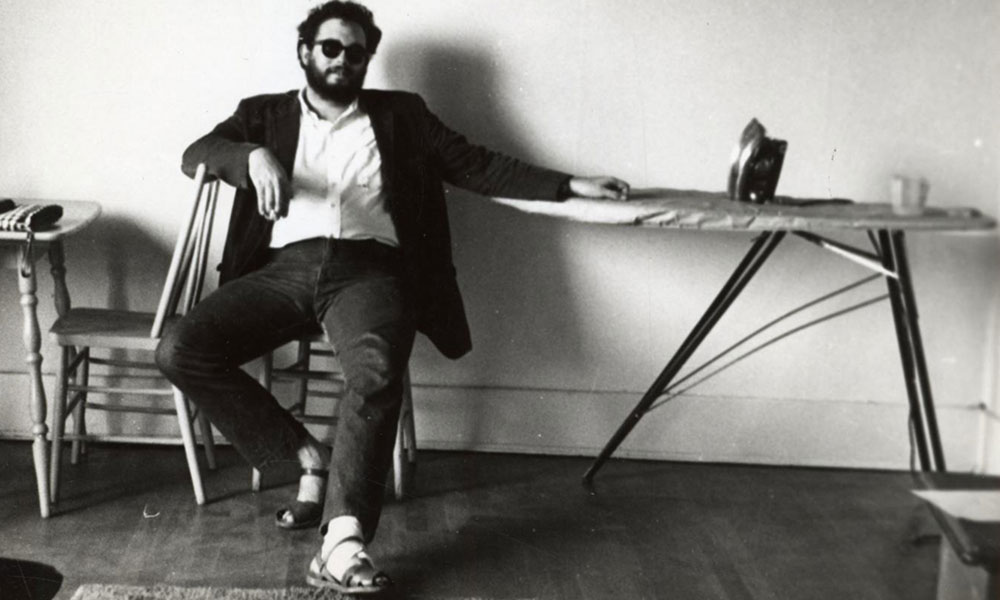
(Lead image of John Sinclair seated next to an ironing board is by Magdalena Arndt, courtesy of U-M’s Bentley Historical Library.)