It Happened at Michigan: Pumas have greeted guests for 85 years
In the 1920s, when architect Albert Kahn was designing U-M’s new University Museums Building on Geddes Avenue (today, known as the Alexander G. Ruthven Building), he envisioned animal sculptures, like lions, flanking the front entrance. Carleton W. Angell, a museum artist for the university, was asked to heed this request.
But rather than lions, Angell chose to sculpt a pair of pumas, because pumas were native to Michigan, while lions were not.
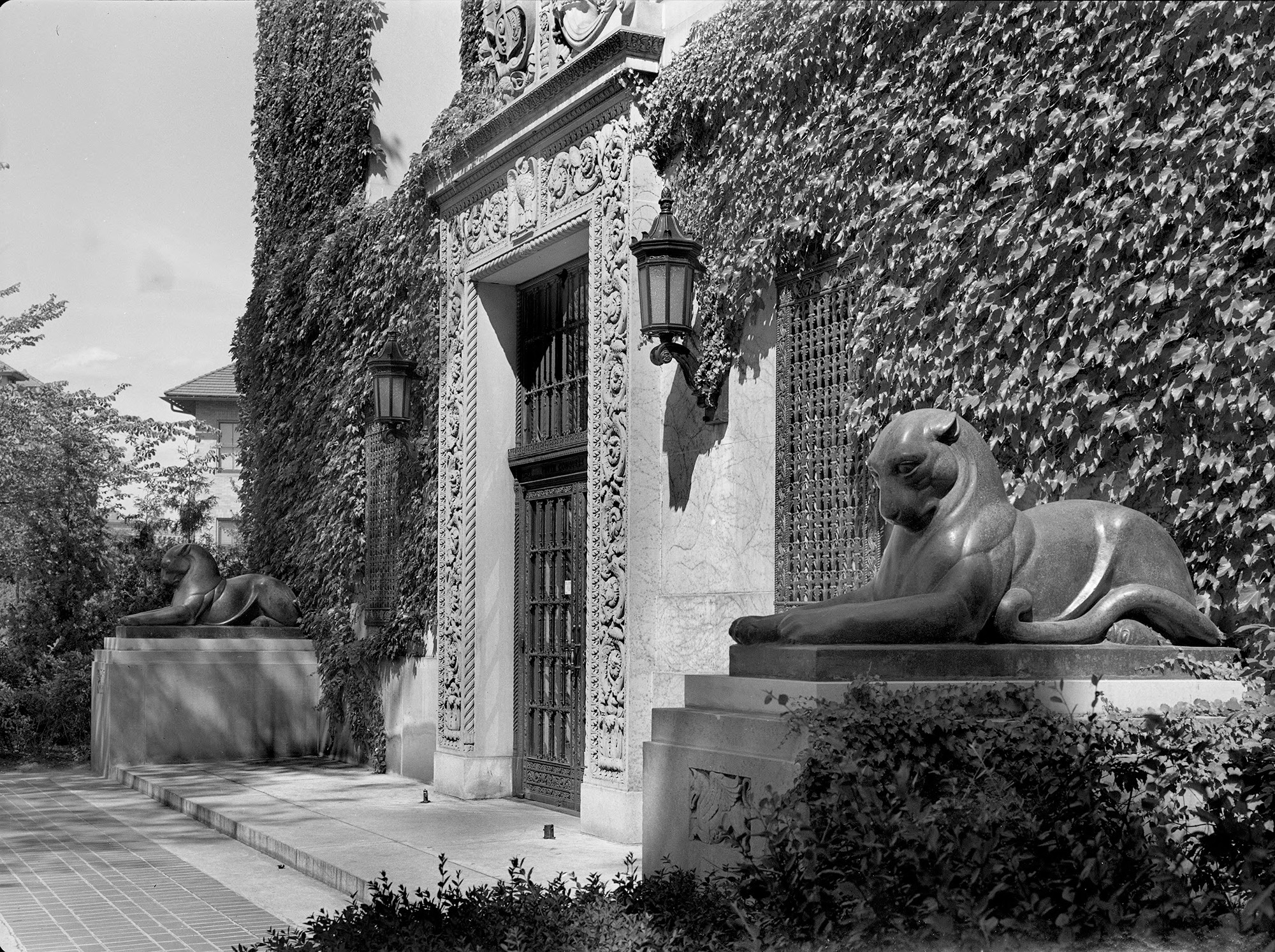
Angell’s pumas were made of terrazzo, painted black, and finally installed in front of the museum in 1940. For 60 years, the large cats greeted visitors to the museum, gave Ann Arbor kids a place to climb and perch, and, according to student lore, roared whenever the U-M football team defeated Ohio State.
But six decades is a long time to sit outdoors in all kinds of weather, and the pumas began to crack at the end of the millennium. To prevent further damage, the pumas were removed from the museum’s entrance and taken indoors to create new molds.
The original cats were then gently restored and placed into storage, and, with funds donated by U-M alumni Jagdish and Saroj Janveja, the molds were used to create two new pumas, this time cast in more durable bronze. The new sculptures were treated with a mix of pigment and chemicals to create a black finish similar to the original painted terrazzo.
The university installed the new pumas in front of the museum on Geddes in 2007. To celebrate the cats’ return, the museum hosted a free public “puma party” and unveiled an exhibit on the work of Angell, who worked at U-M for more than 30 years, creating sculptures, portraits and plaques.
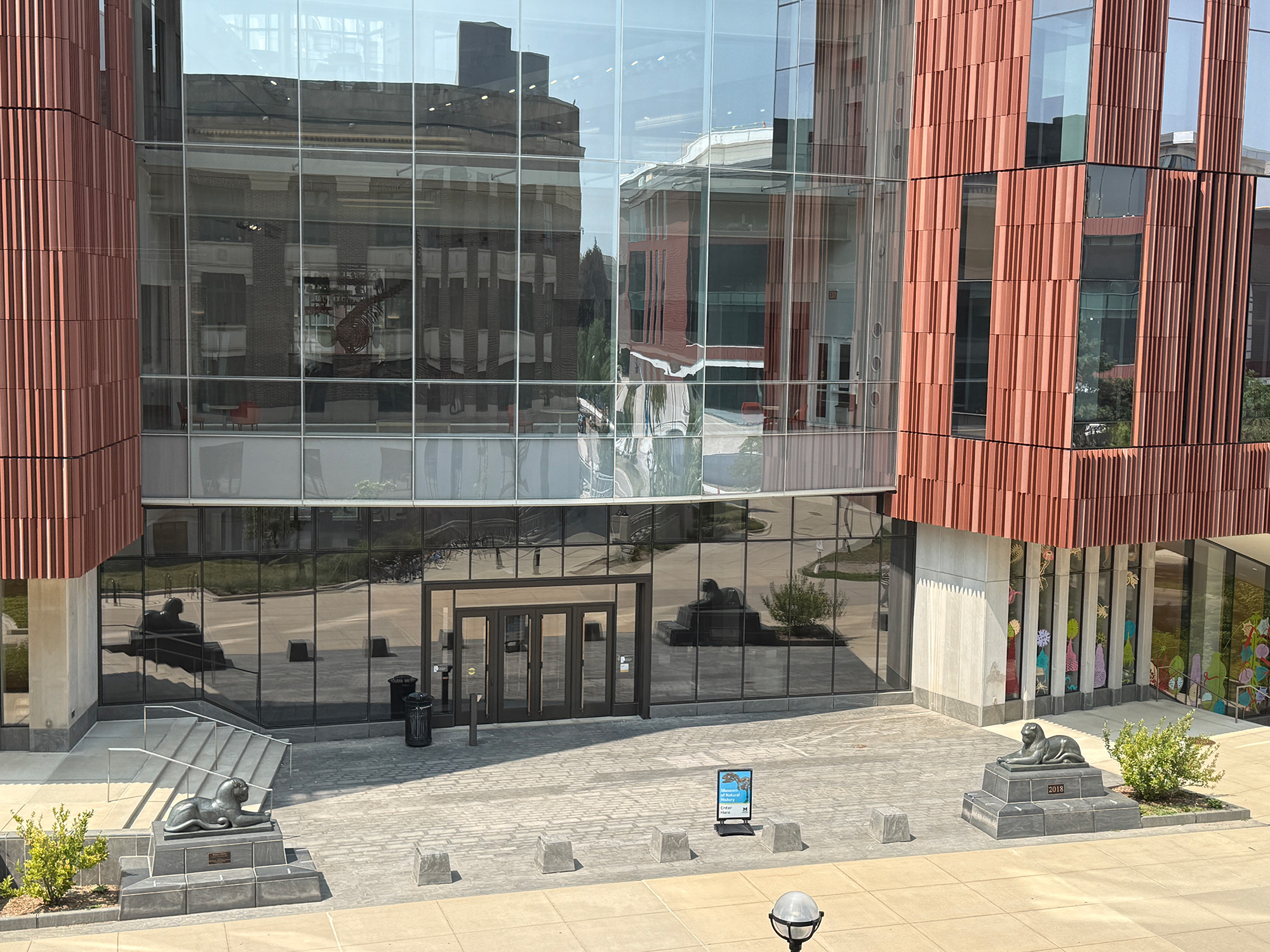
In 2018, with Angell’s great-grandchildren on hand to watch, the pumas crossed the plaza and were placed facing one another in front of their new home: the Museum of Natural History at 1105 N. University Ave.