The ‘cobbler poet’ who became a campus folk hero
Made for better things
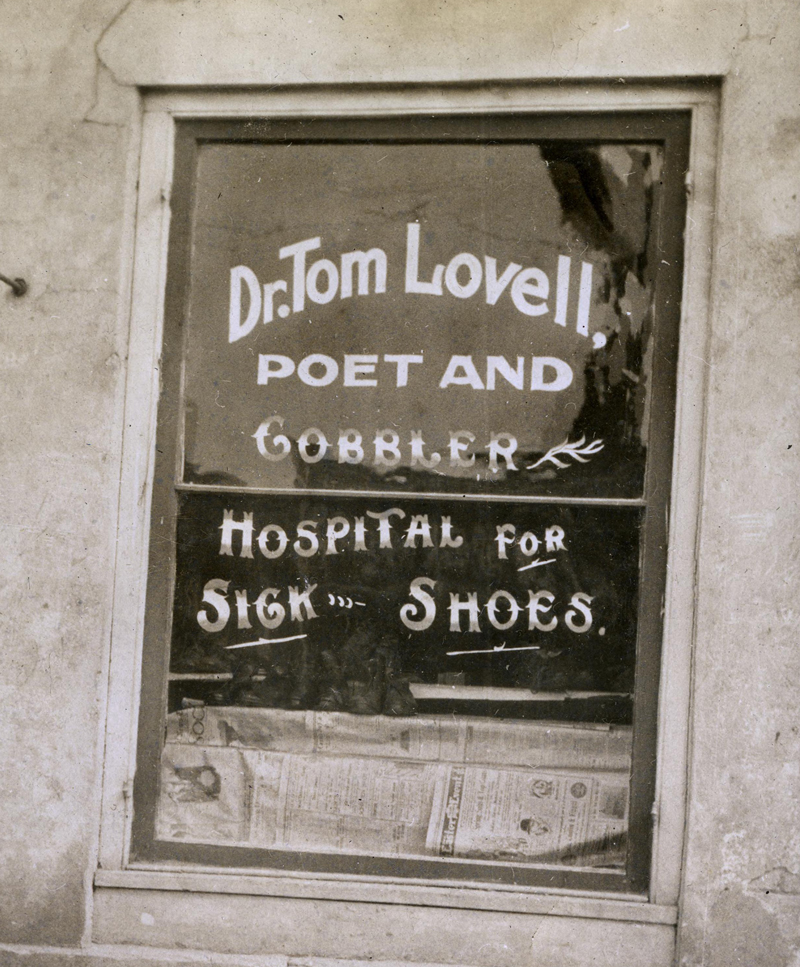
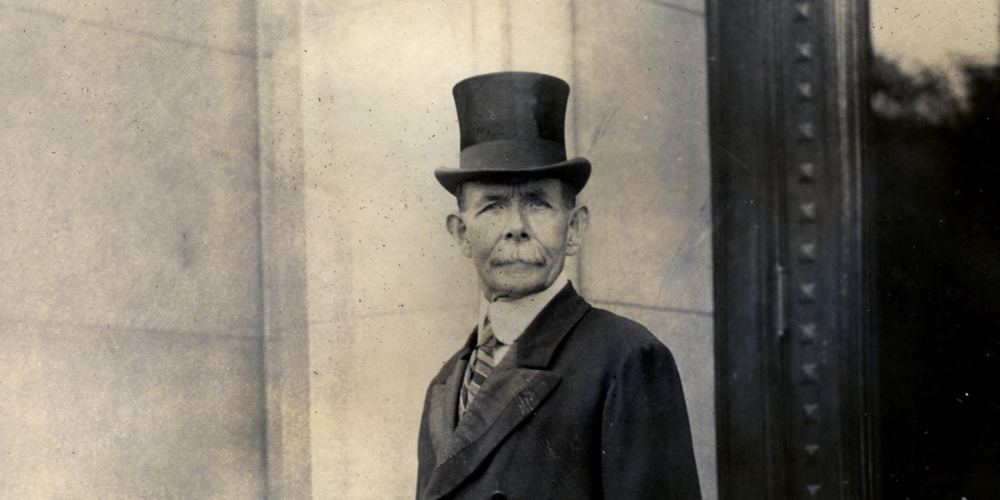
In 1907, a middle-aged English cobbler crossed the Atlantic to Quebec, then bounced westward through Ontario to Windsor, across the river from Detroit. One day he went over to see Ann Arbor and decided to stay. On Huron Street he hung out a sign: “Tom Lovell: First Class Boot and Shoe Repairing.” Within five years, Michigan students had christened him “Doc” Lovell and made him a minor folk hero.
Raised in poverty in the ancient market town of Wellingborough, north of London, he conceived a sturdy idea that he was destined for great things. In the tales of his life that he would tell many listeners, a doctor once informed his mother that “this kid has brains enough for three kids.” When teenage friends taught him to box, his mother forbade him to enter the ring, telling him, “You are made for better things.”
Lovell joined the British army, but the fingers of one hand were crushed in an accident. So he went home and learned the cobbler’s trade. For years he worked in one British town, then another, until, in his mid-40s, he made his way to Canada, then Michigan, where he stuck for good. (There was a Mrs. Lovell too, but she seems to have sent Tom to fend for himself in the States.)
A yearning to be heard
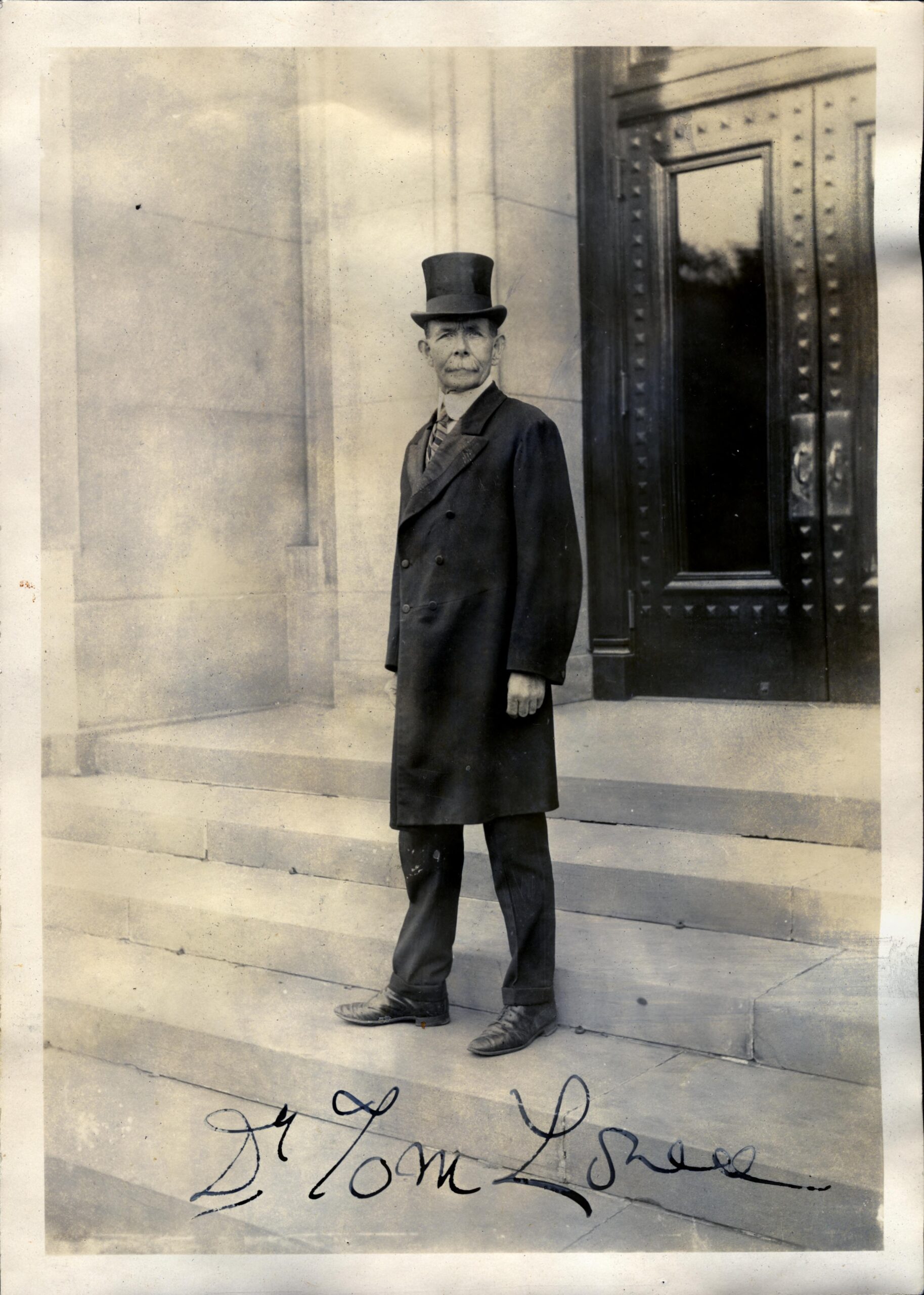
Lovell had failed to make his name in his native land, but now he built a rapt audience among young midwesterners. Some deep impulse to be seen and heard, to make a show and be a star, came to fruition. It began in his little shop, where he greeted every customer with “Hello, my friend!” in a strong Cockney brogue. Often he would recite a poem he had written, sing a song of his own composition, or declaim on topics of general interest.
Soon he took these performances to the streets. He accepted invitations to dine at fraternities. At movie halls and the Michigan Union, he extemporized on Christian uplift and the evils of Darwin’s theory of evolution.
Eventually he was spending less time fixing shoes and more time declaiming. Ann Arbor police once threatened to ban him from State Street sidewalks to keep his audience from blocking pedestrian traffic.
The published poet
He made the pages of The Michigan Daily with verses like this:
The one who is found with a darkened mind
And who never seeks light of any kind
Will soon find his understanding is such
His mind puts darkness for light and his taste corrupts.
Doc Lovell’s poems and song lyrics ranged widely, from his own self-reliance to the American flag; looking on the bright side; venturing forth instead of staying home; overcoming obstacles; the Fourth of July; spring; archery; the birds; the snow (“How strange it should be that this beautiful snow should fall on one with nowhere to go”); Jack London; Jonah and the whale; Abraham Lincoln; and the death of President Warren G. Harding.
“Who is right?”
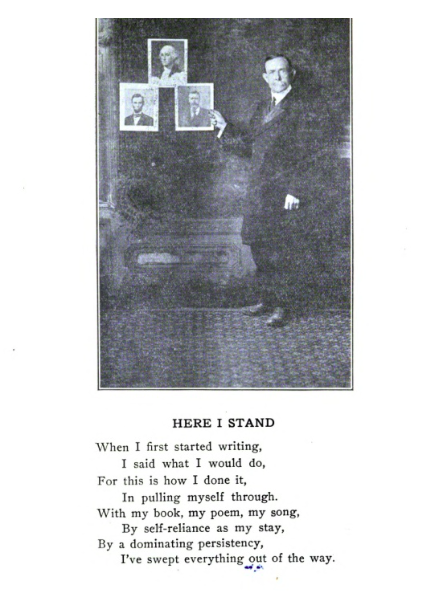
In 1928, the doc — or more likely one of his fans — self-published a 50-page memoir. It appears to be a record of Lovell’s free-flowing remarks taken down by an enterprising scribe.
If so, it’s no wonder passing students stopped to listen. They never knew what he would say next.
A sample:
“If one doesn’t go away they can never come back.”
“If I remain innocent all my days then it’s impossible to know anything.”
“Which comes first — the hen or the egg? Let me ask this: Could an egg build its own nest?”
“I am going to be another David against the Goliath to defy Charles Darwin’s theory … for that theory is a damnable lot of rotten bunk … Now it is just as ridiculous to say that a cat came from a dog as it is to say that a man came from a monkey … How could a mouse become a rat? … Now I ask you: Who is right, Charles Darwin or the cobbler poet?”
Degrees and distinctions
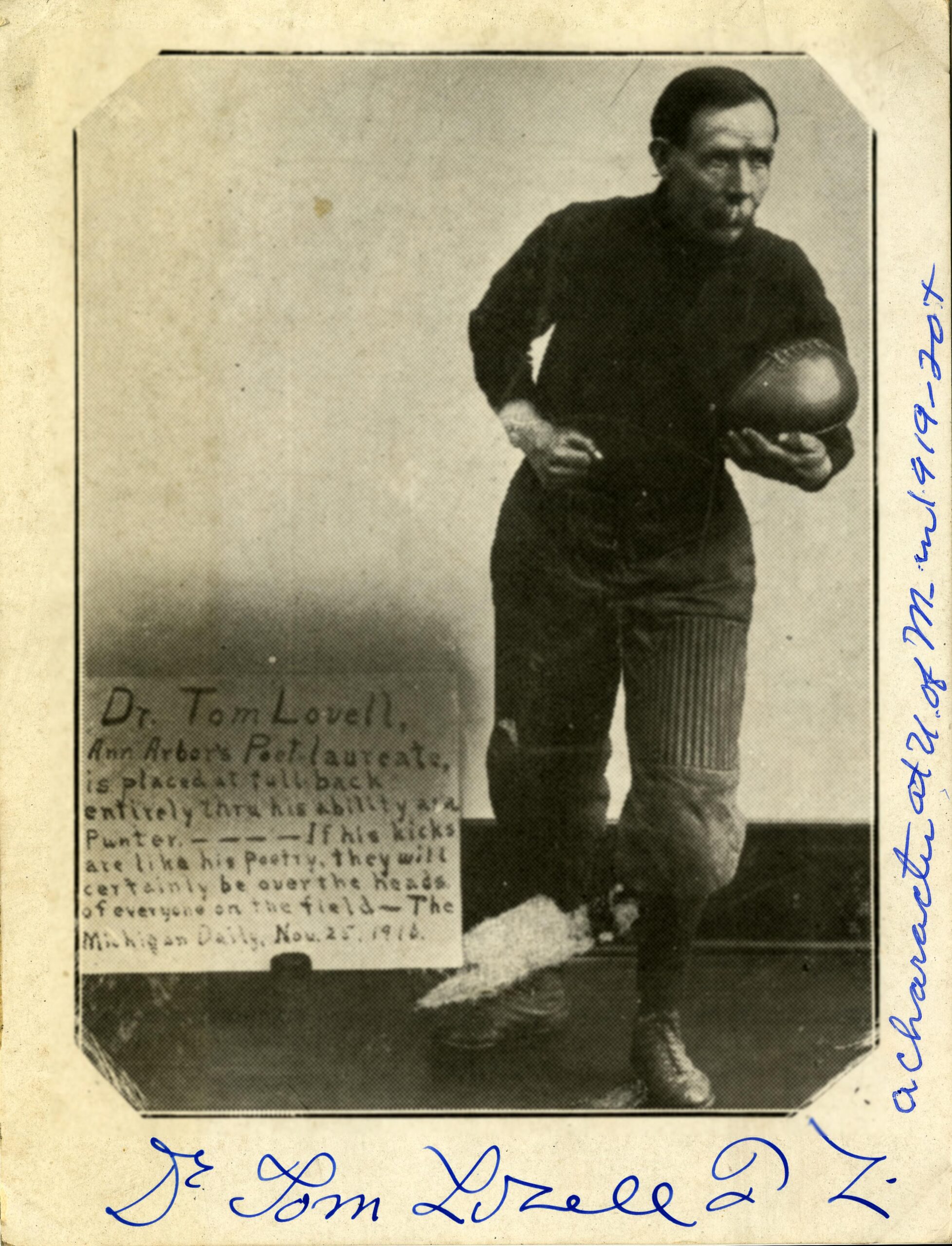
It became a local sport for students to dream up honorary degrees for Doc Lovell. Before he started charging $5 to accept a new degree, he racked up, among others, the academic titles of FFV (Founder of Free Verse); PDQ (Professor of Dual Quinology); TNT (Thinker of New Thoughts); AWOL (America’s Writer of Literature), and Chancellor of Diction.
In 1920, students threw him a banquet and named him Lieutenant-Colonel of Archery of all U.S. Armies and Navies. He was twice proposed for Michigan’s presidency. When Professor Claude Van Tyne asked his American history students to rank the greatest Americans, Doc Lovell tied with Woodrow Wilson for third place behind Abraham Lincoln and Theodore Roosevelt.
Lovell seemed to understand, if only by instinct, that he was the campus’ Shakespearean fool, a butt of jokes but also a puncturer of literary pretension, a living lampoon of high-minded faculty in their academic gowns.
He asked his listeners: “If I’m the fool and you get the fun, you thank God that the fool is about to make the fun, for you couldn’t have the fun without the fool, could you? Why, no. Then swallow that and shut up then. For it takes a clever person to be a clever fool.”
In 1929 he vanished for a time, then reappeared in broken health. He died at 67 in the Washtenaw County infirmary on Jan. 16, 1930. The New York Times published his obituary.
Sources included the Michigan Daily; Tom Lovell, Autobiography in Education (1928); Howard Peckham, The Making of the University of Michigan, 1817-1992, edited and updated by Margaret L. Steneck and Nicholas H. Steneck (1994); and the New York Times.