U-M evaluating sites for high-performance computing facility to advance public research
Community members invited to learn more at a Sept. 9 open house on campus
The University of Michigan is exploring potential locations for a new high-performance computational facility that will bring some of the greatest minds together to solve global challenges for the public good.
The computational facility that will be built in partnership with Los Alamos National Laboratory will enable research advancements in national security, model recovery from national disasters, advance manufacturing and tackle societal challenges such as cybersecurity, mobility, medicine and clean energy.
TO LEARN MORE
- Members of the campus community and the public are invited to an open house to learn more about how the region and state will benefit from U-M’s partnership with Los Alamos National Laboratory. Individuals will be available to take questions and provide information on the project, current efforts and future opportunities. Registration is required.
- Date: Tuesday, Sept. 9
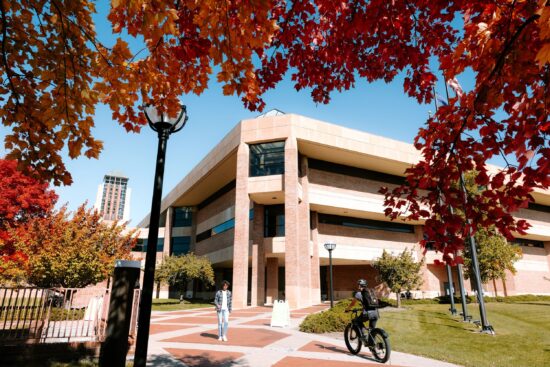
- Location: North Campus Research Complex, Building 18
- Time: 4:30-7:30 p.m.
- Register
“At its core, this project is about strengthening our role in solving some of the world’s toughest challenges,” said Chris Kolb, vice president for government relations. ”We are building a national asset; a public research facility operated by public institutions focused entirely on advancing knowledge.”
Among the sites under consideration is a parcel of land on Textile Road in Ypsilanti Township. The area is zoned for light industrial use and existing infrastructure make it a strong candidate. The university’s plan will prioritize environmental stewardship, and the majority of the property’s natural features will be preserved.
The university first acquired a 20-acre parcel of land in 2024 and this year identified an adjacent 124-acre parcel that better meets the needs of the project. The Board of Regents approved a purchase agreement in June.
Ypsilanti Township officials have asked the university to re-engage with the American Center for Mobility, a site that had been explored previously. U-M is reassessing with due diligence the site’s viability, and an updated list of requirements has been provided.
The university is committed to meeting the requirements and commitments to LANL and developing the facility in a way that protects the environment and minimizes disruption to our shared community, Kolb said.
“From safeguarding our natural resources to incorporating sustainable design features, every aspect of the project will be carefully planned to align with environmental best practices,” he said.
Designed to expand scientific infrastructure and strengthen the state’s role in national innovation, this facility will provide opportunities for students, faculty and researchers to address tough challenges.
“Computation is the key to research that saves lives, empowers communities, creates economic opportunities and protects our way of life,” said Arthur Lupia, vice president for research and innovation.
The project will also help the state advance education, talent development and workforce readiness.
“The demand for research computing continues to increase exponentially across all segments of our society. This new facility will enable us to support our outstanding researchers and graduate students, while also keeping Michigan at the forefront of technological innovation for years to come,” said Ravi Pendse, vice president for information technology and chief information officer.
During the building phase, the project will create 300 construction jobs. Once construction is complete, the project will generate at least 200 high-paying research-based jobs as well as positions for another 30-50 individuals who will run and maintain the computer network.
The computational center also creates the opportunity to extend economic development and generate additional jobs in the region by attracting new industries and businesses that work with classified or secure information.
U-M will work closely with the Michigan Department of Environment, Great Lakes and Energy to ensure protection and management of natural resources surrounding the facility.
- Any stormwater and wetland impacts will be reviewed and permitted by EGLE.
- The facility will not draw from or discharge into the Huron River.
- All necessary cooling water will be purchased from local municipal utilities, and sanitary discharge will be handled through the municipal system.
- In keeping with the university’s carbon neutrality goals, the project will be all-electric.
“The building will be fully electric and designed to operate with minimal impact on the surrounding neighbors,” said Steven Ceccio, a professor of mechanical engineering and of naval architecture and marine engineering who has been involved in this project since its inception. “The facility will not result in excessive noise, vibrations or fumes and on-site generators will be used only for emergencies and limited testing, covering no more than 20% of the facility’s total energy load.”
The roof will be built to allow for the installation of solar panels that can produce onsite renewable energy. Construction is expected to begin in 2027 with the facility fully operational in 2031.
This $1.25 billion initiative, which was endorsed by the Michigan House and Senate Appropriations subcommittees, will join 17 Department of Energy National Laboratories that make up the nation’s research and innovation ecosystem. The national labs provide critical research for U.S. foreign policy, domestic energy and security needs, and enhance communities across America through partnerships with universities, businesses, states and cities.