A look inside three new buildings around U-M’s campuses
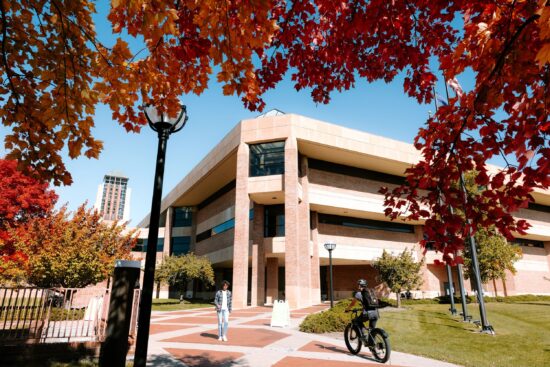
With the fall semester here, the University of Michigan campuses are again bustling with activity.
Within the walls of the many buildings across campus, faculty teach and conduct research, staff work and provide support, and students learn and grow.
As this school year gets under way, the Record is offering readers a glimpse inside three buildings around campus that either recently opened or will open soon.
Here’s a sneak peek inside three buildings on the Central, North and Medical campuses.
CENTRAL CAMPUS
Edward and Rosalie Ginsberg Building
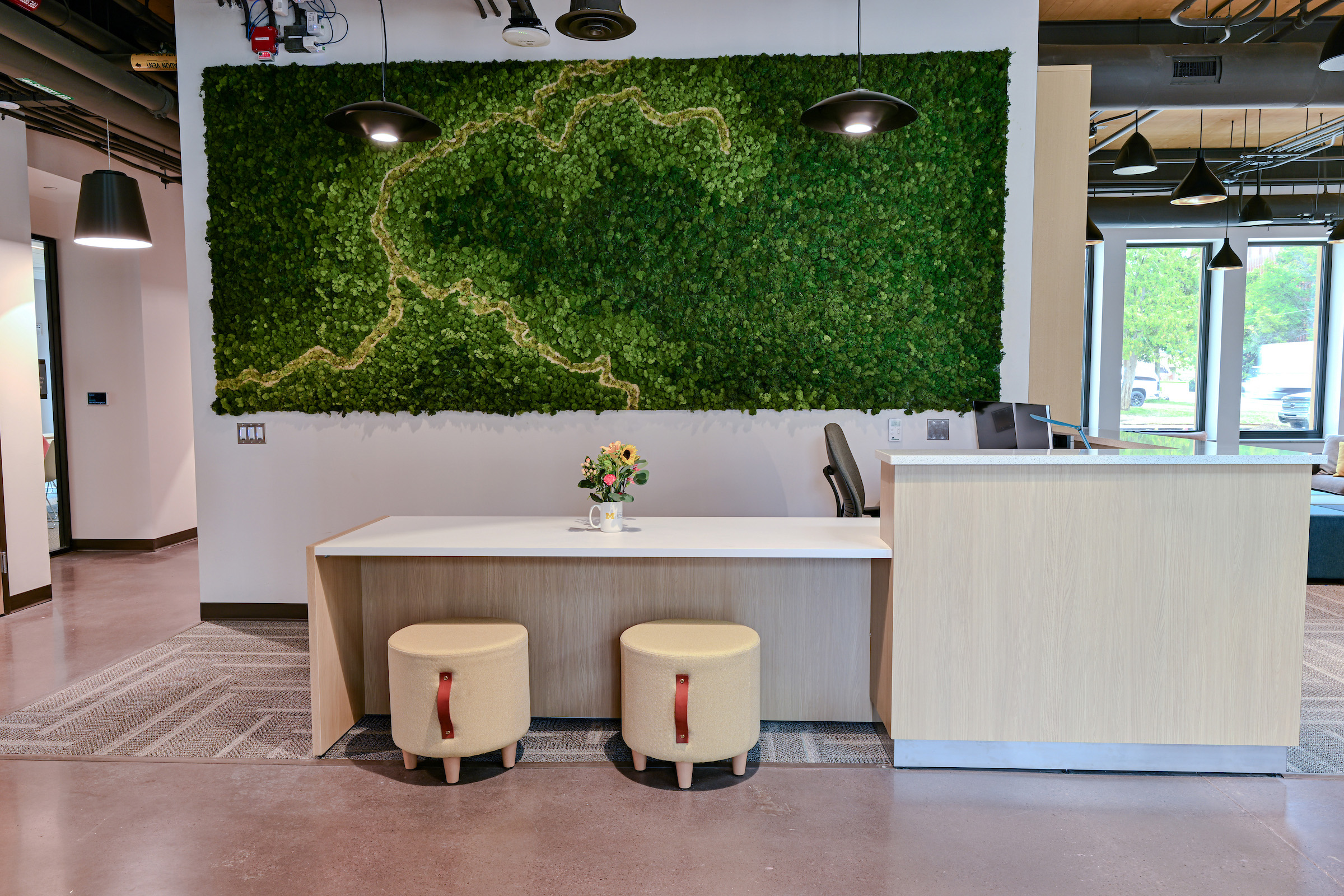
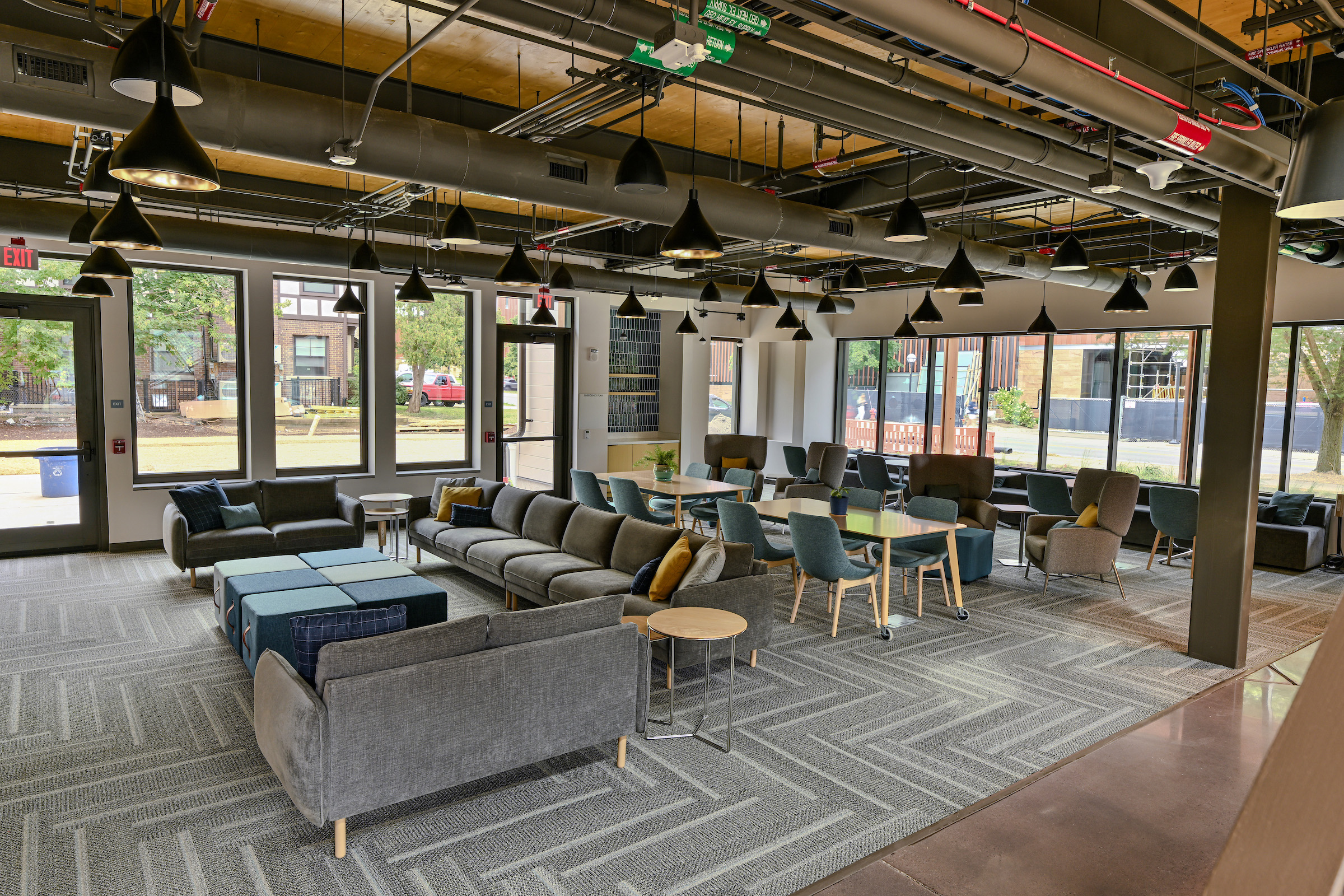
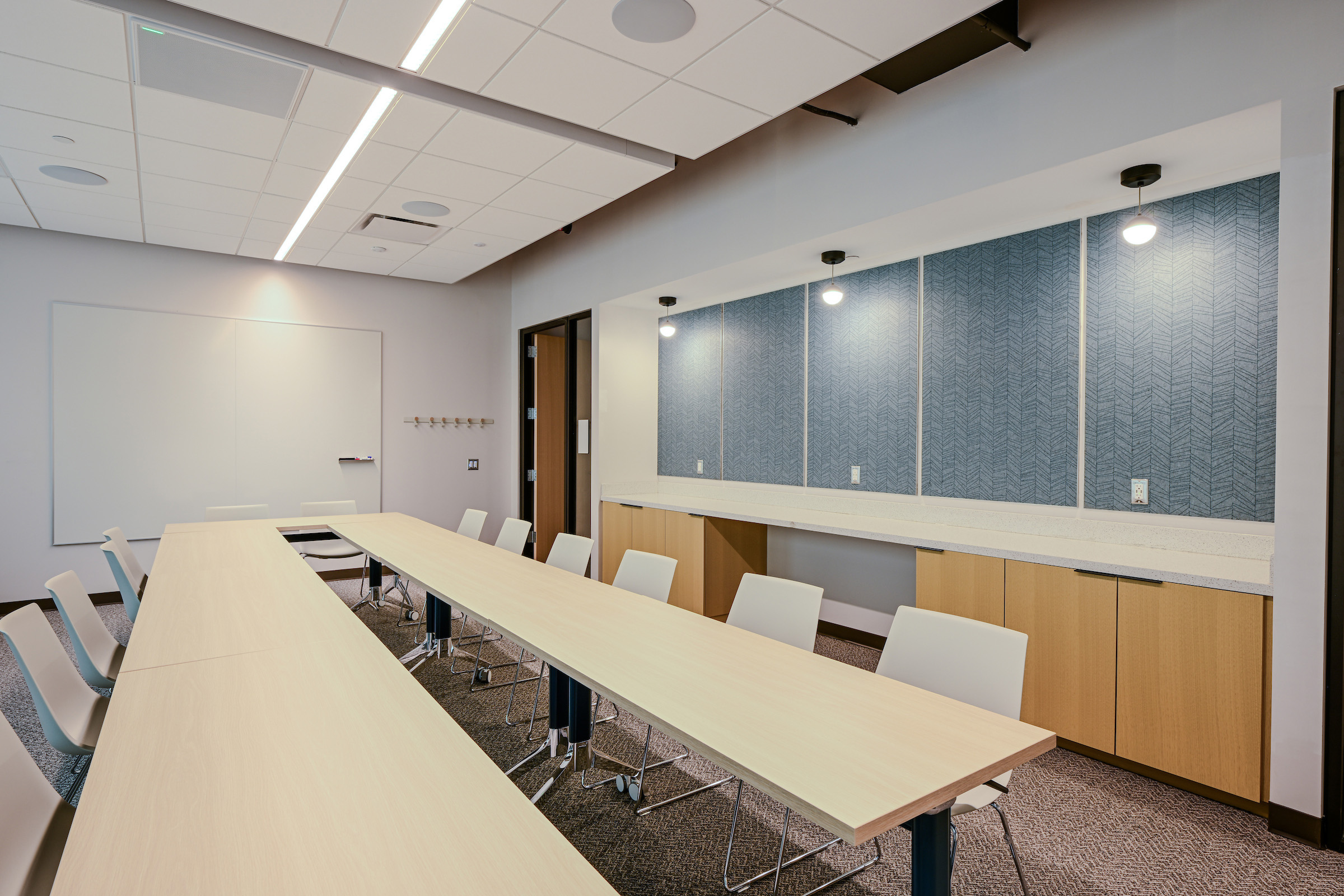
Building on its “where campus meets community” foundation, the Edward Ginsberg Center moved into a new, larger and environmentally friendly home just in time for fall semester.
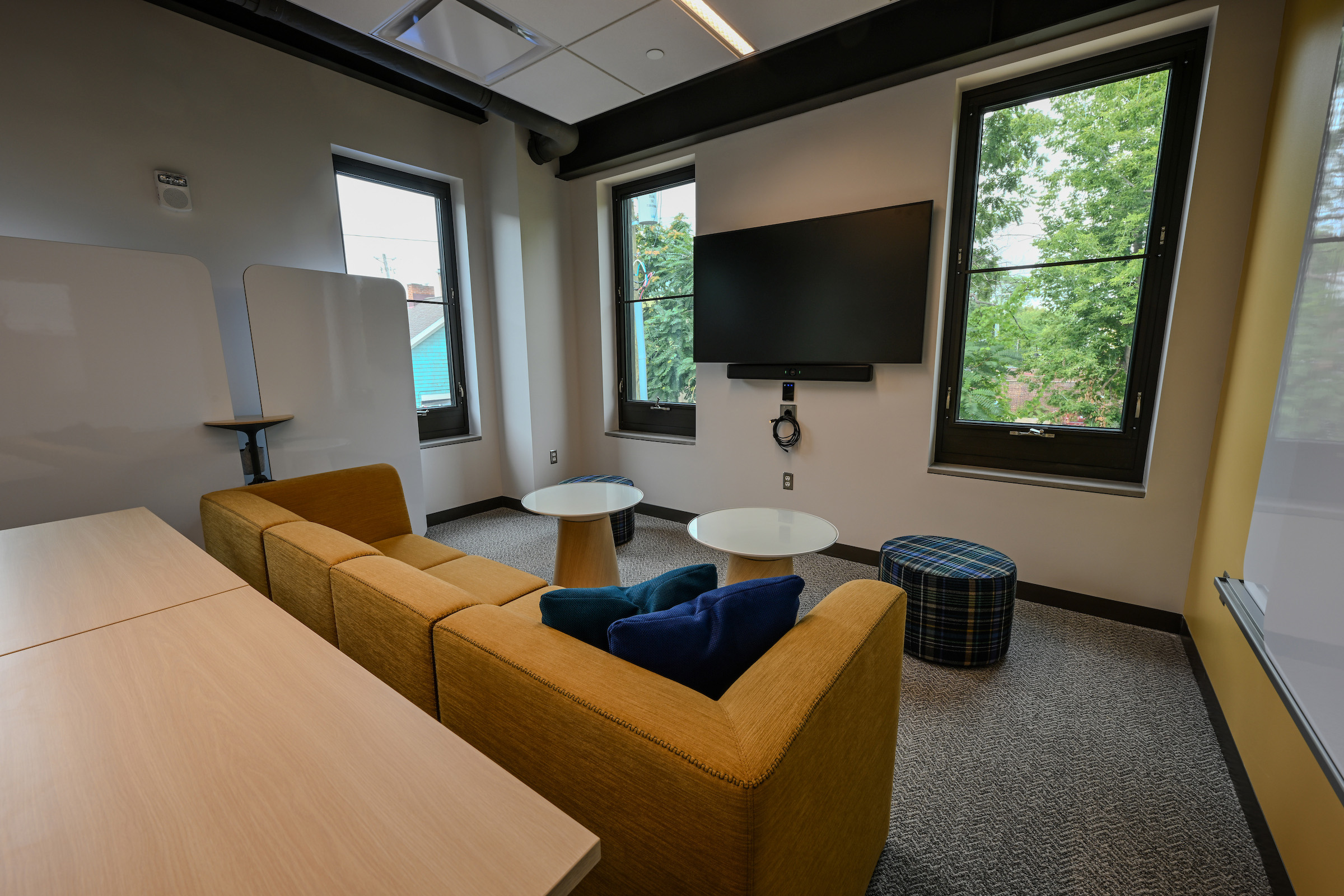
The 11,000-gross-square-foot Edward and Rosalie Ginsberg Building at 1024 Hill St. features meeting spaces, a resource library, student organization space, and support and administrative space, all allowing the center to bring its principles into action through partnerships, preparation and pathways for community engagement.
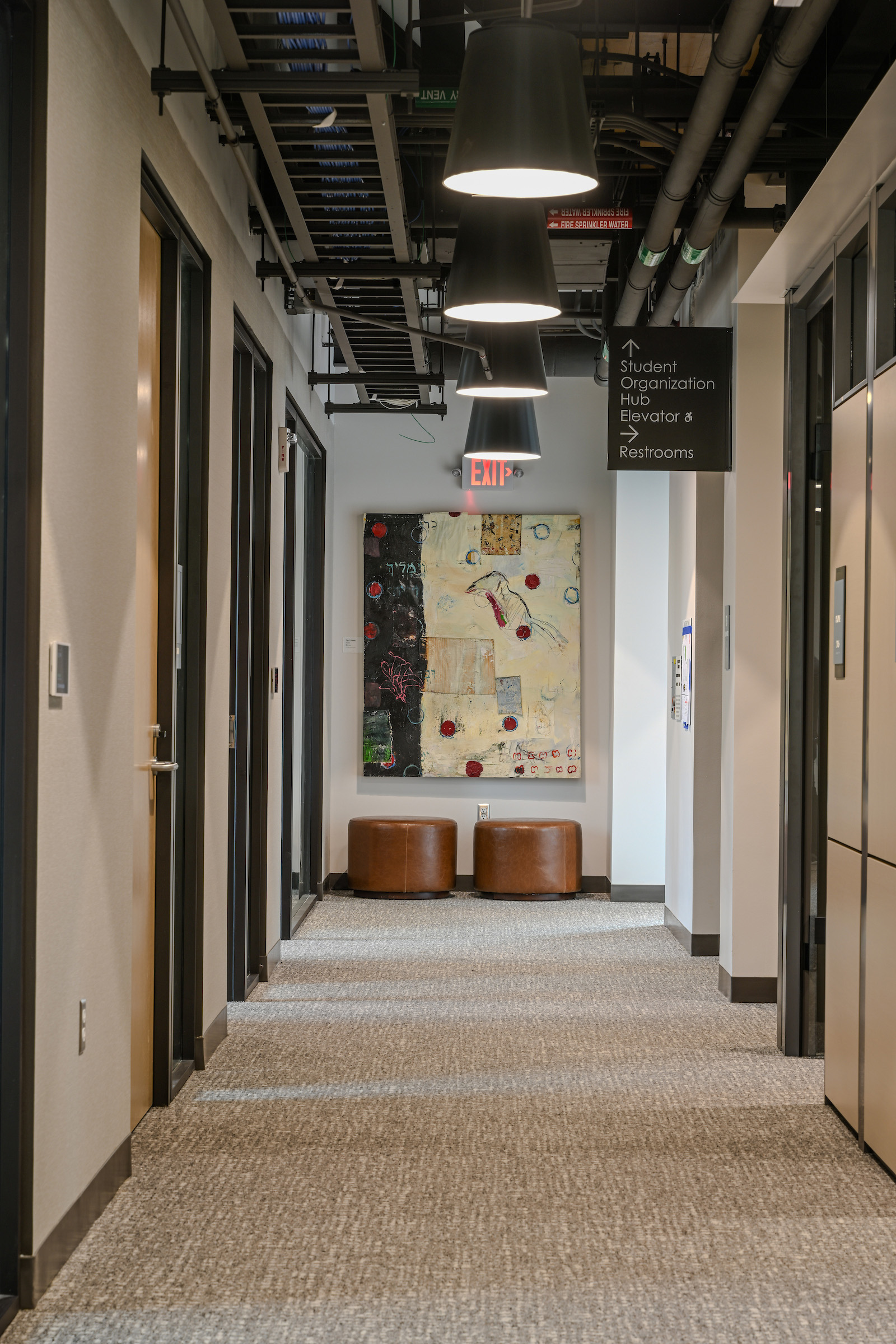
The new building sits in the footprint of the center’s previous home, the 7,500-square-foot Madelon Pound House, which the university acquired in 1951. That building required significant infrastructure upgrades and was not well-suited for the center’s needs. Madelon Pound’s name will continue to be honored in a way that is approved by the Facilities Naming Steering Committee.
The $10.5 million project features numerous eco-friendly measures, including an energy-efficient, closed-loop geo-exchange heating and cooling system; high-performance roof and wall materials for optimum energy efficiency and minimal upkeep; and low-flow plumbing fixtures for water conservation.
A $10 million gift from longtime U-M supporters William and Inger Ginsberg helped support construction of the building and honor William’s parents, Edward and Rosalie Ginsberg.
During the three-year project, the center conducted its business in the Michigan League but moved into its new home in late August. The building will be open to the campus and community partners from 8 a.m. to 5 p.m. weekdays starting Sept. 2.
A ribbon-cutting ceremony is scheduled for 3 p.m. Sept. 11, with an open house planned from 1-5 p.m. Sept. 26. (RSVP for the open house online)
NORTH CAMPUS
Leinweber Computer Science and Information Building
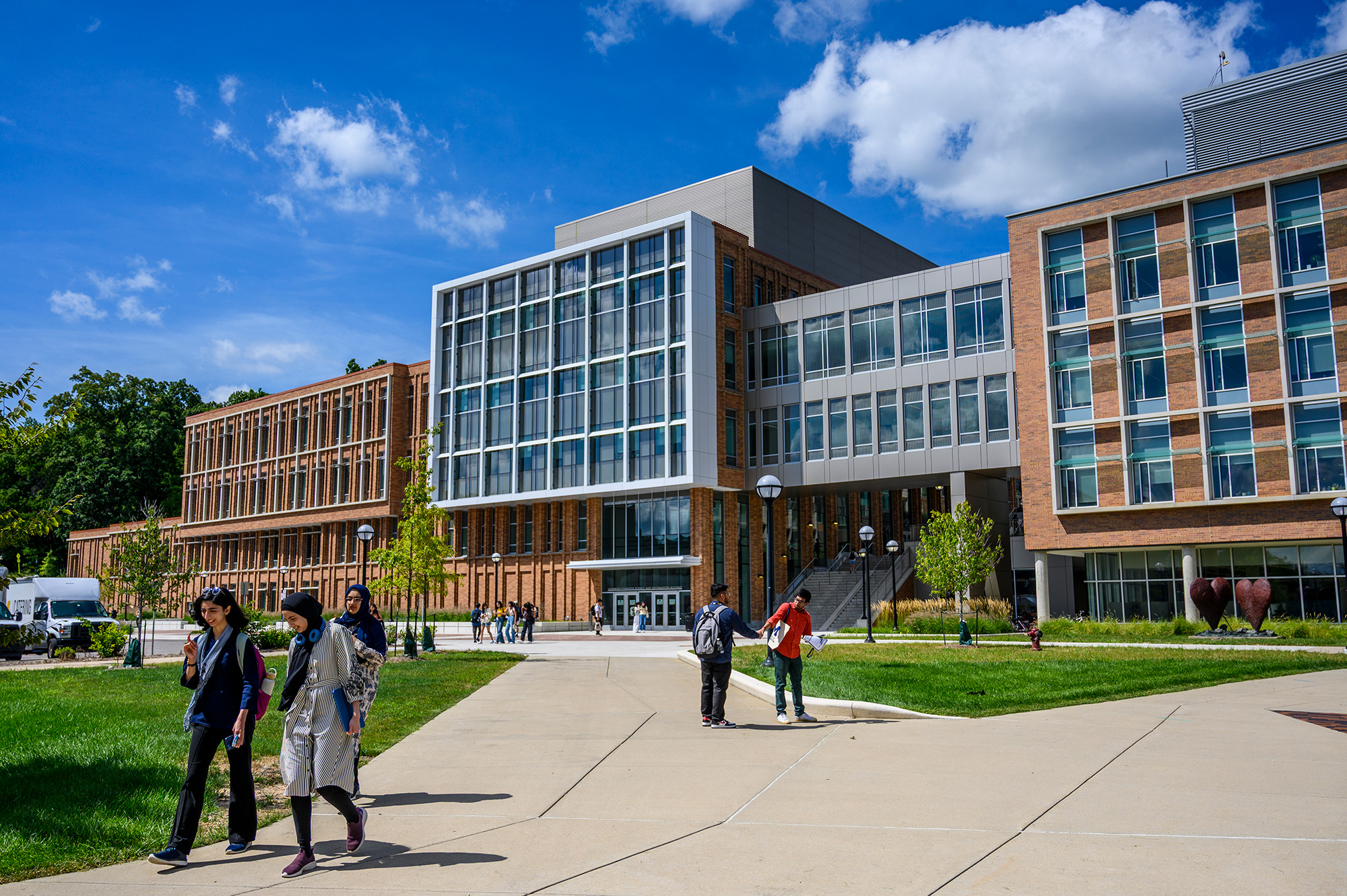
The newest building on North Campus is home to the School of Information’s administrative operations and graduate programs and sits adjacent to the College of Engineering’s Bob and Betty Beyster Building.
This arrangement promotes synergy between UMSI and the College of Engineering — the buildings are physically connected by a series of passageways. The Leinweber Building also houses a portion of the Computer Science and Engineering Division’s faculty, graduate students, and labs, as well as some of CoE’s largest classrooms.
The 163,000-square-foot complex was completed in the spring as the result of a $145 million construction project, helped by a $25 million gift from the Leinweber Foundation.
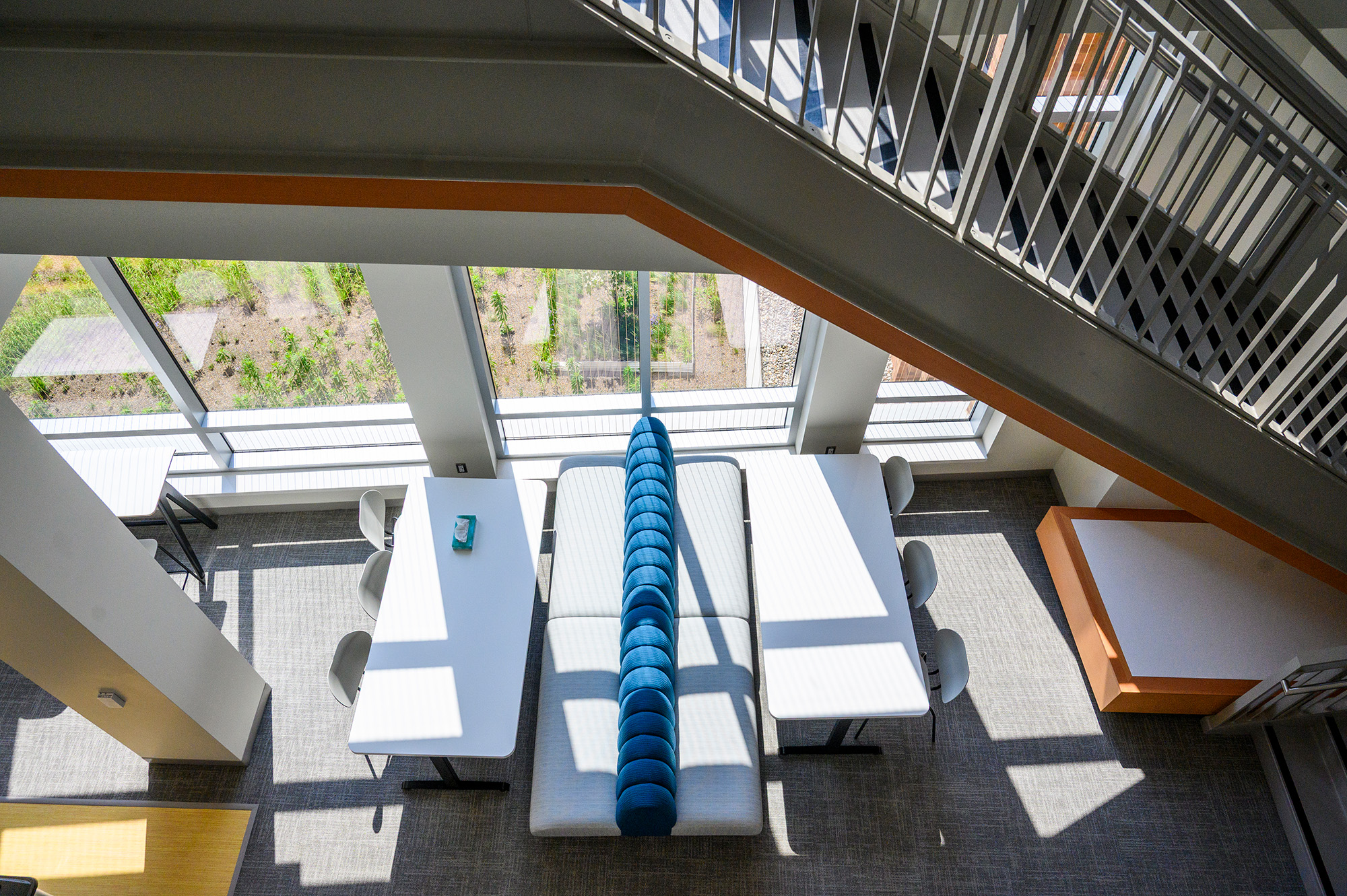
The building’s exterior features a bird-safe glass facade. Because the first and second floors of the building have a larger footprint than the upper floors, the roof of the second floor is a green roof that includes a variety of plantings. This roof provides a restful view for many occupants of the building’s upper floors while also positively impacting air quality, energy efficiency, and stormwater management.
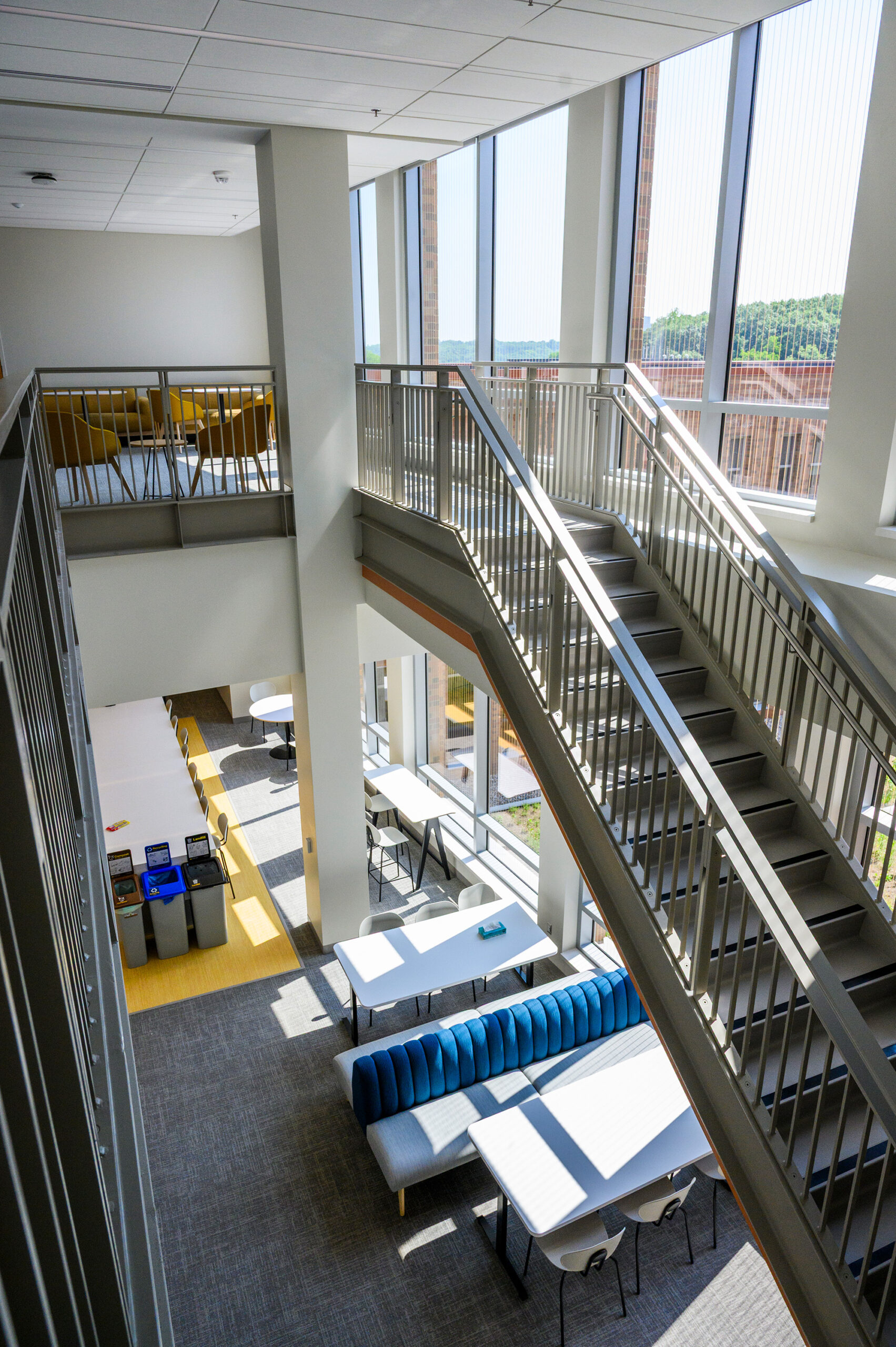
Inside, a central staircase rises through the lobby, bordered on one side by a glass rail with a barcode motif. On the other side, built-in wooden benches create a natural gathering place for students to sit and chat.
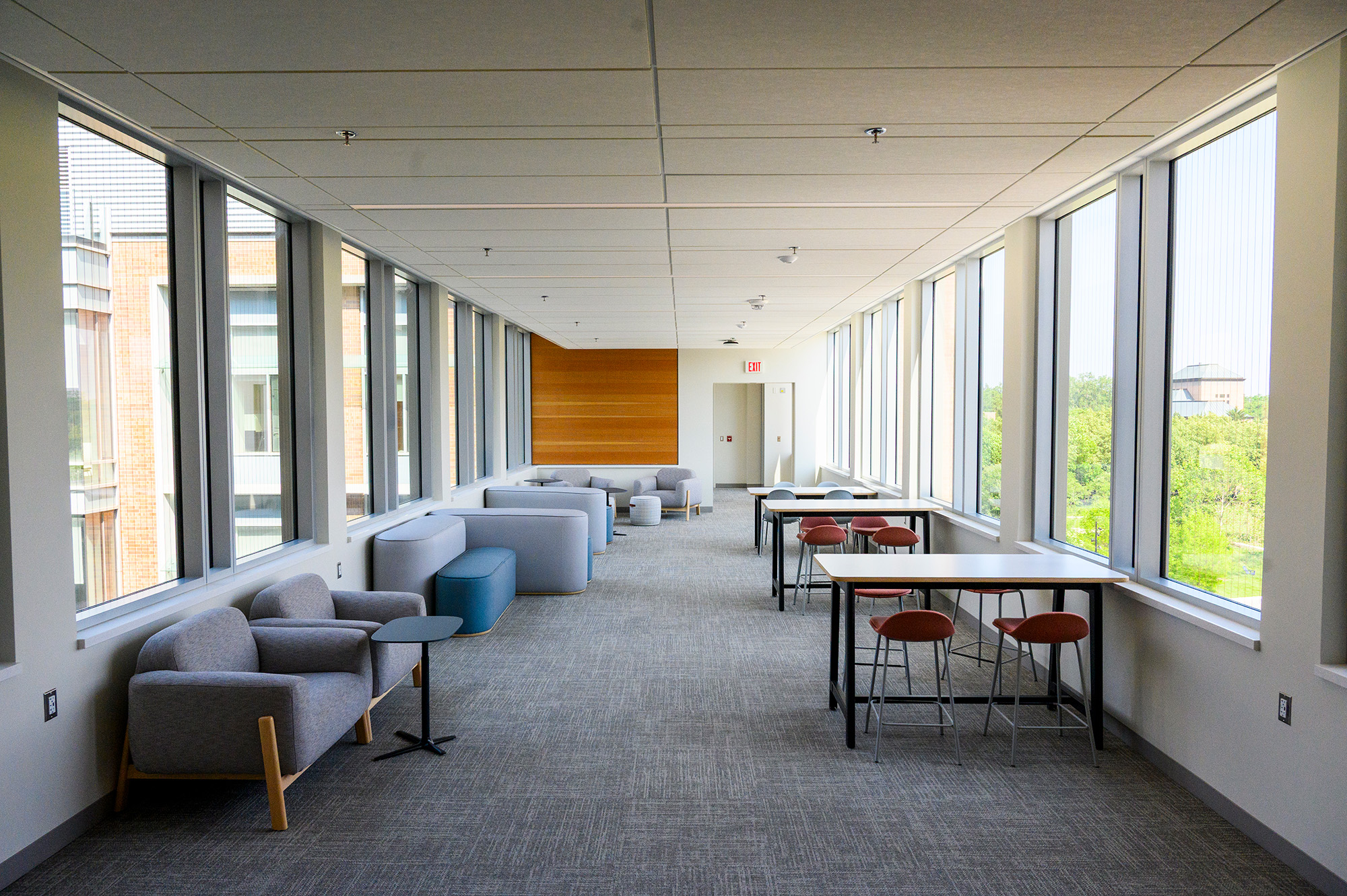
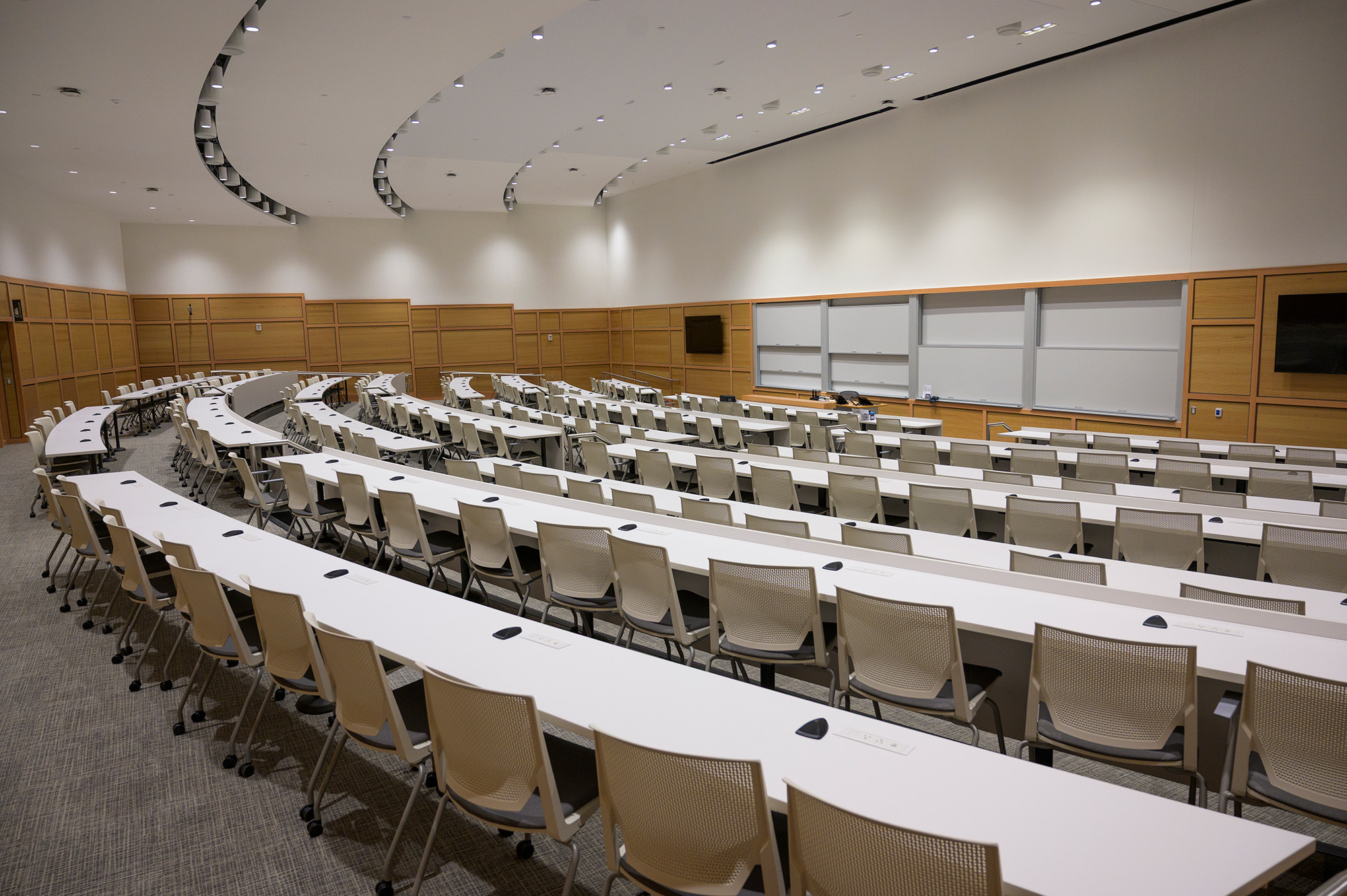
Students will enjoy spaces that encourage bold ideas and collaboration across disciplines — from modern classrooms with state-of-the-art technology, including five lecture halls seating more than 100 people each, to a makerspace each for UMSI and CSE, a design lab, and an augmented reality/virtual reality lab.
Faculty and Ph.D. students work from offices on the Leinweber Building’s third, fourth and fifth floors. UMSI staff, who previously worked from five buildings in downtown Ann Arbor, are now closely situated on the second and third floors.
The Leinweber Building represents an important step toward U-M’s carbon-neutrality goals, which include wholly eliminating direct emissions by 2040.
It is the first U-M building to be all-electric, and the first large-scale university building to not rely on natural gas for heating. It is entirely heated and partially cooled by the new Hayward Street Geothermal Facility, which was built alongside and completed in 2024.
For more on the building, visit leinweber.bldg.umich.edu.
MEDICAL CAMPUS
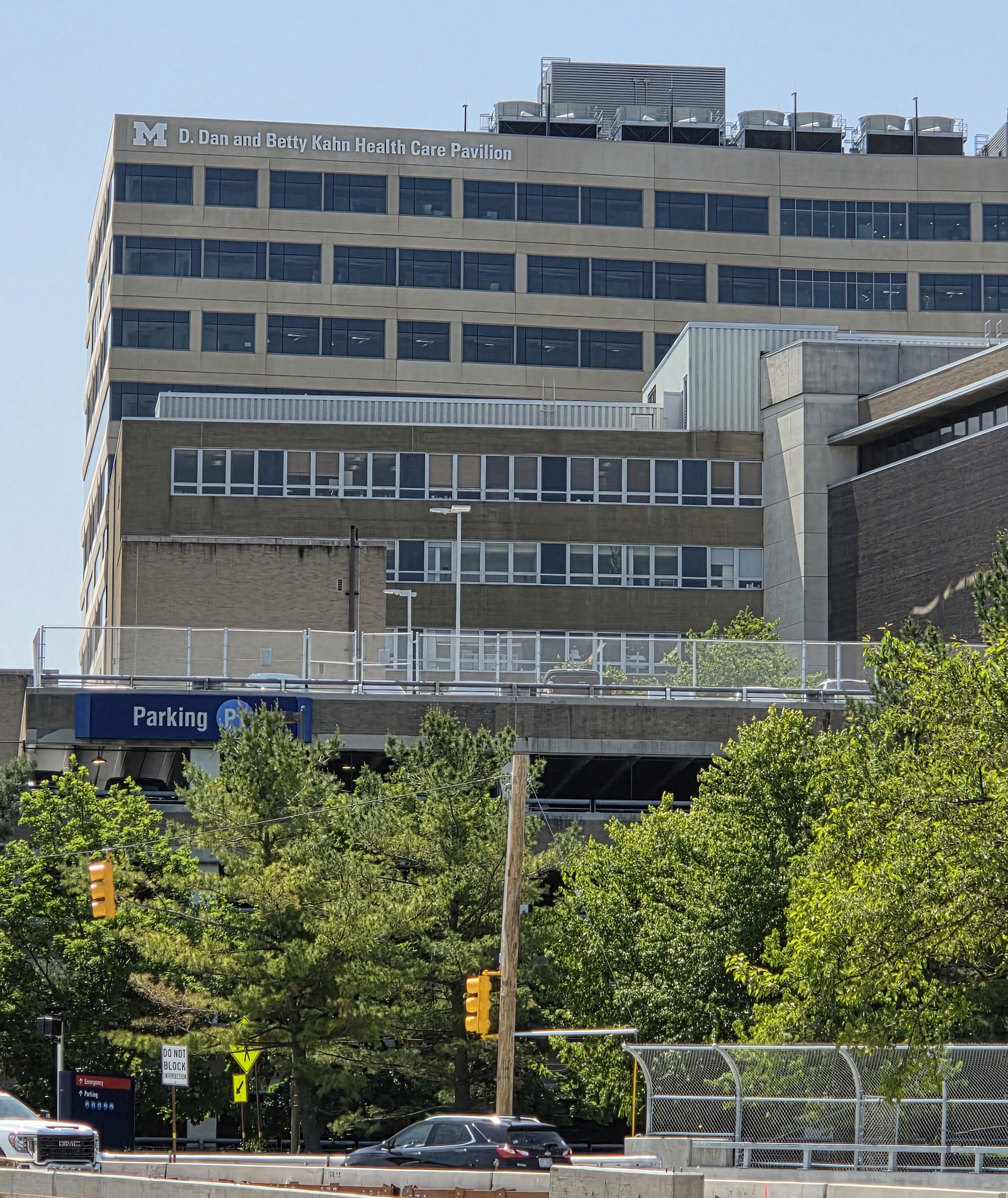
D. Dan and Betty Kahn Health Care Pavilion
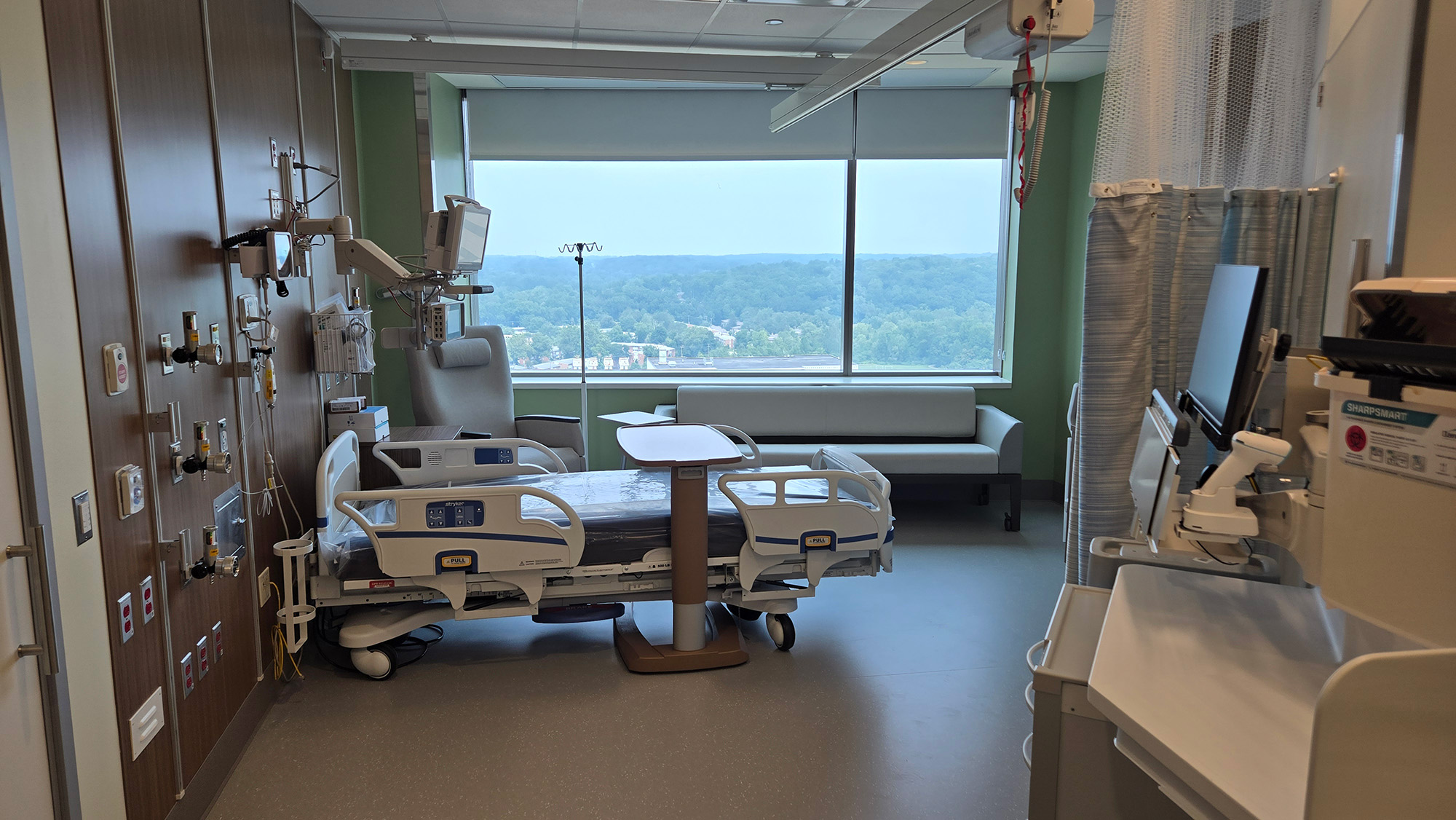
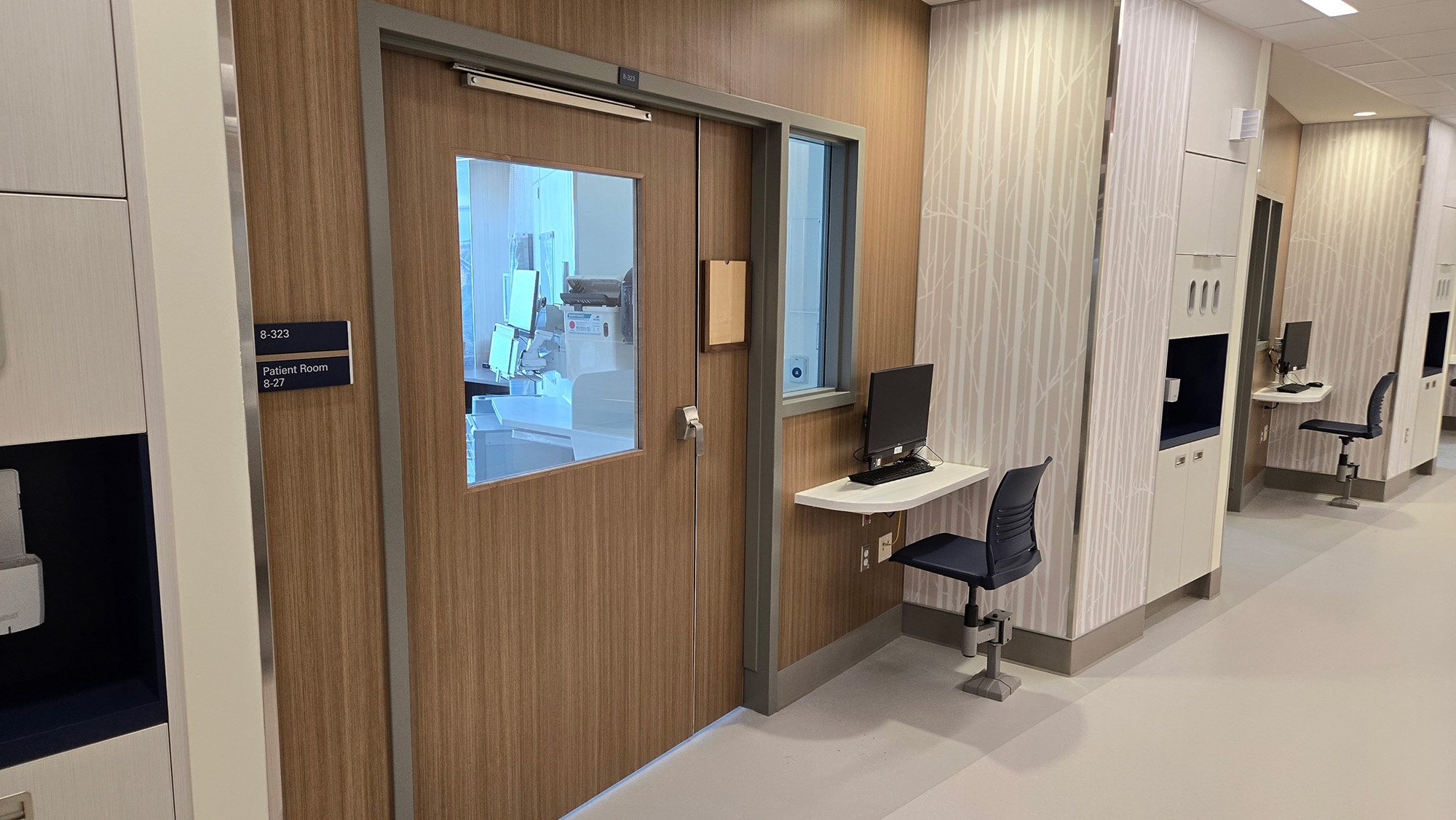
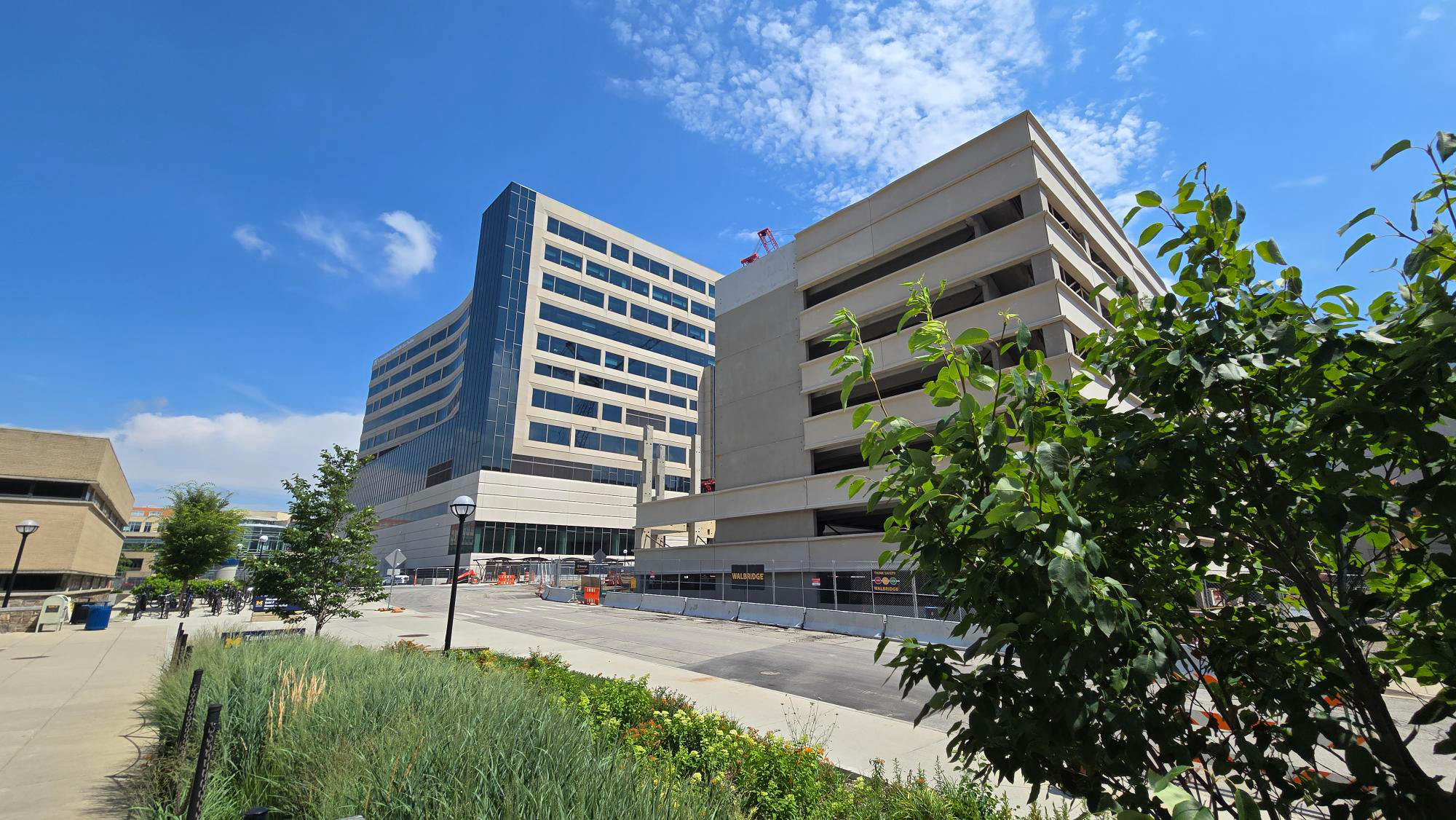
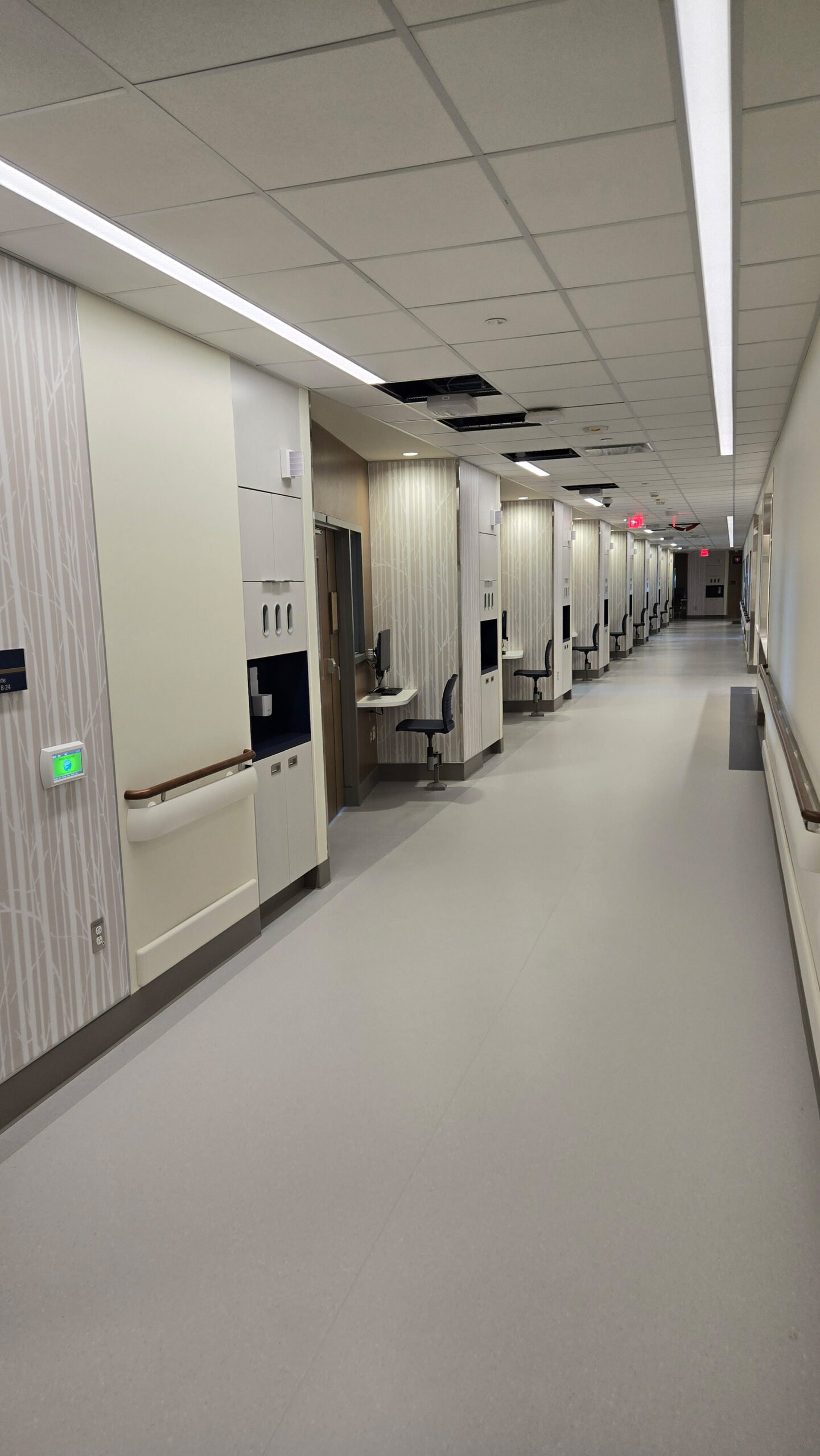
The Medical Campus’ new crowning achievement, the U-M Health D. Dan and Betty Kahn Health Care Pavilion is a 12-story inpatient tower that will house 264 private rooms with intensive care capability, state-of-the-art operating rooms, advanced imaging and high-level, specialty care services for neurology, neurosurgery, otolaryngology, oral maxillofacial surgery, ortho spine, cardiovascular medicine, cardiac surgery, vascular surgery and thoracic surgery patients.
The new adult inpatient facility is scheduled to open for patient care in fall 2025.
Locating these services together will enable healthcare providers to quickly respond to complex cases and deliver lifesaving and life-changing treatments.
At 690,000 gross square feet, the building will provide more access to care for adult patients at Michigan Medicine. The new adult inpatient hospital will also allow the relocation of beds currently in semi-private rooms at University Hospital to private beds in the new hospital.
The $920 million project broke ground in 2019, and construction continued in 2021 after pandemic delays. Thanks to one of the largest gifts in Michigan Medicine history — $50 million — the hospital is named for longtime philanthropists D. Dan and Betty Kahn.
The facility is designed to maximize direct access to natural light for patients, visitors and staff. Its many windows provide panoramic views of the campus and the city of Ann Arbor.
The Pavilion is constructed adjacent to the Frankel Cardiovascular Center, and the two are linked with bridge and tunnel connections. The facility is designed for sustainability to meet LEED (Leadership in Energy and Environmental Design) Platinum Building Certification, the highest possible rating. The Pavilion is estimated to use 40% less water than a standard hospital by the careful selection of plumbing fixtures and the design of the process water systems.
— Heather Guenther of Student Life, Abigail McFee of the School of Information, and Noah Fromson of the Michigan Medicine Department of Communication contributed to this report