Navigating absurdity in an imperfect world
Building a public narrative
In a previous Climate Blue column, I wrote about the U.S. Department of Energy posting propaganda, using a seriously flawed document designed to fit and to build a political narrative to undermine climate science and the regulation of carbon dioxide.1
I used a conversation in Alice in Wonderland between Alice and the Cheshire Cat to illustrate how a set of simple, true statements could be put together in a way that both formed a blurry version of potential truth and was, in fact, nonsense.
A reader wrote to me that my description of propaganda as something full of premises, images, and reasoning designed to remove complex realities from their context was a good description of what they felt was happening.
In this column, I will imagine Alice wanting to find accurate knowledge to steer her wanderings through Wonderland.
How do we know what is reliable, what is true?
Science takes a hit
The last decade has been hard on truth and science.
Academic papers and books, such as the Merchants of Doubt, have documented the efforts to cast climate change as uncertain, poorly executed science that does not rise to a level of justifying the costs of changing our energy systems.
The DOE’s effort to sanction an alternative narrative about our warming climate and its consequences has moved us into a world of absurdity
In this world of absurdity, we need to remember how we determine what we believe.
What do you know?
Propaganda, rhetoric, and creating doubt have been around for millennia. Some of the oldest and most basic philosophical questions ask: How do we know what is true?
Since it is impossible for us to investigate every idea and every issue back to its foundation, we might recast the question as: Who do we believe?
Using the online Merriam-Webster dictionary, the definition of “to believe” is “to consider to be true or honest” or “to accept the word or evidence of.”
Belief and truth are closely related. And we can add another term to the family, knowledge, which the journalist Robert Jensen calls “justified true belief.”
If we pick at these things enough, we can get into all sorts of circular reasoning and decide that we actually don’t know anything. That is not very useful.
But, as these words and the ideas churn around, what emerges as essential is “evidence.”
Truth requires evidence of some sort, which requires some process for gathering that evidence.
The scientific method is such a process. It has rules of observation, measurement, development of potential explanations of the observations, testing and evaluation, and reporting. There are the values of objectivity, transparency, and reproducibility by independent, unconflicted members of the community. There are ethical conventions to attend to those values.
It is easy to argue that the scientific method is the most effective way we have of generating reliable knowledge about the world.
But science is not the only way to collect or substantiate evidence.
Plenty of us respond to or act on evidence that comes from social media, the news, or a neighbor. That evidence may be completely unreliable, unmeasured, and out of context. At least momentarily, however, we have accepted the evidence as truthful enough on which to act.
Some take their religious beliefs as a source of absolute truth, and that is the only evidence they accept.
Others might seek the guidance of a guru or someone they trust as their evidence.
Ever-present uncertainty
Though observation, measurement, and evaluation serve as the foundation of the scientific method, and as an element of truth, they are not the only sources of evidence supporting a scientific conclusion.When investigating complex phenomena, we can never measure things completely. The best measurements still have errors. There are multiple plausible explanations of the observations.
We start to look for coherent, consistent, and convergent explanations of what we observe. Do the explanations make sense and describe what we experience? Over time, if there is convergence of coherent and consistent evidence, an evidence-based consensus begins to emerge.
Consensus does not mean that we are certain. In fact, we are not. Nor does it mean that there is absolute agreement by all involved. It is an evaluation of the preponderance of evidence. Argued agreement among experts is usually viewed as a measure of confidence.
Belief and truth rely on a foundation of different attributes, which, ultimately, we accept or not.
Into the void
It is important to recognize the scientific method does not produce facts. It produces knowledge with a description of uncertainty. Facts are certain; facts are rare. Absolute truth is rare.
Science, scientists, and federal scientific institutions have, historically, been among the most trusted sources of knowledge. Many people seeking scientific knowledge could look to websites and assessments from these trusted sources. But as federal institutions are defunded and websites and documents are removed or made difficult to find, we are left with a void of knowledge.
The DOE’s alternative narrative about climate science goes beyond making knowledge hard to find. The goal is for those in power to define the interpretation of science and to shape it to their political goals. The broader behavior to create a void of knowledge makes it easy for that narrative to fill the void.
Objectively speaking
Ideally, the evidence of science writes an objective narrative.
That ideal is never achieved, because humans write the narrative. People tell the story.
What the attack on science and federal institutions tells us is that there is power in the knowledge generated by the scientific method.
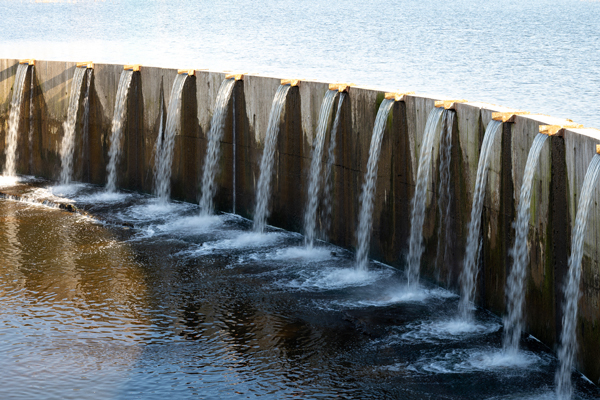
As a power source, scientific knowledge sits there with potential, like the water behind a hydroelectric dam. That knowledge has no intent, but it sits in the midst of powerholders in business,
politics, and government, who do have intent. By its nature, it is subject to exploitation.
There is knowledge stored that power holders want to use. There is knowledge that they want to suppress. When government, wielding its power over the people, decides to shape the knowledge from science to fit the stories it wants to tell, we are in trouble
The story that is written is not objective; it is motivated. The evidence of science is corrupted.
Damages and decay
Misinformation, disinformation, and propaganda are effective ways to undermine science. It has proved frighteningly easy to damage institutions and destroy intellectual capacity. By mining and exaggerating the mistakes and misbehaviors that are present in all human activities, it has been possible to damage trust in the scientific process and scientists.
We are left in a place where people have to become more self-reliant on their ability to determine the quality of knowledge, the integrity of truth. We need to be aware of how we determine what we believe, and whether it is backed by evidence.
Becoming conscious of what is at the foundation of knowledge and truth is an important skill that all informed citizens need to learn. With the decay of trusted institutions, we need to be able to find credible and legitimate sources of knowledge. We need to quicken and sharpen our efforts of evaluation and critical thinking.
We also need to do more than to speak and to remain present. We need to protect the knowledge we have. We need to continue the development and curation of science-based evidence. We need to elevate our efforts and discipline in providing, to the best of our ability, objective narratives of evidence-based beliefs.
1This document was removed and the writing team disbanded due to multiple violations of the Federal Advisory Committee Act. DOE’s action was not a statement about the quality and accuracy of the document.
(Lead image: iStock.)