The good news is …
Forward, ever forward
The world may be spinning out of control right now, but that cannot keep researchers at the University of Michigan from spinning new ideas into life-changing discoveries. Michigan Today invites you to take a brief respite from the existential turmoil and join us for a brief life-affirming moment steeped in science, creativity, knowledge, and joy.
Groundbreakers
In this issue, we share some awe-inspiring medical discoveries that could have a tremendous impact on all of us.
One brilliant team is developing an at-home melanoma test consisting of a skin patch and test strip with two lines, similar to COVID-19 home tests. Developed with funding from the National Institutes of Health, the patch and test move toward rapid at-home melanoma testing, helping patients catch the most aggressive form of skin cancer early without a biopsy or blood draw.
And that’s not all. Have you ever heard of histotripsy? Well, now you have. U-M scientists have developed a revolutionary cancer treatment that is non-invasive — no incisions and no harmful side effects — by harnessing sound waves. Using ultrasound technology created at U-M, histotripsy could be a welcome alternative to chemotherapy and radiation.
And we’re not done yet. This issue also features U-M scientists who have discovered a unique brain cell that may hold a key to Alzheimer’s disorientation.
Not just for the birds
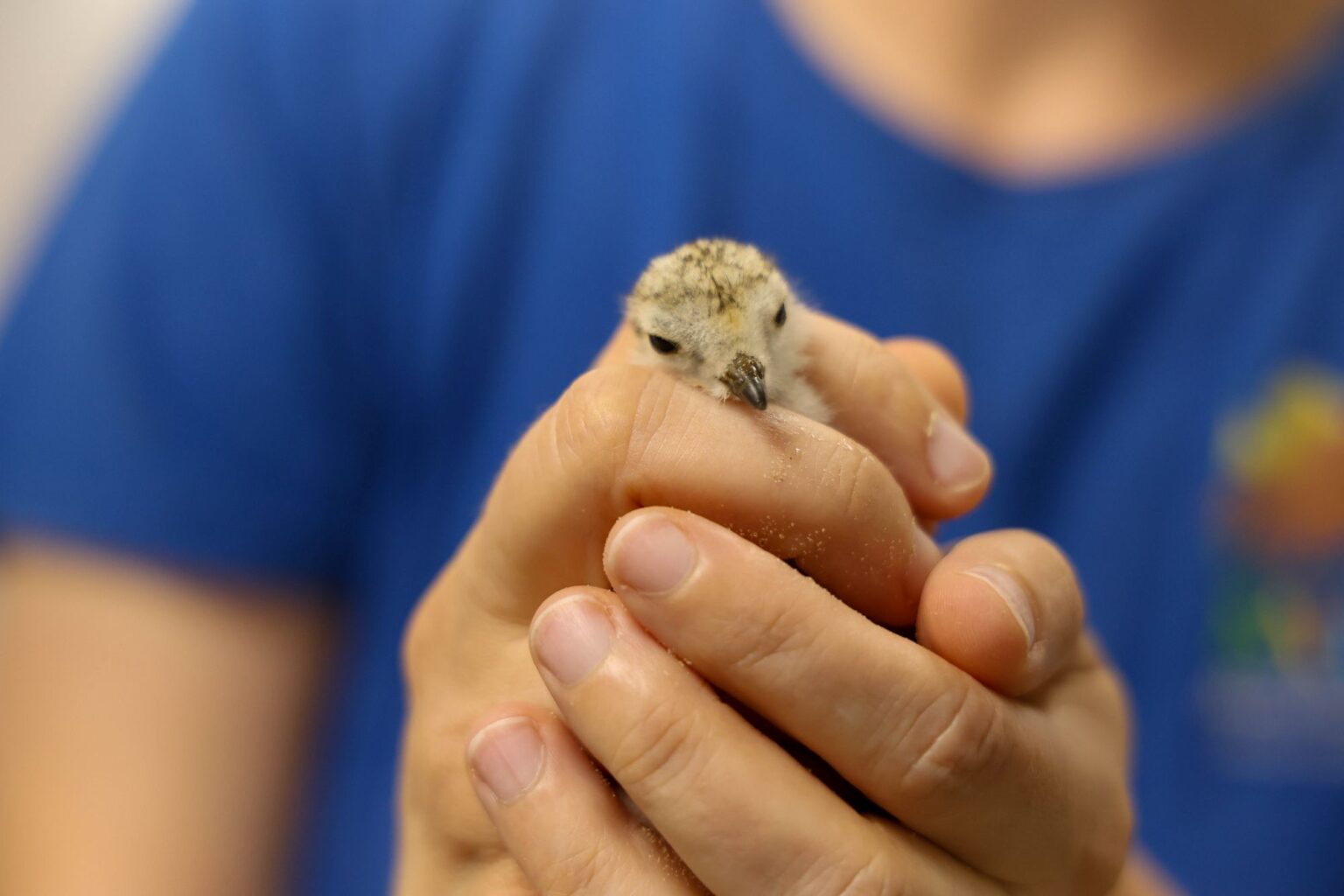
Looking to the great outdoors, we also celebrate the scientists protecting the habitat of piping plovers along the shores of Michigan’s Great Lakes. The (incredibly cute) shorebird population faced near-extinction in the 1980s and is now legally protected. Sarah Foote, an animal program manager at Potter Park Zoo in Lansing, has visited the U-M Biological Station for 15 summers as part of a team effort to rejuvenate the Great Lakes species.
“It’s great to be part of a conservation story that’s a Michigan conservation story,” Foote tells Michigan News’ Greta Guest. “I am just helping these birds that would’ve never made it in the wild. This is a very special species.”
Who knew a little bird could provide sanctuary at a time when those of us who are human could really use it.
A research safety net
And despite federal cuts to research spending, U-M continues to forge ahead, creating the Michigan Research Launchpad. The program will connect faculty to a wide range of programs and systems dedicated to furthering the impact of U-M’s research efforts and supporting innovative, high-quality grant proposals.
“The Michigan Research Launchpad will offer the University a crucial competitive edge,” Arthur Lupia, vice president for research and innovation tells the University Record. “Our researchers are creative, capable, and committed to tackling society’s greatest challenges. The Launchpad is the place for the U-M community to not only learn about new and coming research opportunities but to improve their capacity for national and global leadership in these vital areas.”
(Lead image: Piping plover being cared for at the incubation center. Image credit: Jeremy Marble, University of Michigan News.)