U-M holds open house on high-performance computational facility
The University of Michigan hosted an open house Sept. 9 for community members to learn more about a proposed high-performance computational facility that will bring some of the nation’s top researchers to Michigan to tackle the world’s most pressing challenges.
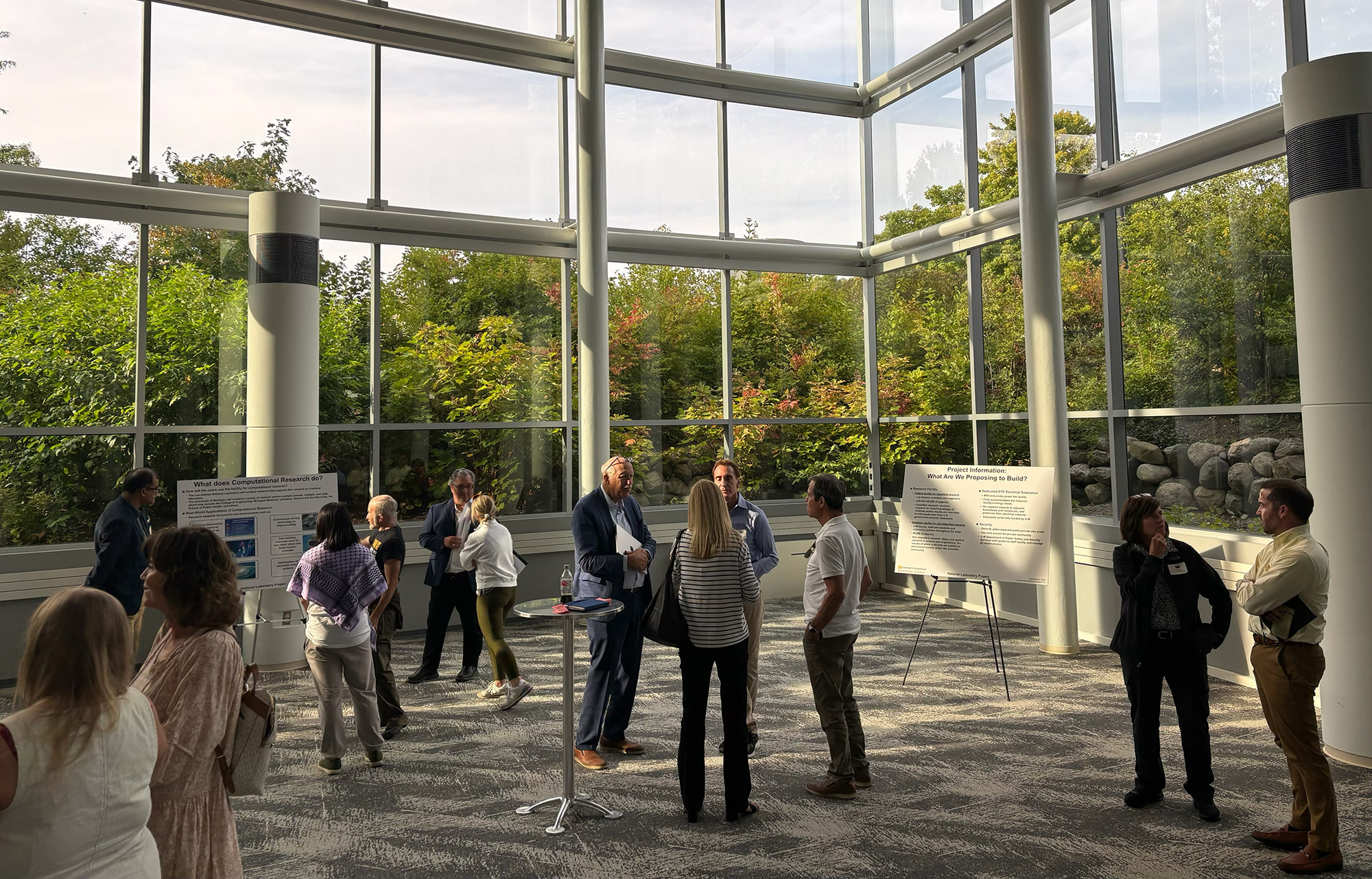
An estimated 70 area residents and campus community members attended to ask questions and learn more about the project, a partnership between U-M and the Los Alamos National Laboratory that will enable cutting-edge research to enhance national security, public health and clean energy while creating hundreds of high-paying jobs in Washtenaw County.
“We would like to thank everyone who engaged in constructive dialogue and gave us a good perspective on community interests that will help the university as we move forward with this proposal,” said Chris Kolb, vice president for government relations. “This demonstrates that the local community is eager to learn more about how this project will come to life and the long-term benefits it will bring to the region.”
High-performance computational facilities use high-speed networks of thousands of supercharged computers that can quickly solve complex problems and drive breakthroughs in science, medicine and energy.
“High performance computing enables a wide range of scientific and engineering discoveries,” said Steven Ceccio, the Vincent T. and Gloria M Gorguze Professor of Engineering, and professor of mechanical engineering and of naval architecture and marine engineering in the College of Engineering who has been involved in this project since its inception.
“This project could accelerate the discovery of new drugs and treatments for disease. It could also help us create more sustainable building materials or better modeling of the weather so we can more accurately predict hurricanes and keep communities safer in the future.”
At the open house, held on North Campus, U-M faculty and administrators provided information and answered questions about the planning process and careful review of two potential sites, which include a parcel of land on Textile Road in Ypsilanti Township and the American Center for Mobility, at the Willow Run manufacturing complex.
The university is thoroughly investigating and analyzing both locations to ensure that the site selected meets the infrastructure needs of a high-performance computation center while also aligning with environmental best practices.
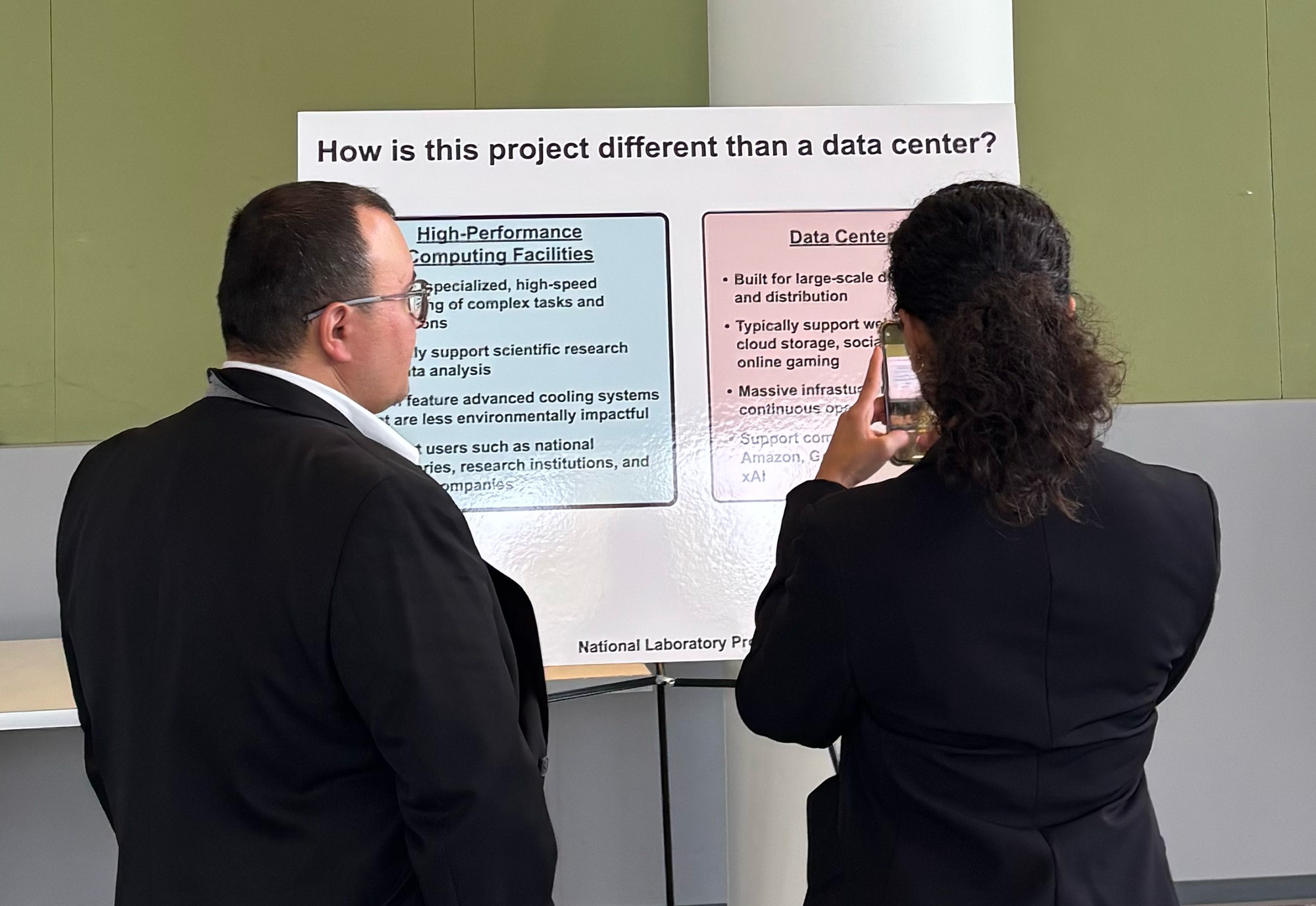
The open house was an opportunity to show that large-scale research infrastructure can be designed and operated in alignment with a sustainable future.
The project is being designed to meet the LEED Silver certification, the U.S. Green Building Council’s intermediate level of accreditation, at the minimum, with the LEED Gold standard as a stretch goal.
The facility’s rooftops are being designed to accommodate solar panels, and the buildings will be fully electric. Cooling water will come from municipal sources. The Michigan Department of Energy, Great Lakes and Environment will review and permit the stormwater and wetlands management plans. The facility will not draw or release any water into the Huron River. The university intends to maximize conservation and efficiency.
The university has secured an agreement with DTE to provide power and will incur the costs of building a new substation. Eventually, roof-top solar panels will also provide a portion of the power necessary to run the facility.
Construction on the $1.25 billion initiative, which was endorsed by the Michigan House and Senate Appropriations subcommittees, is expected to begin in 2027 with the facility fully operational in 2031. When completed, the facility will join 17 Department of Energy National Laboratories that make up the nation’s research and innovation ecosystem that provides information that is critical for U.S. foreign policy, domestic energy needs, and supports local and national economies.