AIIM summit unites leadership to chart university’s AI future
The AI Institutes at Michigan recently brought together academic leadership from across all three campuses for a summit designed to shape U-M’s direction in artificial intelligence research, collaboration and policy.
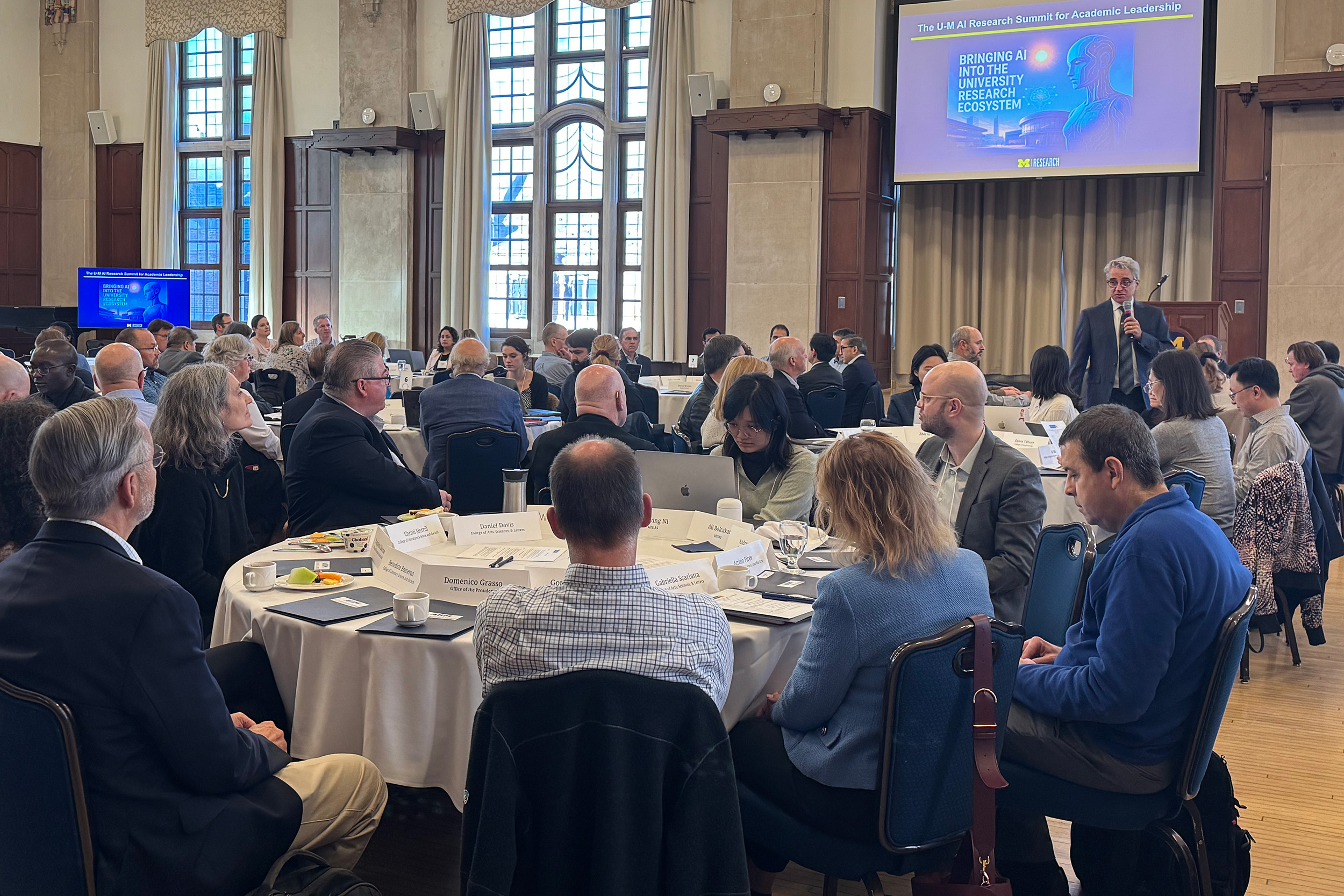
The AI Research Summit for Academic Leadership, sponsored by AIIM and the Office of the Vice President for Research, in coordination with the Office of the Provost, provided academic leaders a platform to discuss the challenges, possibilities and collaborative potential that AI presents.
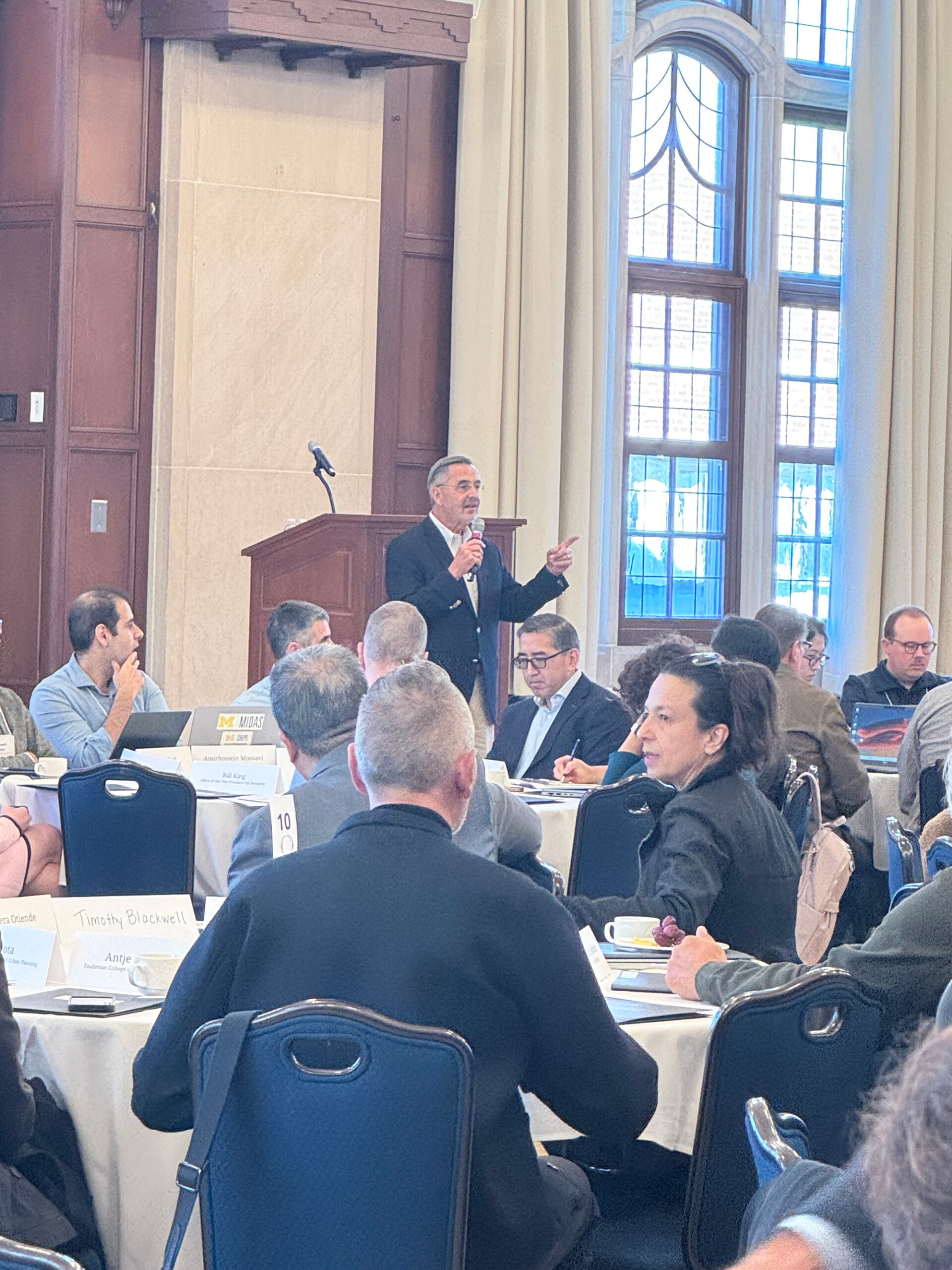
President Domenico Grasso opened the summit — AIIM’s first since its launch in March — by underscoring the significance of advanced technology to U-M’s mission and encouraging academic leaders to maintain the university’s role at the forefront of innovation.
The summit’s agenda paired “lightning inspiration” talks from faculty in fields spanning comparative literature, emergency medicine, law and music with focused table discussions. These sessions challenged departments to articulate their AI vision for the next five years, identify challenges and develop strategies for collaborative, responsible AI integration.
MORE INFORMATION
“Our strength comes from the depth of expertise at U-M,” said Brad Orr, associate vice president for research, natural sciences and engineering, who is leading the initiative. “AI holds tremendous potential to accelerate our progress in areas like healthcare, manufacturing, national security and advanced computing. Our goal is to provide faculty with the tools, infrastructure and partnerships they need to turn ideas into impact both for U-M and for society.”
Key takeaways from the summit highlight the need for a unified approach to responsible AI research at U-M, with investment in computing resources, faculty development and governance. To address these gaps, departments plan to focus on targeted seed funding, pilot programs and training initiatives over the coming year to enhance technical skills and promote collaboration across disciplines. Through these efforts, U-M aims to make AI a core driver of research innovation over the next five years.
AIIM, which was launched to advance AI research and collaboration at U-M, supports Look to Michigan, U-M’s strategic vision for driving innovation and societal impact. Look to Michigan expanded this year under Grasso’s leadership to include advanced technology as a fifth core pillar, underscoring U-M’s commitment to responsible technological progress alongside its ongoing priorities of education, health, civic engagement and sustainability.
“U-M’s is well-positioned to take on both the challenges and opportunities that AI brings,” said Arthur Lupia, vice president for research and innovation. “By working together across disciplines and listening to the perspectives from departments across all three campuses, we can ensure that AI advances our research mission and serves the public good.
“This summit is an important step as we plan how U-M will lead with creativity, curiosity and a deep commitment to our values.”