It Happened at Michigan: A Michigan man’s best friend
He was the first dog to live in the President’s House and was known for his daily strolls across U-M’s campus. Leo, a huge, yellow-coated bullmastiff owned by Henry P. Tappan, U-M’s inaugural president, was a well-known presence around town.
“On the campus,” the Michigan Alumnus once wrote, “Leo was king of beasts.”
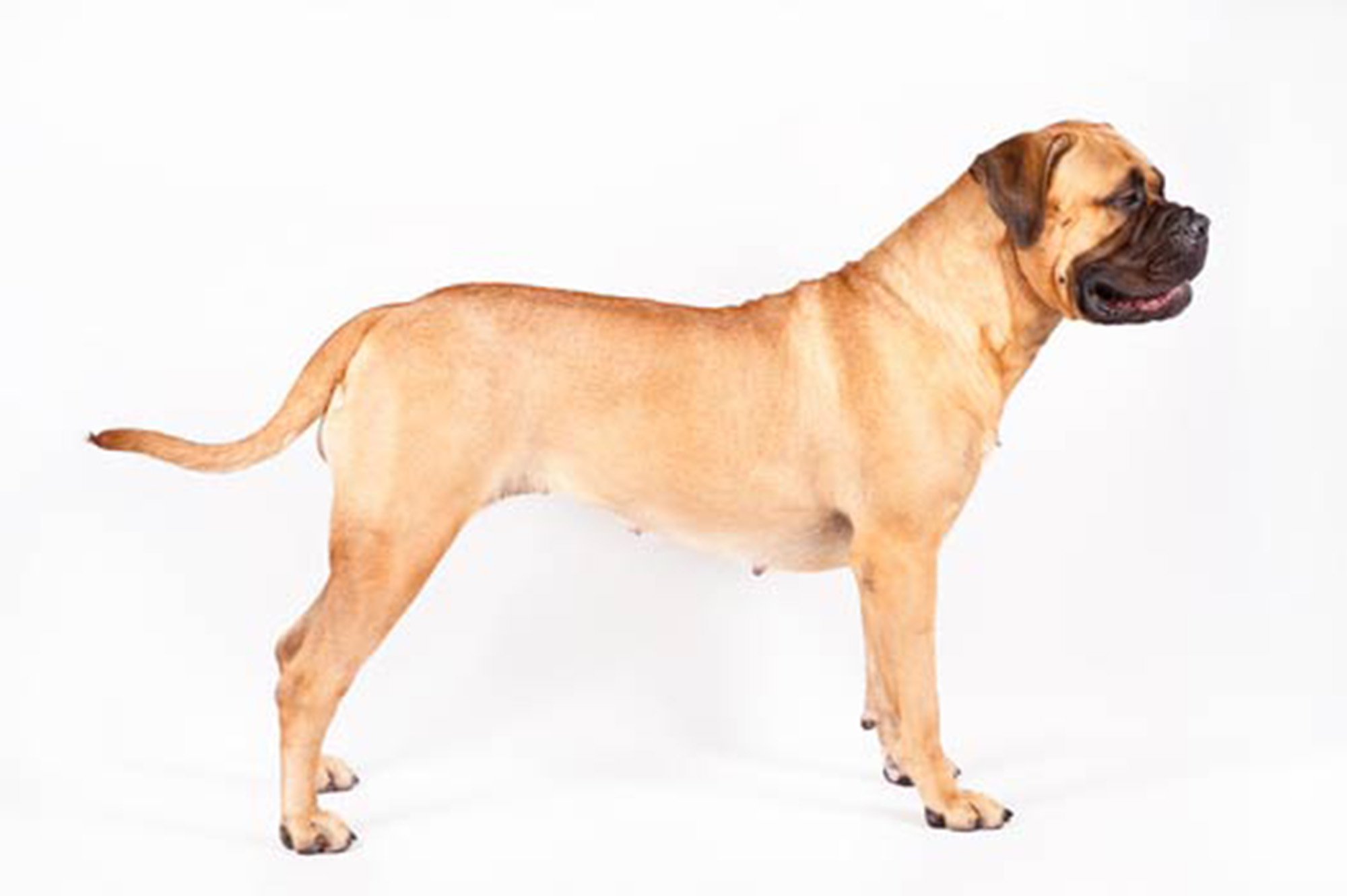
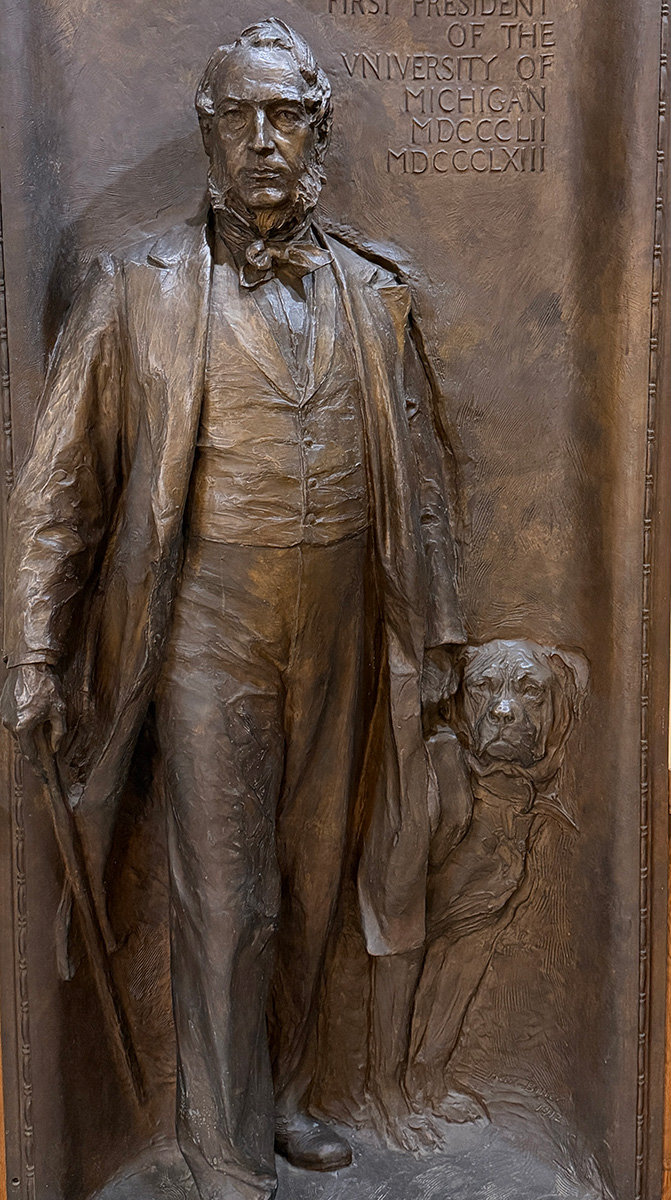
Leo was one of several dogs Tappan owned, though letters and recollections make it clear the mastiff was his favorite. When Tappan left the President’s House, he did so with a walking stick in one hand and Leo at his side.
When the president taught his philosophy course, Leo joined him in the classroom, sleeping on the teaching platform. At mandatory morning chapel services, the big dog was made to stay outside while Tappan went through the daily devotionals with students. But sometimes the separation was too much.
“As a rule, the dogs, Buff [another of Tappan’s dogs] and Leo, were kept out of the chapel service; but occasionally, in their devotion to their master, especially if there was much cheering on the part of the students, they invaded the chapel room,” wrote Tappan’s biographer, Charles M. Perry.
Leo had one nemesis on campus — a four-legged bundle of yap known as Fido.
Fido’s owner was Professor Louis Fasquelle, who taught German and French. Just as Leo accompanied Tappan to class, Fido could often be found in Fasquelle’s classroom. When he wasn’t napping, Fido was barking, and nothing stirred him more than the sight of the giant mastiff. (It didn’t help that Tappan and Fasquelle didn’t care for each other either.)
One day, Fido was in Fasquelle’s room on the second floor of Mason Hall. From Fasquelle’s platform, Fido had a view overlooking what would become known as the Diag. Below him, walking in his usual lordly manner, came Leo. Instinct overtook common sense, and Fido flung himself out the open window, determined to finally crush his archenemy.
“Fido sailing out into midair, suspended between earth and heaven, saw his mistake, his wrath changed to fright, and he commenced ti-yi-ing for dear life. His tail would certainly have been between his legs had he known where they were,” said alumnus Roswell B. Taylor.
“The proud Leo stood for an instant rooted for a fight, but as Fido came nearer, both courage and philosophy failed him, and wheeling, with a complementary trail of ti-yi’s, he made a brown streak for the Tappan domicile.”
Fido was not physically hurt, but Leo’s spirit was nicked. After that day, a bird swooping overhead would cause him to cower. And he avoided parading past the east side of Mason Hall.
Leo died in the summer of 1863, and Tappan buried his beloved friend in the garden of the President’s House. It was a terrible time in general. The Civil War was raging, and Tappan’s career at the university was over, crushed by a Board of Regents that had lost patience with what they saw as his embracing of German universities, a model of higher education he tried to implement at Michigan.
In the months that followed his firing, Tappan said he felt the spirit of Leo. He “often comes up before me when I sit alone and he seems to lay his head on my knee again and to look up into my face with his gentle knowing eyes, and I feel as one feels when he recalls the tender memory of a departed friend.”
Toward the end of his life, long after he’d left Ann Arbor, Tappan wrote a letter to Henry Simmons Frieze, a Latin professor then serving as U-M’s acting president. Frieze’s wife, Anna, had mailed Tappan dried leaves from the ground over Leo’s grave at the President’s House.
“I feel much touched by the tender care of Mrs. Frieze in planting foliage and flowers over my old dog’s grave,” Tappan wrote. “I retain his photograph and I never look at it without experiencing in my heart a gush of tenderness that strengthens my faith that ‘love is indestructible’ whether to man or beast.”
— This is an abbreviated version of a story by Kim Clarke, executive speechwriter for the president, for U-M’s Heritage Project. To read the full article, visit the Heritage Project.