Professor creates passive cooling solutions for low-income communities
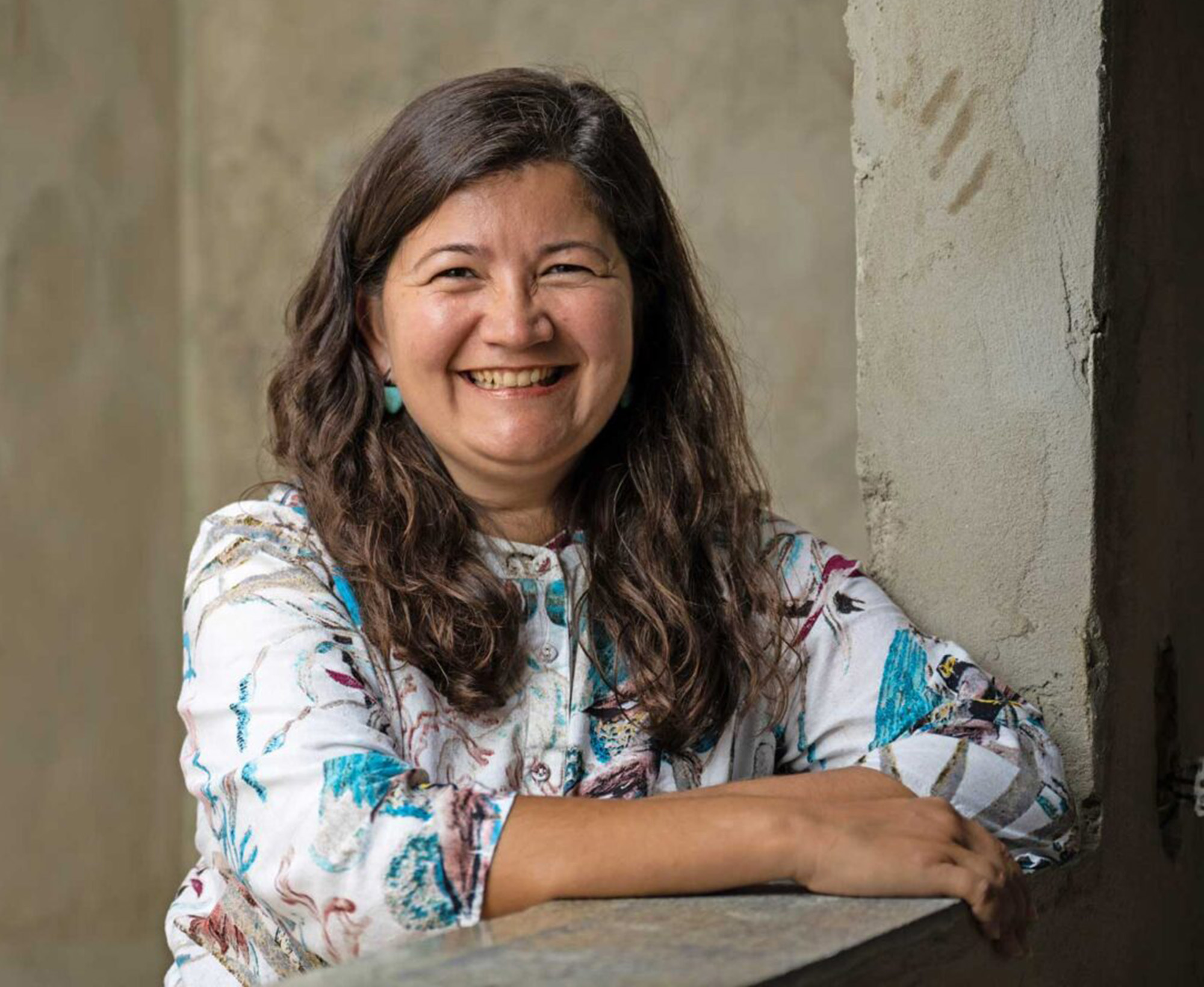
Two years ago, Ana Paula Pimentel Walker, associate professor of urban and regional planning, began knocking on the doors of crudely built shacks in the favelas, or slums, of São Paulo, Brazil, and Bucaramanga, Colombia.
Most of the homes she visited lacked electricity, running water, sanitation, insulation, and heating or cooling systems. In interviews with the residents, Pimentel Walker learned about their housing issues and heat-related health concerns.
At each dwelling, Pimentel Walker measured the size of the living space and the roof height. Then she identified the scrap materials ― such as metal, plywood, and cloth ― and local techniques used to build, repair, and expand the structure. She also recorded the ambient temperature inside and outside the house.
It was hot, hazardous fieldwork. But completing this technography of construction practices marked an important first step in Pimentel Walker’s multidisciplinary research project to co-develop passive cooling solutions for self-built housing in low-income communities.
“People living in informal and precarious settlements in sprawling cities or in resource-deprived rural villages of the Global South are adversely affected by increasing extreme weather and temperatures,” Pimentel Walker said. “Indoor heat can exacerbate heat stress and heat-related illnesses. Houses can become heat traps.”
Without timely interventions, more people in self-built housing will experience the ill health effects of extreme heat in coming years, she said.
The heat is on
Increasingly, heat and health have garnered global attention.
The World Meteorological Organization reported in November 2024 that the previous year was on track to be the warmest year — and 2015 to 2024 the warmest decade — on record. At COP29 in Azerbaijan, the WMO State of the Climate 2024 Update issued a Red Alert at the “sheer pace of climate change in a single generation.”
U.N. Secretary-General António Guterres declared: “Climate catastrophe is hammering health, widening inequalities, harming sustainable development, and rocking the foundations of peace. The vulnerable are hardest hit.”
The COP29 Special Report on Climate Change and Health warned that “climate change poses a fundamental threat to human health and survival” and urged governments, policy-makers, and other sectors to place health at the heart of climate solutions.
Modeling passive cooling
Pimentel Walker is putting that mandate into action through her passive cooling research project in Brazil and Colombia.
Funding from the Office of the Vice President for Research’s Bold Challenges Boost program, Taubman College’s Pressing Matters grant program, and the U-M Center for Global Health Equity, among others, enabled her to engage global partners and put boots on the ground in São Paulo and Bucaramanga.
Pimentel Walker collaborated with Lars Junghans, associate professor of architecture in the Taubman College, to analyze temperature data and utilize a thermal comfort model that evaluated 22 different passive cooling intervention candidates. Passive cooling uses design elements and materials to control the temperature and improve the thermal comfort inside a home during hot weather with little or no energy consumption.
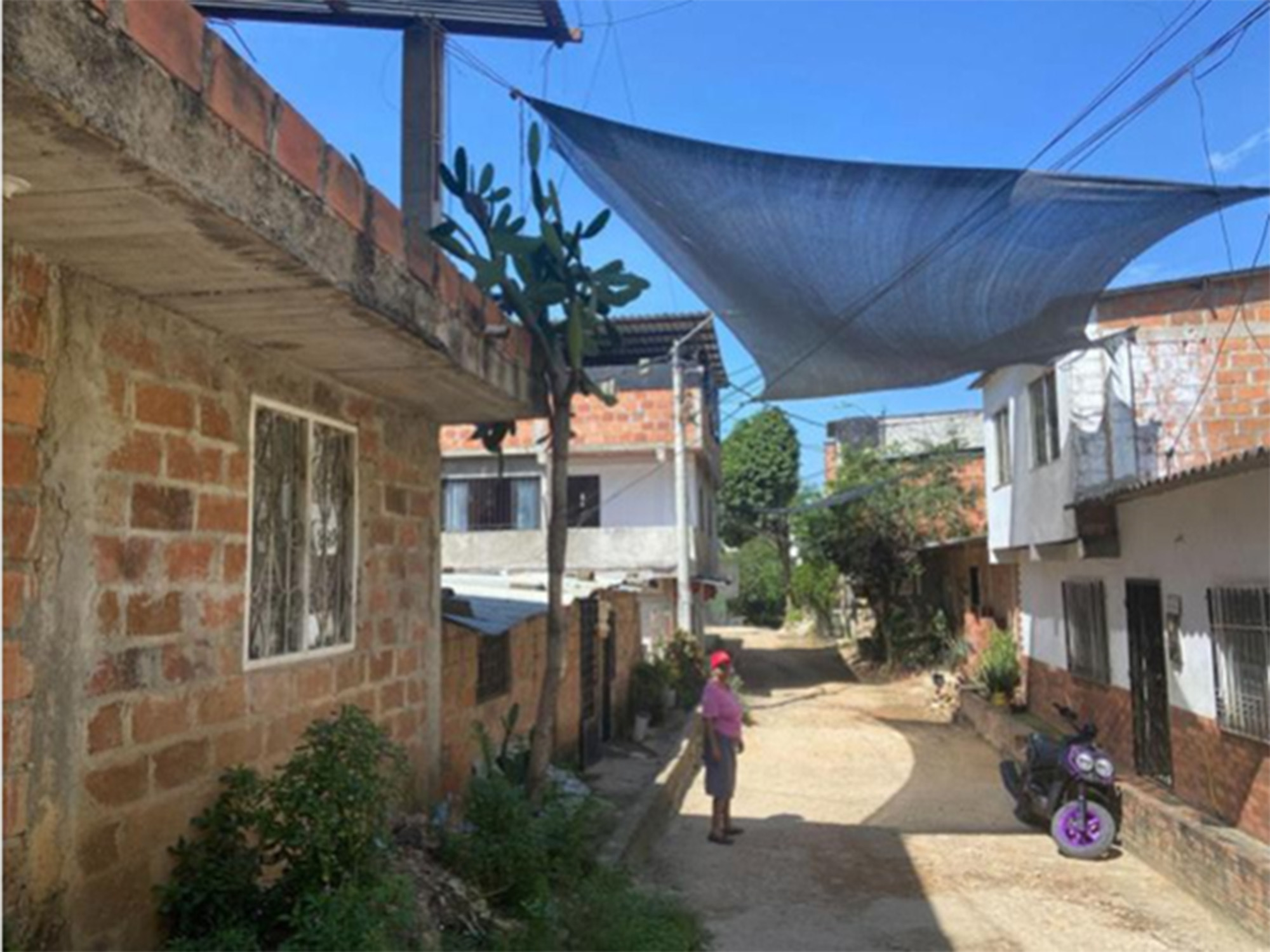
Some options they evaluated included coating the walls and roofs of shacks with white reflective paint, covering the roofs with grass or mud, adding insulation and filling gaps, creating a cavity wall, installing a second roof over an existing one, and creating a roof overhang to provide sun and rain protection.
“Our modeling showed that painting a corrugated-metal roof with white reflective paint would lower the temperature inside a São Paulo shack in January by 9 degrees Fahrenheit at 3 p.m.,” Pimentel Walker said.
NOMINATE A SPOTLIGHT
- The weekly Spotlight features faculty and staff members at the university. To nominate a candidate, email the Record staff at urecord@umich.edu.
Other modeling results, particularly the use of multiple cooling methods in a dwelling, were equally promising. Encouraged by these findings, Pimentel Walker’s research team began co-designing implementable interventions to make them affordable, culturally suitable, and appealing.
In June and July 2024, Pimentel Walker returned to São Paulo and Bucaramanga, where she held daylong workshops with the favela residents, dwellers’ associations and other partners to gather feedback.
“I shared information on why they may face higher mortality rates than other communities due in part to heat exposure and how increasing the thermal comfort inside their homes has positive health outcomes,” she said.
Pimentel Walker also passed out surveys and asked residents to choose their favorite passive cooling options. Then they discussed why certain interventions would work better in practice than others.
Taking the next steps
Pimentel Walker shared the results of her team’s passive cooling research with her global partners in Brazil and Colombia, as well as with the international community during her appearance at the Group of 20 Social Summit in Rio de Janeiro in November 2024.
Today, she is working with government officials, nongovernmental organizations, and private industry to implement changes in policies and practices that will improve the housing conditions and reduce the burden of heat stress in informal settlements.
“Eventually, we would like to see international organizations and governments include the point of view of self-built and precarious homes in their heat-adaptation plans and give these settlements top priority since the residents are the most exposed to extreme heat and have fewer resources to combat dangerous heat waves,” Pimentel Walker said.
MORE INFO
This fall, Pimentel Walker and Erinn Cameron, a research fellow at the Center for Global Health and Equity, will also begin studying the health impacts of extreme heat. In collaboration with other public health partners, they will validate health surveys with populations in informal and precarious settlements, enabling future research to examine how heat impacts a range of issues, including sleep quality, respiratory health, and mental health.
“Community partners in Brazil have told me, for example, that their kids struggled to study for tests and have their homework done during the November 2024 heat wave in São Paulo,” Pimentel Walker said.
How Pimentel Walker’s findings translate to U.S. communities
While her research has primarily focused on settlements in Brazil and Colombia, some of the insights Pimentel Walker and her team have gained also hold lessons for housing challenges closer to home.
Techniques like painting roofs white or adding simple secondary ceilings require minimal resources and could be easily adapted to many communities, including places in the Southwest United States, where people build their own homes or live in aging homes without reliable air conditioning.
In Michigan, weather extremes tilt more toward cold winters than sweltering summers. Pimentel Walker pointed to the work of her colleague, Carina Gronlund, a research associate professor in the School of Public Health and in the Institute for Social Research, Survey Research Center, who has collaborated with organizations providing weatherization and energy efficiency services in Southeast Michigan. Her efforts have focused on both maintaining warmth during cold nights and improving summer comfort.
“Thermal comfort involves shielding from heat, but it can also mean protecting against cold,” Pimentel Walker said, noting that her team has modeled interventions to ensure the passive cooling measures they’re recommending don’t also lower indoor temperatures in the winter months, especially for the São Paulo climate.
Yet even in Michigan, climate change is intensifying summer heat waves, and households that lack air conditioning can benefit from some of the simple passive cooling strategies Pimentel Walker’s team recommends, like encouraging cross-ventilation or adding insulation. The key, she said, is educating the residents and helping communities source affordable materials they need to implement these passive cooling strategies.
To aid this effort, Pimentel Walker’s team created instructional pamphlets to hand out to residents, and they’ve hosted informational webinars, which are still accessible online.
The biggest challenge in Michigan, Pimentel Walker said, is grappling with zoning laws.
“Zoning laws and building codes do not always allow residents to make passive cooling modifications, and these people cannot afford to pay fines for violations,” she said, adding that’s one reason she encourages painting a roof white because it can be done almost anywhere without violating codes.
Pimentel Walker said it’s important to note, though, that standard white paint does not yield the same results as reflective thermal paint.
“These specialized coatings contain particles that enhance solar reflectance and thermal emittance, making them significantly more effective than regular white paint in both reflecting sunlight and dispersing heat into the atmosphere,” she said. “There are also various types of cool coating, with some designed specifically for concrete, while others work better on metal roofs, ceramic tiles, and different surfaces.”
Finally, Pimentel Walker said community engagement is critical in adaptation. This includes partnering with neighborhood associations and local nonprofit organizations to help organize collective strategies, such as neighborhood paint-buying initiatives, to offset the cost of implementing passive cooling tactics.
It also means creating local cooling centers or shaded spaces to give residents a safe space when temperatures soar.
“One thing we are trying to push forward is the idea of public spots where children can go to do their homework or residents can cool off when it’s simply too hot to be home,” she said.
—Genevieve Monsma of The University Record contributed to this article