U-M professor emeritus gives voice to forgotten feminists
“Sex Radical,” a new documentary-drama from U-M professor emeritus Andy Kirshner, will premiere Oct. 30 at the Michigan Theater. The film resurrects the story of Ida Craddock, a late-Victorian feminist and sex educator who defied censorship laws at great personal cost.
For Kirshner, a composer, filmmaker and longtime teacher at U-M, “Sex Radical” is not only his latest creative endeavor but also a timely exploration of free expression, women’s rights, and the cyclical nature of America’s “culture wars.”

From music to multimedia storytelling
Kirshner taught for more than two decades at U-M, in both the Penny W. Stamps School of Art & Design and the School of Music, Theatre & Dance. His classes included film scoring, sound design, video art, and multimedia performance.
He is also a saxophonist by training with degrees from Tufts, the New England Conservatory, and U-M — and he has composed for jazz orchestras and experimental opera.
During his time in Ann Arbor, Kirshner nurtured his curiosity with a variety of multimedia projects, including “Sex Radical,” “Liberty’s Secret,” a girl-meets-girl movie-musical and satire of American politics, and “Manufacturing Hate: 10 Questions for Henry Ford,” a probing look at Ford’s antisemitism.
“I’ve always been interested in stories that speak to social and political issues,” he said.
An introduction to Ida Craddock
The seed for “Sex Radical” was planted in 2009, when Kirshner heard historian Leigh Eric Schmidt discussing his book “Heaven’s Bride,” about Ida Craddock.
Craddock’s name was new to Kirshner, but her story captured his attention. Born in 1857 in Philadelphia, Craddock was smart and fearless.
She passed all the entrance exams for the University of Pennsylvania, only to be rejected by trustees because she was a woman.
NOMINATE A SPOTLIGHT
- The weekly Spotlight features faculty and staff members at the university. To nominate a candidate, email the Record staff at urecord@umich.edu.
Denied an academic career, she turned her formidable energy to religious study, sex education, and writing.
Craddock also claimed a “spirit husband,” and kept a diary of psychic experiences that mixed mystical encounters with candid accounts of sexuality. While that may seem strange by today’s standards, believing in communication with spirits was not unusual in the late 19th century.
In addition to being drawn to Craddock’s compelling story, Kirshner was intrigued by the parallels between her era and current times. Craddock fought against Anthony Comstock, a U.S. postal inspector who used the 1873 Comstock Act to criminalize the mailing of material about sex, contraception or abortion.
“He believed he was on a holy mission to protect children from sin,” Kirshner said. “But in the process, he destroyed many lives.”
That echoes present-day debates over reproductive rights and censorship, Kirshner said, especially as pro-life activists have cited Comstock’s Act in attempts to ban abortion medication sent in the mail.
Telling the story on film
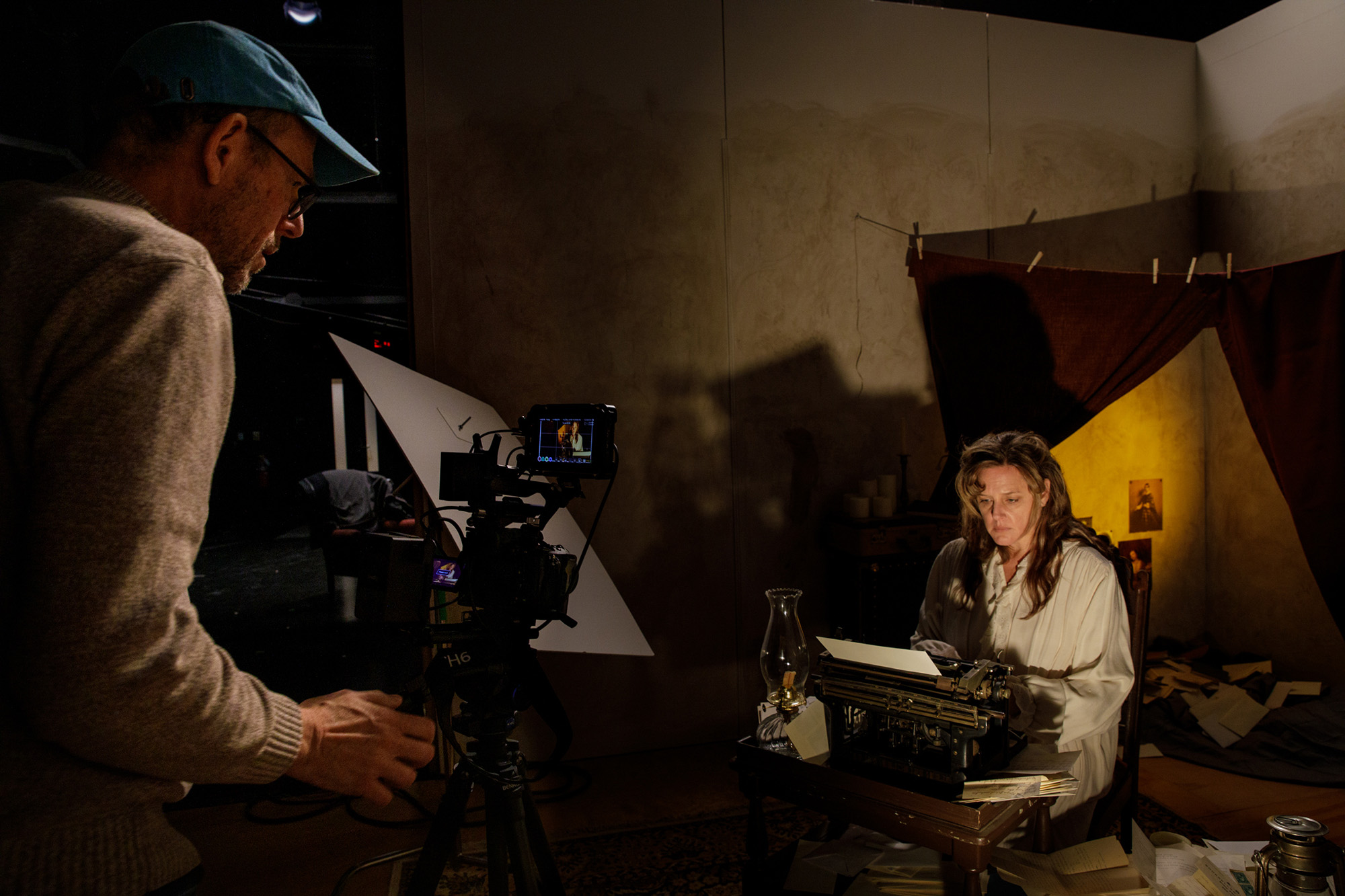
Initially, Kirshner imagined telling Craddock’s story as an opera or musical. As a composer, he was fascinated by the “voices” in her head and how they might be represented musically. But after several drafts that didn’t feel right, he returned to the project with a documentary-drama approach.
To build the script, he immersed himself in archives at Southern Illinois University, where Craddock’s surviving papers are stored. He also drew heavily on works from U-M’s Joseph A. Labadie Collection, one of the largest repositories of radical literature, and the William L. Clements Library.
“Often a documentary is third-person, but here we had lots of Ida’s own words,” Kirshner said. “That allowed me to let her speak directly, in a very intimate way.”
Actor Emily Sutton-Smith, who plays Craddock in the film, recorded some text from Craddock’s pamphlets, diary entries and essays, which Kirshner then set to music.
“I wrote the film’s score around her words,” he said. “The rhythm of her speech becomes part of the music.”
Emma Goldman, a feminist who once called Craddock “one of the bravest champions of women’s emancipation,” acts as the documentary’s narrator. Portrayed by former U-M theater professor Priscilla Lindsay, Goldman situates Craddock’s story within the larger struggle for women’s rights and free speech. Gillian Eaton, another former U-M theater faculty member, plays Ida Craddock’s mother, who was embarrassed by her daughter’s “sexology teaching” and sought to have her institutionalized.
Michigan roots and resources
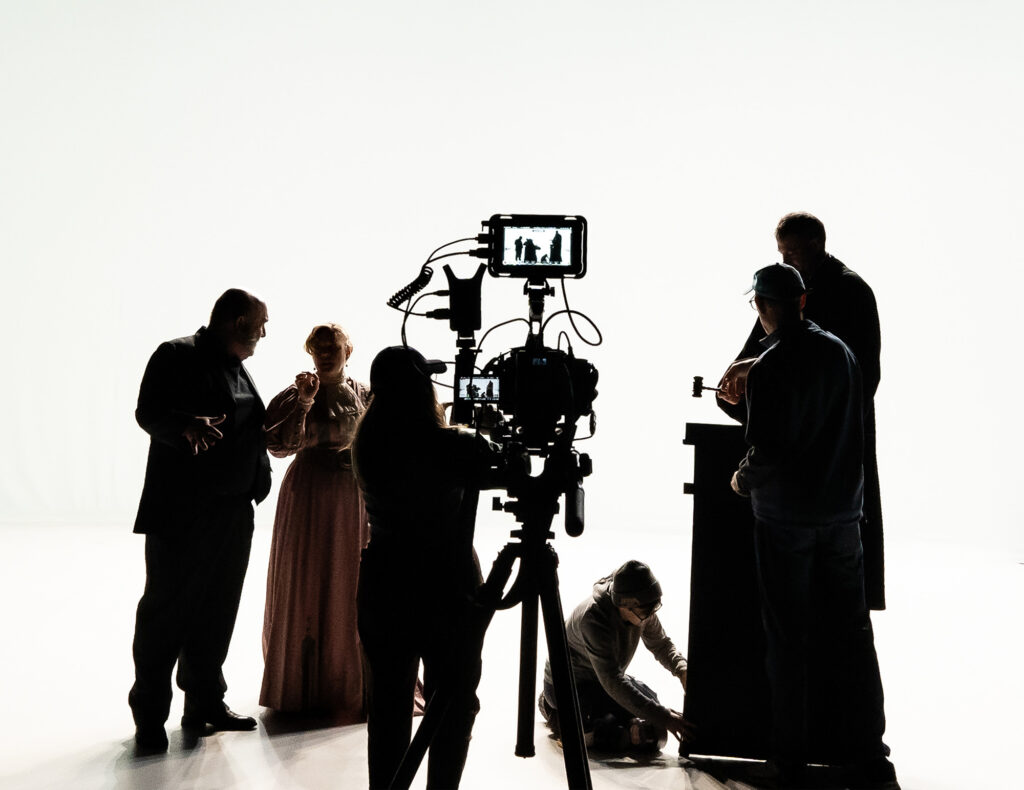
Though Craddock’s story stretches from Philadelphia courtrooms to a European exile, “Sex Radical” was shot primarily in Ann Arbor at the Duderstadt Center on North Campus. Costumes and props came from U-M’s vast theatrical stock.
In addition to Lindsay and Eaton, the film crew was also a community of U-M talent: production designer Laura Pazuchowski, art director Juliet Hinely, and co-producer Brenna Murphy are all Stamps alums; sound designer David Fienup is a U-M graduate; and costume designers Andie Ziemkowski and Jean Nardone were recent Stamps grads working on their first film.
NOMINATE a spotlight
- The weekly Spotlight features faculty and staff members at the university. To nominate a candidate, email the Record staff at urecord@umich.edu.
Funding came from the Institute for Research on Women and Gender, the Center for the Education of Women , the Stamps School, and SMTD.
For Kirshner, these ties underline how U-M nurtured his creative life for decades and continues to sustain ambitious projects during his emeritus years.
A historical story for today’s times
“Sex Radical” depicts Craddock’s repeated arrests, her commitment to an asylum, and her refusal to stop publishing sex advice for couples. She insisted that women should decide when they bore children, and that they should enjoy sex, two views considered extreme in the 1890s.
Her resistance ultimately cost her life. Faced with a long prison sentence, she took her own life in 1902, but her courage paved the way for later feminists and Free Speech advocates.
How to see “Sex Radical”
- Premieres Thursday, Oct. 30 at Michigan Theater
- Get tickets at marquee-arts.org or watch via streaming, Oct. 31-Nov. 4
Kirshner hopes audiences will appreciate both the historical drama and its modern resonance. “The culture wars of the 19th century were largely about sexuality and gender,” he said. “Those questions are still with us, whether women can control their own bodies, and the relationship between church and state.”
Beyond the screen
To complement the film, Kirshner is also participating in a related exhibition at the Stamps Gallery on South Division Street, which will run through December. As part of the group faculty exhibition, “Untold Stories II,” visitors can see original radical journals, like “Lucifer the Light Bearer,” alongside clips from the movie.
Together, the film and exhibition form what Kirshner calls “a conversation across time” between Craddock and us today.
Studying Craddock, Kirshner said, deepened his sense of how social change often depends on individuals who never live to see its fruits. Goldman also spent much of her adult life in exile, believing her work largely forgotten, until later generations revived her writings in the 1970s.
“That was poignant for me,” Kirshner said. “We inherit freedoms from people who sacrificed without knowing if they made a difference.”