Barriers keeping people with disabilities from workforce
People with disabilities who desire to work should be provided opportunities and avenues to secure meaningful employment, and the largest barriers those people face are not their disability but systems that are designed to exclude them from working.
That was the central message shared by Connie Sung, the Annmarie Hawkins Research Professor in Disability Justice and professor of social work in the School of Social Work, to the Board of Regents at its Nov. 20 meeting.
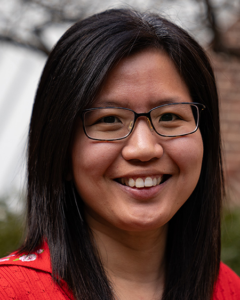
During a special presentation to the board, Sung noted that only about one-third of adults with disabilities are employed, representing about half the rate of people without disabilities.
“The majority of people with disabilities want to work,” Sung said. “They are talented, motivated, and have a lot to offer. There is a significant employment gap all around the world, but here in the U.S., the gap is even more profound.
“This gap is not a reflection of individual ability. This is a reflection of systems that were not built to include them.”
Sung’s focus is on removing systemic barriers that prevent people with disabilities from accessing education, employment and community opportunities. As part of that work, she will partner on a campus-wide disabilities inclusion initiative.
“The goal is not to change people themselves, but to change the systems around them, so that everyone has a chance to thrive,” she said.
Her research team designs, tests and implements research-based employment readiness training programs for both people with disabilities and employers, collaborating with schools, vocational rehabilitation agencies and community organizations.
One example making a difference in Detroit is Project Empower and Employ, which supports students with disabilities, particularly those at risk of justice involvement, in developing workplace readiness. Sung’s team works with several Detroit public schools to embed the employment training program into their curriculum and partners with employers to create internship and employment opportunities.
Another project is having international impact. Inclusive Hub was piloted in Slovakia, and the promising outcomes have led to expansion to nine additional countries in Central Europe. The work was featured by the U.S. Department of State and highlighted at the United Nations General Assembly Science Summit.
Sung said her team’s work is grounded in a key principle of disability rights: “nothing about us, without us.”
“Our research team does not design programs in isolation,” she told the regents. “We co-develop our programs with people with disabilities, their families, educators, employers and community stakeholders throughout the entire process to ensure that their voices are included and our work truly meets the needs of the people it is meant to serve.
“My ultimate career goal is that employment becomes the default expectation for people with disabilities, and that communities, families, and organizations have the tools and confidence to help them thrive.”