It Happened at U-M: Researchers helped create the first flu vaccine
In the early 1940s, the Ann Arbor campus became a leading research site for a vaccine to prevent influenza, a disease that had killed an estimated 50 million people globally during the 1918-19 pandemic.
As war raged overseas, the U.S. Army had begun planning for the possibility that the United States might be drawn into the conflict. Recalling the devastation of the 1918-19 influenza, Army officials worried about the impact of a flu outbreak on young soldiers living in crowded training camps.
So, in 1941, as part of that preparation, the U.S. Army established the Commission on Influenza and asked Thomas Francis Jr., a physician and virologist who’d helped identify influenza B, to direct its research. Francis had just joined the new School of Public Health at the University of Michigan, and much of the commission’s work would take place in his laboratories in Ann Arbor.
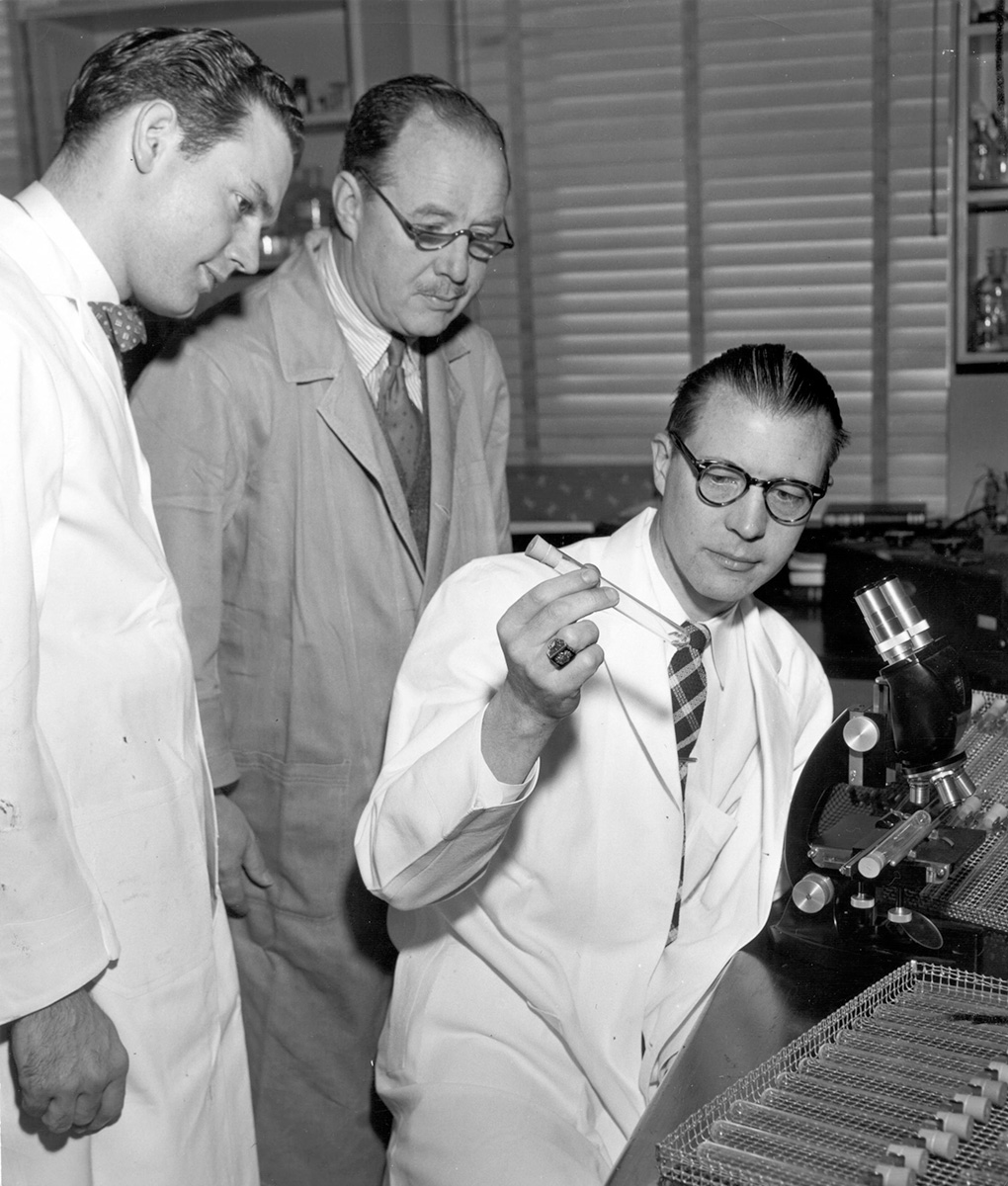
With support from the Army, Francis and his team, which included a young researcher named Jonas Salk, began developing an inactivated, or “killed,” influenza vaccine. The process involved growing the virus in chicken eggs and then chemically inactivating it so that it could no longer cause disease but could still trigger immunity.
From 1942-45, Francis’s group tested the vaccine in large-scale field trials. Early formulations targeted influenza A; later versions included influenza B as well. The results showed that the vaccine could reduce illness and minimize outbreaks in crowded settings.
In 1945, the first influenza vaccine was licensed in the United States, initially for use by the armed forces and later by civilians. Much of the research and testing that supported the vaccine’s approval had been carried out at U-M under Francis’s direction.
The next winter, however, brought a crucial reminder of influenza’s unpredictable nature. During the 1946-47 season, the virus changed enough that the previous year’s vaccine no longer provided immunity against it. The experience demonstrated that influenza viruses continually evolve, and that vaccines would need to be reformulated annually to remain effective.
That realization shaped the modern influenza vaccination program. In the years that followed, the World Health Organization organized a global surveillance network to identify circulating strains and guide annual vaccine composition, a process that continues today.
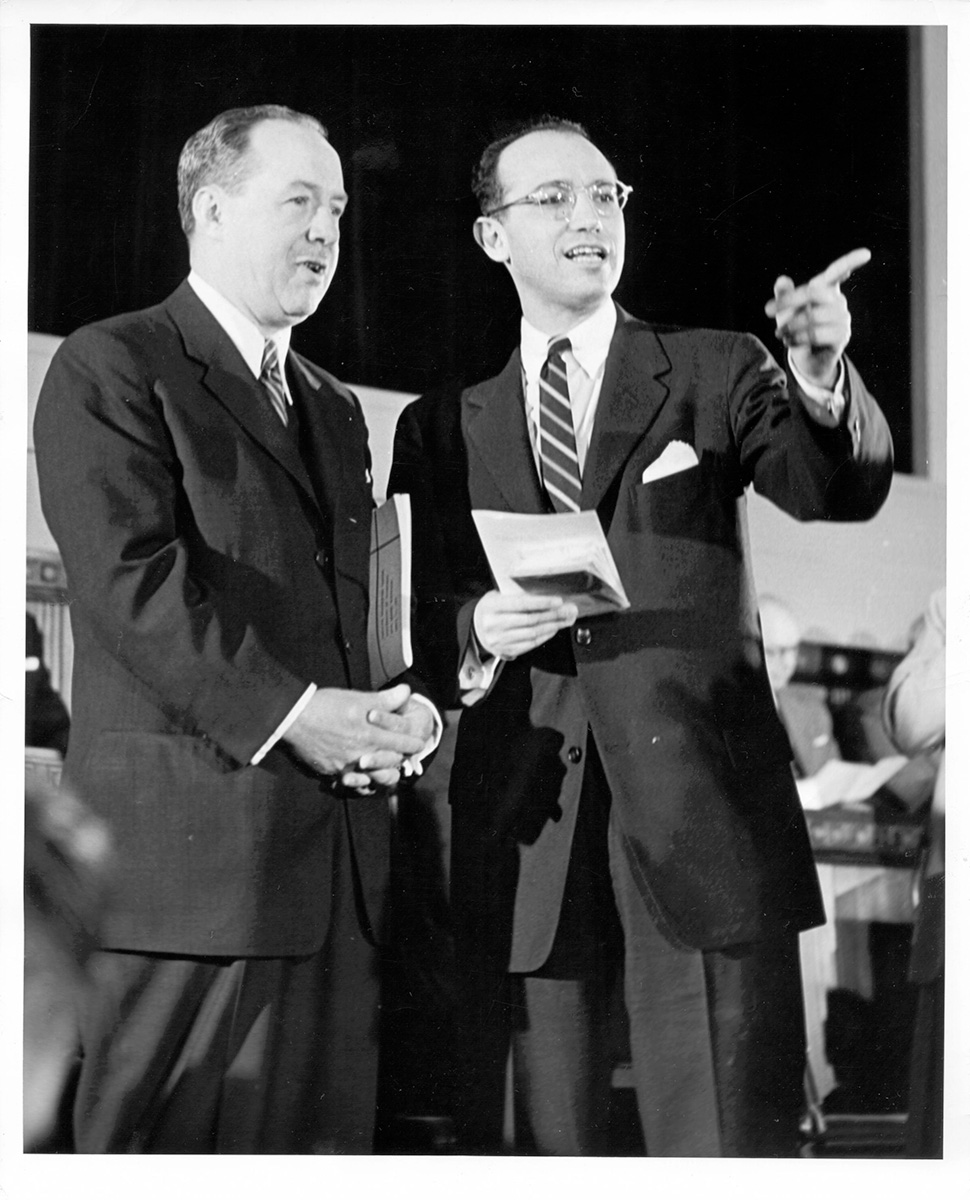
Both Francis and Salk went on to leave lasting marks on medical research. A decade after their work together on influenza, the two reunited for another historic effort: Salk developed a polio vaccine, and Francis, drawing on the rigorous testing methods he had honed at U-M, directed the nationwide field trial that proved its effectiveness.
— By Genevieve Monsma, The University Record