Look to Michigan comes alive during State of the University
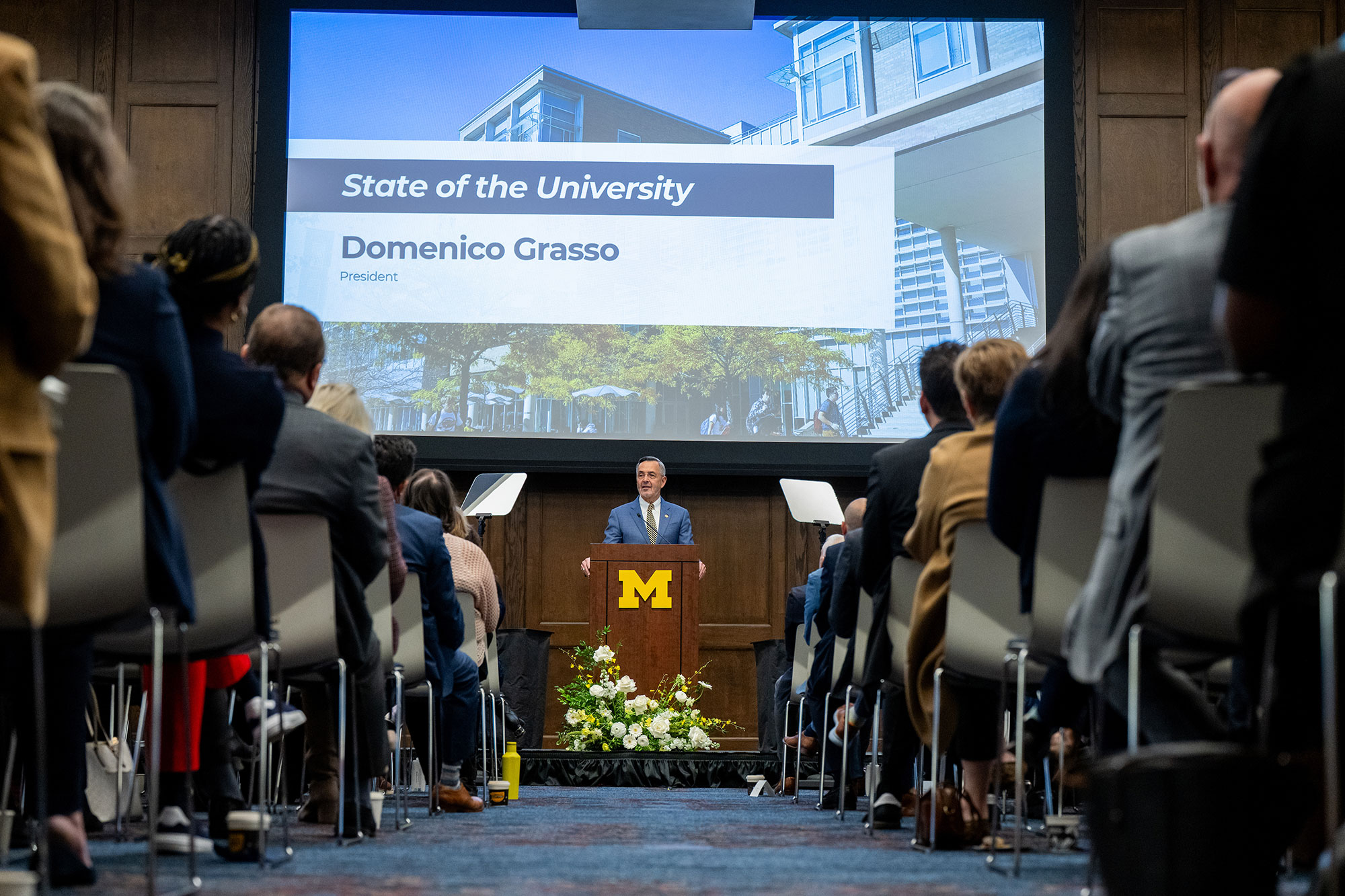
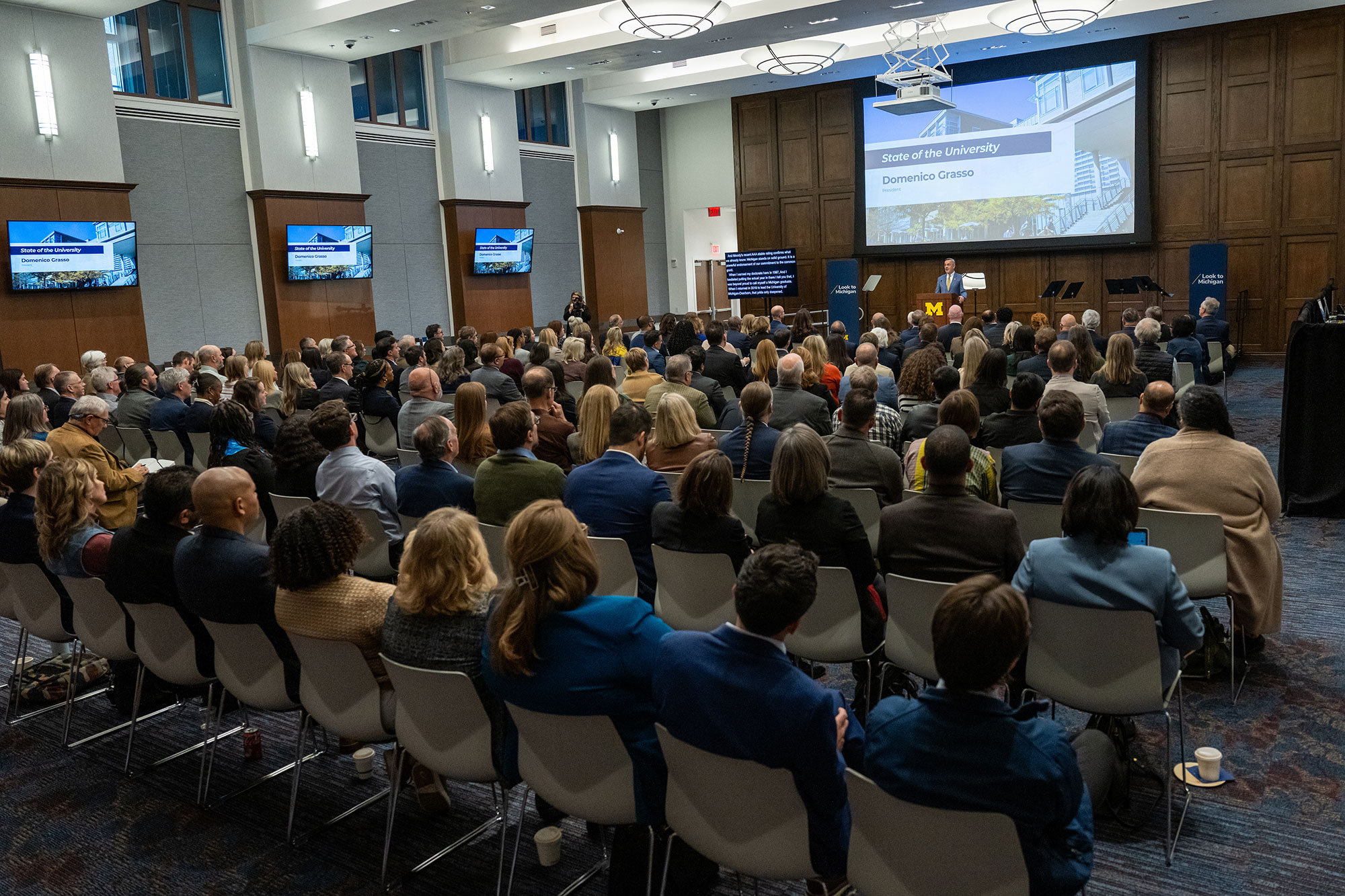
During the State of the University address Nov. 13, several faculty and students illustrated the Look to Michigan vision impact areas and demonstrated how the university is serving the public good on land and sea.
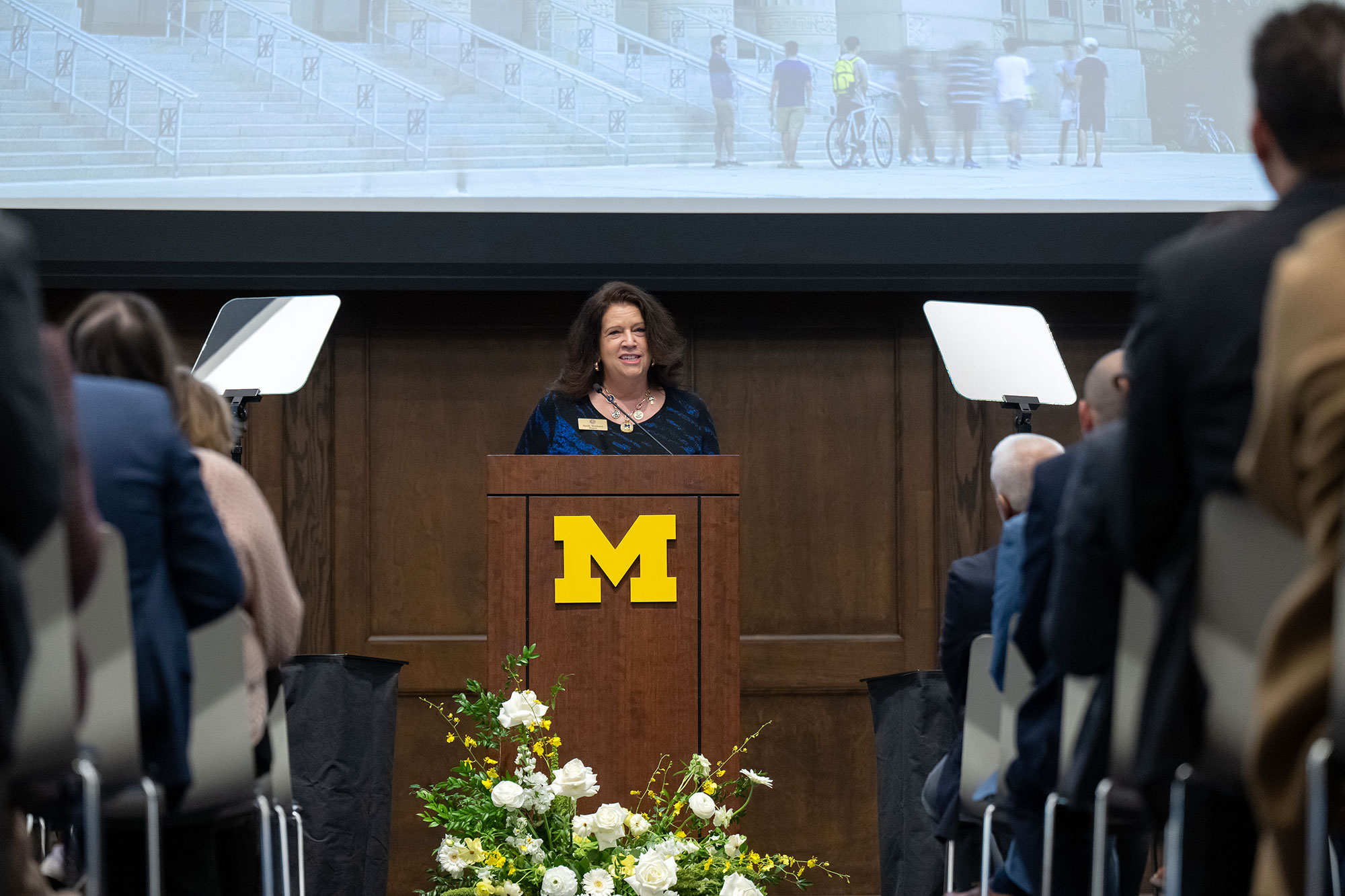
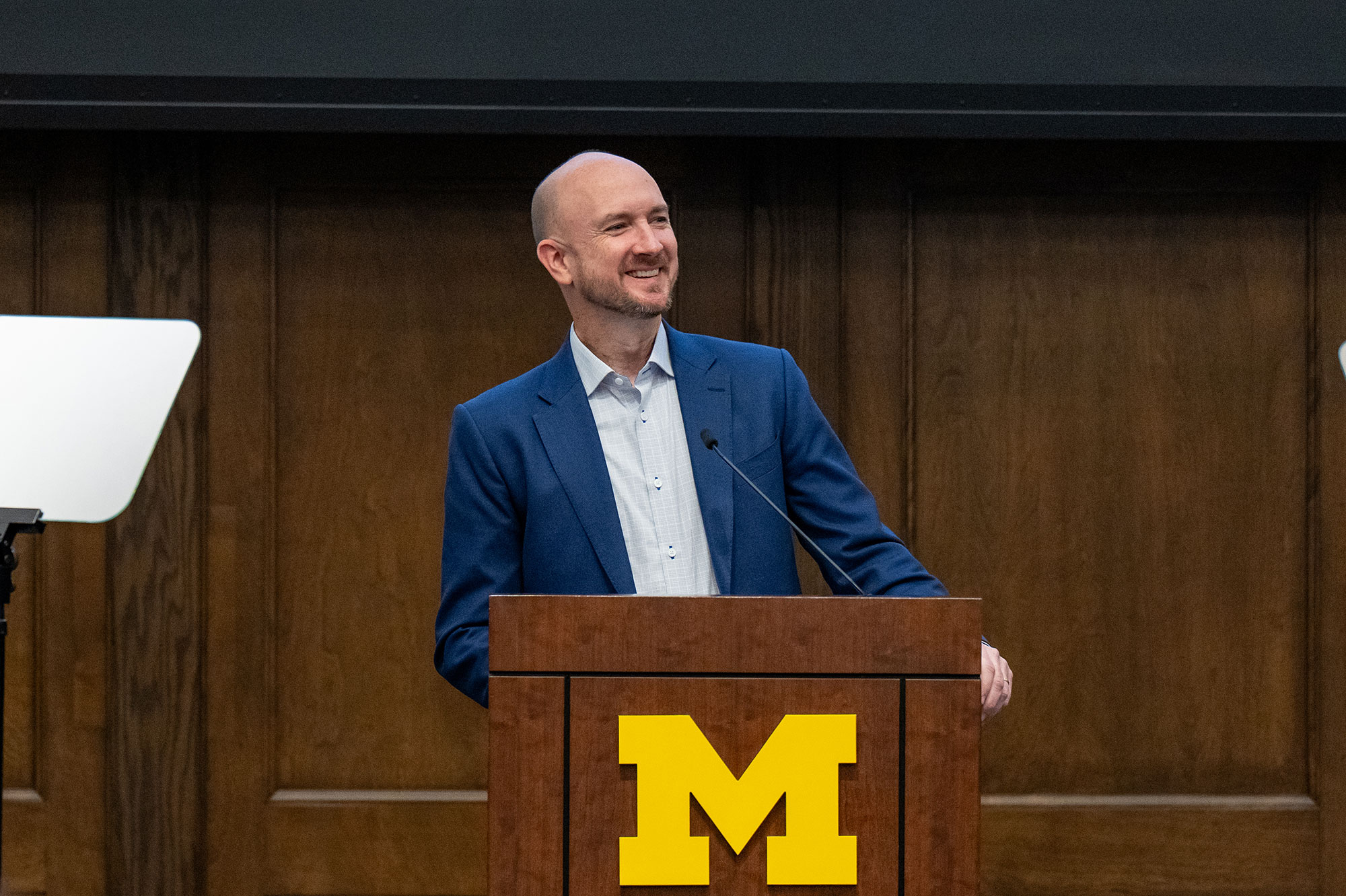
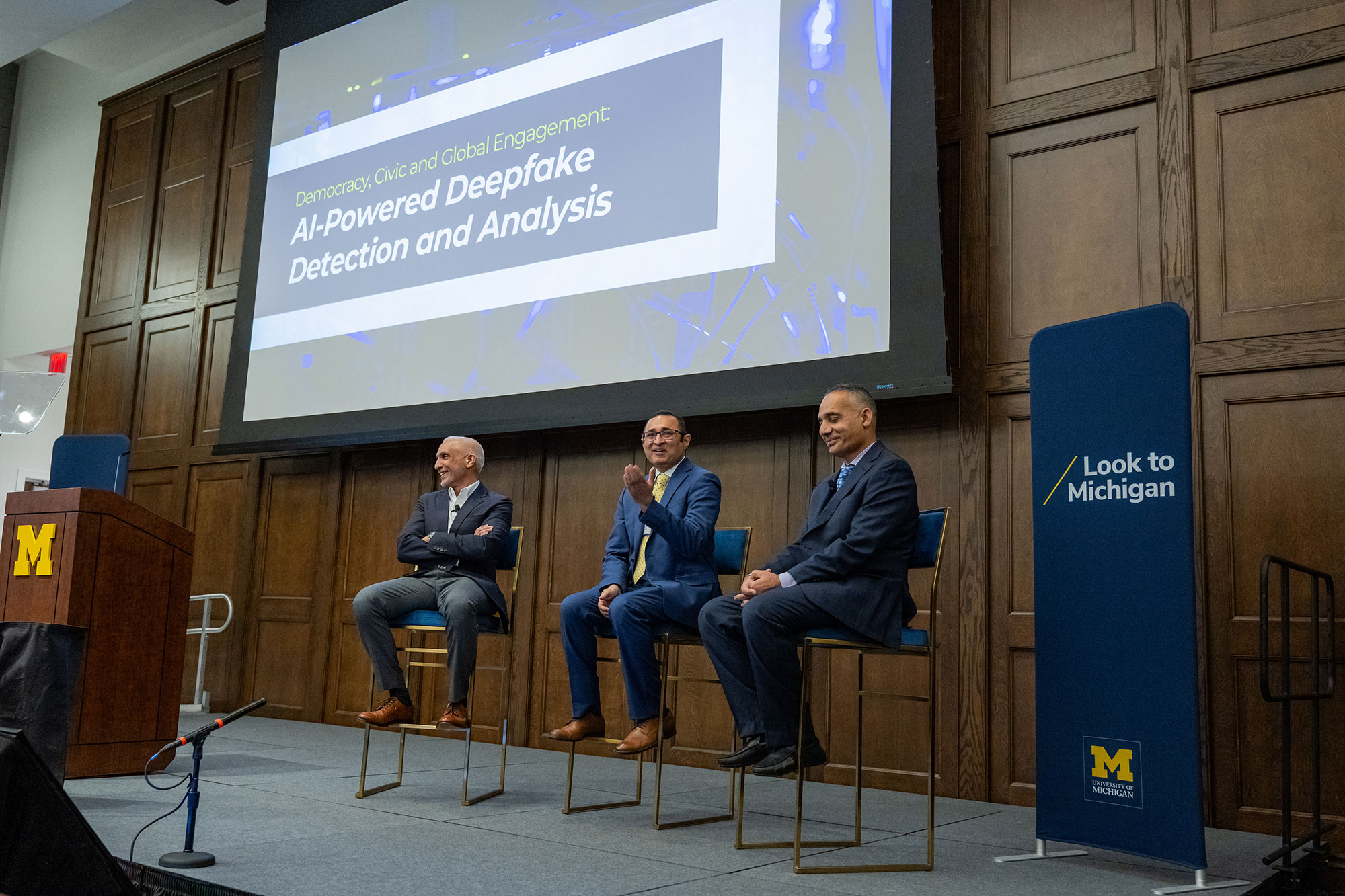
Hafiz Malik, associate dean for graduate education and research and professor of electrical and computer engineering, College of Engineering and Computer Science, UM-Dearborn; Khalid Malik, professor of computer science and director of cybersecurity, College of Innovation and Technology, UM-Flint, speak about combating AI-powered deepfake content.
Life-Changing Education
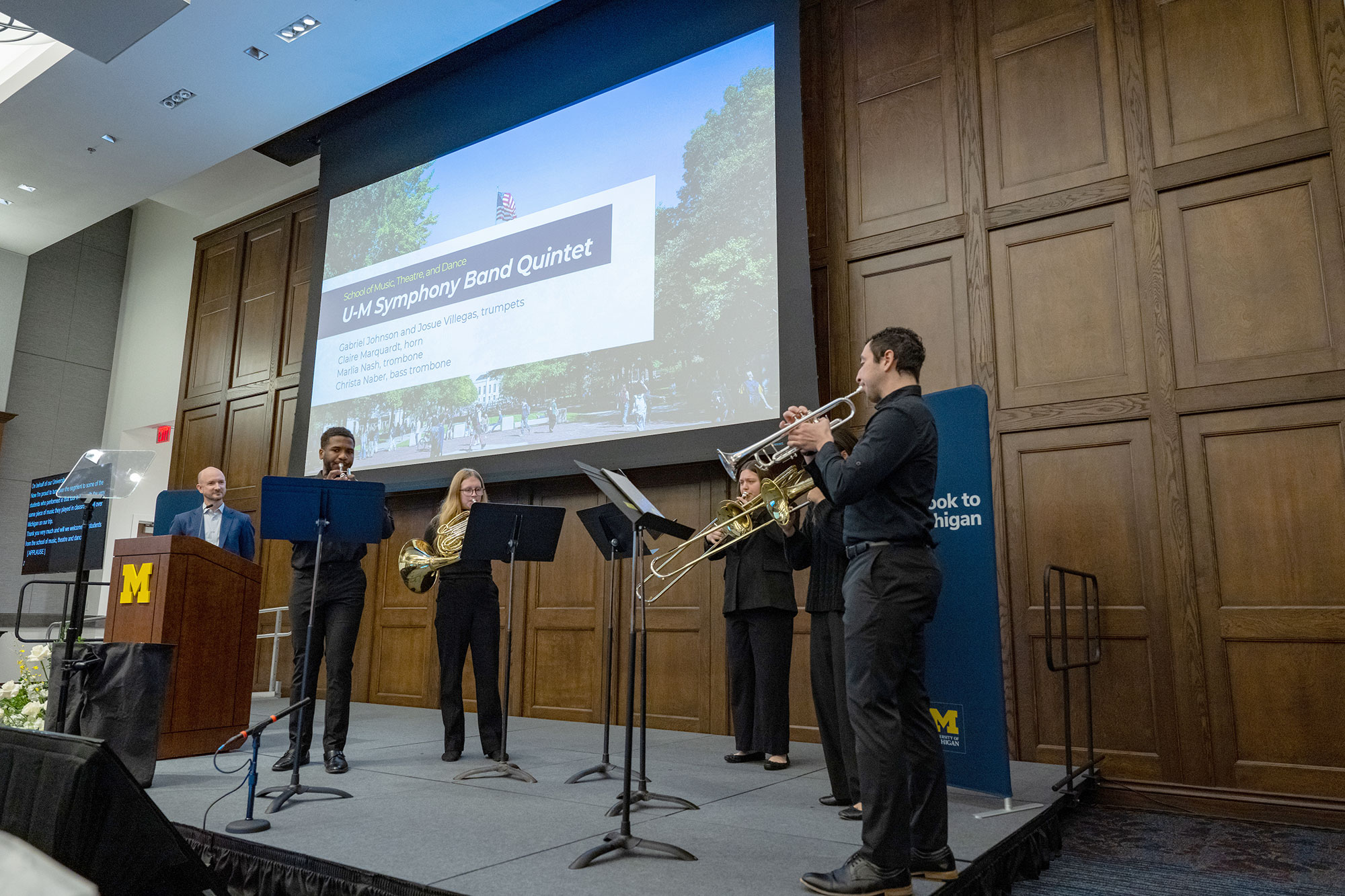
Jason Fettig, professor of music and Director of Bands in the School of Music, Theatre & Dance, walked guests through the university’s first Symphony Band Tour in 30 years, an immersive effort to educate students across the state on the power of music.
The tour in 2025 served Michigan residents by delivering community-focused arts experiences and educational opportunities.
“This tour was wonderful because it not only reached out to give a gift to our communities, but it was a gift to our students as well — to get out into these communities and have a chance to engage and understand the role that they play in carrying forward the work that we do here,” Fettig said.
Highlights included a performance in Fenton with high school and middle school bands and the mayor of Fenton in attendance, a joint clinic and concert with the U-M Flint Wind Ensemble, a visit to the Interlochen Arts Academy and a concert and clinic presentation for six high school ensembles at Blue Lake Fine Arts Camp.
The bands performed eight public concerts and 11 educational clinics in seven days.
“With the success of this first tour, I hope we have a chance to repeat this project many times in the years to come, giving each class of students opportunities to make a real-world impact as part of their education and reaching people in every part of our great state,” Fettig said.
Fettig’s presentation concluded with a Symphony Band brass quintet live performance of Second Suite in F “March” by Gustav Holst.
Human Health and Well-Being
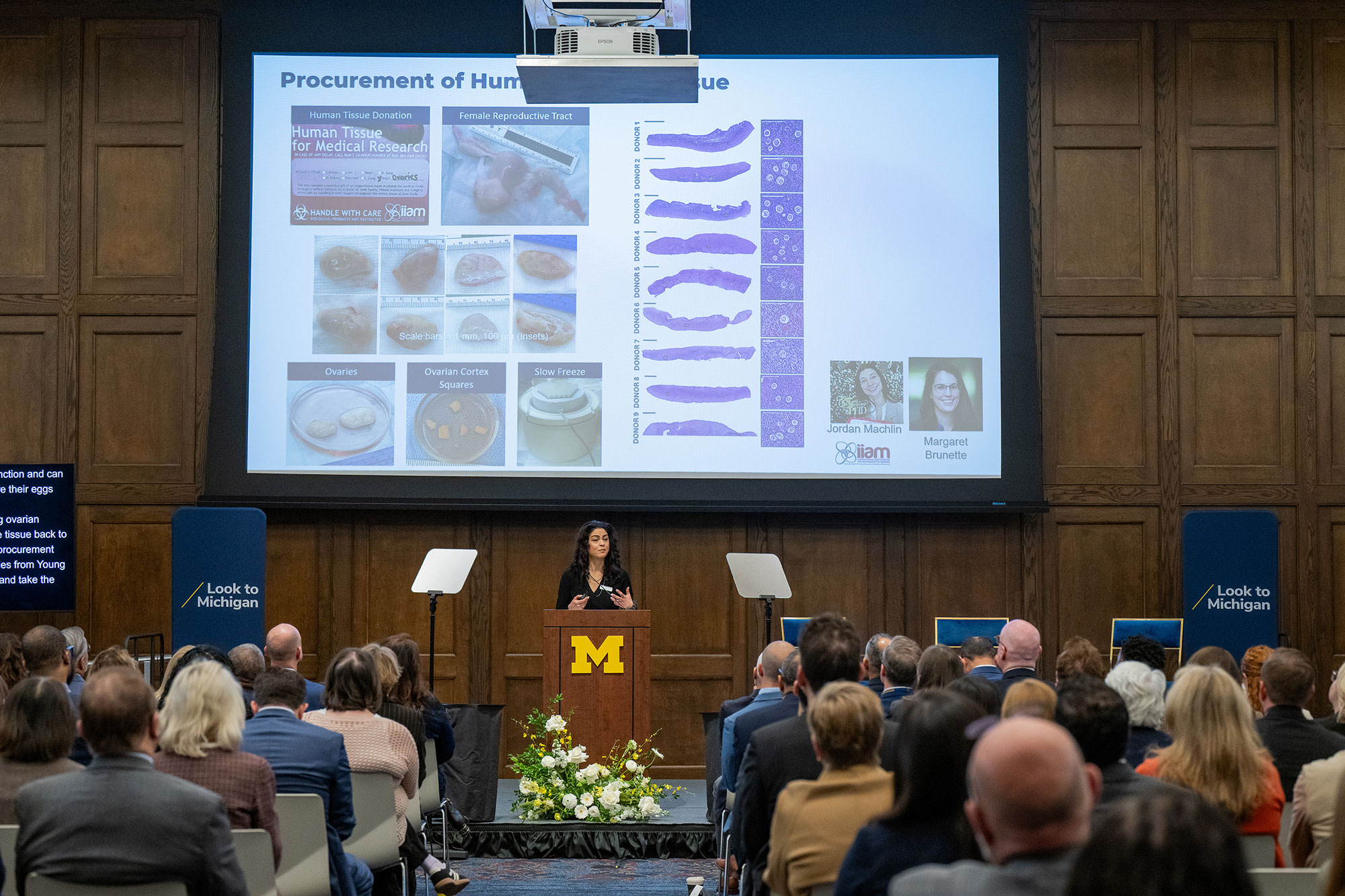
Ariella Shikanov, professor of biomedical engineering in the College of Engineering, and professor of obstetrics and gynecology in the Medical School, updated the campus community on pioneering research focused on artificial ovaries.
“My research is focused on ovaries, and most people who hear ovaries think about fertility,” she said. “But ovaries are not only for fertility. They are super important for women’s health, they’re important for endocrine function, and my lab is doing a lot to try to restore both — fertility and endocrine function.”
In the U.S., doctors see 10,000 new cases of premature ovarian failure a year among pediatric patients. Many girls who receive anticancer treatment before puberty develop the condition and are unable to undergo natural puberty.
Currently, the standard of care is hormone replacement therapy, which is not designed for adolescent girls and is inadequate for physiological puberty induction.
To restore normal physiology, Shikanov and her team have developed ArtOva, a novel polymer capsule that contains functioning ovarian tissue from a healthy donor and can be transplanted into adolescent girls, restoring natural ovarian function for pediatric cancer survivors.
Democracy, Civic, and Global Engagement
Faculty from U-M’s three campuses presented an on-stage dialogue that explored AI-powered deepfake detection and analysis.
Leading the discussion were:
- Javed Ali, associate professor of practice, Gerald R. Ford School of Public Policy.
- Hafiz Malik, associate dean for graduate education and research and professor of electrical and computer engineering, College of Engineering and Computer Science, UM-Dearborn.
- Khalid Malik, professor of computer science and director of cybersecurity, College of Innovation and Technology, UM-Flint.
Ali, who spent 20 years in Washington, D.C., working for the Defense Intelligence Agency, the Department of Homeland Security and the Federal Bureau of Investigation, has created a cybersecurity course in Ann Arbor to help future leaders understand threats and the governmental tools required to confront them.
“Misinformation, in and of itself, is a really difficult challenge,” he said. “But now you add in the advanced tools that are out there to drive those threat-related projects and activities, and artificial intelligence is really one of the game changers.”
At UM-Flint, research has focused on detecting deepfakes in the code system. To illustrate how sophisticated deepfake technology has become, Khalid Malik shared a deepfake that the UM-Flint Security Modeling and Intelligent Learning in Engineering Systems, or SMILES, Lab created using images and audio from President Grasso. The team at Flint has been working to create tools that help identify both AI-generated and manually edited deepfakes.
“As a researcher, our challenge is how to bring trust in AI…and restore the trust in our democratic institutions as well,” he said.
UM-Dearborn is leading the way in developing technology to detect fakes on social media. Hafiz Malik shared an example of a deepfake as well, explaining how the team at Dearborn was able to use their detection tools to debunk the video by analyzing its audio track.
“These kinds of audios and videos hit our desk almost every day or every other day,” he said. “We are developing technologies that are robust, that are agnostic to attacks, so that we can tell the truth.”
Energy, Climate Action, Sustainability and Environmental Equity
Lisa DuRussel, a licensed landscape architect and associate professor of practice and engagement in the School for Environment and Sustainability, highlighted the Detroit Sustainability Clinic.
For decades, SEAS students and faculty have been learning with Detroit, collaborating with community partners and city agencies to advance environmental, climate and energy justice across the city’s neighborhoods, parks, vacant land and waterways. The Detroit Sustainability Clinic was established in 2021 to bring structure and continuity to that legacy.
In four years, the clinic has partnered on 12 community-based projects, eight with government agencies, and connected 13 faculty and more than 85 students across disciplines.
“It’s a bridge between academic insight and community-led change,” DuRussel said. “The motto is simple: Public partnerships for the public good. This means sustained relationships — not one-semester projects.”
DuRussel showed a film about Eliza Howell Park, one of Detroit’s largest and most beloved parks. Each year, new teams build on the work of the last, so data, design and trust all accumulate over time. Thanks to the efforts of four graduate students, under DuRussel’s guidance, and their collaboration with Detroit, the Eliza Howell Park project develops adaptive maintenance and planting strategies that honor both ecology and community use.
Advanced Technology
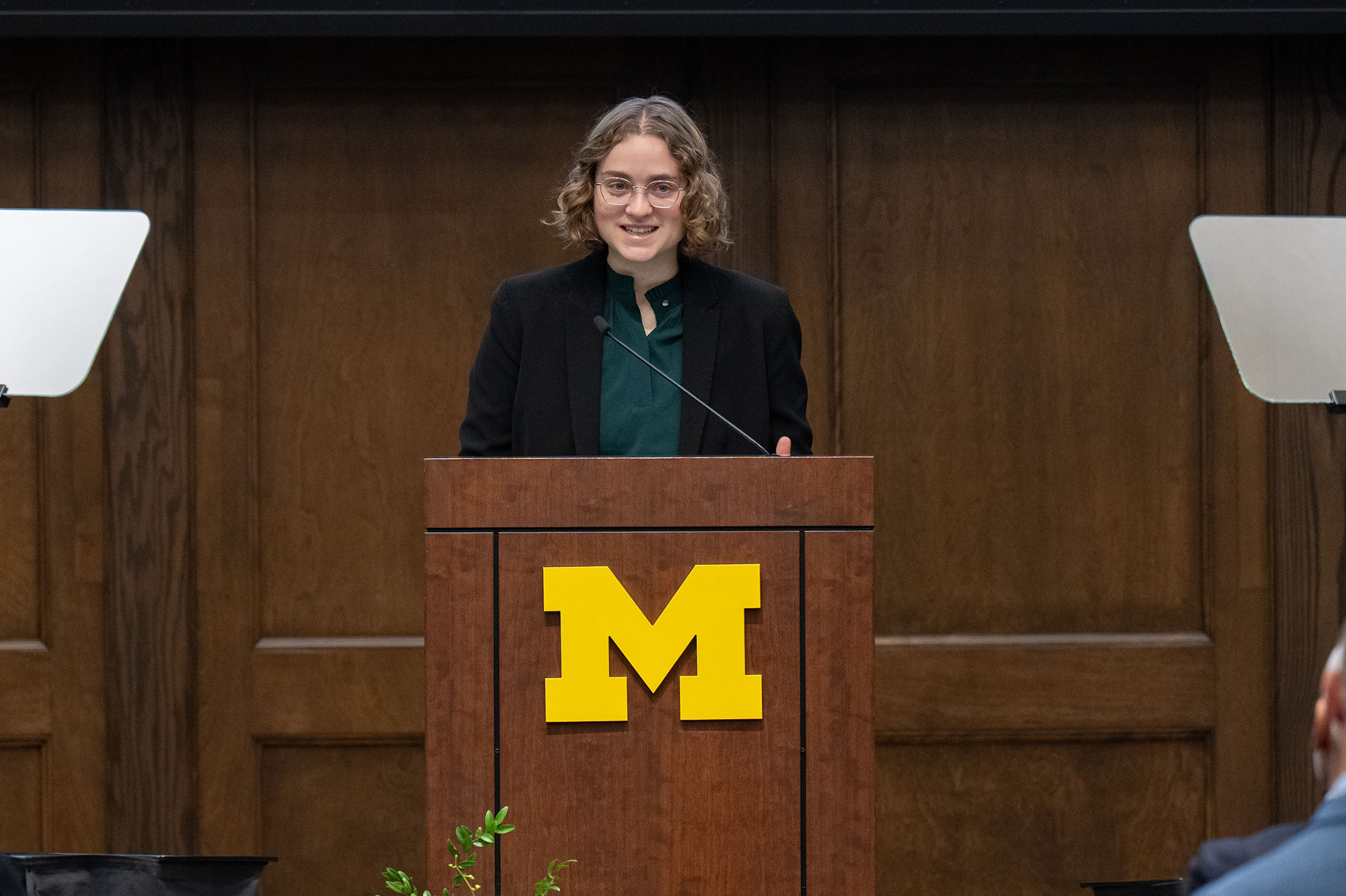
Anja Sheppard, a Ph.D. candidate in robotics in the College of Engineering, concluded the Look to Michigan impact presentations by highlighting U-M’s extensive marine robotics advancements.
“I’m really excited to talk about the work that my lab, the Field Robotics Group in the Robotics Department at the University of Michigan, has been doing to work on solving some key open research problems for marine robotics,” Sheppard said.
“The Earth, lakes and oceans contain critical resources, ranging from historical sites, such as shipwrecks, to coral reefs, which contain incredible biodiversity and also can mark the effects of climate change, to undersea fiberoptic cables that provide critical communication infrastructure across the world.”
Sheppard said the Field Robotics Group is working to address three challenges in marine robotics: shipwreck detection, autonomous surveying and real-time 3D mapping.
Underwater robots help preserve critical historical and environmental sites. U-M researchers, already uniquely poised to solve open challenges in underwater robotics due to their resources and proximity to the Great Lakes, are implementing machine learning and AI to make the process even more efficient.