The smartest sisters
The top of the list
Just before World War I, people in the University registrar’s office wanted to see how the fraternities and sororities stacked up in academic performance, and how those students compared to “independents.”
So, for more than 10 years, they tracked grades for every Greek-letter house plus other student houses and organizations. Then they mapped the data on big charts.
The results were strikingly clear.
Year after year, sororities got higher grades than fraternities; that is, almost all the sororities did better than almost all the fraternities.
And at the peak of the graphic, almost every year, was one small, independent sorority: Collegiate Sorosis.
Grades before inflation
Now, this was long before the grade inflation of recent decades. The University tracked academic performance as follows: A grade of A in a course was scored as 100%; B as 85%; C as 70%; D as 50%; and E as 20%.
And if you averaged all the grades of all the students, the steady mean hovered around 72.5%. (If you’re wondering how that compares to the average grade-point average of today’s U-M students, the answer is: The University doesn’t publish it.)
Take 1920-21, a fairly typical year for these rankings. Group by group, the highest grades to lowest were:
- Professional sororities (there was only one, a medical sorority): 81%
- General sororities: 79%
- “Other women’s clubs”: 77%
- Professional fraternities: 76%
- Athletes: 74.5%
- “Other men’s clubs”: 73%
- General fraternities: 71.5%
Above all those groups was Collegiate Sororis, at 84.2%
So much for the predictions, back when Michigan admitted women in 1871, that they could never compete with men in the classroom. (Lest you suspect 1920-21 was a fluke: The average from 1914-22 for all sororities was 79.4%; all women 78.8%; all fraternities 72.%; and all men 71.2%.)
But why did Sororis do so much better than everybody else, women and men alike?
College in the Roaring Twenties
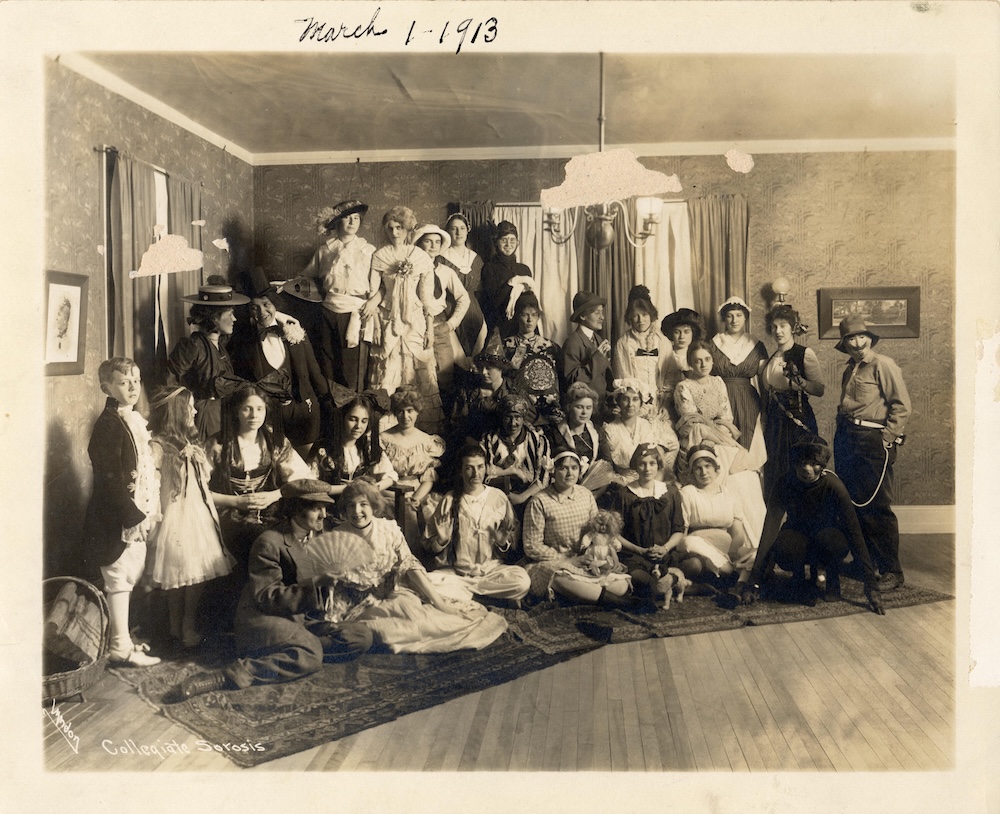
To hit the books hard in the Roaring Twenties was no easy thing. Distractions were rising. The car craze was fueling joy riding. Prohibition bred excess drinking in local speakeasies. Michigan football fandom was in a frenzy every fall.
And the University’s numbers were swelling. Professors used to small classes were getting alarmed at how disengaged their students seemed.
One close observer was a young professor of sociology, Robert Cooley Angell (grandson of James Burrill Angell, U-M’s president from 1871—1909).
After a thorough study of undergraduate life at U-M, Angell wrote in 1924: “Were these men and women who flock to our colleges possessed of a burning desire for knowledge, the problem of their numbers might be satisfactorily met. But, unfortunately, few are guilty of any such feeling.
“Probably the majority come to increase their earning power in later life; many to spend a pleasant four years and emerge on a superior social level; some to distinguish themselves in athletics or other extra-curricular activities; a small minority to increase the meaning of their lives by achieving a better understanding of man and nature…
“It is small wonder that the intellectually eager are almost unmarked in the throng.”
But someone recognized Collegiate Sorosis: President Marion LeRoy Burton. Like Angell, Burton worried about students neglecting their studies in favor of parties, sports, and clubs.
In 1923, when Sorosis topped the chart yet again, Burton sent a letter to the sisters.
“I am one of those educators who still believes that education has something to do with the mind,” he wrote, “and since Collegiate Sorosis for the past three years has maintained the highest scholarship standing of any of the fraternities or sororities, I cannot let the occasion go by without expressing to you … with great enthusiasm and earnestness, my hearty congratulations upon your achievements as an organization.”
‘To stand for high scholarship’
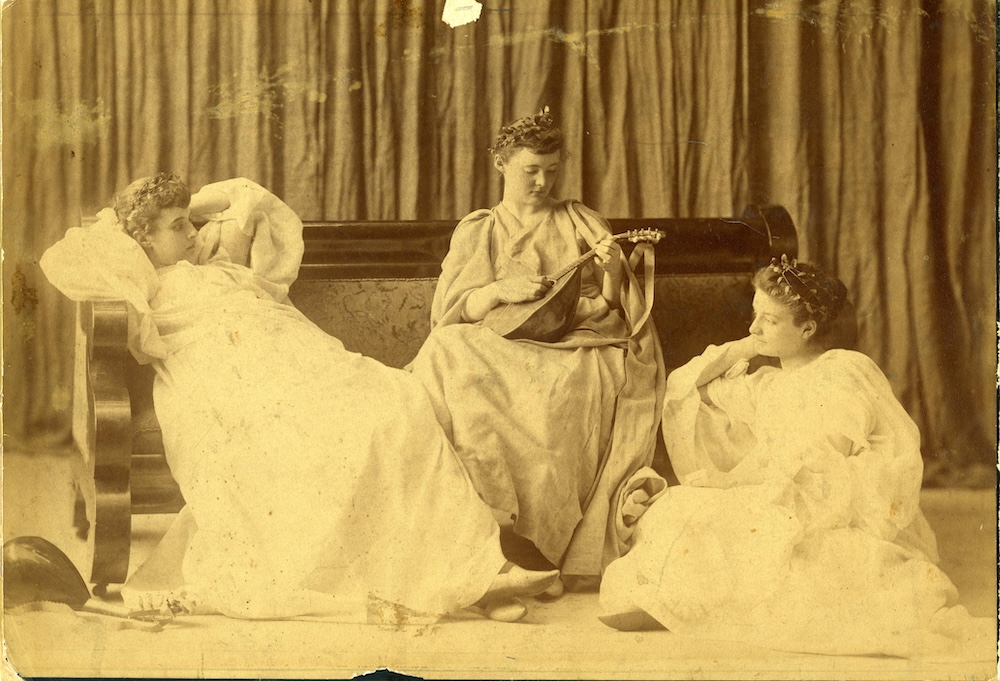
So why were the sisters of Sorosis so smart?
Evidence about their lives a century ago is scarce. But the source of their excellence seems to lie in the 1880s, when the house was founded.
It arose out of unrest in Kappa Alpha Theta, U-M’s first sorority, started in 1879, just a few years after the admission of women. By the mid-1880s, certain sisters and alumni of KAT became unhappy with their national organization over charters granted at small colleges that fell short — in the sisters’ view — of the academic standards at big schools like Michigan. Chapters elsewhere disagreed. So the Michigan Thetas ditched their charter and formed their own independent society. (KAT re-started later.)
“These young women had high ideals for the organization that they were starting,” wrote Marjory Knowlton Bursley (1901), daughter of a U-M law professor and wife of Joseph Bursley, dean of students. “They wished to stand for high scholarship and to contribute their share in furthering women’s place on the campus.”
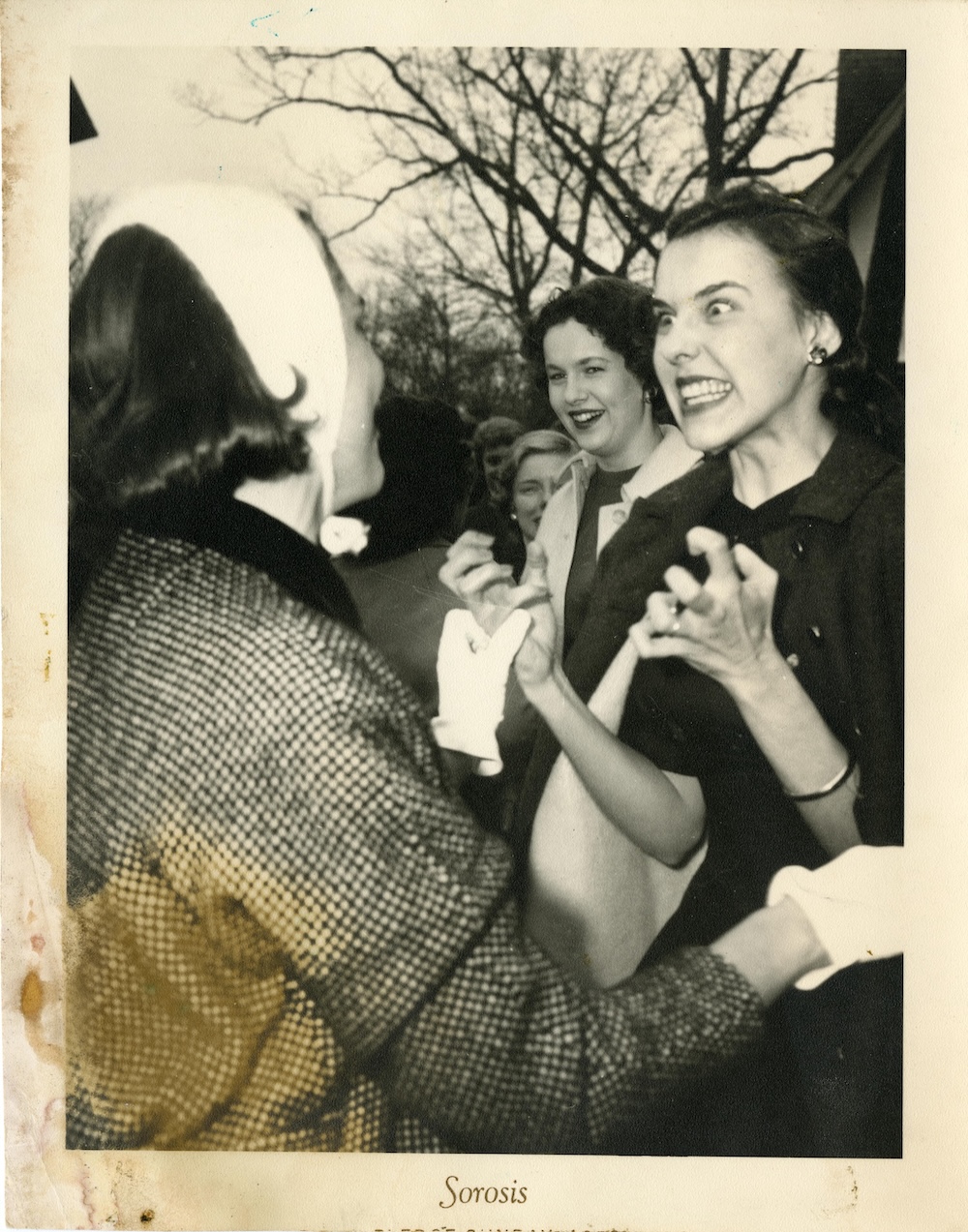
So, before there were women faculty, they invited faculty wives — including Sarah Caswell Angell, President Angell’s wife — to join as associate members. And they were granted affiliation with Sorosis of New York, a club of prominent women of a feminist bent, and thus became Collegiate Sorosis. (The word means “fruit of many flowers.”)
When the sisters wrote their charter and pledge rules, they omitted explicit requirements for high scholarship. But exacting expectations were implied between every line. A founding member, Bessie West Pattengill (1886), later recalled: “[Our] standards of scholarship were high in those days … With so few girls in college, when co-education was still more or less on trial, we were put on our mettle to keep up standards, and no girl would have been chosen as a Charter Member whose scholarship was in question.”
‘Fond dreams’
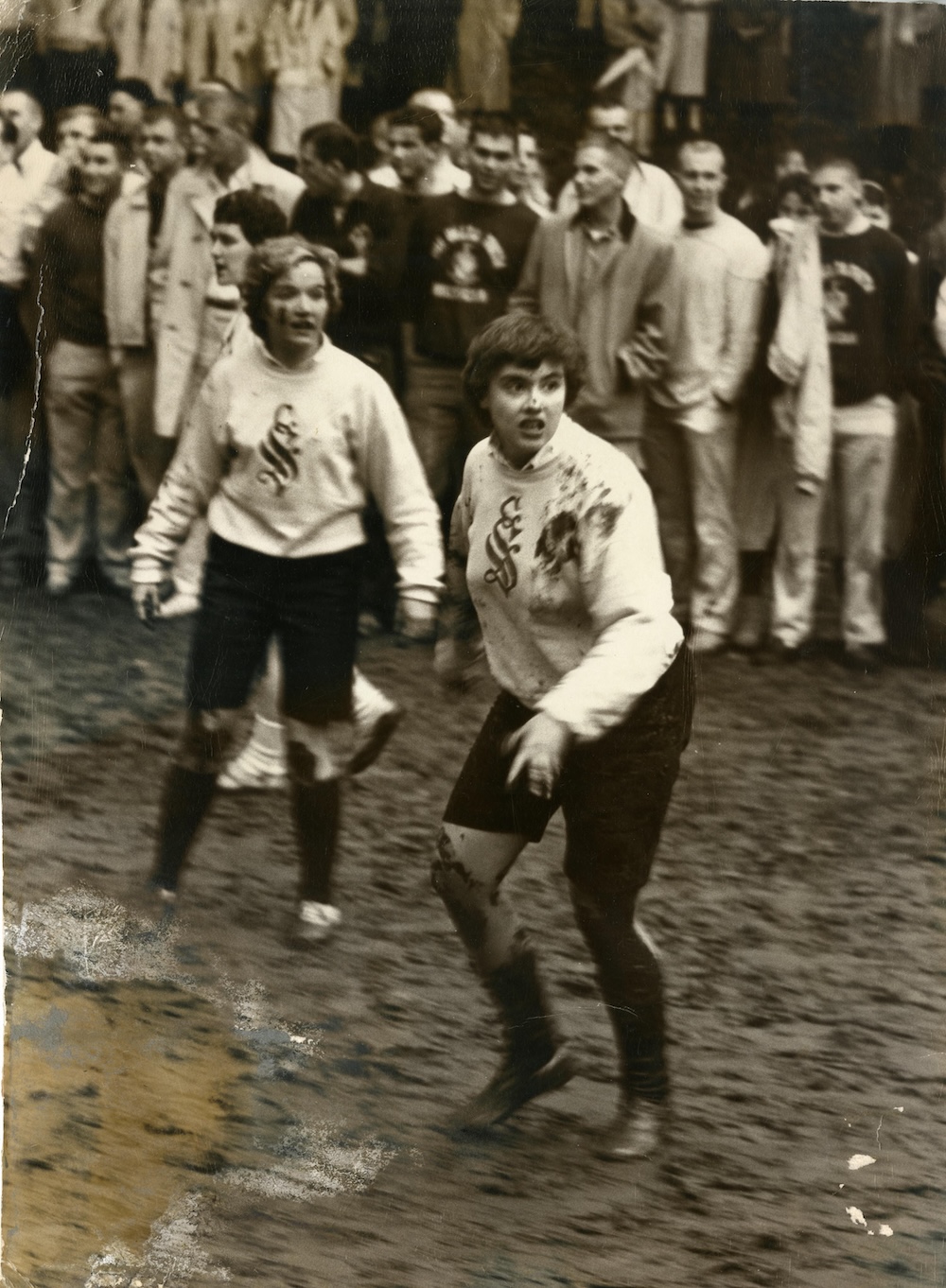
They meant to be “quite freed from the narrow exclusiveness of the old Greek letter societies, and from any spirit of separation from the Independent girls,” Pattengill went on. And with tongue in cheek, she said: “I remember well what great things I thought we should accomplish. No more, I thought, need an Independent girl feel shut off and alone — Sorosis would make a social home for her. If any girl outside should be so indiscreet as to be talked about because she allowed a young man to smoke a cigarette in her parlor, Sorosis would fly to her defense, knowing well that her intentions were honorable. Fond dreams — you see how young we were!!”
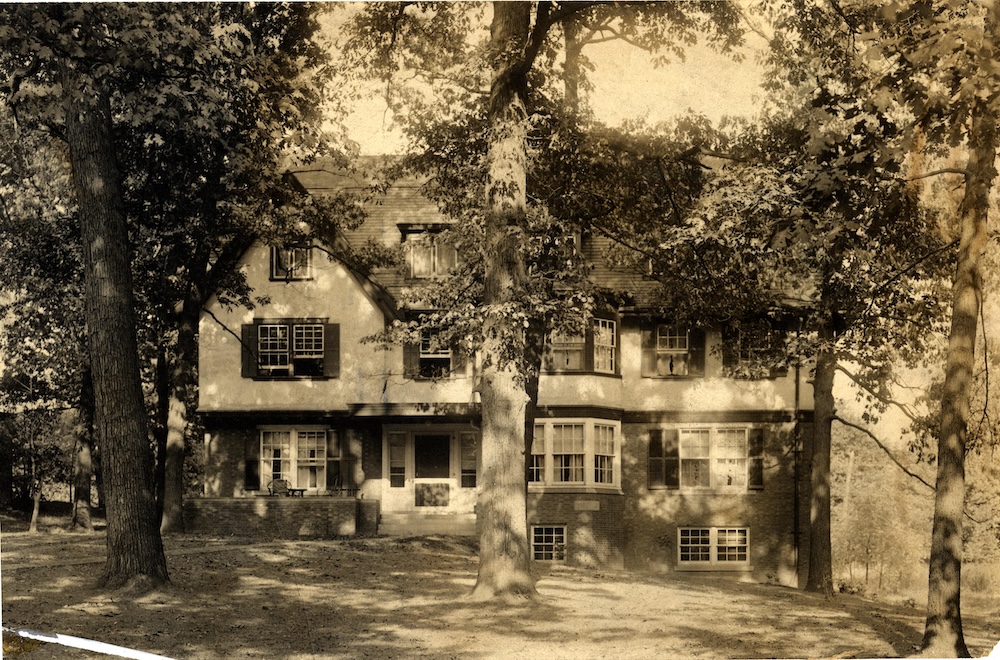
In 1906-07, after years of renting, the members moved into a house of their own on Washtenaw Avenue. Their high standards persisted year after year. In 1930, someone tracked membership in U-M’s chapter of Phi Beta Kappa, the elite academic honor society, since its founding in 1907. Nearly one in 10 of all Sororis sisters had been selected.
The sorority thrived through the 1930s and ’40s, when new dormitories siphoned many students away from the sororities and fraternities.
But in the late 1960s and early ’70s, when students turned away from “Establishment” institutions, many sororities and fraternities saw their numbers plunge, Sorosis among them. In 1973, the alumni closed it down and sold the house. But a “Bring Sorosis Back” campaign reestablished the society just five years later on the strength of “a burning conviction … that young Michigan women would be attracted to what Sorosis had to offer.”
The comeback lasted only for a while. In 1987, in a bid to sound less antique, the house renamed itself Chi Sigma. But it wasn’t enough. In 1991, the sisterhood disbanded for good, and its foundation’s funds were donated to U-M’s Center for the Education of Women.
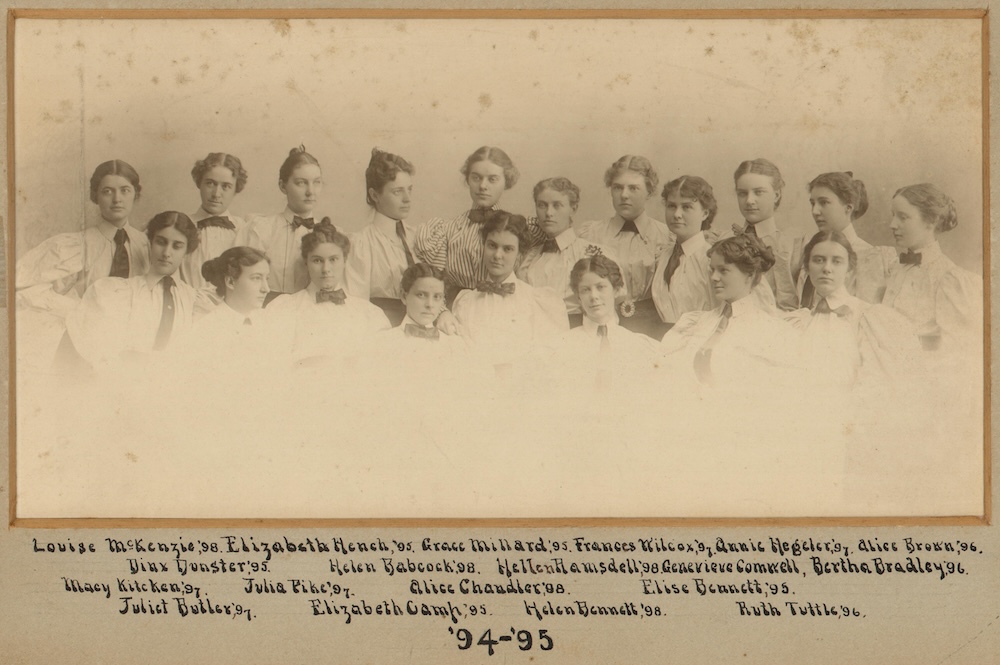
Sources included the papers of Collegiate Sororis (including several unpublished short histories) and of the University registrar, Bentley Historical Library; A Sorosis Book (1906; supplement 1911); Robert Cooley Angell, “Report on Methods of Increasing the Intellectual Interest of Students at the University of Michigan,” typescript, papers of the registrar; and The Michigan Daily. Lead image: Collegiate Sorosis members in 1895-96, courtesy of U-M’s Bentley Historical Library.