Emergency Medicine staffer turns trauma into a mission
When Denise Wieck picked up the phone on Memorial Day 2021, she didn’t know her whole life was about to change. The call sent her racing to the hospital, bracing for the worst.
“They did not anticipate him living,” said Wieck, an administrative specialist in the Department of Emergency Medicine.
In the frantic hours that followed, surgeons rushed her 17-year-old son, Guy, into the operating room.
“The whole right side of his skull was removed to make room for the swelling and half of his temporal lobe removed due to damage, and when I finally saw him, I’ll never forget, he had all kinds of tubes coming out of his head — It was pretty horrific,” she said.
Guy had been shot in the right eye with what Wieck later learned was a “ghost gun” — a weapon assembled from parts purchased online, without a serial number, by her teenage son’s friend.
“He thought the chamber was empty, and it wasn’t,” she said. “He pulled the trigger and the bullet went through Guy’s right eye.”
Bone and bullet fragments remain embedded in his brain to this day.
“The next 72 hours are critical,” Wieck remembers being told. At night, Wieck sat alert so he wouldn’t dislodge tubes. “I didn’t really sleep much.”
Inside the hospital, teams coordinated intensive neurosurgical and neurological care, then led Guy through milestones that might seem small to outsiders, but enormous to families.
“After eight days, he was up and walking with help,” Wieck said. “On the ninth day, he told them that he didn’t want a walker, and so he was walking by himself.”
Recovery isn’t linear
Complications followed — seizures that would define the next two years.
The day after his October cranioplasty — the procedure to replace the skull bone that had been removed to relieve swelling — he had his first seizure. On New Year’s Eve, a prolonged episode, called status epilepticus, nearly claimed his life a second time.
Anti-seizure medications were adjusted again and again. Because of the remaining metal fragments, he cannot have an MRI to pinpoint exactly where the seizures are happening.
Eventually, specialists implanted a vagus nerve stimulator.
MORE INFORMATION
“It’s been seriously amazing how much that has helped,” Wieck said.
Guy learned to recognize auras — his fingers will tingle — and then he’ll activate the VNS to stop a seizure in its tracks.
Two years seizure-free, he earned back his license in June and bought a car he adores: a 1993 Oldsmobile 98 Regency.
“Only 2% of the people who have his kind of injury actually live, but he’s here and he’s doing amazing despite having many medical issues that he battles every day trying to be ‘normal’ and will forever,” she said.
From mom to prevention advocate
Wieck decided that she would turn her trauma into her legacy.
“When a detective first said ‘ghost gun,’ I thought ‘What the heck is a ghost gun?’” she said. “They are basically untraceable, because they don’t have any serial numbers on them. Within 30 minutes, his 17-year-old friend had a firearm from a kit he had purchased online and assembled.”
That shock hardened into purpose.
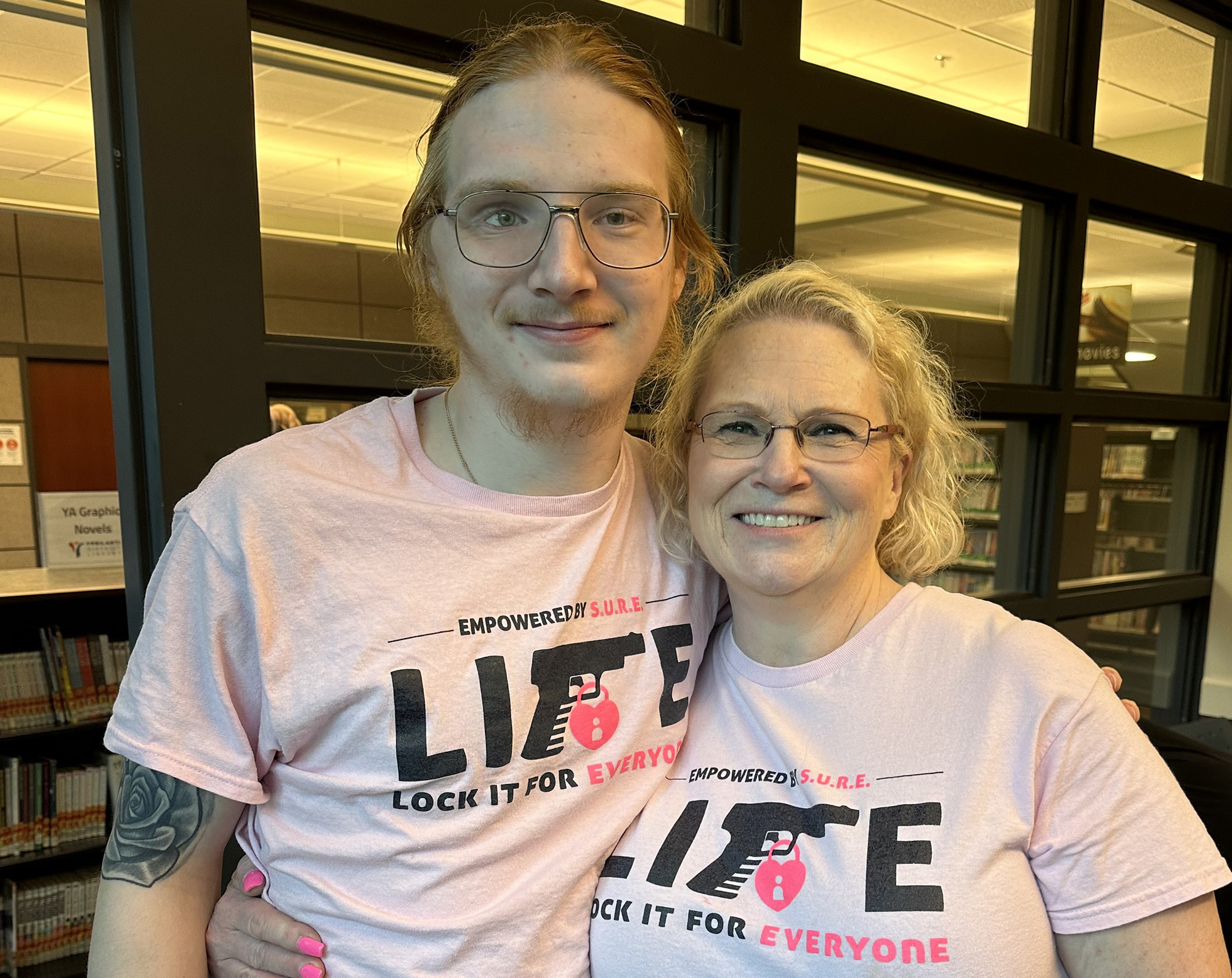
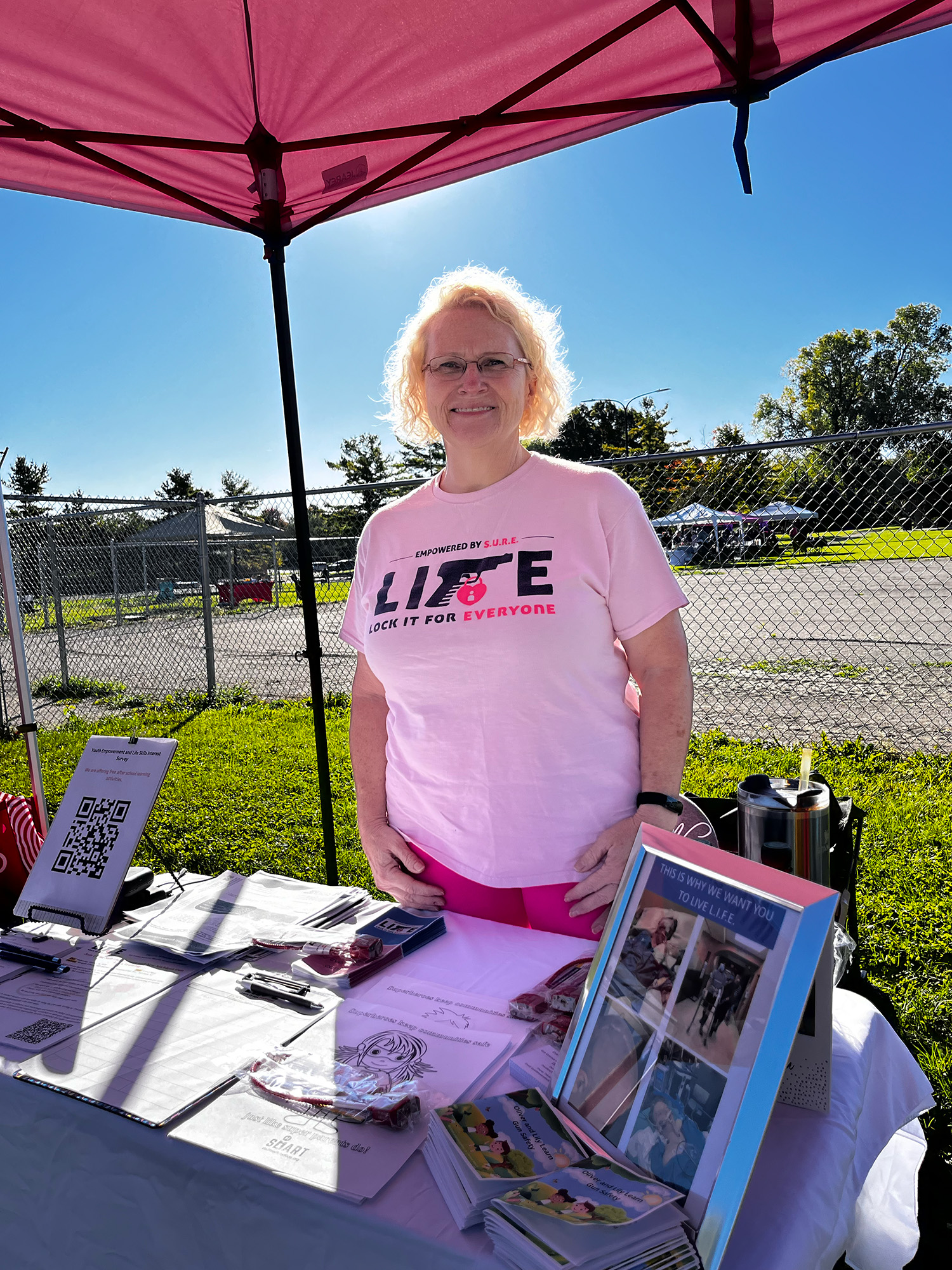
Through the Washtenaw County Sheriff’s Office, she joined SURE (Sisters, United, Resilient, and Empowered), and then co-founded a nonprofit with Guy: LIFE (Lock It for Everyone).
“We believe in the right to have a firearm, but we also believe that you need to be educated and capable,” she said.
Wieck also volunteers widely, including Moms Demand Action, End Gun Violence Michigan, Everytown for Gun Safety and the county’s Community Violence Intervention Team.
She and Guy speak at community and professional events across the state and beyond.
“I always say I’m the mouth of the program, and he is the face of the program,” she said.
NOMINATE A SPOTLIGHT
- The weekly Spotlight features faculty and staff members at the university. To nominate a candidate, email the Record staff at urecord@umich.edu.
Additionally, she and Guy give back to U-M, by contributing to research and education efforts, including the Weil Institute’s Massey TBI Lived Experience Advisory Council.
“I find my advocacy work very rewarding to me, especially when we can see that we’re making a change,” she said.
Even with progress, some weeks are heavy.
“You just feel defeated because firearm deaths just keep happening,” she said. “My work is never going to end, but I’m going to prevent deaths.”
Most of all, she wants families to act before tragedy.
“I thought I would never be affected by gun violence,” she said. “But you never know when you are going to be. If you start working to prevent it now, it won’t happen to you.”
Wieck knows her son’s story won’t go to waste.
“We truly believe that things happen for a reason,” Wieck said. “Guy believes he lived to help people and to make that difference.”