Helping communities breathe life back into Great Lakes ecosystems, economies
Coalition of Great Lakes nonprofits, directed by U-M alumna Laura Rubin, helps empower communities to preserve and restore nature, nurture new generation of sustainable business

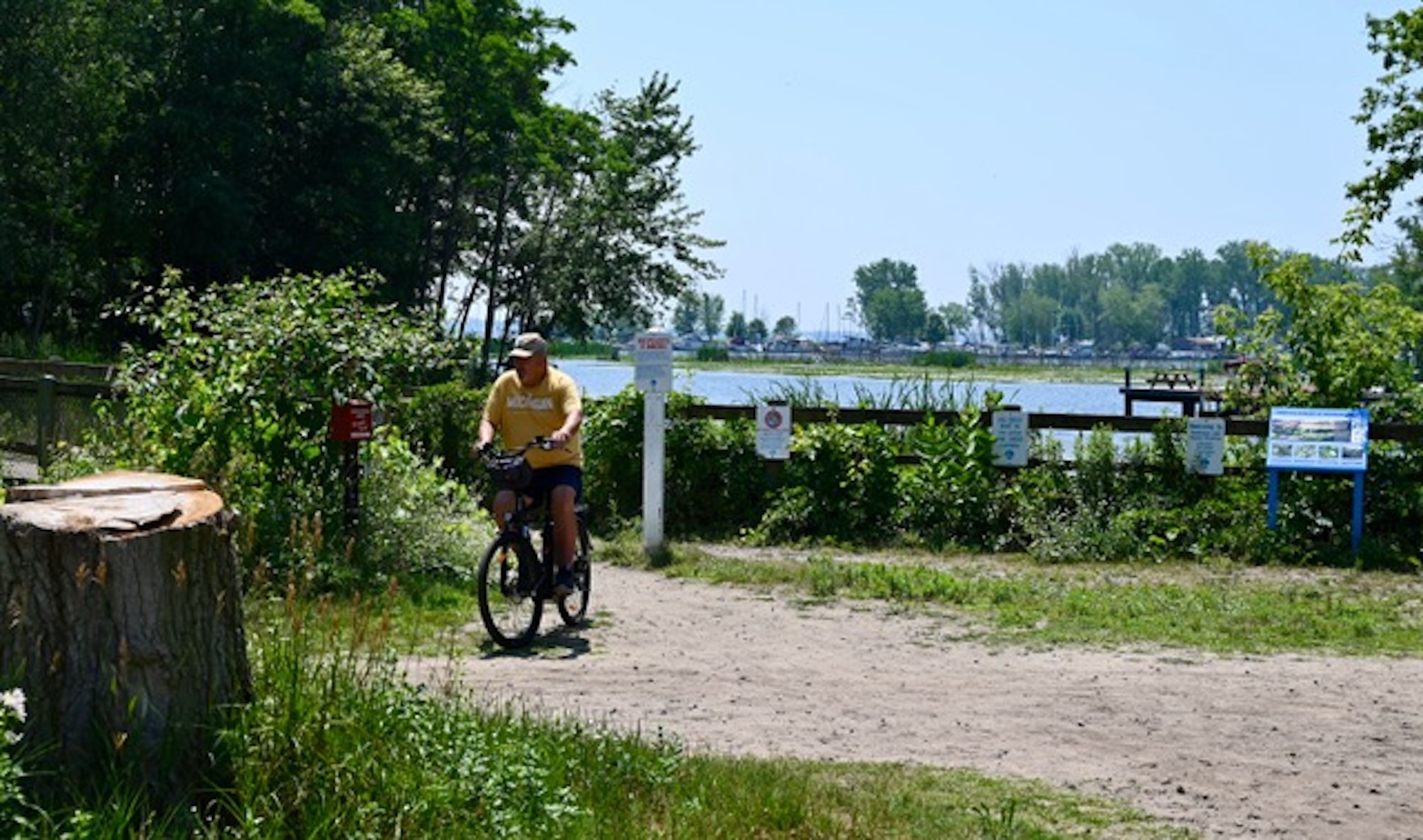
MUSKEGON, Michigan—Although the temperature was north of 80 degrees, Muskegon Lake was dulling any unpleasant edge to that heat. A quick scan around the shore confirmed it was an ideal day for boating, fishing, biking—anything that got you on or near the water.
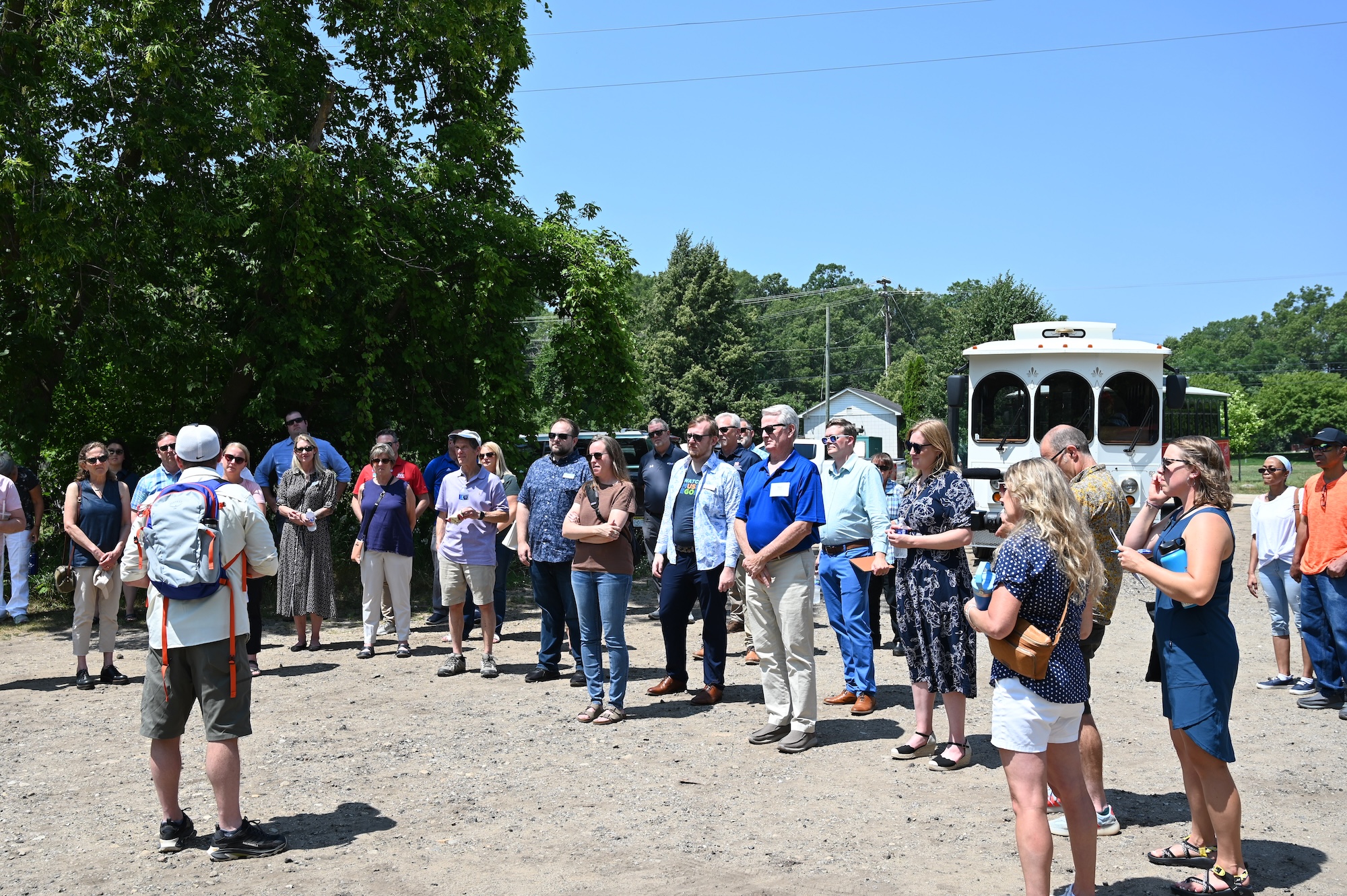
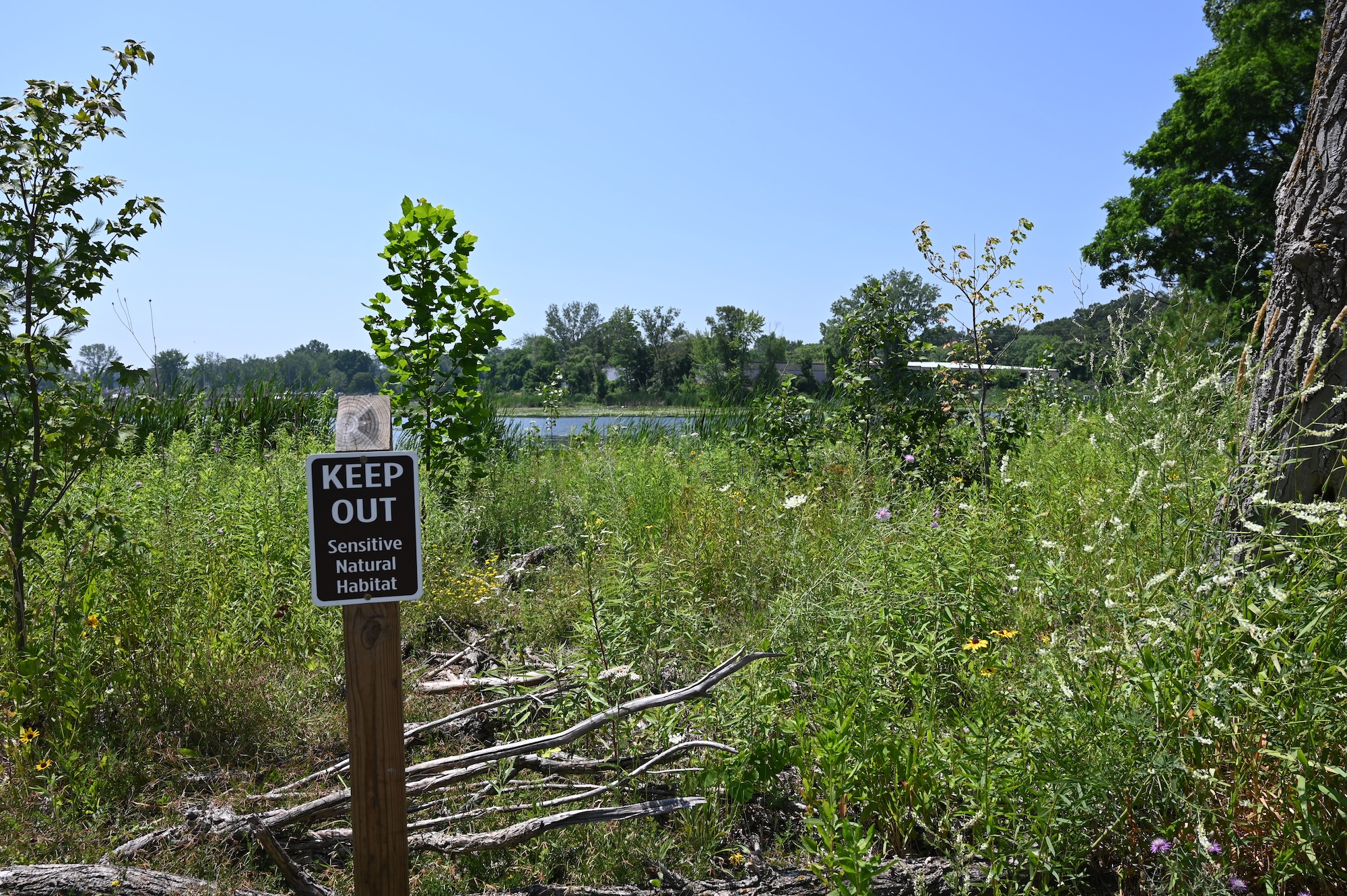
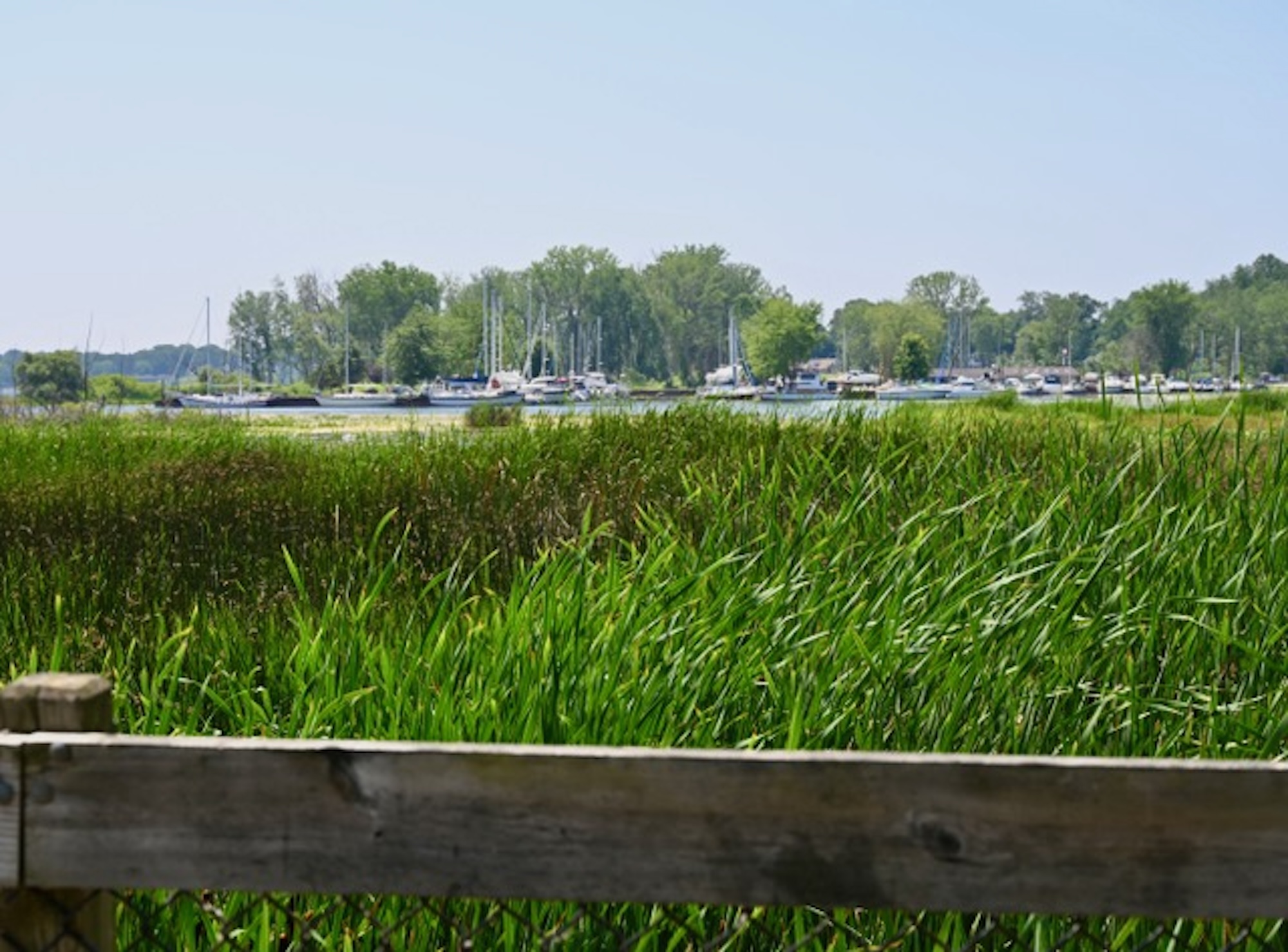
But there was a group of about 50 people who were there for more than just the recreation. The group strolled through a lush shoreline wetland that was once, as one restoration ecologist put it, “a museum of invasive species.” As the tour group took in the sights and sounds—the rustling blades of native beach grass and the calls of birds that once avoided this site—its members were also appreciating a remarkable transformation that they were part of.
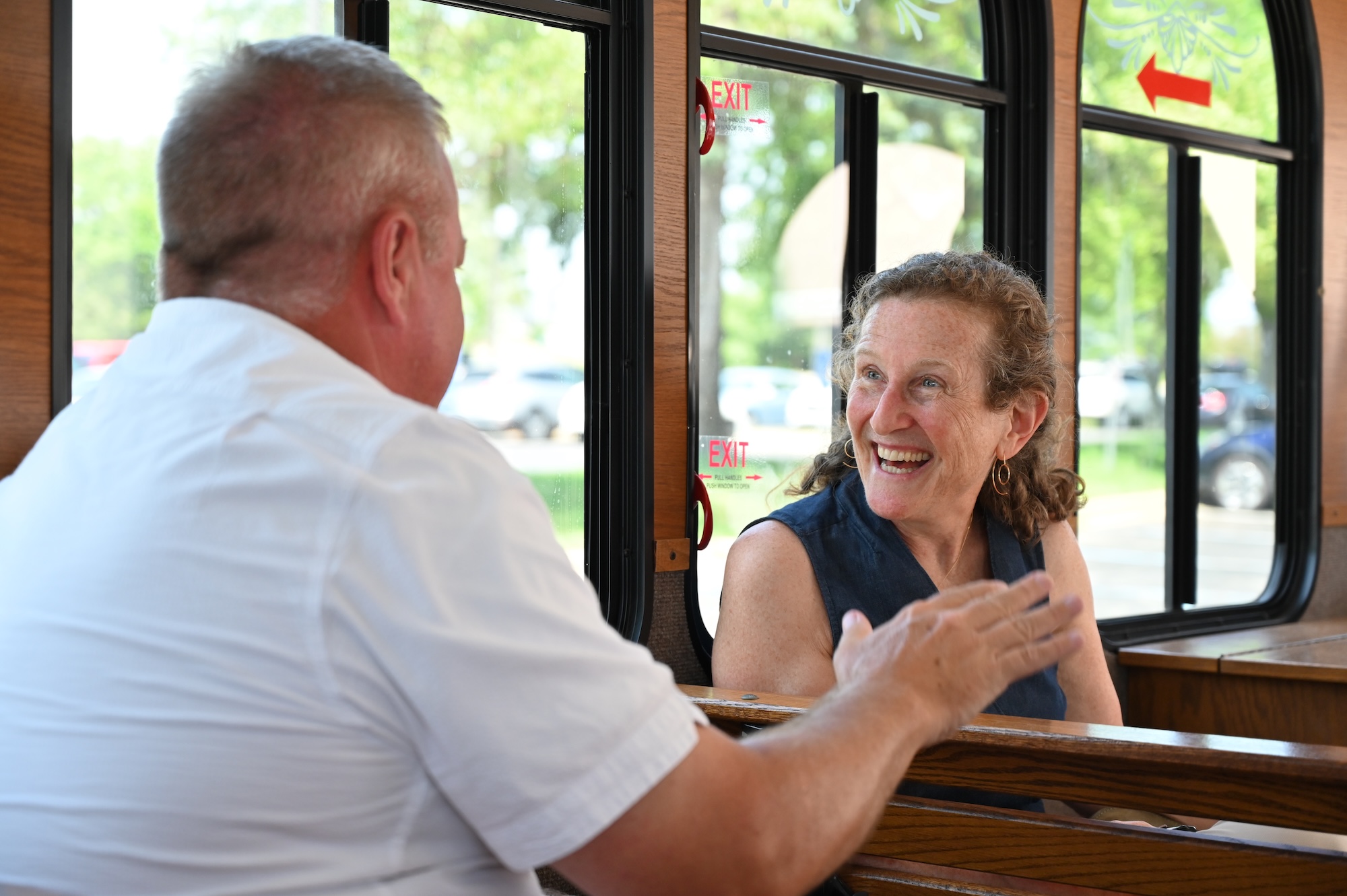
The tour group included University of Michigan alumna Laura Rubin, who, in 1995, became the first graduate of the Erb Institute’s master’s program, earning both an MBA and a Master of Science in natural resources. She is now director of the Healing Our Waters-Great Lakes Coalition, which is made up of nearly 200 different nonprofit organizations from the Great Lakes region with a shared goal of conserving and restoring the lakes’ ecosystems.
This combined force helped spur Congress to pass legislation that, since 2010, has invested more than $6 billion toward stewardship of the Great Lakes basin. This money has helped restore streams and habitats, reduce runoff and keep invasive species out of lakes, among other things. Michigan has benefited from more than $1 billion of that going into nearly 3,000 projects.
That means the Great Lakes State provides the coalition with ample opportunities to help support tours like this one on Muskegon Lake, which is just inland of Lake Michigan. Hosted by local organizations, these tours remind stakeholders, including elected officials, of their transformative power when they have the resources.
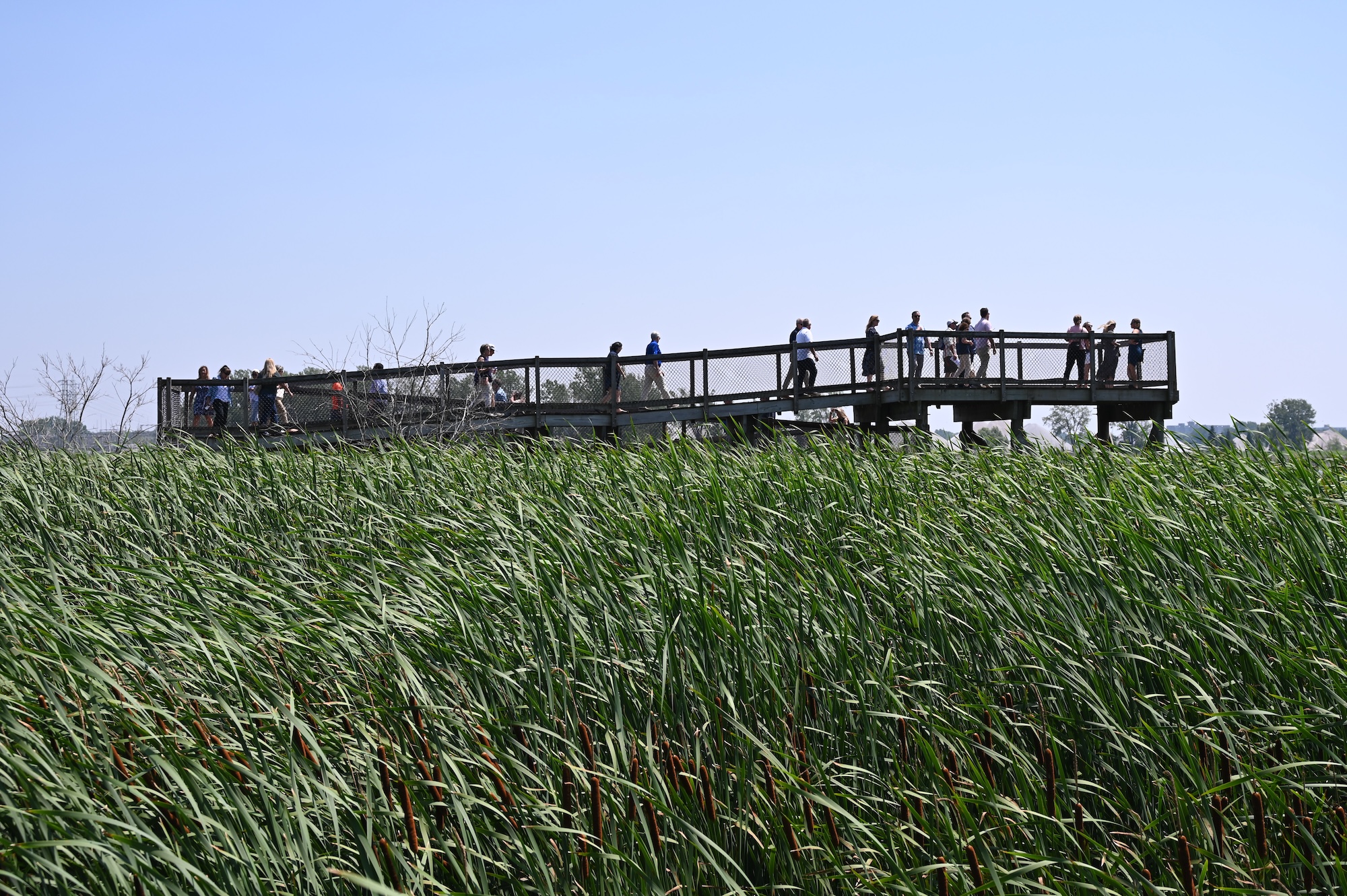
Tens of millions of funding came to Muskegon Lake. In addition to having been a haven for invasive species, the lakeshore site where the tour has stopped was also once a literal dump, making it an unfortunate microcosm of the entire lake. Muskegon Lake had helped sustain lumber mills, foundries and factories for more than a century at great cost to itself. It became so polluted that, in 1987, it was classified as an AOC, or area of concern, by the U.S. and Canada under the Great Lakes Water Quality Agreement.
Following more than 15 years of work, about $80 million investment and 20 successful restoration projects, Muskegon Lake is now on the verge of officially shedding the AOC label. The group touring the restored areas represented the community members, business partners, government workers and other stakeholders who made this possible, ushering in a new era in the city’s history with the lake still firmly at its core.
“It’s just so important to have a healthy and vibrant Muskegon Lake for our community,” said Muskegon Mayor Ken Johnson. “To get Muskegon Lake cleaned up and restored, that now allows new development patterns and new uses and new access. Most fundamentally, it’s something that our community can gravitate towards and enjoy. But at the same time, it can still be our economic engine.”
Johnson and community leaders are working to foster a sustainable “blue economy” powered by the lake. It’s an active working port, not only for shipping, but for cruise lines. A clean and healthy lake also promotes tourism, boating and fishing. Muskegon’s downtown area is also experiencing a resurgence, which local officials also attribute to the lake’s revival.
“It creates so much value in so many different ways,” Johnson said. “Culturally, recreationally, economically and, for many, spiritually.”
A 2020 study from Grand Valley State University estimated that the lake’s shoreline restoration boosted Muskegon property values by almost $8 million and is adding nearly $28 million each year in recreational benefits.
The lake’s cleanup started as grassroots efforts spearheaded by local leaders and residents, beginning well before the lake was listed as an area of concern, Johnson said. These efforts, however, lacked the money, expertise and equipment needed to more fully undo the industrial damage that dated back to the late 1800s.
But that’s where people like Laura Rubin come in.
Healing our waters
In the early 2000s, Great Lakes advocates saw the Chesapeake Bay and the Everglades secure substantial sums of federal support for conservation and restoration.
“But the Great Lakes were getting nothing,” Rubin said. “When we talked to the administration and members of Congress, they said, ‘There’s no united voice out of the region and there’s no clear need out of the region.'”
So they formed the Healing Our Waters-Great Lakes Coalition to provide that unified voice and identify the region’s clearest needs. The coalition was then able to help advocate for the passage of the Great Lakes Restoration Initiative—bipartisan legislation that has provided more than $300 million annually to ecosystem improvement projects throughout the region.
Communities around the Great Lakes have launched more than 8,000 projects with support from the initiative, which is federally administered by the U.S. Environmental Protection Agency in collaboration with 15 other agencies.
The U-M Research Seminar in Quantitative Economics, which has provided economic forecasts and models since 1952, turned its analytical prowess to the Great Lakes Restoration Initiative in 2018. It found that for every dollar spent between 2010 and 2016, the GLRI will produce a $3.35 return on investment through 2036. During that 2010-2016 timeframe, the GLRI also created or supported more than 5,000 jobs annually, boosting income across the Great Lakes region by $250 million per year, according to the study.

“We employed a conservative approach to modeling the regional economic impacts of the GLRI,” the study’s authors wrote. “We believe that our estimates are likely to understate the program’s true impacts.”
In Muskegon, the National Oceanic and Atmospheric Administration and the Great Lakes Commission worked in partnership with the Muskegon Lake Watershed Partnership, the local public advisory council, to allocate GLRI resources. The GLC is a regional steward of the lakes formed by eight states and two Canadian provinces.
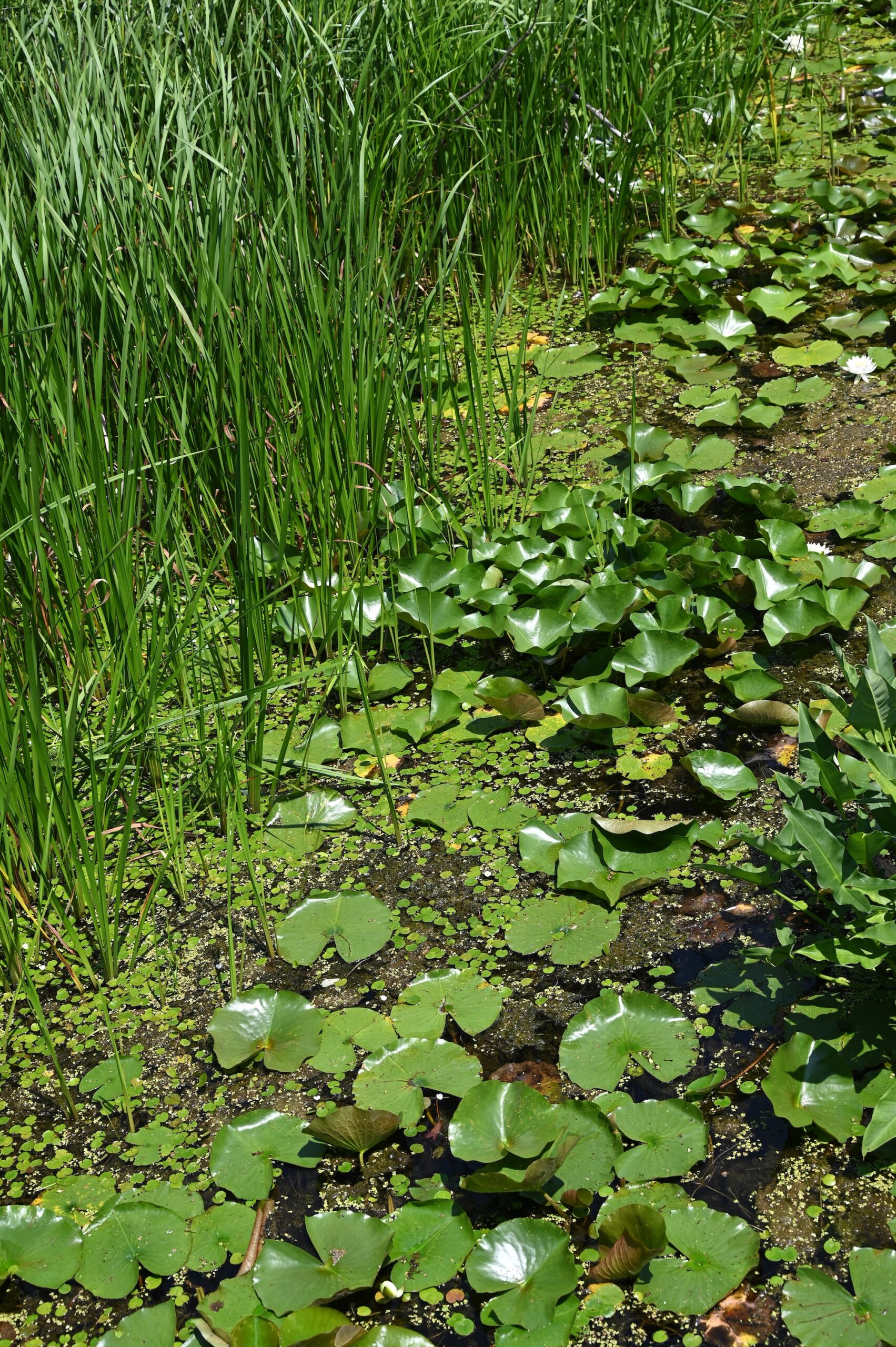
About $25 million of the $80 million invested in Muskegon Lake came from the GLRI. That investment brought thriving natural habitats back to a shoreline that had been hardened by steel, cement and concrete. It helped pay for the workforce and equipment that removed hundreds of thousands of tons of fill, sediment and debris from the water, some of which was contaminated with toxic chemicals like lead and mercury.
“We’re not a stinky foundry town anymore,” said longtime Muskegon resident Dave Alexander for a case study of the city that accompanied the 2018 GLRI economic report. “We are a place that has industry, that has commercial and residential and recreational uses of our waterfront, but all of those things are working in concert with each other. They’re not in conflict as they may have been in the past.”
That sentiment remains today.
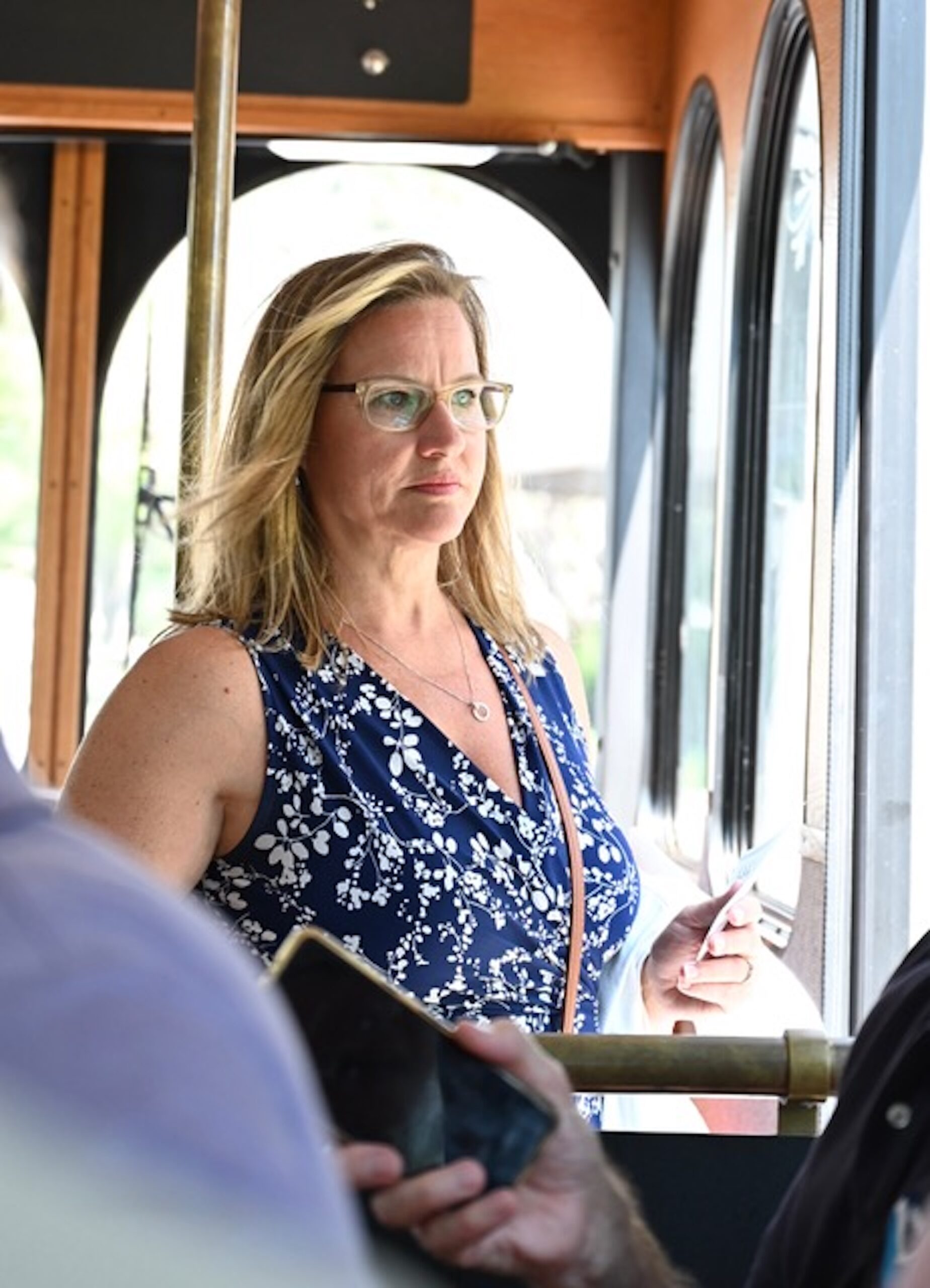
“We would not have been able to do that without Healing Our Waters and without the Great Lakes Restoration Initiative and all the partnerships that we’ve had from the federal, state and local government,” said Erin Kuhn, executive director of the West Michigan Shoreline Regional Development Commission, which oversaw Muskegon Lake’s restoration projects and serves 120 local governments along the state’s Lake Michigan coast.
The development commission also hosted and organized the Muskegon Lake tour. As much as the event celebrated what had already been accomplished, the community leaders were perhaps more eager to discuss what it meant moving forward.
Even in brief conversations between sites, it was easy to hear their pride in how Muskegon’s blue-collar history had helped build the state and the country. But they were also looking forward to what they could achieve next—without being defined by that history’s environmental toll.
“We’re now at a point where we can turn the page and to be part of that is so exciting,” Kuhn said. “We now can define the future of Muskegon County.”
‘Healthy tension’
Devoid of context, the sustained federal support of the GLRI might seem surprising. After all, leadership of the nation’s highest office has switched between political parties three times since the legislation first passed. But anyone from the region knows the Great Lakes are natural wonders that transcend politics.
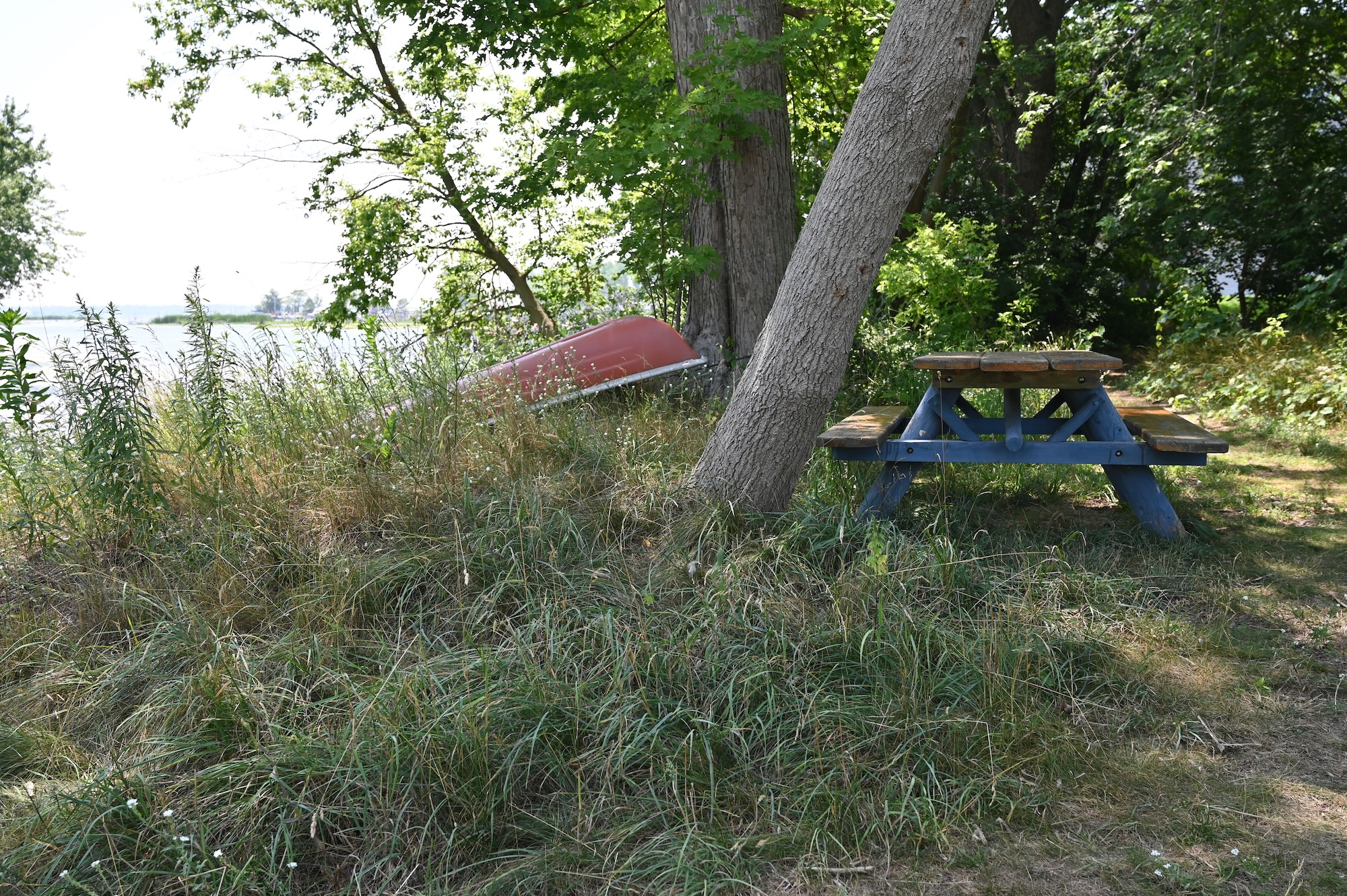
“Everybody enjoys the Great Lakes. It’s a unifying factor. This lake is everybody’s lake—everybody’s—so it’s all of our responsibility to take care of it,” said Republican Don Brown, deputy public works commissioner for Macomb County, on the evening boat ride around Muskegon Lake that concluded the restoration tour event.
And Democrats were on the same boat, both literally and figuratively. Peter Dickow said protecting the Great Lakes has always been a priority not only for his boss, Democratic U.S. Sen. Gary Peters, but also congressional colleagues from the Great Lakes states.
“The Great Lakes caucus is pretty bipartisan and cooperative,” said Dickow, West Michigan director for the senator’s office. “They recognize we’ve got a good thing here and we’re not going to screw it up. It’s too important.”
Rubin knows she’s fortunate to lead a coalition that has supporters from both sides of the aisle and every walk of life. But that doesn’t mean her job is easy. For one, not each of the nearly 200 groups represented by the Healing Our Waters-Great Lakes Coalition are going to be aligned on every individual issue.
“One of the unique things about the coalition is when you have as many member organizations as you do, you’re not going to get everybody to agree on everything. And that’s not my role,” Rubin said. “It’s to keep everybody moving in the same direction of Great Lakes protection and restoration.”
Impact of U-M education
This is one of the areas where Rubin says her U-M education has helped perhaps the most. At the Erb Institute, students are trained and taught by faculty from the Ross School of Business and the School for Environment and Sustainability.
It was collaborative by nature and strengthened her skillset in a variety of different areas, including understanding and working with different viewpoints. In fact, the idea of combining her fields was so new when Rubin was a student, some of her business school classmates regarded her as a hippie, while her environmental cohort considered her a sell-out.
While those opinions have evolved, the experience, along with support from her faculty mentors, helped reinforce that success wasn’t contingent on everyone seeing everything the same way.
“I’m holding a large tent for people to come together to talk about what their goals are, what their mission is, and a place for healthy tension,” Rubin said. “Everybody might not agree that water infrastructure is the most important thing, or fish habitat. But, again, we all understand that ultimately we’re moving in the right direction.”
Of course, the Erb experience also provided other invaluable opportunities. It opened doors to get firsthand experience in ecological fieldwork, understanding economic issues that resonate with politicians and voters, as well as learning how successful nonprofits operate.
Because of this, Rubin is comfortable sitting down with any stakeholder—be it a coalition member group, a congressional official or a more technical partner. On the boat tour alone, there were representatives from NOAA; the U.S. Army Corps of Engineers; the Michigan Department of Environment, Great Lakes, and Energy; and the Annis Water Resources Institute at Grand Valley State University.
And while they’re all on board with the mission of Great Lakes restoration and protection, they know their work isn’t done. There are still more than 20 areas of concern in the Great Lakes region at a time when the federal budget outlook is as uncertain as anyone can remember.
Although the administration is rolling back environmental protections, bipartisan groups in both houses of Congress have signaled continuing support for the GLRI.