Edmund Fitzgerald and safe shipping on the Great Lakes: U-M experts available to comment
EXPERTS ADVISORY
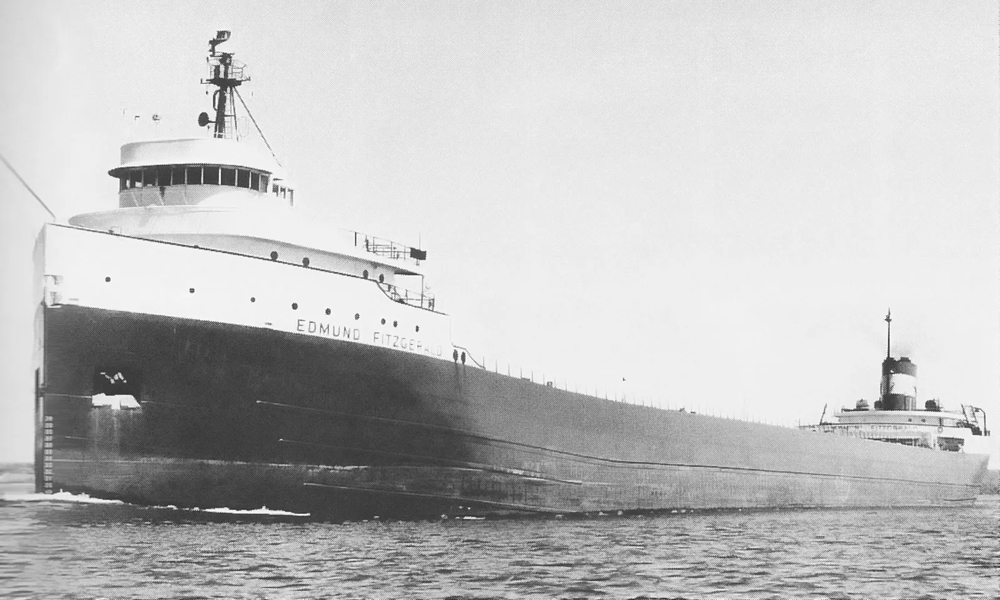
November 10 will mark the 50th anniversary of the sinking of the SS Edmund Fitzgerald, a tragedy that remains shrouded in mystery to this day. The ship sank in Lake Superior during a storm, claiming the lives of all 29 people aboard.
U-M experts can discuss how the sinking of the Fitzgerald, and other discoveries, changed the operation of Great Lakes freighters to improve the safety.

Matthew Collette, professor of naval architecture and marine engineering, can comment on how the Edmund Fitzgerald impacted freighter operation, and why the cause of the accident is so uncertain.
“There are three or four theories on why the Fitzgerald sank, and they’re all plausible theories. It’s really hard now, 50 years after the fact, to disentangle what really happened,” he said. “That’s the reason people love the Fitzgerald—it’s a mystery.
“The lakes were considered a safer environment than the ocean, even though we knew they could get nasty in the fall. So lakers didn’t have basic gear that would be considered required on an ocean-going ship. Now, all Lakers are required to carry survival suits to protect the crew against cold water, or a depth sounder to see how much water is underneath the vessel. That all became a safety requirement from the Coast Guard after the Fitzgerald sank.”
Contact: mdcoll@umich.edu

Armin Troesch, emeritus professor of naval architecture and marine engineering, can comment on how Great Lakes freighters presented unique engineering challenges when they started to be built longer. Originally, naval architects thought they could get away with less steel on the Great Lakes than in the ocean. Because waves on the lakes have a shorter period than in the oceans, more wave peaks would support the weight of the ship. But concerns were raised when the longer ships started vibrating.
“But longer ships were more pliable, so when we started putting 1,000-footers on the Lakes, the crew started noticing that the ships would vibrate like spaghetti,” he said. “The relative displacement was several feet in some cases. That was counterintuitive because longer ships should have had more support in the lakes.
“Vibrations in the ship hull were the cause. This happens naturally when the metal is disturbed. Think of a tuning fork—it’s a stiff piece of metal, but it rings at a specific frequency when you hit it. The lowest frequency that ships will vibrate at is a two-node vibration. It’s a bit like the cat-cow yoga movement—the center of the ship flexes up and down. The longer, more pliable ships tended to have lower vibration frequencies.
“Turns out you can address this as an operator by changing the speed of the ship a very little bit or by changing the heading angle into the wave. You change the frequency of encounter and detune the system.”
Contact: troesch@umich.edu
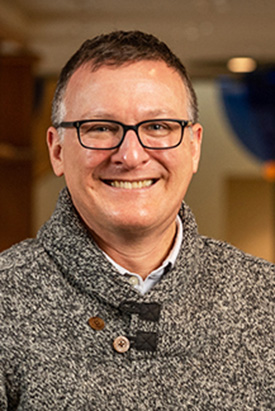
Richard Neitzel is an occupational health and safety researcher at the School of Public Health and director of the Center for Occupational Health and Safety Engineering.
“The anniversary is a reminder of the importance of worker and workplace safety laws that save lives and prevent injuries every day across America,” he said. “It’s also a time to stay tuned to funding cuts that are eliminating these protections.”
The federal government’s virtual elimination of the National Institute for Occupational Health and Safety, which for 50 years has overseen protections for workers, is of particular concern. NIOSH funds go to training and research at U-M and dozens of other universities and also supports important efforts like respirator certification, disease tracking and evaluations of potential workplace hazard reduction strategies.
About 55,000 American workers die each year of preventable occupational injuries and illnesses, and workplace injuries and illnesses cost the economy $250 billion each year, said Neitzel, who discusses the NIOSH situation in this video.
“Without this research more Americans will suffer preventable injuries and illnesses, businesses will face higher costs and families will lose loved ones to workplace accidents that could have been prevented,” he said. “This isn’t just about workplace regulations or government agencies. It’s about your safety, your family’s well-being and our nation’s economic health. Research on occupational safety and health isn’t a luxury. Our lives and livelihoods depend on it.”
Contact: rneitzel@umich.edu