U-M Tech Transfer builds on successes
A company that builds systems to protect computer networks from security problems. The manufacturer whose device detects sometimes-deadly Grade B Streptococcus in newborns. A business that develops new technology for laser eye surgery. All of these companies are based on research from U-M and were formed with licensing and business development assistance from the University’s Office of Technology Transfer (OTT). And all three success stories are examples used by the vice president for research when telling his story of a “five-year transformation” of the OTT program.
Tech Transfer (TT) has played a major role in a number of innovative new businesses formed in the Ann Arbor area and throughout the United States, Vice President for Research Fawwaz Ulaby told the Board of Regents during his annual report Jan. 16. Since 2000, 24 new “venture quality” companies have spun from the program, 20 of which have Michigan headquarters.
The success of OTT has gained recognition from the state, including a 2002 honor from the Michigan Economic Development Corporation for “exemplary success in commercializing technology and promoting entrepreneurship in Michigan.” OTT is the only University program in the state of Michigan to have received the award.
But Ulaby told regents OTT was not always a leader in economic development. “In the beginning, the period from 1980 to 1995, TT was regarded as peripheral and unimportant,” Ulaby said. “Many were disappointed in our performance, reflected in a 1991 headline describing U-M ‘like a cork keeping ideas in a bottle.'”
Ulaby told regents the major growth and redefining of TT has come about in the past six years, following the board’s adoption of a policy recognizing its importance to the University.
“In 1996 Vice President for Research Homer Neal challenged schools and colleges to support TT efforts,” Ulably said. “From that point forward, things began to happen, including a major U-M leadership retreat in 1999 where a serious and strong commitment was made.”
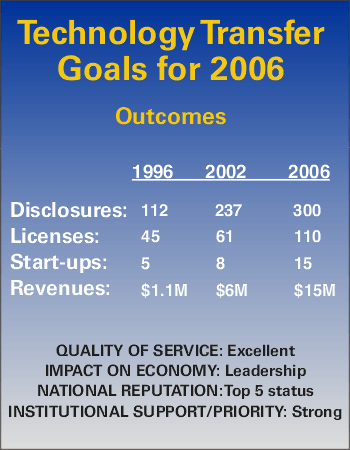
OTT revenues jumped from $1.1 million in 1996 to $5.7 million in 2002. Perhaps more telling, Ulaby said, the number of new “venture quality” business start-ups increased from 10 in the period 1995-98 to 24 from 1999-2002.
The number of staff members has nearly doubled, from 14 to 24 from 1996 to 2002, bringing the resources in line with its peers. The University’s increased commitment to OTT also has resulted in the hiring of Ken Nisbet as executive director in 2001 and the appointment of a national advisory board this past October.
In addition to highlighting the program’s history, Ulaby gave regents a preview of what is ahead. OTT’s goals for 2006 include raising revenues of $15 million, increasing the number of startups per year to 15, and continuing its advances in responsiveness, quality of service and contribution to economic development. U-M currently ranks among the top colleges and universities in Tech Transfer, but Ulaby wants it to be in the top five in the nation four years from now.
“With the staff’s talent, team spirit and attitude; the increased excitement and engagement of our superb faculty; and the support of the regional business community and national networks, Michigan is poised to realize its potential as a source of valuable technologies in the many fields of research in which it is a leader,” he said.