Can ‘spam’: New options reduce unwanted e-mail
Log on to http://spambusters.mail.umich.edu and click on “Sign Up/Manage Do Not Spam List.”
If there’s something strange in your e-mail box, who you gonna call? Spam Busters.
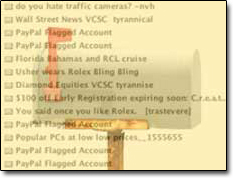
Information Technology Central Services (ITCS) recently implemented a new opt-in service to help interested faculty, staff and students reduce the amount of unwanted “spam” e-mail they receive.
Faculty, staff and students who have an entry in the University’s online directory can sign up for the Do Not Spam List to have mail from known spam sources blocked from reaching their address. People who own a group in the directory also can have spam blocked for that group.
Log on to http://spambusters.mail.umich.edu and click on “Sign Up/Manage Do Not Spam List.” The link contains buttons for activating the spam block function on both individual and group addresses. It also provides tips for preventing spam delivery.
“Spam can sometimes be in the eye of the beholder,” says Kitty Bridges, associate vice president for ITCS. “It is critical that this service be an opt-in function so that individual users can decide what e-mail they do or do not want to receive. Some want to receive all e-mails and decide what to read or keep.”
ITCS administrators caution that not all spam will be eliminated. ITCS purchased the spam-blocking lists from Mail Abuse Prevention Systems (MAPS), which tracks known spam sources, but many spammers routinely change their Internet protocol (IP) addresses to avoid such lists.
“This will reduce the amount of spam in e-mail inboxes, but the MAPS lists are conservative,” says Amy Brooks, ITCS Anti-Spam Project leader.
“We wanted to keep the risk of blocking legitimate mail extremely low.”
ITCS calls the new system an effective first line of defense while additional options are developed.
“It is very difficult to stay ahead of spammers, so we have to attack this with many different methods,” says Bridges. “This is one step for helping users protect themselves. We will soon offer content filtering for spam as an additional step.”
“Many people on campus don’t want to get spam or deal with spam at all,” Brooks says. “Others are concerned about missing legitimate e-mails. We are trying to provide anti-spam services that take both viewpoints into account.”
The Spam Busters Web site includes a tool that allows the user to check to see if a particular IP address, e-mail address or domain is on the Do Not Spam List, or is blocked for any reason.
According to ITCS, the number of U-M directory entries (both individuals and groups) that have opted in to the Do Not Spam List had reached nearly 10,000 by Jan. 20.
Also by Jan. 20, more than 22,000 messages from known spam sources were being blocked per day.
For help in using the Do Not Spam list, send an e-mail to online.consulting@umich.edu or call (734) 764-HELP (4357).