IT visionary to address Commencement
Honorary degree recipients
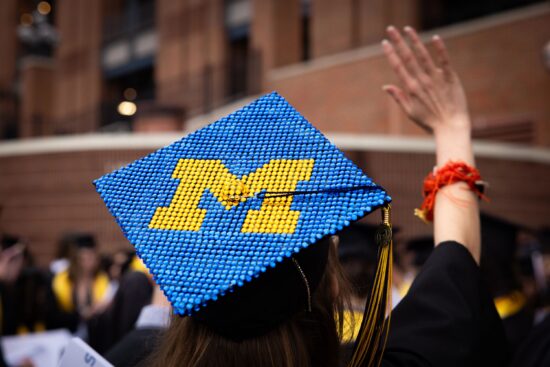
John Seely Brown—former chief scientist of Xerox Corporation, and a leading contemporary thinker on the influence of technology on modern life—will give the main address and receive an honorary degree at U-M’s Spring Commencement ceremony at 10 a.m. April 30 in Michigan Stadium.
The Board of Regents approved honorary degrees for Brown and five other individuals at its March 17 meeting.
“John Seely Brown combines visionary thinking with a clear-eyed understanding of how science affects people in everyday life,” says U-M President Mary Sue Coleman. “His ground-breaking work in applying information technology to higher education is a great gift to the academy. It is with gratitude and pride that we recognize this celebrated U-M alumnus with an honorary degree.”
The honorary degrees to be conferred are: Brown, doctor of science; Henry W. Bloch, founder of H&R Block and U-M alumnus, doctor of laws; physicist Mildred Dresselhaus, Institute Professor at the Massachusetts Institute of Technology, doctor of science; Bruce S. McEwen, the Alfred E. Mirsky Professor and head of the Hatch Laboratory of Neuroendocrinology at The Rockefeller University, doctor of science; Margaret Ann (Ranny) Riecker, philanthropist and longtime supporter of higher education and the education of women, doctor of laws; and Glenn E. (Bo) Schembechler, former U-M football coach, doctor of laws.
Dresselhaus will be the main speaker at University Graduate Exercises to be held at 1 p.m. April 29 in Hill Auditorium.
Brown served as chief scientist for Xerox Corporation from 1992-2002 and headed the Xerox Palo Alto Research Center (PARC) from 1990-2000. Brown joined PARC in 1978. His work expanded the role of corporate research to include topics such as organizational learning and nanotechnology. In 1984, he became director of PARC’s Intelligent Systems Laboratory, which worked on developing artificial intelligence programming. He is a visiting scholar at the Annenberg Center and Annenberg School of Communication at the University of Southern California.
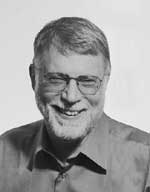
He received a bachelor of arts in mathematics and physics from Brown University in 1962, and master of science in mathematics in 1964 and a doctorate in computer and communication science from U-M in 1970. He is a member of the National Academy of Education and a fellow of the American Association for Artificial Intelligence and the American Association for the Advancement of Science. He also serves as a trustee at Brown University and the John D. and Catherine T. MacArthur Foundation.
Brown is a co-founder of the Institute for Research and Learning, a non-profit institute for addressing the problems of life-long learning. With Paul Duguid, he co-authored the widely acclaimed book, “The Social Life of Information,” published in 2000 and translated into nine languages.
Dresselhaus has been a leader in carbon research for 40 years. Her physics research has seen many breakthroughs in the physics of solids. One of 12 active Institute Professors at the Massachusetts Institute of Technology, during the past decade she has focused on understanding the fundamental science of carbon nanotubes, which have potential for applications in flat-panel displays, drug delivery and electronic devices. She is past director in the U.S. Department of Energy’s Office of Science. She is a member of the National Academy of Sciences, the National Academy of Engineering, and the American Academy of Arts and Sciences.
In 1951, a time when the field had few women, Dresselhaus graduated with a physics degree from Hunter College. After a year at the University of Cambridge on a Fulbright fellowship, she received a master’s degree from Harvard University. She completed her doctorate in physics at the University of Chicago, where she took classes and interacted with Enrico Fermi. In 1990, she was awarded the National Medal of Science, the nation’s highest honor for science.
Dresselhaus has been a leader in the advancement of science education, especially for women. Having struggled herself with balancing work and home life, she became an advocate for women scientists. She was appointed first chair of the Committee on the Education and Employment of Women in Science and Engineering of the National Research Council, due, in part, to her past leadership in finding solutions for problems faced by women students and faculty in academia.
Bloch and his older brother, Leon, started the United Business Company in Kansas City, Mo., shortly after World War II, offering bookkeeping and tax services. When Leon left to practice law, Bloch and his younger brother, Richard, continued the business. In 1955, the Internal Revenue Service in Kansas City discontinued its free tax-preparation assistance service. The company seized this opportunity to focus solely on tax preparation and was renamed H&R Block, Inc.
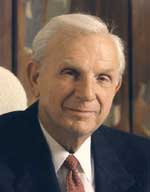
The company’s rapid growth in the early 1960s left it with a shortage of qualified personnel, leading to the founding of H&R Block’s Tax Training Schools in 1966.
H&R Block has a network of more than 11,000 tax offices located primarily in the United States, Canada, Australia and the United Kingdom, making it the sixth largest retailer in the world.
Bloch began his college career at the University of Missouri at Kansas City, and later transferred to U-M, from which he graduated in 1944 with a bachelor of science in mathematics. In 1995, he made a gift to LSA to support innovative curricular revisions incorporating elements of the arts into course offerings.
McEwen and his research team at The Rockefeller University’s Harold & Margaret Milliken Hatch Laboratory continue to elucidate the impact of stress on brain structure and neurochemistry, as well as to define differences in the brain between men and women.
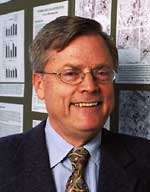
McEwen received his bachelor of arts in chemistry from Oberlin College, summa cum laude, and his doctorate from the Rockefeller University in cell biology. He also completed a postdoctoral fellowship at the Institute of Neurobiology in Goteborg, Sweden.
McEwen is past-president of both the International Society of Neuroendocrinology and the Society for Neuroscience. He is a member of the National Academy of Sciences, the American Academy Sciences, the Institute of Medicine, the American Academy of Arts and Sciences and the New York Academy of Sciences.
He is co-author with Harold M. Schmeck Jr. of “The Hostage Brain”(1994) and is co-author with science writer Elizabeth Lasley of the book “The End of Stress as We Know It” (2002).
The son of English Professor George McEwen, he grew up in Ann Arbor and graduated from the former University High School. He continues to serve as a scientific adviser to the U-M Mental Health Research Institute.
Riecker has been for more than 40 years a trustee of both the Harry A. and Margaret D. Towsley Foundation (formed by her parents) and the Herbert H. and Grace A. Dow Foundation. She has worked toward improving the work of foundations, especially family foundations, in Michigan through the Council of Michigan Foundations, and nationwide through the Council on Foundations.
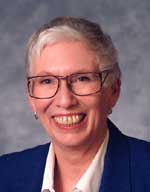
Riecker’s support of education is visible on many levels. At U-M she has held key leadership positions for major fundraising campaigns. She was co-chair of the steering committee of the $1 billion Campaign for Michigan (1990-97). Currently, she is honorary co-chair with her husband, John, of The Michigan Difference, a $2.5 billion campaign. She also serves on the Leadership Council of the Center for the Education of Women (CEW). Elsewhere, she has been a trustee of Carleton College, her alma mater, and Central Michigan University.
“Ranny Riecker is deeply committed to improving her community and its institutions—including the University of Michigan,” says Rebecca Blank, dean of the Gerald R. Ford School of Public Policy. “She has been an invaluable source of advice and wisdom to me. She’s a tireless volunteer; she co-chaired our fundraising committee for a new building and I literally couldn’t have done this without her.”
Riecker also is committed to supporting students, especially women, encouraging them to be involved in research. Her gifts to U-M have supported the Undergraduate Research Opportunity Program and CEW.
Schembechler was head coach of the football team for 21 years and served as athletic director from 1988-90. He has won more football games than any other head football coach in U-M history. His overall coaching record in 27 seasons (including six at Miami University) was 234-65-8. Schembechler never had a losing season, and at his retirement he ranked as the winningest active football coach in NCAA Division I.
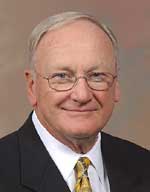
Schembechler built a legendary football program founded on teamwork and integrity, values that continue to mark the program today. His coaching record at U-M was 194-48-5 with 13 Big Ten Conference championships. The connections his teams built with alumni have helped strengthen the University’s own ties with its graduates.
Schembechler earned his bachelor’s degree in education from Miami University of Ohio, where he also lettered in football and baseball. He received his master’s degree from The Ohio State University in 1952, while working as a graduate assistant coach under Woody Hayes. He later served five seasons as an assistant coach to Hayes before accepting the head-coaching job at Miami in 1963.
Schembechler was inducted into the Miami Hall of Fame in 1972, the State of Michigan Sports Hall of Fame in 1989, and the U-M Hall of Honor in 1992. In 1993, he was inducted into the Rose Bowl Hall of Fame and the National Football Foundation College Hall of Fame.