Annual awards fete top faculty
Twenty-three faculty and staff members will be recognized for their teaching, scholarship, service and creative activities at a dinner Oct. 4 in Rackham Assembly Hall.
Distinguished University Professorships recognize full or associate professors for exceptional scholarly and/or creative achievement, national and international reputation, and superior teaching skills. Created in 1947, each professorship bears a special name, determined by the appointive professor in consultation with her or his dean. Each professorship also carries an annual salary supplement of $5,000 and an annual research supplement of $5,000. The duration of the appointment is unlimited, and the title—without the salary and research supplements—may be retained after retirement. In addition, newly appointed Distinguished University Professors are expected to deliver an inaugural lecture during the first year of appointment. Honorees and their awards are:
• Noreen Clark, Marshall H. Becker Collegiate Professor of Health Behavior and Health Education, professor of pediatrics and communicable diseases, director of the Center for Managing Chronic Disease, School of Public Health, awarded the Myron Wegman Distinguished University Professor of Public Health:
• Nicholas Delbanco, LSA, the Robert Frost Collegiate Professor of English Language and Literature;
• Geoff Eley, history, the Karl Pohrt Distinguished University Professor of Contemporary History;
• Lennard Fisk, College of Engineering , the Thomas M. Donahue Distinguished University Professor of Space Science; and
• Raoul Kopelman, LSA, the Richard Smalley Distinguished University Professor of Chemistry, Physics and Applied Physics.
Distinguished Faculty Achievement Awards honor senior faculty who consistently have demonstrated outstanding achievements in the areas of scholarly research and/or creative endeavors; teaching and mentoring of students and junior faculty; service; and a variety of other activities. Faculty at the rank of full or associate professor may be nominated. Nominations of women, minorities and members of other groups historically underrepresented in their disciplines are encouraged. Up to five awards of $1,500 are made each year. Awardees include:
• David Ballou, professor of biological chemistry, Medical School;
• Enoch Brater, Kenneth T. Rowe Collegiate Professor of Dramatic Literature and professor of English and theater, LSA;
• Victor Li, Benjamin Wylie Professor of Civil and Environmental Engineering, College of Engineering;
• Sherril (Sherri) Smith, professor of fiber arts, School of Arts and Design;
• Alan Wineman, professor of mechanical engineering, College of Engineering.
Faculty Recognition Awards are intended for faculty early in their careers who have demonstrated substantive contributions to the University through significant achievements in scholarly research and/or creative endeavors; excellence as a teacher, adviser and mentor; and distinguished participation in service activities of the University. Eligible candidates include full professors with no more than four years at that rank, associate professors, and assistant professors. Nominations of women, minorities and members of other groups historically underrepresented in their disciplines are encouraged. Up to five awards of $1,000 each are made each year. Recipients include:
• Peter Ho Davies, associate professor of English language and literature, Helen Zell director, master of fine arts program, LSA;
• Vincent Hutchings, associate professor of political science, LSA;
• Peggy McCracken, professor of French and women’s studies, LSA;
• Christopher Monroe, professor of physics and director of the National Science Foundation FOCUS Center, LSA; and
• Sherif El-Tawil, associate professor of civil and environmental engineering, College of Engineering.
University Undergraduate Teaching Awards are designed to honor faculty early in their careers who have demonstrated outstanding ability in teaching undergraduate students. Nominees must have an evident commitment to students; a record of innovation in teaching and learning; notable dedication to working effectively with a diverse student body; and a consistently positive effect on students’ intellectual/artistic development. Any tenure-track faculty member who has been in the professorial ranks for more than two years may be nominated. Nominations of women, minorities and members of other groups historically underrepresented in their disciplines are encouraged. Each year up to two awards of $1,000 will be made. Awardees include:
• David Gerdes, associate professor of physics, LSA;
• Andrew Shryock, associate professor of anthropology, LSA;
Research Faculty Recognition Awards recognize individuals who hold at least a 75 percent appointment at the rank of research associate professor, research assistant professor, associate research scientist or assistant research scientist. Selection criteria include exceptional scholarly achievements, as evidenced by publications and/or other scholarly activities in any academic field of study. The recipients will be awarded $1,000. Recipients include:
• Michael Keidar, assistant research scientist in aerospace engineering, College of Engineering; and
• Maria Szerszen, associate research scientist and adjunct associate professor, civil and environmental engineering, College of Engineering.
Research Faculty Achievement Awards are given for outstanding scholarly achievements, as represented by significant contributions to an academic field of study over time, a specific outstanding discovery or the development of innovative technology.
Nominees must hold at least a 75 percent appointment at the rank of research professor, research associate professor, research scientist or associate research scientist. Recipients receive $1,500 each and are selected by the vice president for research based on the recommendation of the research faculty awards committee. Honorees include:
• Amy Schulz, research associate professor, health behavior and health education, School of Public Health and Institute for Research on Women and Gender; and
• Susan Shore, research associate professor, Kresge Hearing Research Institute.
Distinguished Faculty Governance Awards honor faculty members who provide distinguished service to faculty governance over several years with an emphasis on Universitywide service by consistently placing it on the same level as personal, career and departmental interests. Such members represent a scarce resource, and the kinds of corporate activity they take on provide a secure sense of collective conscience. Faculty government, through the Senate Advisory Committee on University Affairs, recognizes their accomplishments with this award. The award was established by SACUA in 1986 and is funded by the Alumni Association. Recipient:
• William Ensminger, professor of internal medicine, Medical School.
Jackie Lawson Memorial Faculty Governance Award honors Jackie Lawson, a professor of English and communications at U-M-Dearborn from 1985 to 2000. She was deeply committed to faculty governance and to strengthening the relationships among the University’s three campuses. At the time of her death, Lawson was chair of the Senate Advisory Committee on University Affairs, the first faculty member from one of the regional campuses elected to that position. The University posthumously presented Lawson its Distinguished Faculty Governance Award in 2001. Any faculty member is eligible for the award of $1,500, to be presented only in those years when an exceptional candidate is identified, which is signified by exceptional distinction reflected in faculty governance service to the entire University that reaches beyond the local campus confines of Ann Arbor, Dearborn and Flint. Honoree:
• Paulette Cebulski, associate professor of physical therapy, School of Health Professions and Studies, U-M-Flint.
Regents’ Award for Distinguished Public Service honors extraordinary distinction in public service by a member of the University faculty. Nominations come from the ranks of the University Senate (assistant, associate and full professors, research scientists and librarians who are Senate members). The award recognizes public service activities that relate closely to teaching and research and reflect professional and academic expertise. Service activities may occur outside the University in local, state, national or international arenas. Honoree:
• Anne Ruggles Gere, professor of English language and literature and of education, LSA.
University Librarian Recognition Award recognizes an individual who holds a primary faculty appointment as librarian, archivist or curator with no more than eight years’ practice in the profession. Selection criteria include active and innovative early career achievements in library, archival or curatorial services. This may include developing specialized services for faculty and students, improving access to information or efficiently managing library and archival resources (staff, space, funding, collections), or other activities. The recipient will be awarded $1,000. Awardee:
• Annette Haines, field librarian, School of Art and Design.
University Press Book Awards are presented to members of the University’s teaching and research staff, including emeritus members, whose book has added the greatest distinction to the Press List. Selections are made from books published within a span of two calendar years. The cash value of the award is $1,000 and is apart from any royalties the book may have earned. Awardee:
• Geoff Eley, history.
Distinguished Faculty Achievement Award, David Ballou
David Ballou, professor of biological chemistry in the Medical School, is one of the world’s leading enzyme kineticists.
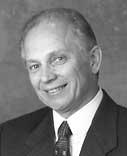
A department member since 1971, he has specialized in the biochemistry and biophysics of vitamin B2-based enzymes that carry out reduction-oxidation transformations on physiologic substrates. Because of his combination of technical virtuosity and mechanistic insights into how nature uses the co-enzyme forms of riboflavin for myriad oxidative interconversions of metabolites, scholars have come from all over the globe to work in partnership with him. Similar collaborations have been sparked by his technical skill and insight into how nature uses nonheme iron and heme-containing oxygenases.
The National Institutes of Health (NIH) have supported Ballou’s laboratory for more than 32 years, and in 1991 recognized the importance of his productivity and collaborative efforts with a MERIT Award—one of the most prestigious single-investigator research honors. His scientific contributions have resulted in many important papers in several areas of biochemistry. His work makes major contributions to understanding the functions and mechanisms of numerous enzymes involved in biological processes. Throughout his career, Ballou has been a hands-on scientist, regularly carrying out experiments with students and collaborators.
Also impressive is the list of invited talks Ballou has given over the years at almost all of the international symposia on flavins and flavoenzymes, in addition to giving invited lectures at several international conferences in other areas of enzymology.
He recently was selected for the editorial board of Inorganic Biochemistry, the oldest specialty journal covering the interface of biochemistry and inorganic chemistry.
Ballou widely is sought for service on doctoral thesis committees from a number of departments, normally being on 25 or more such committees. Students often carry out major parts of their research experiments directly with him.
In collaboration with Dr. Alex Ninfa, he has written a book titled “Fundamental Science Laboratory Approaches for Biochemistry and Biotechnology,” which has been translated into Chinese and Italian and adopted by more than 80 universities in North America alone.
Ballou is a research scientist who has produced a large body of original scientific research and is recognized internationally for his contributions across several disciplines, and he is considered a thoughtful and caring educator.
Distinguished Faculty Achievement Award, Enoch Brater
Over the course of 30 years at U-M, Enoch Brater, the Kenneth T. Rowe Collegiate Professor of Dramatic Literature and professor of English and theater in LSA, has established himself as one of the world’s foremost authorities on contemporary drama. His name indelibly is linked to two of the century’s most influential playwrights: Arthur Miller and Samuel Beckett.
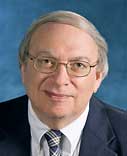
In numerous books, essays and lectures, Brater has redefined the terms in which we understand the dramatic opacities, innovations and legacies of Beckett. He also is recognized as a pre-eminent scholar of the work of Miller, one of Michigan’s most illustrious graduates.
Brater’s books have reshaped the field of Beckett studies. His scholarship combines exquisite sensitivity to the text with a full understanding of the dynamics of theater in performance. “Beyond Minimalism: Beckett’s Late Style in the Theater” (1987) was the first book to focus on Beckett’s later works, while “The Drama in the Text: Beckett’s Late Fiction” (1994) illuminates the ways in which the later dramas unfold and seeks to understand more fully how the genres of drama and fiction feed and re-energize each other.
Recognizing early on the importance of Miller’s work, Brater has written on the playwright throughout his career. In the last few years, however, his work on the always popular but frequently misunderstood Miller has reached a high point.
Brater has edited and contributed essays to two books that serve as milestones in the critical reappraisal of Miller, “Arthur Miller’s America” (2005) and “Global Miller” (2007). These companion volumes place Miller’s work in a national and transnational context, respectively. In addition, “Arthur Miller: A Playwright’s Life and Works” (2005) offers a cornucopia, for academic and general readers alike, of biographical information and incisive, always illuminating critical interpretation.
Brater has been enormously industrious not only in his writing and editing, but in organizing conferences and as president of the Samuel Beckett Society. His organization and orchestration of a successful conference on Miller and his efforts during the last decade to help the Arthur Miller Theater reach fruition have been especially notable.
Brater has been a challenging and demanding professor, with classes filled to capacity, and a much-appreciated mentor and dissertation adviser to many graduate students who have gone on to successful careers.
Distinguished Faculty Achievement Award, Victor Li
Few celebrated scholars can claim that their work is likely to affect the safety of tens of millions of people all over the world. But as a result of his development of a new, safe and sustainable building material, Victor Li, the E. Benjamin Wylie Professor of Civil and Environmental Engineering, College of Engineering, is among the few.
Li’s achievements have been recognized by honors and awards, among them an honorary doctoral degree from the Technical University of Denmark for his “outstanding, innovative contributions to materials research and engineering and providing our society and the construction industry with new, safe and sustainable building materials,” an honor he received in the presence of the Queen of Denmark.
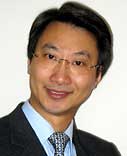
Li solely is responsible for the development of engineered cementitious composites, a building material that for the first time builds tensile ductility into concrete structures. He also was the first to recognize the importance of linking materials science to construction-materials design, of linking materials properties to targeted infrastructure performance, of linking structural durability to environmental sustainability and of creating a rigorous scientific pathway to carry out scale linking.
His passion has been to transform his work into something practical that can benefit society and the environment. He has involved material companies, product manufacturers and construction firms in collaborative research that demonstrates his vision for how to transform a scientific concept into an engineering product.
Li’s strong teaching skills are characterized by his ability to motivate students and to simplify complicated technical matters without loss of accuracy. He has supervised more than 20 doctoral theses. After a target goal and a broad framework are agreed upon, he challenges students to set their own research agendas. Many of his former students are now leaders in engineered cementitious composites technology in their home countries.
Li is recognized internationally as a pioneering researcher, a caring educator, a creative inventor and a visionary leader in civil engineering. In addition to numerous invitations to give keynote speeches at major national and international conferences, he has the distinction of being honored by election to both the American Society of Civil Engineers and the American Society of Mechanical Engineers.
In part because of Li and his students’ research accomplishments, U-M today is viewed as the world’s technology leader in advanced civil engineering materials.
Distinguished Faculty Achievement Award, Sherri Smith
One of the most innovative fiber artists in the world, Sherri Smith, professor of fiber arts, School of Art and Design (SOAD), has been a key figure in bringing fiber arts to national and international attention. Her creative body of work represents ideas that are realized in two- and three-dimensional work that is engaging, thought-provoking and beautiful.
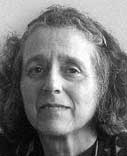
Over her 35-year career Smith has exhibited at 49 museum and art centers, including the 7th International Biennial of Tapestry at Lausanne, Switzerland, where she displayed one of the most significant and innovative fiber statements in that biennial’s history. Her association with commercial galleries also is extensive, and the long list of her national and international collections includes prominent private collectors, museums and corporations.
Smith always has had an uncommon interest in deciphering how things work. As she began to work with students, she insisted that they demystify technology and regard it as fundamental to building anything worthwhile. At a time in the late 1960s and early ’70s when many practitioners in the field of textiles worshiped the means, she insisted they shift focus to the expressiveness of the product. She is extraordinarily knowledgeable about textiles from around the world.
The breadth of Smith’s knowledge in various fields of study contributed to unusual insights that stimulated reaction and formed her reputation. She may be the only weaver in the world capable of making a sophisticated connection between weaving and quantum physics.
Under her leadership the Department of Physics and SOAD began a dialogue and collaboration that has resulted in works exhibited at the Fermi National Accelerator Laboratory, and her own work has appeared on the cover of the Michigan Center for Theoretical Physics publication.
Smith designed the fiber arts program at Michigan. She knows almost everything there is to know about the field and has organized that knowledge into a compact course of study. She is known for inventing techniques and incorporating new materials—qualities that have carried over into the classroom.
With her skill balancing the needs of all her students, so that each is able to move forward as an artist and as a person, she has produced many serious artists who are successful in the field.
Generous with colleagues as well as students, Smith has been a leader and role model, selfless in service to the school and University.
Distinguished Faculty Achievement Award, Alan Wineman
In 42 years on the faculty, Alan Wineman, professor of mechanical engineering, CoE, has established an outstanding record of performance in teaching, research and service.
His research has been in developing and applying mathematical models for the mechanical response of polymeric solid and fluid materials. He has used continuum mechanics to make important contributions to a wide range of technically significant problems.
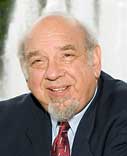
In work that has touched nearly every aspect of mechanics, Wineman has made significant contributions to elasticity, viscoelasticity, mixture theory, non-Newtonian fluid mechanics and mechanics of field-dependent materials. He has published more than 120 papers in the top-ranked journals and has earned international recognition as a highly creative and innovative researcher.
Many of his papers were written well ahead of their time, and it is only today that others have come to appreciate his foresight. With K. R. Rajagopal, he has written a textbook on viscoelasticity titled “Mechanical Response of Polymers,” a clear, readable book that is accessible to senior undergraduates and graduate students alike and reflects his commitment to education.
With both undergraduate and graduate students Wineman has gained a reputation as a caring, committed teacher. Pi Tau Sigma, the Mechanical Engineering Honor Society, has named him Professor of the Term in four different terms. In addition, he twice has received the CoE Teaching Excellence Award, an unprecedented achievement. He became an Arthur F. Thurnau Professor in 2000, the University’s most prestigious teaching excellence award, and in 2002 he received the American Society of Engineering Education Archie Higdon Distinguished Educator Award.
Wineman also has an admirable record of service on many committees at the departmental, college and university levels. He also has served two terms on the board of directors of the Society of Engineering Science, organized a large number of symposia at national conferences, and was co-organizer for several conferences held at the University.
Wineman’s career and overall contributions are an inspiring model for his juniors and contemporaries in the field of mechanics. He combines creativity and insight associated with free thinking and dedication with a great care for the welfare of students and colleagues alike.
Faculty Recognition Award, Peter Ho Davies
Since joining the faculty in 1999, Peter Ho Davies, associate professor of English languages and literature, and the Helen Zell Director of the Master of Fine Arts (MFA) Program in LSA, has been a tremendous asset to the English Department and to the University at large in his capacities as teacher, mentor, colleague, fund-raiser, administrator and writer.
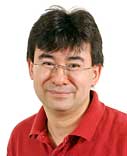
Citing Davies’ international reputation as a writer and a sterling reputation as a teacher and administrator, colleagues say his contributions to the art of fiction and dedication to students at all levels are both inspired and inspiring. He has been instrumental in establishing Michigan’s MFA program as one of the most successful and highly esteemed in the country.
Davies’ two volumes of short stories have garnered impressive recognition, including the John Llewelyn Rhys and PEN/Macmillan prizes. His work has appeared three times in “The Best American Short Stories.” He has been named one of his generation’s best British novelists by the prestigious British journal Granta, won a Guggenheim Fellowship and a National Endowment for the Arts Fellowship and been chosen as a finalist for the Los Angeles Times Book Award.
A striking feature of Davies’ fiction, according to a former colleague, is “an enormous breadth of reference, both to history and geography. The range—in tone and subject matter—is astonishing.” His stories are highly respected among other writers not only for the fluidity and precision of their language, but for the intelligence and originality of their thematic concerns.
“I don’t think anyone is writing better or more varied short stories in English,” one writer says. “His work is so smart and heartfelt and merciless and funny and completely brilliant. I can’t wait to see what he’ll do next.” His recently completed novel, “The Welsh Girl,” will be published in spring 2007 and is certain to add luster to his already brilliant career.
By all accounts, Davies is a talented, generous and particularly effective mentor. In his workshops and in one-on-one work, he creates an environment conducive to genuinely original creative work. His teaching is a major reason so many top writers apply to Michigan’s program, and is why so many recent graduates have gone on to astonishing success.
Since assuming leadership of the MFA program Davies has revamped critical curriculum aspects, been instrumental in hiring distinguished new faculty and established several new major student awards and a wide variety of professional development initiatives for young writers. His decisive role in attracting a $5 million donation has increased graduate student fellowships and stipends and created a fund for the Zell Visiting Writers Lecture Series.
Faculty Recognition Award, Sherif El-Tawil
Sherif El-Tawil, associate professor of civil and environmental engineering in CoE, is an internationally renowned expert in structural engineering.
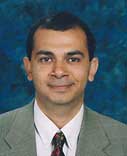
His research explores how buildings and bridges behave under the extreme loading conditions generated by natural and manmade hazards such as earthquakes, collisions and blasts. The overarching objective of his work is to explore how new materials, systems and technologies can be exploited to create innovative structures that mitigate potentially catastrophic effects of severe loading.
El-Tawil has made seminal contributions to the development, implementation and application of computational structural simulation technology. Some of the models he has developed to investigate how steel structures respond to strong seismic shaking have been utilized widely at U.S. universities and at the Nippon Steel Corp., Japan.
El-Tawil’s work has prompted important changes in national seismic codes that govern the construction of steel buildings in earthquake-prone regions. His work on steel connections that fractured during the 1994 Northridge earthquake has led to the development of recommended design criteria that make steel connections more resistant to fracture, thereby improving earthquake resistance and seismic vulnerability of buildings.
Design criteria proposed by El-Tawil recently were incorporated into the 2005 edition of the Seismic Design Provisions of the American Institute of Steel Construction, the main document governing seismic design of steel buildings in the United States and worldwide.
El-Tawil serves as managing editor for the Journal of Structural Engineering. He also is an active member of several American Society of Civil Engineers committees, including, blast effects, seismic effects and methods of analysis. He is chair of the ASCE composite construction committee.
At the state level, El-Tawil is director for the Michigan Department of Transportation Center of Excellence for Bridges and Structures at U-M. His dedication to excellence has been recognized several times through numerous local and national awards.
Course evaluations show El-Tawil to be an excellent teacher, counselor and mentor—a reputation that has been confirmed by the many awards he has received at Michigan and elsewhere. During his four years at U-M he has revised three courses and used research funds to develop the Computational Structural Simulation Laboratory, a facility that explores and develops innovative simulation tools for structural engineering and allows students to interact with structural systems within a virtual environment.
Faculty Recognition Award, Vincent Hutchings
Vincent Hutchings, associate professor of political science LSA, has a record of scholarly achievement that places him among the elite ranks of his discipline. His work is rigorous, creative and focused on questions of central importance to political science and society.
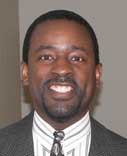
He is innovative in his research methods, clever both in designing original data-collection projects and in using existing data to address his research questions, and consistently attentive to the possibility of alternative hypotheses. He addresses major questions about democratic governance and individual decision making, while being careful not to overstate what his evidence supports.
In his book, “Public Opinion and Democratic Accountability,” published in 2003, Hutchings considers two well-documented but not obviously reconcilable observations: (1) Members of Congress seem to be hyper-responsive to their constituents; and (2) constituents seem to be stumbling around in the dark, massively ignorant of public affairs. The puzzle Hutchings seeks to resolve is why representatives are so attentive to such an inattentive crowd.
In a second line of research he and a colleague are looking at the political significance of groups and group attitudes and asking how voters determine the cues they use in evaluating government.
Hutchings is highly regarded by colleagues, here and around the country, who admire the bridge he has built between representation and public opinion. He won a coveted Robert Wood Johnson fellowship, and was a co-principal investigator of the National Politics Study, a landmark examination of immigration and ethnicity in the contemporary United States.
Having served on more than a dozen dissertation committees, Hutchings wins high praise for individual mentoring and classroom teaching. Graduate students say he is tireless, generous and always accessible. Last year Pi Sigma Alpha, the honorary society in political science, gave him an award for the best undergraduate teacher.
He encourages students to wrestle with multiple points of view and develop written skills in setting forth and defending arguments.
Hutchings has compiled a record of service on committees, and has been active professionally, presenting papers, giving seminars and serving as discussant and chair at various meetings. He currently is co-chair of the American Political Science Association Committee on the Status of Blacks in the Profession.
His character, work and professional involvement have helped maintain the status that the political science department has held for many decades.
Faculty Recognition Award, Peggy McCracken
A French medievalist of international stature, Peggy McCracken, professor of French and of women’s studies, LSA, has made major contributions to the field of medieval romance and gender studies.
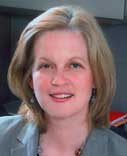
Her work has challenged and redefined what gender meant and how it was constructed in the Middle Ages. She has published two ground-breaking books, as well as numerous articles in major refereed journals.
The importance of McCracken’s first book, “The Romance of Adultery: Queenship and Sexual Transgression in Old French Literature” (1998), was evident in how quickly it became an authority in its field. It is cited now in any work that deals with medieval romance or historical medieval women.
Her second book, “The Curse of Eve, the Wound of the Hero: Blood, Gender, and Medieval Literature” (2003), makes an elegant and persuasive case not only for the significance of blood in medieval romance, but also for how that blood is gendered. She traces the particular ways that blood is gendered within medieval culture, as well as the anxious strategies used to maintain distinctions between the values of men’s blood and the values of women’s blood.
Her current book project, “Medieval Iconology: Bodies, Images, and Narrative,” asks how medieval authors used images to think and what they used images to think about.
McCracken’s teaching record in both Romance languages and women’s studies is outstanding, and student evaluations show appreciation of her teaching on many levels. “She was a joy to learn from,” says one student. Graduate students emphasize her ability to critique and disagree with their comments while maintaining a positive attitude. A much sought-after and highly regarded graduate mentor, she has directed or co-directed four doctoral dissertations, while being a member of six other committees since 1999.
As part of an initiative in global feminism, McCracken was the first faculty member to travel to Beijing in the summer of 2002 to teach a feminist theory seminar as part of a collaborative postgraduate certificate program organized by U-M, the Chinese University of Hong Kong and the Chinese Women’s College in Beijing.
McCracken has assumed major academic service roles in both the Department of Romance Languages and Literatures and in the Women’s Studies Program. She was graduate chair in women’s studies from 2001-03 and chair of Romance languages and literatures from 2003-06.
Faculty Recognition Award, Christopher Monroe
(No photo available)
Since arriving at U-M in 2000, Christopher Monroe, professor of physics and director of the National Science Foundation FOCUS Center, LSA, has established one of the world’s leading laboratories in quantum information science.
His large impact on this new field can be gauged by the Science Citation Index, which lists nearly 5,000 citations of his more than 70 papers. Four of these have more than 400 citations each. He receives dozens of invitations each year to deliver papers at international research conferences.
His work has been featured on popular science television and radio news programs. The American Physical Society has honored him with the I.I. Rabi Prize in 2001 and a Distinguished Traveling Lectureship for the Division of Laser Science for 2002-2006.
Monroe is an established, internationally recognized leader in the area of quantum information and quantum computing. His work has been important in establishing benchmarks for quantum computing. His experiments at the National Institute of Standards and Technology in Boulder, Colo., established the first quantum computer gates, using individual atoms as memory elements.
At U-M his group has demonstrated simple quantum computing algorithms with atoms, developed the first semiconductor chip to host individual atoms and pioneered the linking of individual atoms with individual photons for quantum communication.
Not only a world-class researcher, Monroe also is an exceptional research group leader and outstanding mentor to an ever-growing number of undergraduate, graduate and postdoctoral students. His research group is one of the largest in atomic physics, yet everyone gets his personal attention.
He believes all his students can succeed—and they do. His graduate students find exceptional postdoctoral positions, and his postdoctoral researchers all have been successful in finding faculty positions. He has not shied away from demanding teaching assignments, having developed and given well-attended advanced courses on quantum information science and recently teaching an introductory course on the physics of music.
As a founding member and current director of the NSF FOCUS Physics Frontier Center at the University, Monroe’s work on quantum information is a primary part of the center’s quantum control major research component.
Without question, his membership in the department has added to the prestige of its highly ranked atomic physics group. He has organized workshops to bring leading scientists in his field to Ann Arbor, both through the FOCUS Center and the Michigan Center for Theoretical Physics.
Distinguished University Professorship, Noreen Clark
Noreen Clark, the Marshall H. Becker Collegiate Professor of Health Behavior and Health Education, professor of pediatrics and communicable diseases, director of the Center for Managing Chronic Disease, School of Public Health, is the country’s leading behavioral scientist in respiratory health. She also is a pioneer in using social and behavioral approaches to improving public health.
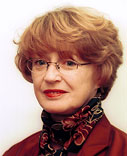
Clark is acclaimed for her use of research methods in natural settings and her careful analysis of how theory-based interventions can improve the health and well-being of individuals and their families, especially in low-income communities. Her work has gained national and international reputation for scholarship in disease management and health promotion. Open Airways at School, a program she developed, now reaches nearly 1 million children in this country and also has been adapted in other parts of the world.
Clark’s research has had a profound impact on the management of chronic disease and has improved the day-to-day health status of vulnerable populations, especially children, low-income people, women, older adults and the chronically ill. Yet her research findings have had implications for all.
Her team-based and collaborative research has mobilized as co-investigators social and behavioral scientists, physicians, epidemiologists, environmentalists, biostatisticians, health management experts and other specialists in studies that reflect the best of thinking across these fields.
An exceptional teacher and mentor, Clark takes special interest in students, involving hundreds of them in her research and affording them invaluable experience.
A hallmark of her teaching is the integration of her experience with research findings. Many of her former students now hold prestigious academic positions or are among the leading practitioners in public health.
For 10 years, Clark served with great distinction as dean of the School of Public Health. In addition, she has an astonishing list of service contributions to some of the most important national and international public health, science, government and voluntary agencies. The many honors and awards she has received and her leadership role in editorial boards, grant review committees, advisory councils, task forces and professional committees give further testimony to the high respect in which she is held by the scientific community.
In every aspect of her work, Clark has distinguished herself as a productive, thoughtful and compassionate scholar, teacher and administrator.
Distinguished University Professorship, Nicholas Delbanco
The accolades Nicholas Delbanco, Robert Frost Collegiate Professor of English Language and Literature, LSA, has received over the years from colleagues, students and readers would be impossible to summarize in a short citation.
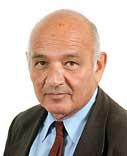
His contributions to American letters and to the University are voluminous, wide-ranging and continuing. Over the course of his career he has written some 23 books in a variety of genres and has served as editor of another half-dozen. Equally important, through his teaching and leadership role in the MFA Program, he has mentored countless younger writers, many of whom have gone on to distinguished careers.
Delbanco’s reputation ultimately may rest on his many works of fiction, 14 novels and two collections of short stories. After a meteoric rise as a young writer, he went on to demonstrate his intrinsic literary steadiness, his bedrock grace and elegance and his moral seriousness in a shelf of books that, however else they differed, took their stand upon an abiding appreciation of language and character and avoided commonplace, facile literary tricks and gimmicky motifs.
Described by one reviewer as, “as fine a pure prose stylist as any writer living,” Delbanco is the model of a man of letters, and long since has earned a large and enviable reputation. Very few American writers of his generation have created a body of work so extensive, diverse and of the highest literary quality—work that includes literary criticism, essays, reviews, screenplays, drama, travel literature, textbooks and memoir. A colleague describes his prose as “quietly elegant and serenely musical, touched by the effervescence of the present and the music of time lost.”
The very qualities that make Delbanco a rare and special writer are those that have made him a teacher of renown at U-M. A former student who now is a noted author speaks of Delbanco’s devotion to the craft of writing. “His reverence for its finest examples are contagious,” she says, “and they fill his classroom with a zest for literature that I’ve seldom witnessed elsewhere.”
Under Delbanco’s leadership, the MFA program attained its stature as one of the best in the nation. Likewise, under his direction the Hopwood Awards for aspiring writers have become more widely known.
His efforts with both put U-M on the literary map. Generous with advice and encouragement for students and colleagues alike, he has worked tirelessly for many years in service to the University.
Superb writer, teacher, mentor and administrator, Nicholas Delbanco is a craftsperson who has handed down what he knows to two generations of students and is one of Michigan’s greatest ambassadors to the world of letters and culture.
Distinguished University Professorship, Geoff Eley
One of the most influential European historians of his generation, Geoff Eley, the Sylvia L. Thrupp Collegiate Professor of Comparative History, LSA, has earned a dazzling reputation nationally and internationally.
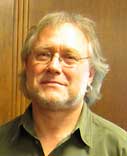
The author of seven monographs, seven edited collections, and 123 articles and book chapters, he has transformed the basic dimensions of German history as currently practiced. Few historians have built so many connections to people working in other fields of history and in other disciplines, and few are so open to new theoretical approaches.
Eley’s “Forging Democracy: The History of the Left in Europe, 1850-2000,” published by Oxford University Press in 2002, proves the exceptional range and depth of his scholarship. Not only does he trace the multitude of nationally framed efforts to conceive different “socialisms,” he also highlights the actual trajectories taken in forging democracy in the last 150 years.
He considers equally the actions and perspectives of governments and the practices of ordinary people. “A Crooked Line: From Cultural History to the History of Society,” recently published by the U-M Press (which honored it with a Press Award), is a brilliant analysis of the key shifts in the landscape of historical scholarship that have taken place in the last four decades.
Three distinctive strengths mark Eley’s work: an enviable capacity for absorbing and synthesizing catholic and complex literatures; a theoretical agility that adds great richness to his writing; and a passionate regard for historical contingency, for the specificity of the particular moment. He believes the study of history must be interdisciplinary and theoretically informed, and his own work is marked by an exceptionally rare knowledge and understanding of other disciplines, Eley has helped place the University near the top internationally for training German historians. He has mentored a gifted cohort of graduate students, several of whom are rising stars in the field.
Further, few have contributed as much in service to the University. Eley was co-founder and director of the program in Comparative Studies of Social Transformation, a principal architect of cooperation in the field of German Studies, a stalwart in the long effort to create a strong center for western European studies and an influential participant in the program in film and video studies.
Distinguished University Professorship, Lennard Fisk
One of the most accomplished and influential scientists at the University, Lennard Fisk, the Thomas M. Donahue Professor of Space Science, CoE, is a world-renowned theorist recognized for incisive ideas and innovative theories that form the framework for understanding many important processes in the solar system.
His more than 180 publications in refereed journals have introduced new ideas and concepts to create an understanding of the atmosphere of the sun and its extension into space to form the heliosphere. In recognition of his outstanding contributions, he was elected to the National Academy of Sciences in 2003.
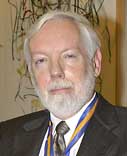
Fisk also has received many other honors for his research. He is an elected member of the International Academy of Astronautics (IAA) and a foreign member of Academia Europaea, the pan-European academy for the arts, sciences and letters; a fellow of the American Geophysical Union; and recipient of the IAA Basic Science Award and the Space Science Award of the American Institute for Aeronautics and Astronautics.
Fisk’s early work on anomalous cosmic rays is an example of how his research has had a far-reaching impact in space sciences. The theory he and colleagues developed has successfully explained a set of anomalous features of cosmic ray flux, an accomplishment that has changed the way the scientific community views the dynamic processes occurring in the solar system.
Before joining the faculty in 1993, Fisk had a distinguished career as a science administrator. From 1987-1993 he served as the NASA associate administrator for the Office of Space Science and Applications, where he was responsible for NASA science programs, including astrophysics and planetary exploration; earth science and space physics; life and microgravity science; and the institutional management of the Jet Propulsion Laboratory and the Goddard Space Flight Center.
NASA awarded Fisk its highest honor, the Outstanding Leadership Medal and the Distinguished Service Medal.
At U-M Fisk has been dedicated to promoting good teaching and exposing students to the intricacies of the nexus of science, engineering and public policy. Since stepping down as department chair he has developed three new courses. He is an effective lecturer whose talks contain a mix of scientific details, policy analysis, pointed challenges to students and contextual levity.
Fisk’s career has brought the University national and international recognition.
Distinguished University Professorship, Raoul Kopelman
In his 40 years at U-M, Raoul Kopelman, the Richard Smalley Distinguished University Professor of Chemistry, Physics and Applied Physics, LSA, has developed a world-renowned research program.
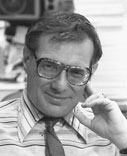
His research has crossed many disciplines, from theoretical chemistry to molecular engineering to medicine. He is a highly recognized and award-winning pioneer of a number of concepts, experimental techniques, novel materials and new medical diagnostic ideas.
Internationally respected for creating paradigm shifts in diverse fields of research, he is known as the creator of the world’s smallest light source and smallest sensors, the pioneer of the nonclassical theory of reaction kinetics, the inventor of near-field optical microspectroscopy and the creator of targeted autonomous nanomedical devices for photodynamic therapy of brain cancer.
Kopelman has published about 500 peer-reviewed manuscripts in highly cited chemistry, physics and medical journals. He has made large contributions to many different fields, including chemical reaction kinetics, spectroscopy, physics of excitons, analytical chemistry, nanotechnology and nanobiotechnology. In addition, with a dozen patents in the areas of spectrochemical analysis and medical diagnostics, he has influenced the way we think about and discover new ideas for applications in technology.
During his long career at the University, Kopelman has directed one of the most highly funded and respected research programs in the Department of Chemistry, as evidenced by his many prestigious awards, including a John S. Guggenheim Fellowship (1994), Collegiate Inventors Grand Prize (with student Jeffrey Anker in 2002), and two awards from the American Chemical Society, the Edward Morley Award and Medal (1995) and the Award in Spectrochemical Analaysis (2005).
An outstanding teacher Kopelman has been a research mentor to a large number of undergraduate, graduate and postdoctoral students in the areas of physical, material, analytical and biophysical chemistry. As a testament to their excellent training, a number of these students have attained prominent careers in academia and industry.
Kopelman is an internationally respected scientist, a wonderful mentor and a dedicated citizen. His service to the chemistry department through committees and graduate recruitment, and to the University and scientific community through organization of symposia and representation on panels at various funding agencies over many years, exemplify his true desire to help develop science and technology here and in other areas of the country.
University Undergraduate Teaching Award, David Gerdes
An extraordinarily committed and capable teacher, David Gerdes, associate professor of physics, LSA, has become a leading figure in Michigan’s physics undergraduate program. His delight in sharing science with his students motivates everything he does.
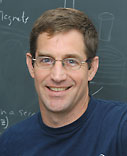
Gerdes applies a carefully honed instructional sense with great stamina, working with students until they master the most challenging course material. He has demonstrated teaching excellence in four primary areas: large introductory physics courses for premedical and other preprofessional students, upper-level courses for physics concentrators, individual supervision of undergraduate research students and, most recently, the revitalization of large introductory laboratory courses. He is a popular lecturer who skillfully uses the peer-instruction method to ensure that every student grasps the material. He also excels in the art of using demonstrations to illustrate difficult concepts.
One of Gerdes’ innovative teaching techniques is what he calls online preflight quizzes, in which students are asked to answer a series of Web-based questions on the reading assignment prior to coming to lecture. This innovation has had a dramatic effect on the students that do the reading and come to lecture prepared to learn.
Students are enthusiastic about their classes with Gerdes and grateful for his help with difficult material. A former student says, “With humor and an infectious enjoyment for the subject, Professor Gerdes opened new doors to his students.
“I went from dreading the subject and doing poorly in first-semester physics to understanding and appreciating it so much in Professor Gerdes’ class that I went on to teach it. He changed student perceptions of physics; it went from a subject to be memorized and tested to a lens—a tool—through which to grasp the world.”
Gerdes is an exceptional mentor as well as teacher.
University Undergraduate Teaching Award, Andrew Shryock
Through his teaching, research and service, Andrew Shryock, associate professor of anthropology, LSA, contributes to the Department of Anthropology, the Center for Middle East and North African Studies, the college, the University and the broader community within the state of Michigan.
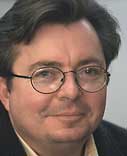
Student evaluations for Anthropology 101 are astonishing for a course that regularly includes some 500 students. As a direct result of his engaging and inspiring lectures, the number of anthropology majors has increased. With the ability to turn a huge auditorium into an interactive classroom, Shryock has played a major role in keeping the course vital, up-to-date and relevant.
Skillfully using humorous anecdotes, memorable personal stories and contemporary music and film, he involves students in the knowledge making process, inviting them to see the strange as familiar and the familiar as strange. Shryock wants his lectures to haunt, inspire, entertain and trouble his students.
His mentorship of graduate student instructors also wins high praise. One testimonial letter says, “With an incredible degree of support, he gave each of the graduate students involved with the course the space to design their own discussion sections; regularly expressed his trust in decisions I made as the head graduate student instructor or others did in the context of their discussion sections; and encouraged an open, amicable atmosphere of consultation and exchange in our weekly meetings.”
Shryock also has been called a leading Middle East scholar of his generation and one of the outstanding anthropologists of his cohort. Widespread recognition of his accomplishments and stature are indicated by the multiple book and film awards he has received, by invitations to the Institute of Advanced Study at Princeton in 1995 and the Center for Advanced Study in the Behavioral Sciences at Stanford in 2002 and by receiving this year a Guggenheim Fellowship to support his latest work in Jordan.
Research Faculty Achievement Award, Amy Schulz
(No photo available)
Amy Schulz, research associate professor, health behavior and health education, School of Public Health and Institute for Research on Women and Gender, is one of the foremost researchers in the country in community-based participatory research on neighborhood effects and health.
Her leadership has played a vital role in transforming research design, methods and analysis in health promotion and disease-prevention interventions.
Since her initial appointment as assistant research scientist, Schulz has published 14 book chapters and 30 peer-reviewed articles in some of the most highly regarded field journals. She also has edited two books.
“Gender, Race, Class and Health” (2006) is one of the first academic books to tackle the complex contributions of gender, race and class in shaping the health of populations. The second, “Methods in Community-Based Participatory Research for Health” (2005), will stand long in community-based participatory research as the standard methodological text that will guide generations of new researchers. In addition, Schulz has written more than 100 papers for presentation at professional meetings.
As principal investigator of four multiyear research investigations, she has assembled interdisciplinary research teams of scholars and community-based partners to address complex issues, using sophisticated quantitative and qualitative methods.
A gifted teacher and committed mentor, Schulz has demonstrated an excellent ability to communicate her research to diverse audiences. Frequently asked to co-chair and serve on doctoral committees and to mentor postdoctoral scholars, she is dedicated to fostering the development of students and junior colleagues. Furthermore, she has a deep commitment to translating research findings into health-promoting programs, practices and policies. She also is highly sought after as a speaker and consultant.
Schulz’s commitment to research in higher education represents, in the truest tradition of social justice, applying research to create meaningful change.
Research Faculty Achievement Award, Susan Shore
An outstanding auditory neuroscientist with an international reputation, Susan Shore, research associate professor, Kresge Hearing Research Institute, has made important contributions to an understanding of the organization of the brain’s central auditory system. She also has discovered and developed a connection between the somatosensory system (relating to the perception of sensory stimuli from the skin and internal organs) and the auditory system.
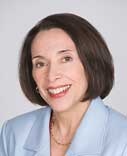
Shore is known for her pioneering work characterizing the anatomy and physiology of trigeminal projections to the central auditory system, which has increased understanding of a common and distressing problem known as tinnitus. She was an invited speaker at a special symposium called Tinnitus: Mechanisms, Models, and Therapy, during the annual meeting of the Association for Otolaryngology in 2003.
She also is considered a world leader in understanding the effects of hearing loss on the physiology of the central auditory system.
Shore uses a combination of sophisticated technologies to identify neurons by their firing properties, their response to stimuli and their anatomical locations and interconnections. She employs special multichannel electrodes that can record from multiple neurons at a time to interrogate a field of activity within the brain region she studies. The devices used, called Michigan probes, were developed in a collaboration between the Kresge institute and the CoE, and Shore was one of the scientists who participated in the design and testing of the devices.
Shore has published her work in internationally respected, high-impact journals. She also has authored several important book chapters and reviews and is a reviewer for international journals such as Nature, Journal of Neuroscience, Journal of Comparative Neurology Journal of the Association for Research in Otolaryngology and Journal of Neurophysiology.
Shore has mentored several undergraduate, graduate and medical students, as well as postdoctoral fellows. She has chaired the Advisory Committee on Primary Research Appointment, Promotions and Titles in the Medical School and served as a member of the University’s Research Policies Committee.
Research Faculty Recognition Award, Michael Keidar
Michael Keidar, assistant research scientist in aerospace engineering, CoE, is an internationally recognized expert willing to tackle problems that deter others.
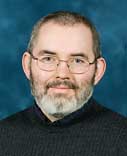
A prolific scholar with an exceptionally strong publication record, Keidar has published 70 articles in refereed journals; in 2005, he published eight articles in prestigious journals. In addition he has a patent, a book chapter and more than 80 conference proceedings to his credit. His articles are considered seminal, and modeling approaches and techniques that he has developed have been adopted internationally.
Keidar’s modeling has allowed for improved performance results for thruster applications. An important aspect of his working mode is his ability to collaborate with colleagues who are performing experimental work. He has demonstrated ability and efficiency in proposing and implementing internationally competitive research.
Keidar’s work is known to a very large number of researchers in areas of advanced propulsion, plasma processing, materials science and nanotechnology. Colleagues note that one of his strengths is his ability to span disciplines. In recognition of his fundamental approach and the quality of his research, he has been invited to speak at various scientific forums.
He has been asked by the U.S. Air Force Research Laboratory to model plasma propulsion systems that are planned to be in the field within the next four years, and is one of the very few scholars in the country to tackle this complicated problem.
Keidar is a numerical modeler of the highest caliber and a theoretician of exceptional talents and physical flair. These qualities help him to transition his research understanding to the classroom. He advises graduate student projects and has worked with several students in the Undergraduate Research Opportunity Program.
One of the world’s leading experts on fundamental problems in plasma thrusters for spacecraft, Keidar in a short time has gained a strong international reputation.
Research Faculty Recognition Award, Maria Szerszen
(No photo available)
During her 10 years at U-M, Maria Szerszen, associate research scientist and adjunct associate professor, Department of Civil and Environmental Engineering, College of Engineering, has become a well-known expert in the area of concrete fatigue, with particular applications to bridge engineering and reliability of structures.
Her projects have been sponsored by the National Science Foundation (NSF) and the Michigan Department of Transportation, and she recently secured an individual NSF award for research on mitigating the adverse effects of concrete shrinkage in bridge structures.
The behavior of civil infrastructure systems such as bridges is complex, involving large spatial scale and a long expected lifespan. In addition, both loading and material resistance have variations that must be taken into account. Her research addresses all important aspects of infrastructure and safety. She has proposed new resistance factors that have been accepted for a new edition of American Concrete Institute (ACI) 318 Standard Building Code Requirements for Structural Concrete.
Szerszen has published her research results in more than a dozen journal articles and three dozen conferences, symposia and workshop proceedings, in addition to numerous technical reports. She was recognized by CoE with the Outstanding Research Scientist Award in 2004, and in 2005 was promoted to the rank of associate research scientist.
In addition to her research, Szerszen has taken on teaching and advising responsibilities. She has been academic co-adviser to six master of science students, co-chaired five doctoral degree committees and supervised the work of students in the Undergraduate Research Opportunity Program and the Summer Apprenticeship Program. Since 2003 she has chaired the Committee on Structural Safety and Reliability within the American Society of Civil Engineers. She is also a member of committees in the ACI and the Transportation Research Board.
Jackie Lawson Memorial Faculty Governance Award, Paulette Cebulski
During her long career at the University, Paulette Cebulski, associate professor of physical therapy, School of Health Professions and Studies, U-M-Flint, has participated actively in almost every area of faculty governance. Through her service on numerous committees she has exemplified the concern for the welfare of the University that the Jackie Lawson Award honors.
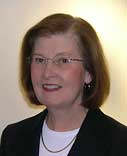
Cebulski served on the search committees that brought Chancellor Juan Mestas and Provost Jack Kay to the Flint campus and was a member of the Strategic Planning Committee charged with developing the 2005-2010 Strategic Plan for U-M-Flint.
Cebulski’s commitment to service and faculty governance has extended to the Ann Arbor campus. She served on the Senate Assembly from 1995-97 and 2003-present, and on the 2002-03 Presidential Search Advisory Committee that brought President Mary Sue Coleman to the University and on the President’s Advisory Committee on Women’s Issues.
For many years Cebulski was director of the Department of Physical Therapy. “What I am most proud of in my service activity,” she says, “was the opportunity to lead our faculty and staff in bringing the first professional doctoral degree to the Flint campus and to lay the groundwork that opened up this campus to the potential development of other professional doctoral degrees…One of my other pleasures was the establishment of strong alumni relations through an annual telefund and spearheading several alumni events in order to re-establish a connection with our alumni who happen to be from both the Ann Arbor and Flint campuses.”
Throughout her career, Cebulski’s contributions have epitomized the “exceptional distinction reflected in governance service to the entire University,” which is the foremost criterion of the Jackie Lawson Award. Her faculty governance service also reflects the candidate selection criterion of having “excelled in building a positive relationship between the Ann Arbor campus and one or both regional campuses.”
Distinguished Faculty Governance Award, William Ensminger
(No photo available)
It is difficult to imagine a faculty member more dedicated to the concept of service to the University in the form of shared governance than William Ensminger, professor of Internal Medicine, Medical School.
In the past 15 years, he has served on nearly 30 committees, task forces and executive boards associated with central faculty governance, his school’s governance and national professional associations and demonstrated impressive leadership.
Remarkably, since 1992 Ensminger has served three terms on the Senate Assembly, including two terms on its executive committee, the Senate Advisory Committee on University Affairs (SACUA). He served as chair of the assembly and of SACUA in academic year 1998-99. He has been a member of the assembly’s Medical Affairs Committee, the Research Policies Committee, the Committee on Economic Status of the Faculty and the Communications Advisory Committee, of which he is currently chair.
Ensminger joined the Michigan Chapter of the American Association of University Professors in 1999 and has served as its president since 2000. He has been a member of the executive board of the Academic Freedom Lecture Fund since 1997 and is also a member of the executive committee of Sigma Xi.
After receiving his medical degree from Harvard Medical School and his doctoral degree from Rockefeller University, Ensminger joined the U-M faculty in 1978. His clinical interests focus on gastrointestinal cancer, with a special emphasis on regional therapy of liver tumors. His research interests are in regional chemotherapy, cancer experimental therapeutics, gastrointestinal cancers and chemoradiation. In 2005-06, he was named to the Best Doctors in America list.
Regents’ Award for Distinguished Public Service, Anne Ruggles Gere
(No photo available)
The public service of Anne Ruggles Gere, professor of English language and literature and of education, LSA, School of Education, has benefited hundreds of thousands of people in the three decades since she earned her doctoral degree from the University in 1974.
Her public service began at the University of Washington, where she founded and developed the Puget Sound Writing Program, the nation’s first secondary-level project on writing across the curriculum. Under her direction, the program produced “Roots in the Sawdust,” a ground-breaking book on writing across the curriculum. Twenty-eight years later, the program continues.
Since joining the faculty in 1987, Gere’s public service has grown. Particularly compelling is the Teachers for Tomorrow program she developed, which supports teacher education. She also took the lead on two Farmington Public School efforts to build bridges among diverse racial and ethnic groups and improve the academic achievement of students. As an overseer and then trustee for Colby College, she has served on education policy and search committees, reviewed and led workshops for different departments and otherwise helped shape liberal education there.
Executive directors of the largest professional organizations at the center of her fields separately attest to Gere’s influential public service. According to one, “While many have lent their support to building a national community among English teachers, there may be no one who has done more than Anne in providing leadership in so many realms.”
Her service in the Modern Language Association includes the founding of one and chairing of two divisions that specialize in teaching, and she currently serves on the MLS Executive Council. She also was selected as a member of the advisory board for the association’s flagship journal, PMLA. Gere also has worked unstintingly with Room at the Inn, a program that provides shelter, food and support for homeless individuals and families.
University Press Award, Geoff Eley
For at least two decades Geoff Eley, Karl Pohrt Distinguished University Professor of Contemporary History, LSA, has been one of the most prominent and prolific historians of modern Germany in the English-speaking world.
There are few important subjects in 19th- and 20th-century German history about which he has not had something important to say, and his work consistently has been informed by an exceptionally rare knowledge and understanding of theory and of the research being done in other disciplines, especially political science, sociology, anthropology, cultural studies and gender studies.
Eley’s latest book, “A Crooked Line: From Cultural History to the History of Society,” which has won the University Press Award, analyzes the key shifts in the landscape of historical scholarship that have taken place in the last four decades. Eley advocates engaging neighboring disciplines and being alert to the meanings of politics.
“I am interested,” Eley says in the preface, “in charting the impact of some vital features of contemporary intellectual history on historians’ thought and practice. For my own part, an ideal of politically engaged and theoretically informed history formed the lasting outcome of my Oxford time. I certainly believed strongly that history needed to meet the highest standards possible in conventional scholarly terms, based in the most creative and reliable empirical investigations and the most exhaustive archival research. But history also had to be relevant.”
“‘A Crooked Line’” brilliantly captures the most significant shifts in the landscape of historical scholarship of the last four decades,” says Robert Moeller of the University of California, Irvine. The book offers an impressive summing-up of his many years of writing and teaching about the meaning of history.
University Librarian Recognition Award, Annette Haines
In her four years as field librarian at the School of Art and Design, Annette Haines has won praise from faculty and students as she answered the multiple needs of a highly technological school.
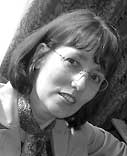
In addition to creatively managing the library, she has been in demand by faculty to give library instruction and orientation to classes and to work with groups of students on research. Always ready to assist with research questions, problems and searches, Haines is unassuming, approachable and sensitive to students of varying levels of research expertise.
When Haines arrived in 2002 the school was in the early stages of a curricular overhaul. The school also had to keep pace with changes in the ways faculty are required to structure and present teaching materials. She was invaluable in augmenting the library’s collections in several areas, and in offering workshops to assist faculty working with a wide range of equipment, materials and technologies. She has done everything possible, colleagues say, to invite, inspire, lead, teach and simply be available when students, staff and faculty request her assistance.
Before Haines arrived the library had minimal holdings in graphic novels and artists’ books. Although she initially had no expertise in this area, she educated herself, solicited donations and applied for funding to allow the library to purchase a core set of books to create a resource for students and faculty interested in narrative visual arts.
She also enthusiastically has expanded the library’s comic collection, quickly learning about the many facets of this complex medium and traveling to Europe to acquire unique materials for the University. Haines has created innovative displays of artists’ books that draw attention and enhance the atmosphere of the library. She also has provided valuable assistance in redesigning the art, architecture and engineering library’s Web site.