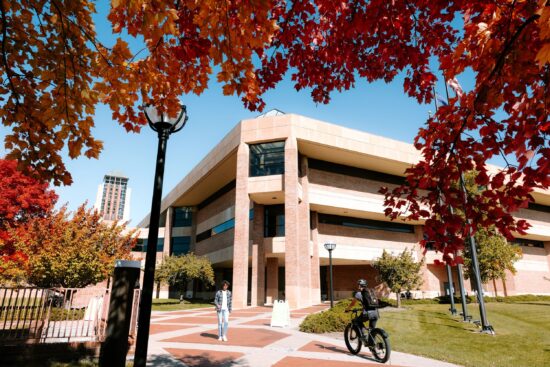
Pruning landscaping costs yields savings
U-M budget pruning efforts will result in fewer blooms on the Ann Arbor campus this fall and next spring and summer.
The number of annuals — everything from marigolds and petunias to snapdragons — will be reduced on parts of the campus supported by the general fund budget. The reduction of 12,000 square feet of annual plantings and bulbs, primarily from Central Campus, especially Ingalls Mall and the Diag, will save some $152,000 per year, says John Lawter, associate director of Plant Building and Grounds Services.
|
“This was a very tough decision,” Lawter says. “We had to weigh the costs and benefits of keeping the campus clean and well maintained against the aesthetic appeal of showy flower displays.”
Most of the perennials such as hostas and grasses will stay although some plant beds will be removed. Also, the colorful beds and pots of showy flowers that long have been a campus hallmark still are an option for self-supporting auxiliary units such as the U-M Health System, Intercollegiate Athletics, Student Housing and Student Unions.
To save money, U-M also has put a hold on its tree replacement program, increased its no-mow program, and has cut back on the turf renovation and irrigation crew staffing. The no-mow program allows remote lawn areas to revert back to prairie where it least affects appearances. In addition to saving labor, this program has the added benefit of reducing the polluting side effects of mowing and increases wildlife habitat. All of these areas are currently located on the North Campus.
All told, these reductions, along with the cut in flowering annuals, equal $280,000.
“We’ll continue to maintain landscaping elements and infrastructure that are costly to replace once lost such as pavements, lawns, irrigation systems, and our existing trees and shrubs,” Lawter says. “Our goal is to keep the campus clean and green until such time as we can bring the color back.”
In all, the Ann Arbor campus has 14,005 trees, more than 275 acres of turf and 96 acres of sidewalks, steps and plazas.
Plant Building and Grounds Services has no plans to reduce its full-time staff. All the cuts mentioned will result in reductions of temporary seasonal staffing. This summer, Plant Building and Grounds Services hired 43 temporary staff, 17 fewer than in the past.