Architects to bring light installation to Nichols Arboretum
“Inhabiting Light,” an interactive architectural installation, will take form in late summer at Magnolia Glade in Nichols Arboretum.
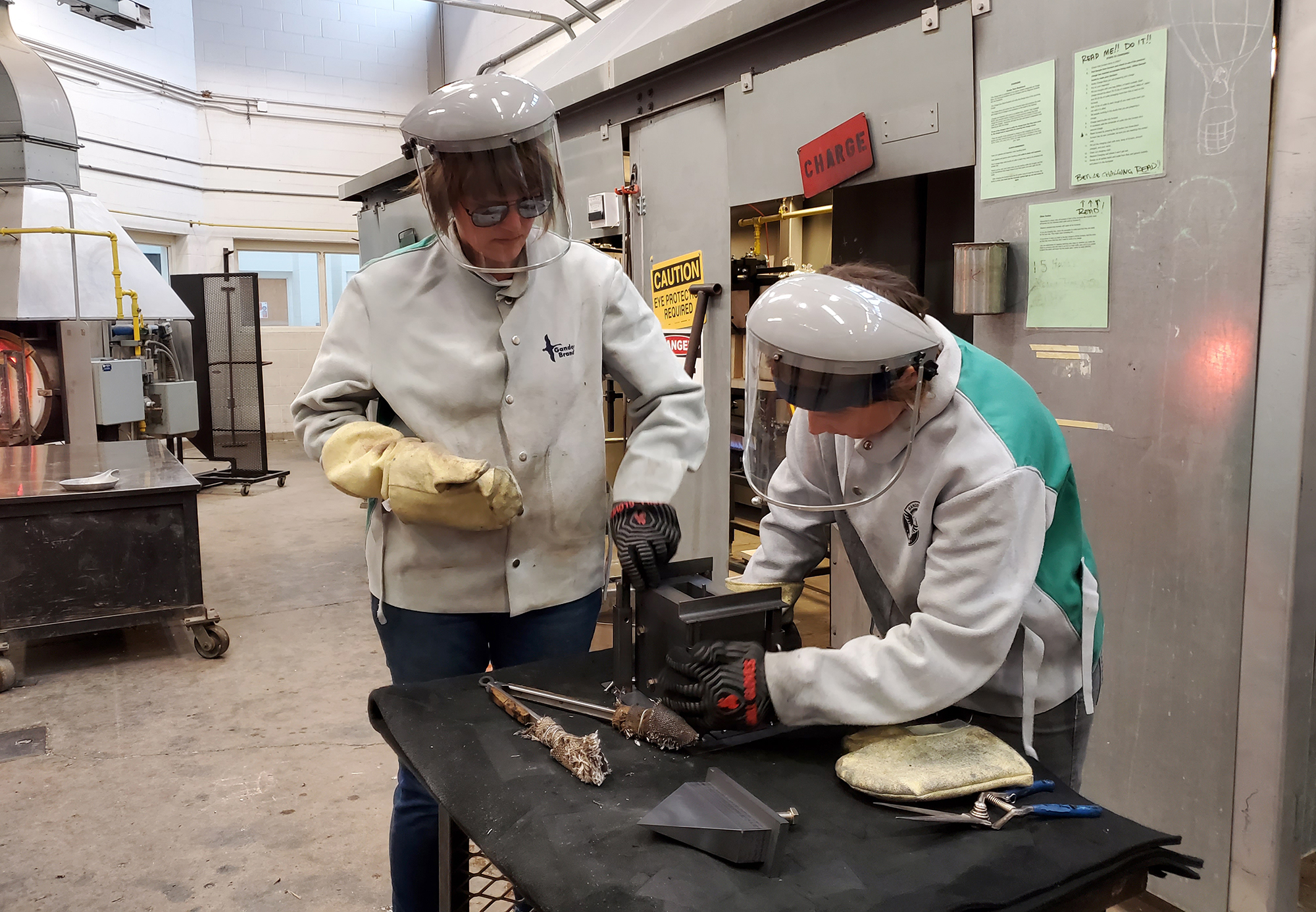
Catie Newell, professor of architecture in the A. Alfred Taubman College of Architecture and Urban Planning, and her collaborator, Alli Hoag, head of glass and associate professor of glass at Bowling Green State University, are creating a unique structure using specialized glass building units called “Light Forms” designed to modulate and transform light.
The structure’s form will feature a shared wooden bench, intersected by glass walls. The walls will create sheltered alcoves and nooks, providing opportunities to experience the piece in solitude or with company.
“We want to give space to people to be able to convene with loved ones or be alone and have some privacy, while also be connected with nature at the same time,” Hoag said.
The Light Forms will transpose the natural light and colors present in the glade, shifting by the moment and the season.
“If it’s cloudy, if it’s sunny, if it’s starting to be nightfall, or sunrise or sunset, the Light Forms pieces end up transposing through reflection and refraction,” Newell said. “Our vision is that the person visiting is getting a chance to inhabit the incredible light of these spaces.”
Newell and Hoag are constructing the piece this spring, performing structural engineering tests and making final decisions about details like base size and glue type. The installation will be up for at least two years, with the potential for extension.
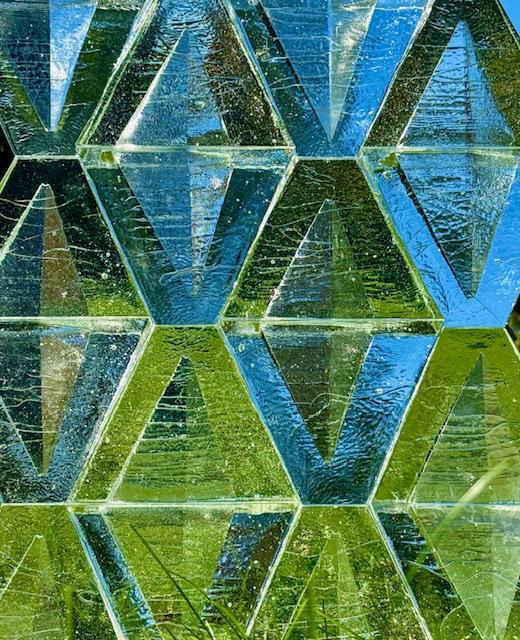
“It’s a very exciting moment, finally linking everything together,” Newell said.
Light Forms are specially crafted, press-formed glass blocks. They have 10 sides, are hollow, and work like masonry units to be stackable, beautiful and structurally sound. Newell describes them as “cast glass modules that work architecturally, allowing light to transfer through them, aggregating together in several different tessellations to make spaces with different textures and optical qualities.”
The duo is producing 2,000 of these glass pieces, with plans to scale up production with industry partners and create fully inhabitable structures in the future.
Light Forms are a creative solution to bringing more passive light into built spaces that would otherwise be disconnected from the cycles of day and night. In the normative architectural model, glass functions almost as an afterthought. Instead, Light Forms allow for light to be considered through the design process, connecting inhabitants to the circadian rhythms of the natural world while still providing privacy.
“Inhabiting Light” will serve as a proof of concept for Light Forms to be used more broadly in architecture.
“The installation itself has its key priority of being that resonant space for the Magnolia Glade, but then also a space where we can show the unique attributes of the Light Forms, with the hopes that it is incorporated within more architecture in the world,” Newell said.
Magnolia Glade, nestled in the valley of the arb near the river landing, is home to a rich and storied collection of magnolia trees. The site has a long history with the C.S. Mott Children’s Hospital. Each year in October, Michigan Medicine care team members host the Walk to Remember and Tree-Planting Memorial, a time to grieve perinatal and newborn loss. Each year, a new magnolia tree is added to the collection. Having the memorial as the site of the installation has informed the way the creators think of it spatially.
“It gave us this really beautiful invitation to introspect about experiencing grief ourselves and thinking about what we could offer,” Hoag said. “It brought this really beautiful layer of meaning to develop the design plans, thinking about how we want to articulate the Light Forms in a specific way to serve that population.”
The project is a group effort across U-M departments and institutions. It has engaged U-M students as research assistants, helping with prototypes, diagram building and background research.