It Happened at Michigan: How The Rock became a local landmark
The Rock, a massive boulder at Washtenaw Avenue and Hill Street, gets a fresh coat of paint and new cause almost every week — congratulating graduates, commemorating a holiday, celebrating U-M milestones, making political statements. The landmark was originally conceived, however, as a monument to George Washington.
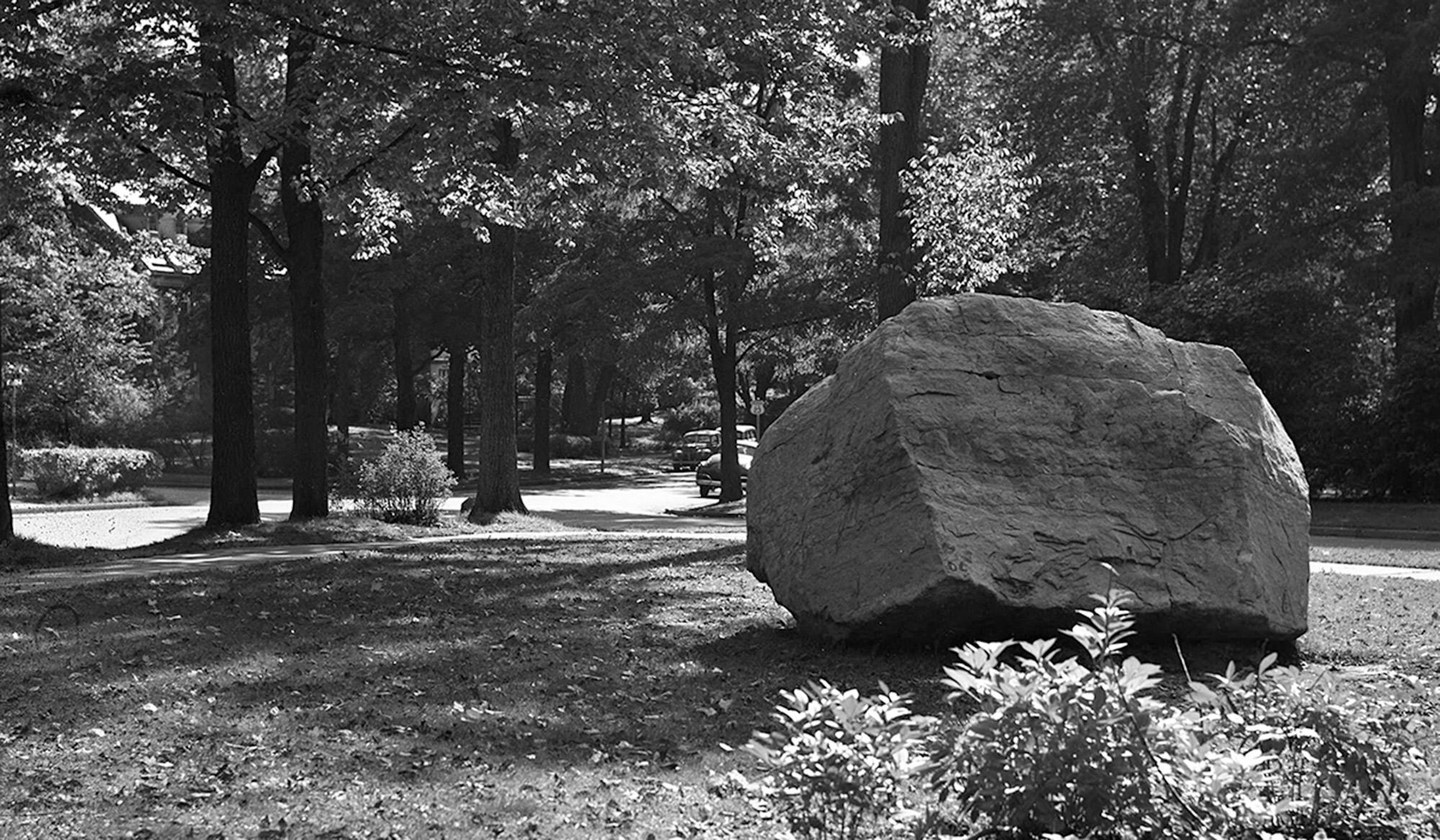
In the early 1930s, Eli Gallup, then the Ann Arbor parks superintendent and a reported rock aficionado, found the large limestone rock in a landfill near Pontiac Trail. In 1932, to mark Washington’s 200th birthday, Gallup had a cement pedestal created to hold the rock, then enlisted the help of a Detroit Edison truck to move the boulder to its current site. In 1939, a marker was added that designated the corner “George Washington Park.”
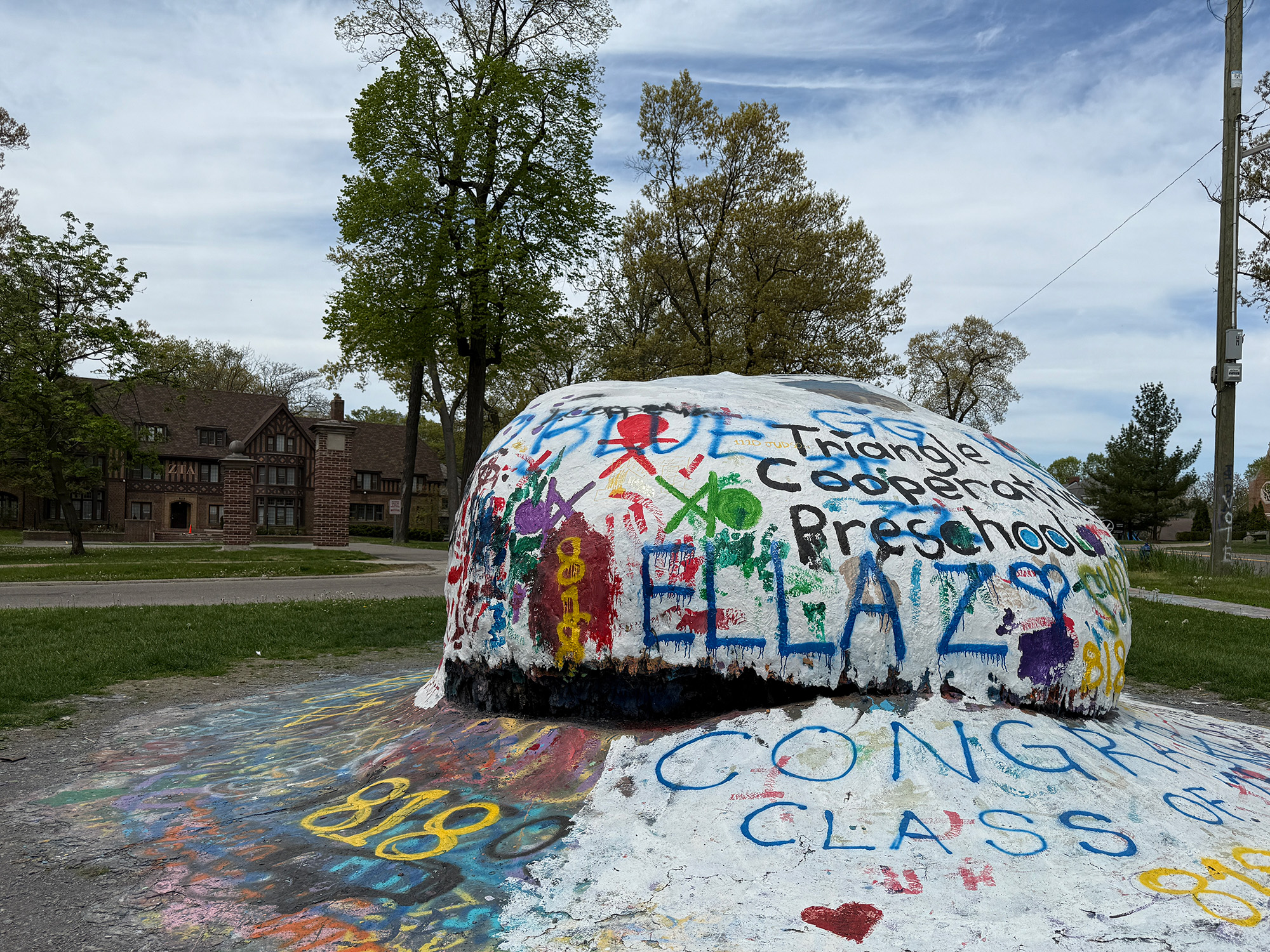
According to a piece that ran in the Ann Arbor Observer in 1991, the rock painting likely began sometime in the 1950s, when students from Michigan State University scrawled the letters “M.S.U.” on The Rock as a taunt before that weekend’s rivalry football game. U-M students promptly retaliated, covering the green and white with maize and blue paint — and igniting a tradition.
Over the years, the parks department has attempted to curb the painting, but their efforts have been in vain. Today, some estimate the paint is at least 5 to 6 inches thick, making it difficult for the top layer to fully dry and leaving the rock slightly tacky to the touch. The memorial marker is reportedly still there as well, though it too is concealed in layers (and layers) of paint.