New U-M faculty get a warm welcome at annual orientation
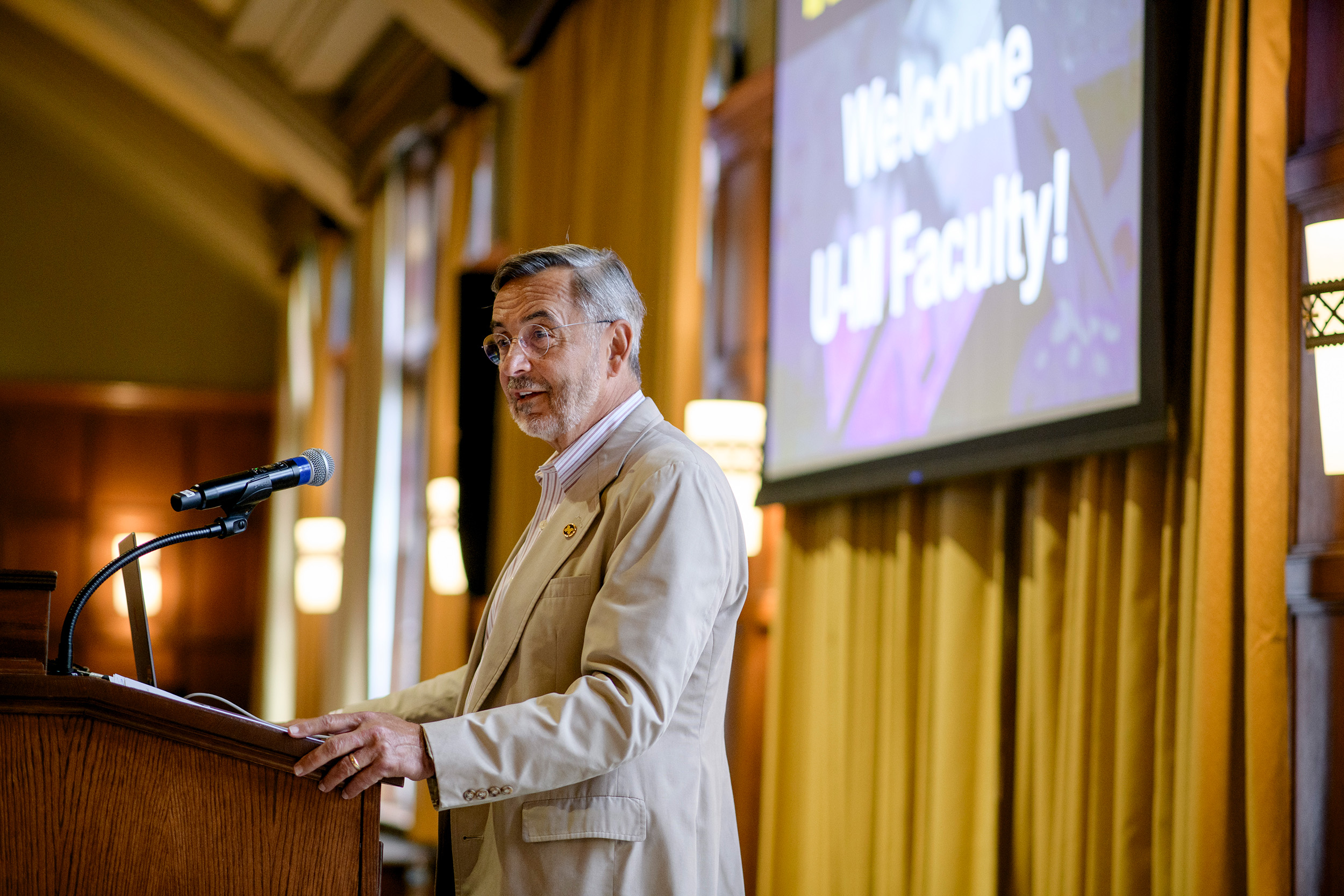
President Domenico Grasso opened the New Faculty Orientation on Aug. 20 by welcoming attendees to “the greatest university in the world” and acknowledging the many strengths of U-M’s newest community members.
“With both our incoming students and new faculty, we have selected the best from around the country and throughout the world,” Grasso said. “Exceptional faculty like you have long been a Michigan hallmark.”
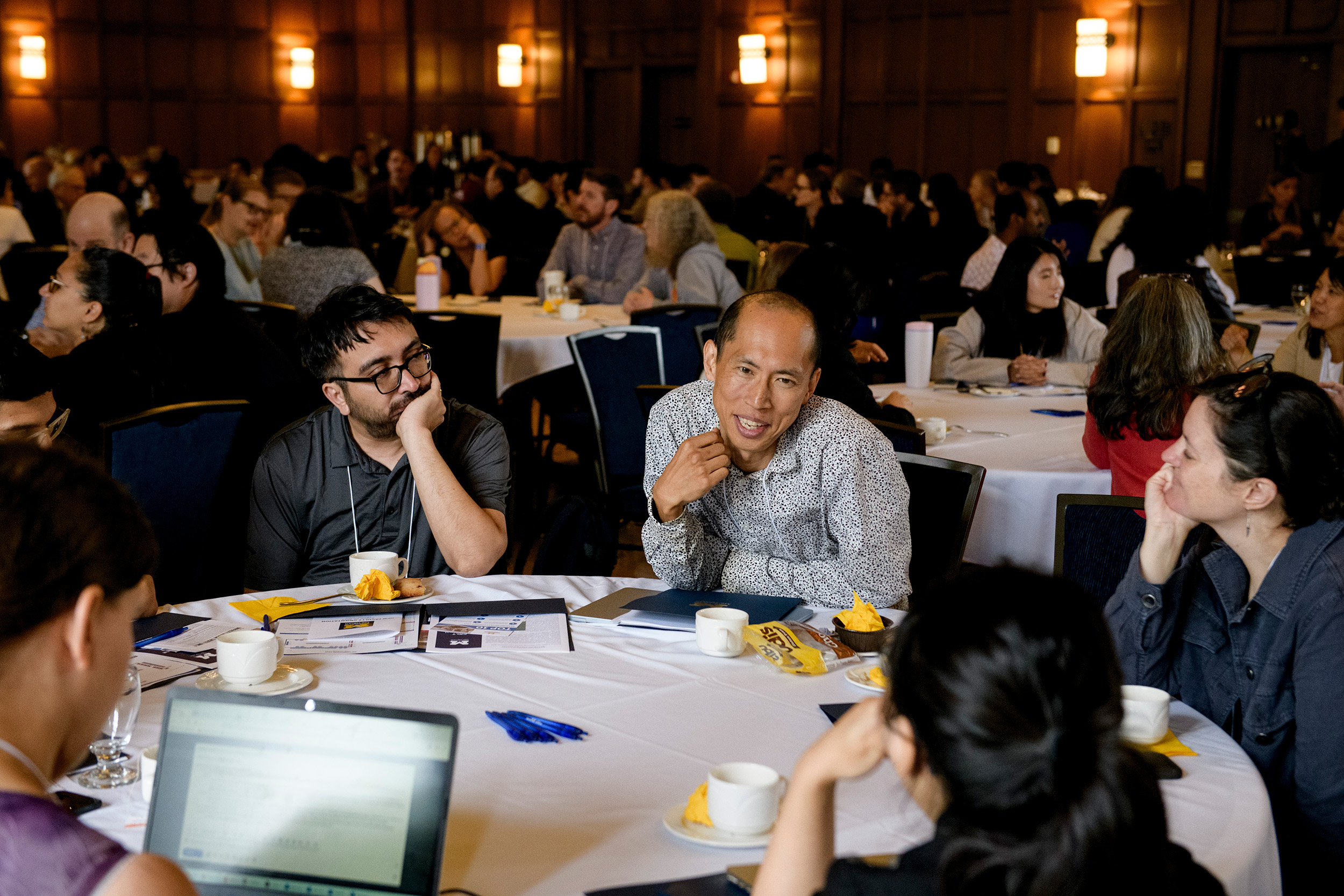
Nearly 200 new faculty members filled the Michigan League Ballroom for the annual campuswide event, sponsored by the Office of the Provost and the Center for Research on Learning and Teaching.
To demonstrate the importance of a strong relationship between professors and students, Grasso shared the story of Andrew Dickson White, who taught history and English literature at U-M in the years before the Civil War. Just a few years older than his students at the time, White not only created new knowledge in the classroom but also left a visible mark on campus.
“When you walk through the Diag, the pathways and trees surrounding you are the work of White and his students,” Grasso said. “Up until then, the Diag was a pretty scrubby place. But White and his students planted trees like elms, pines and maples. They nurtured dozens and dozens of trees and created the park-like setting we enjoy today.”
“Whether in the classroom, a laboratory, or an outdoor conversation on a beautiful day, you will be doing so much to shape the minds of young people as they will, in turn, help you stretch your own thinking,” he said.
Grasso also took a moment to introduce Look to Michigan, the university’s new strategic vision that emphasizes five areas of impact: life-changing education; human health and well-being; democratic, civic and global engagement; energy, climate action, sustainability, and environmental equity; and advanced technology.
“The University of Michigan is a place where bold ideas, transformative research, creative endeavors, and the education of tomorrow’s leaders come together in the public interest,” Grasso said.
“I truly believe this is our moment to be ambitious in ways that only Michigan can.”
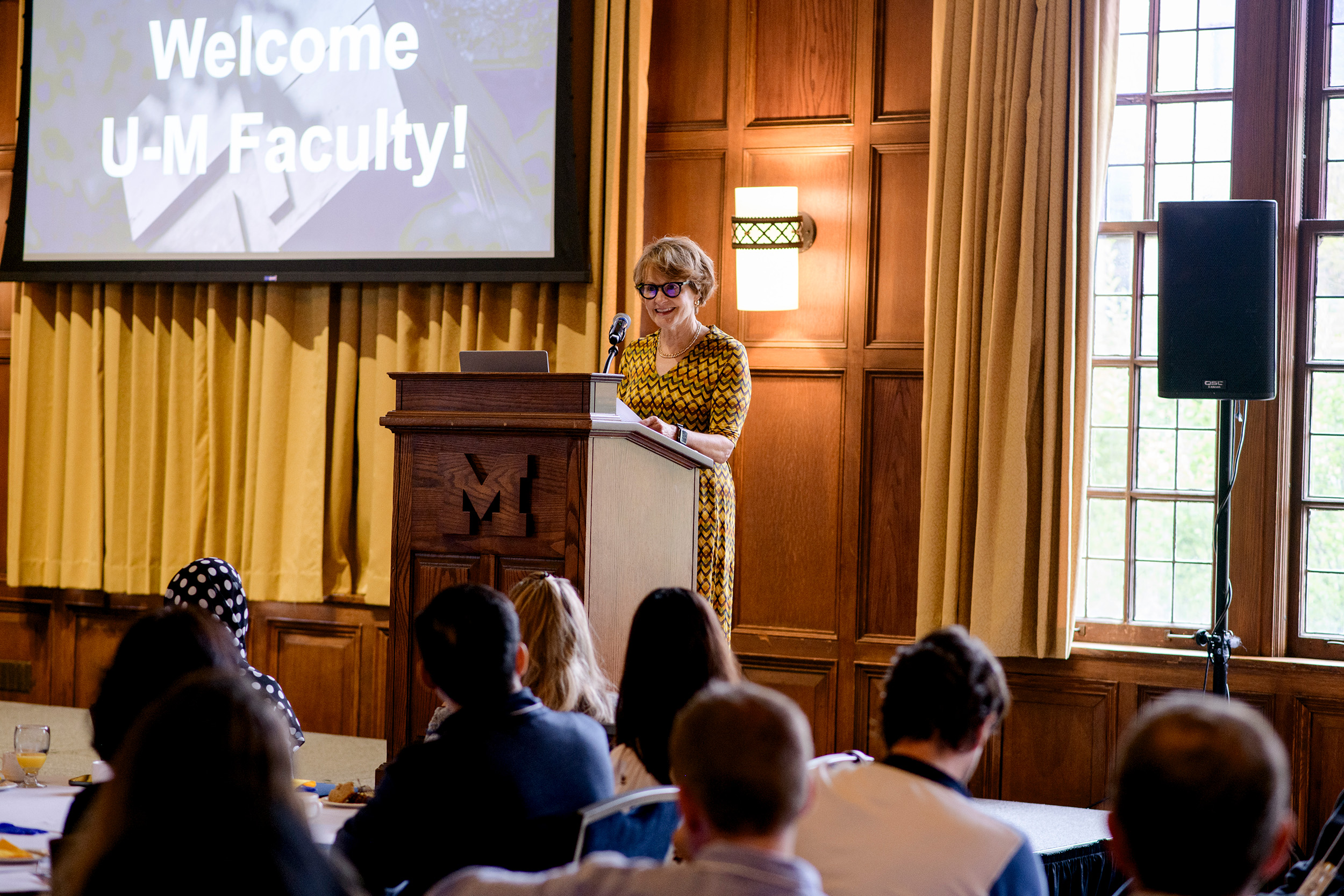
Provost Laurie McCauley offered her own welcome and shared the story of “Astrum,” the solar car designed and raced by U-M’s student-run Solar Car Team. After suffering a rollover in qualifying, the team repaired the car and went on to win the 2024 American Solar Challenge.
“This exemplifies everything we aspire to do and be on this campus. It is incredibly cross-disciplinary. It utilizes cutting-edge green technology. It features partnerships with industrial sponsors,” McCauley said. “And, most of all, it demonstrates the ingenuity, the determination, and the resilience of our diverse student community who spent thousands of hours meticulously refining every aspect of their work, simply for the joy of creating something challenging and wondrous.
“This is the kind of campus that will be your new professional home. These are the kinds of students who will come to you, eager to learn.”
McCauley encouraged new faculty to take advantage of the university’s broad resources, from more than 180 centers and institutes to new AI-powered teaching tools and upcoming initiatives such as the Michigan Arts Festival and Climate Week.
“You have joined a community of nearly 8,000 faculty members,” she said. “No matter what stage of life or scholarship you are in, you’re going to find support from mentors, colleagues, and encouragement for your growth and passions at this university.”
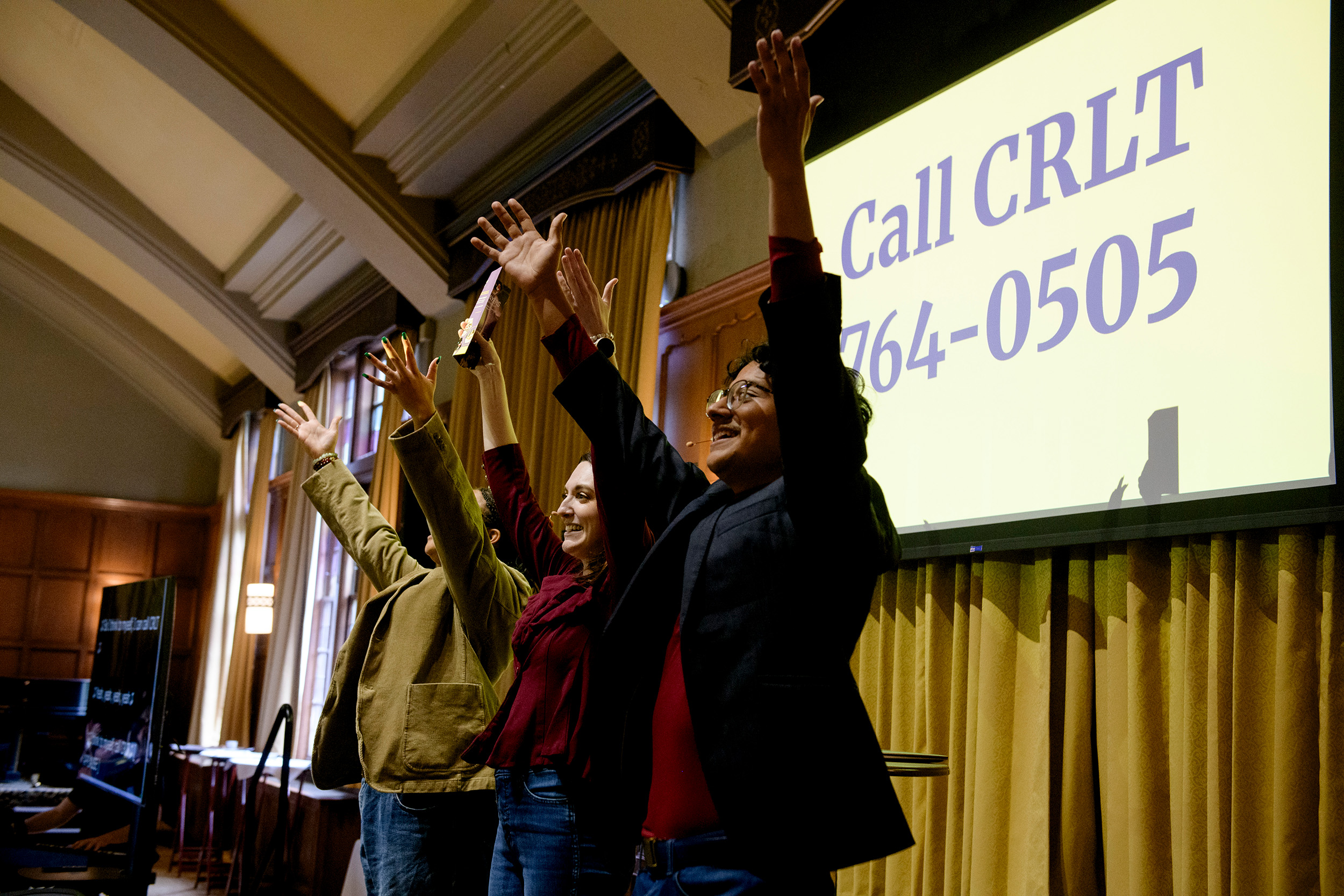
The orientation also featured performances by the CRLT Players, an interactive theater troupe whose skits prompted faculty discussions about equity in the classroom.
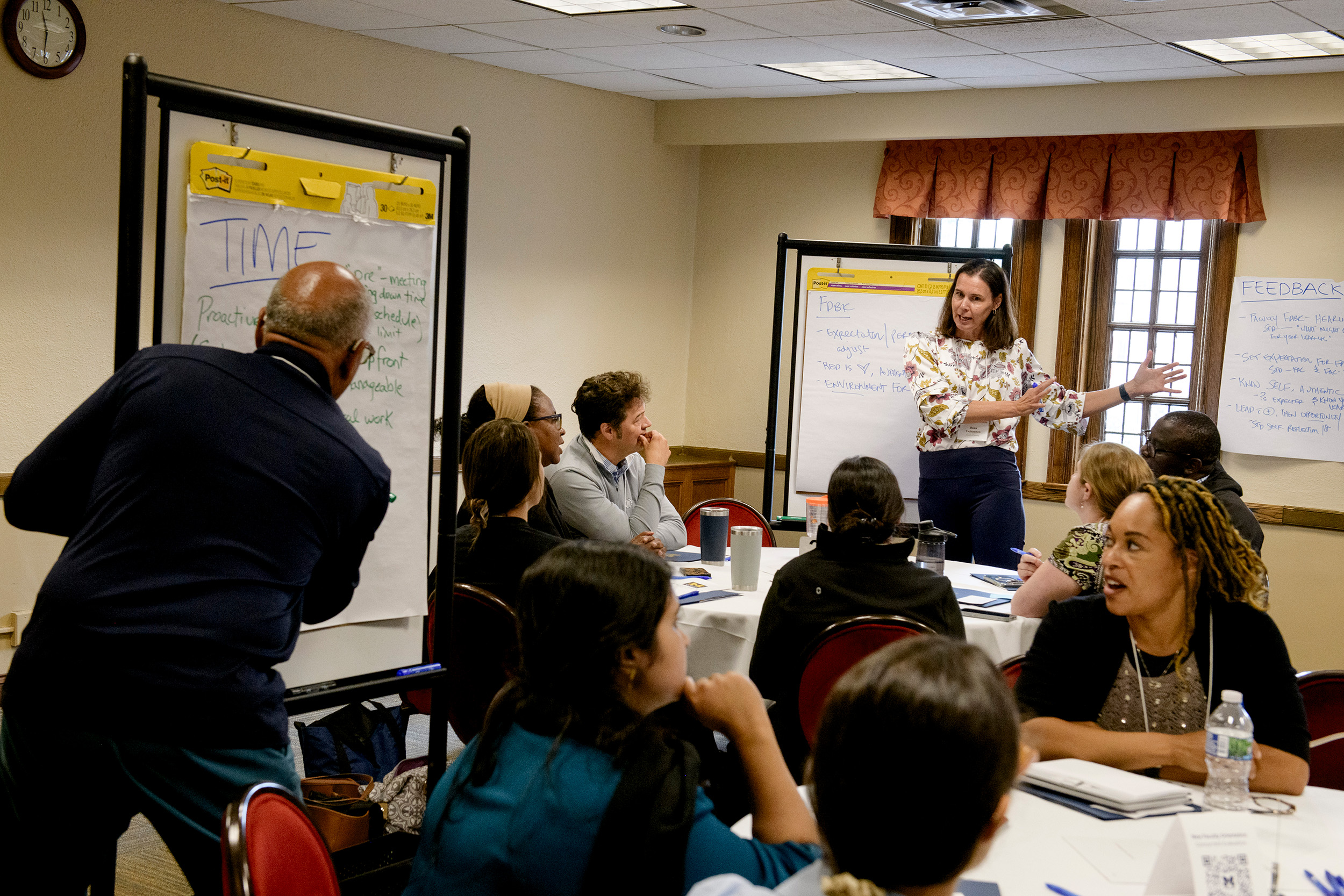
Concurrent breakout sessions covered topics such as research-based teaching practices, the purposeful use of technology, how to support student well-being, strategies for leveraging group work, best practices for clinical/bedside teaching, and more equity-focused teaching tips.
During the session “Tech with a Purpose: U-M Instructors Using Digital Tools to Tackle Common Teaching Challenges,” new faculty members learned about the range of academic technology tools offered at U-M and, specifically, how current faculty are using generative AI and RAG (retrieval augmented generation), Gradescope, and Poll Everywhere to improve and expedite communication with students, make grading more efficient, and boost lecture engagement.
Justin Jager, a new associate professor of psychology in LSA and research associate professor in the Institute for Social Research’s Survey Research Center, said PowerPoint has been the primary tech he’s integrated into his courses so far, but the session opened his eyes to new possibilities.
“I’d like to learn to use RAG — a term I’d not heard before today — to create scaffolding that helps students stay on the right track in a project. It would be a huge time saver for me but also good for students because it ensures they are getting regular, calibrated feedback,” Jager said.
After the breakout session, a luncheon featured remarks from campus leaders.
Arthur Lupia, vice president for research and innovation, spoke about how the mission of the Office of the Vice President for Research is to catalyze, support and safeguard U-M research and scholarship activity.
To illustrate the type of potentially life-changing research being conducted at U-M, Lupia pointed to the Edison System by HistoSonics, a U-M startup founded in 2009. The Edison System, which uses a technique called histotripsy to break down tumors with sound waves, received FDA clearance in October 2023 for the destruction of liver tumors. Earlier this summer, HistoSonics announced a $2.25 billion acquisition by a consortium of top-tier investors.
Faculty Senate Chair Derek Peterson, Ali Mazrui Collegiate Professor of History and African Studies and associate chair of the Department of History in LSA, finished the luncheon presentation by outlining the university’s faculty governance system, sharing a calendar of upcoming events sponsored by the Faculty Senate, and encouraging new faculty to get involved.
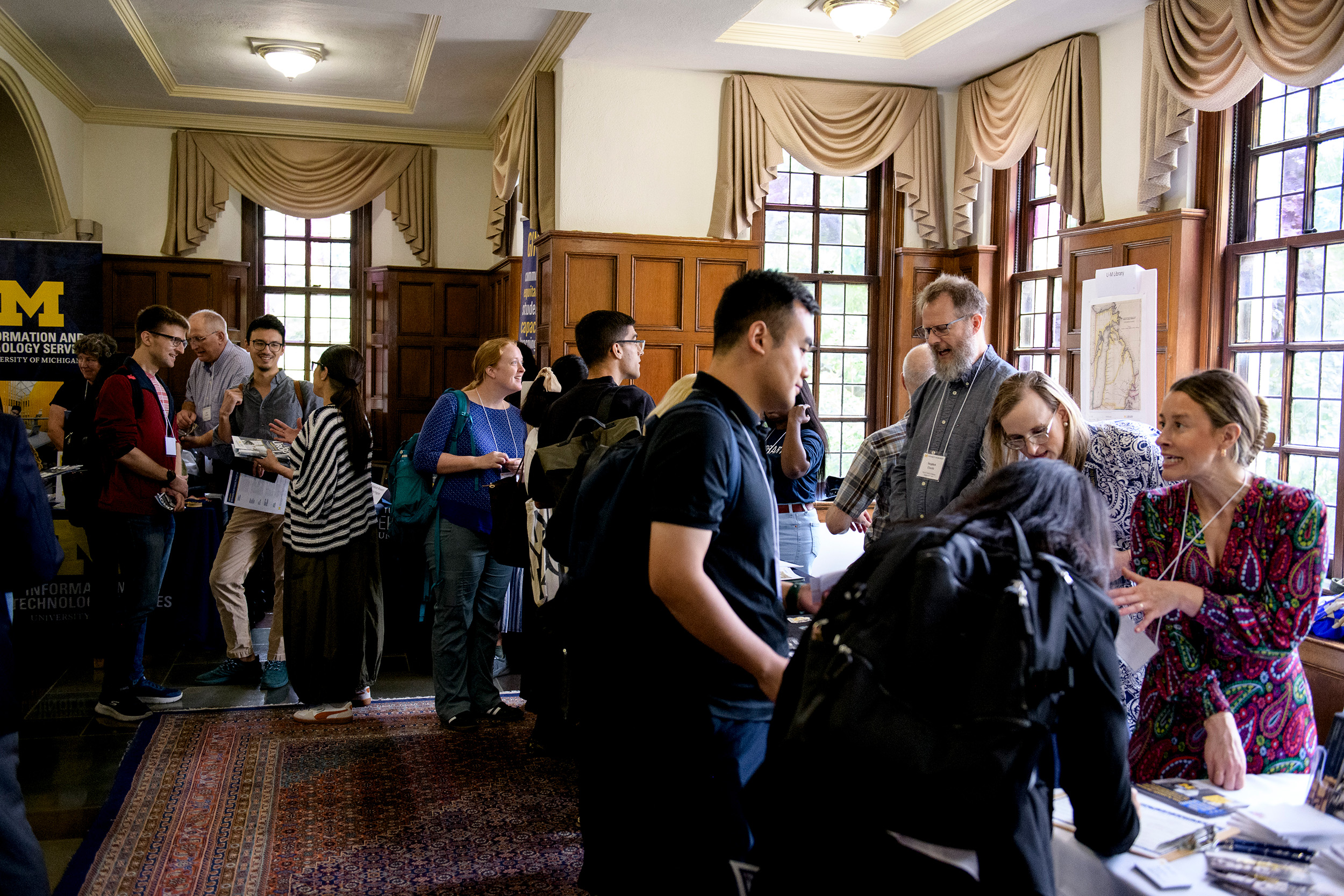
The day concluded with an Information Fair featuring representatives from key university offices.