It Happened at Michigan: How the Diag became the center of it all
For generations of U-M students, faculty and staff, the Diag has been the symbolic heart of Central Campus. From student rallies to snowball fights — and even a U-M graduation — life at U-M has pulsed through this crossroads since the mid-1800s.
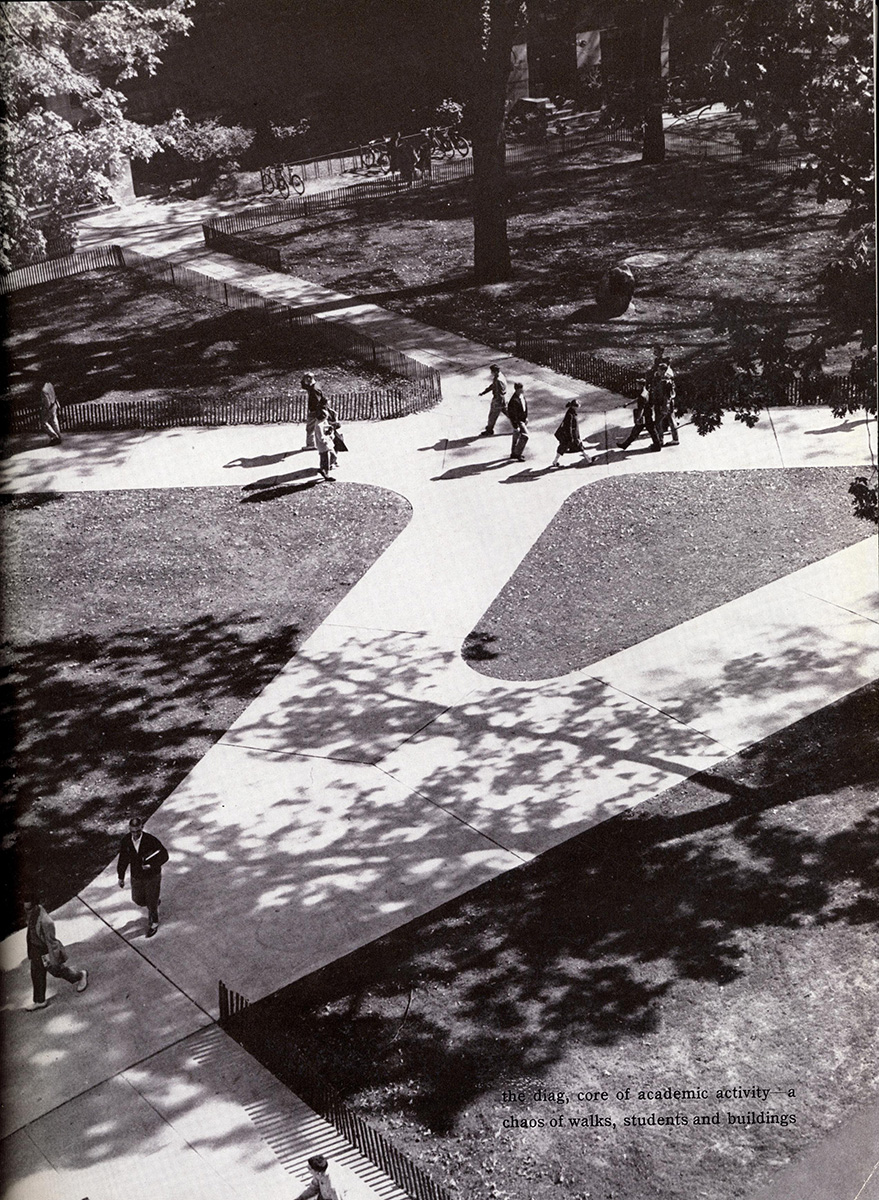
When the university moved from Detroit to Ann Arbor, the 40-acre area that became Central Campus was mostly undeveloped farmland. As buildings rose, footpaths emerged across the grass. Over time, these paths created the familiar “X” pattern of the Diag, which is named, of course, for the diagonal walks that connect Central Campus’ main buildings.
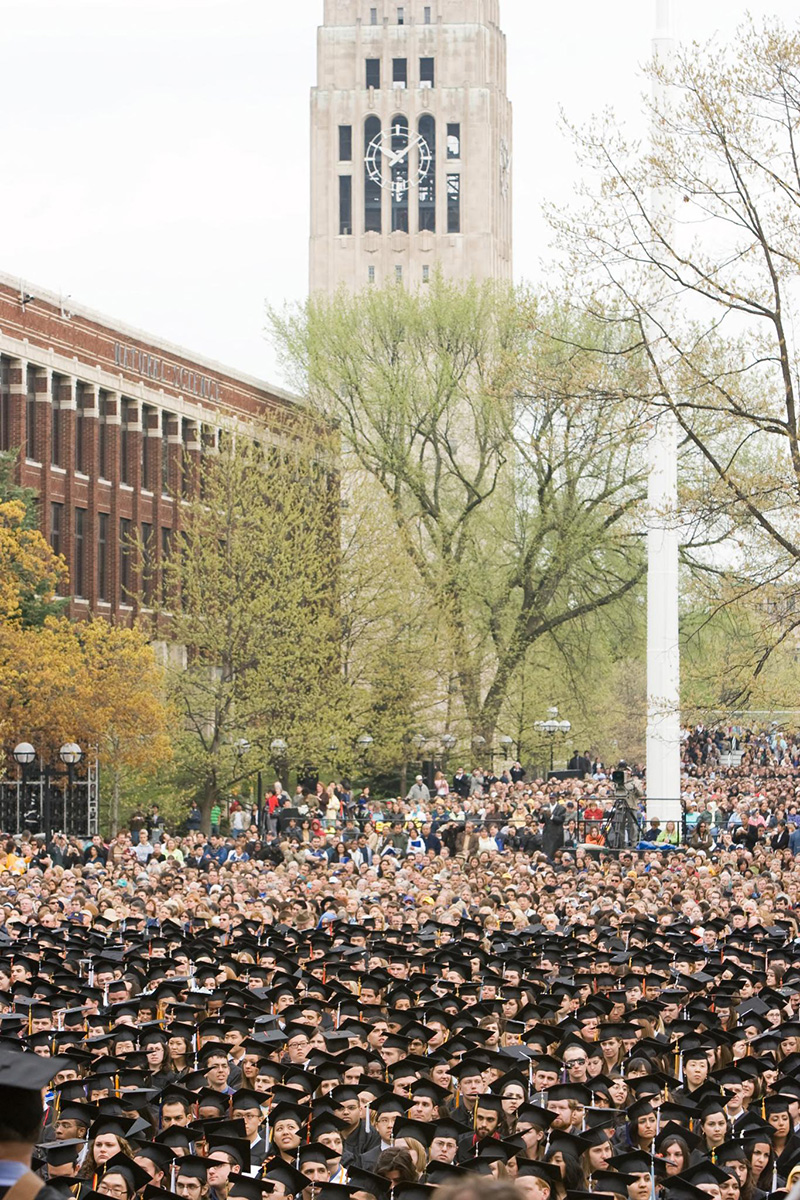
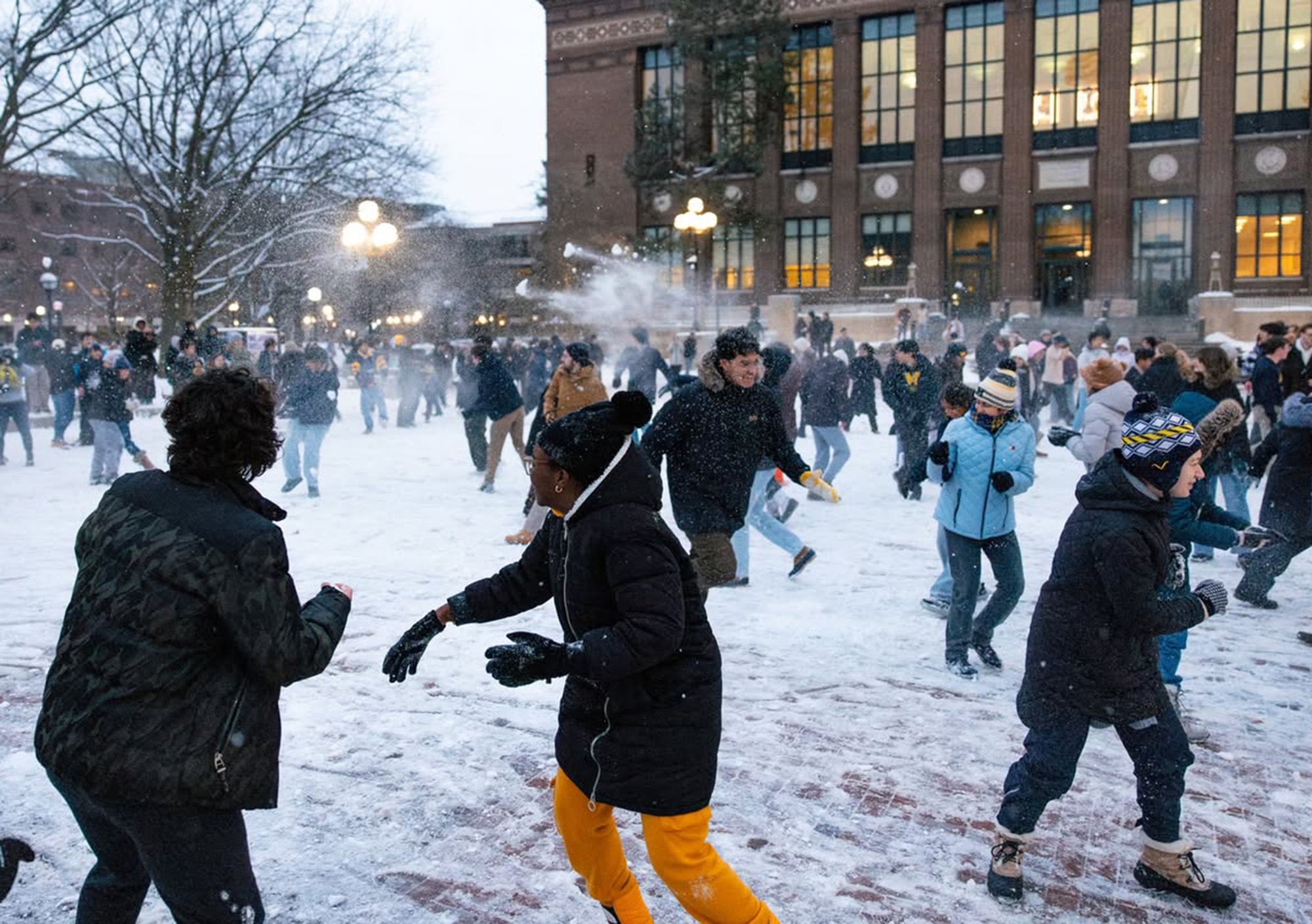
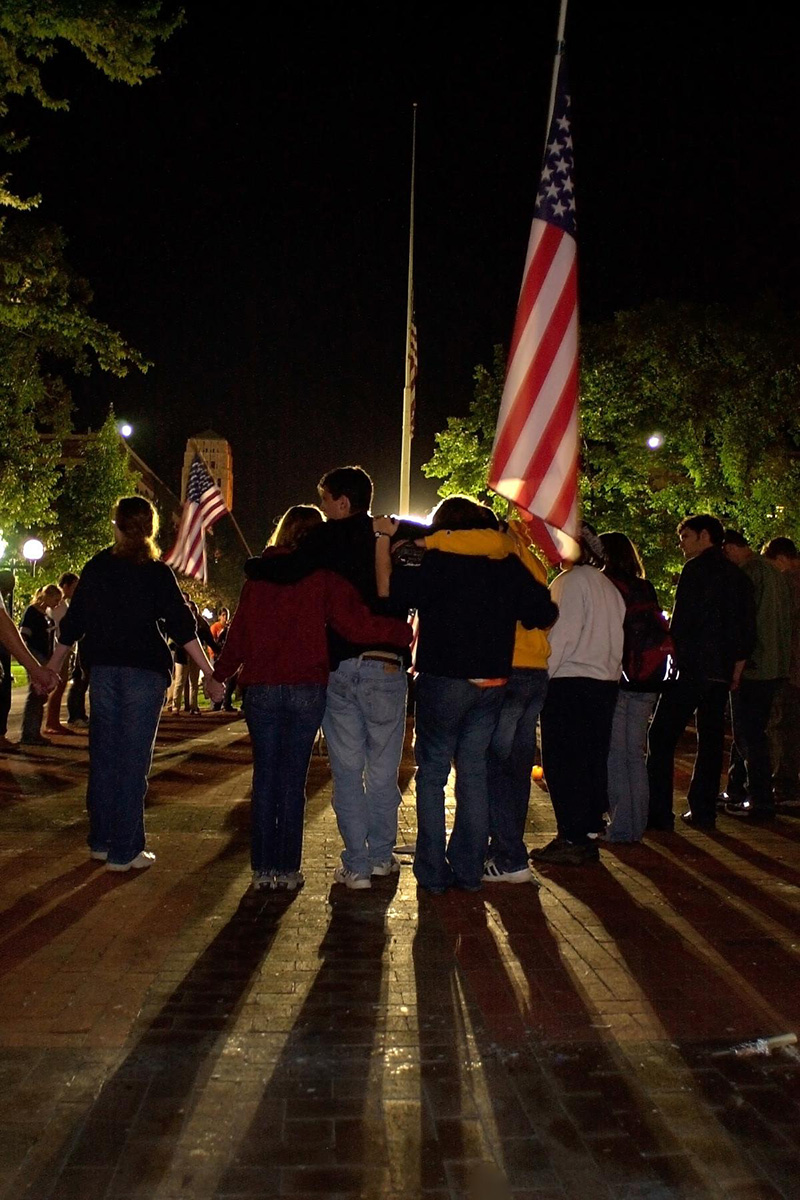
By the late 19th century, the Diag had taken shape as both a literal and figurative center of university life, hosting impromptu student gatherings and formal speeches. During World War II, students and faculty gathered there to hear updates about the conflict, and after the terrorist attacks of 9/11, thousands assembled on the Diag for a vigil.
The Diag is also well-known for its bronze “M,” inlaid in pavement near its center. A gift from the Class of 1953, the block “M” has become part of a student tradition that says any student who steps on the “M” before taking their first U-M exam will fail it.
Each day, thousands of students, faculty, staff and visitors cut through the Diag on their way around campus, so it’s unsurprising that the landmark has needed TLC over the years, including this one.
Earlier this term, the Diag underwent one of its most comprehensive infrastructure projects, replacing aging brick on the walkways with new pavers designed to improve stormwater drainage and prevent pooling and ice buildup.
Workers also installed a modern drainage system to protect nearby tree roots and promote long-term sustainability, and an Americans with Disabilities Act-compliant ramp was built near North University Avenue.
While these improvements may have briefly inconvenienced those wanting to traverse the Diag in late summer, they help ensure that the Diag remains a place for present and future Wolverines to meet, march and make memories.
— Genevieve Monsma, The University Record