40th annual MLK Symposium will feature two keynote speakers
2026 event will explore the idea of being ‘Unbowed and Unbroken’
Donzaleigh Abernathy, a civil rights activist, actress, writer — and the godchild of Martin Luther King Jr. — and Derrick Johnson, the 19th president and CEO of the NAACP, will be the featured speakers at U-M’s 2026 Rev. Dr. Martin Luther King Jr. Symposium Keynote Memorial Lecture on Jan. 19.
The event, which will also be livestreamed, begins at 10 a.m. at Hill Auditorium.
The annual symposium, which honors the legacy of the late civil rights leader, is in its 40th year and will explore the theme: “Unbowed and Unbroken — The Enduring Struggle for Justice.”
“Being ‘unbowed and unbroken’ speaks to qualities of resilience necessary for those who would undertake intergenerational change,” said Angela Dillard, interim vice provost for access and opportunity; vice provost for undergraduate education; and the Richard A. Meisler Collegiate Professor of Afroamerican and African Studies, and professor of history in LSA.
“Our history is not the story of linear progress with guarantees of success. Hence, engaging in concerted movements toward a more just society requires that we cultivate clarity of vision, a diversity of perspectives, a steely determination, and an abiding sense of hope.”
King often spoke of the struggle for justice as a journey of perseverance. In August 1967, he spoke at a Southern Christian Leadership Conference meeting that was overseen by Ralph Abernathy, father of Donzaleigh, co-founder of the American Civil Rights Movement, and the then-vice president of the SCLC.
During that speech titled “Where Do We Go From Here?” King said, “Before we reach the majestic shores of the promised land, there is a frustrating and bewildering wilderness ahead.”
Donzaleigh Abernathy
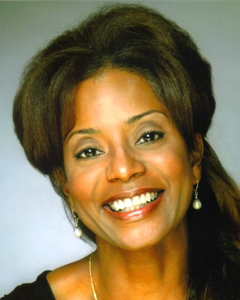
The youngest daughter of Ralph Abernathy and Juanita Jones Abernathy, Donzaleigh’s young life was marked by the bombing of her family home and her father’s church in Montgomery, Alabama. Along with her siblings, she participated in major civil rights events, including the Freedom Riders, the March on Washington, the Selma to Montgomery March for Voting Rights, and the Chicago Housing Demonstrations.
In 2004, she authored “Partners To History: Martin Luther King, Ralph David Abernathy and the Civil Rights Movement,” nominated by the American Library Association as one of the “Best Books for Young Adults,” and contributed to the Smithsonian Institute’s “In the Spirit of Martin.”
Her play “Birmingham Sunday” received the Tanne Foundation Award. Delivering her first public speech at age 12 at “The Children for Survival March” in Washington, D.C., Abernathy has since keynoted conferences for the National Association of Women Judges, the American Bar Association, and the United Nations Women’s Federation for World Peace. Through the Teaching American History Program, she has also spoken to educators about how to present African American and Civil Rights History.
In recognition of her lifelong commitment, Abernathy was given the honor of introducing Rosa Parks at the 45th anniversary celebration of the Montgomery Bus Boycott.
Derrick Johnson
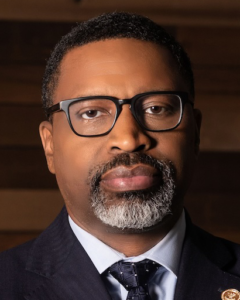
Johnson is also a veteran civil rights activist. Before becoming the NAACP’s president and CEO, he served as vice chairman of the NAACP National Board of Directors and state president for the Mississippi State Conference NAACP.
Under his national leadership, Johnson has been instrumental in guiding the NAACP through a period of reinvigoration and transformation. He has launched initiatives such as the 2018 “Log Out” Facebook campaign to demand accountability from social media platforms; the Jamestown to Jamestown Partnership commemorating 400 years since enslaved Africans arrived in America; and the 2020 “We Are Done Dying” campaign, which exposed healthcare and systemic inequities.
Johnson also oversaw the victorious 2020 Supreme Court lawsuit, NAACP v. Trump, which prevented the rescinding of the Deferred Action for Childhood Arrivals, or DACA, program, protecting millions of young immigrants.
“We are honored to have two inspiring speakers who can bridge the Civil Rights movement to the issues facing us today,” said Sharon Burch, interim co-director of the Office of Academic Multicultural Initiatives, or OAMI.
“At the same time, we want to acknowledge the persistence and courage of past University of Michigan students who made the MLK Symposium a reality. We aim to highlight that the fight for justice is a continuous process rather than isolated moments in time.”
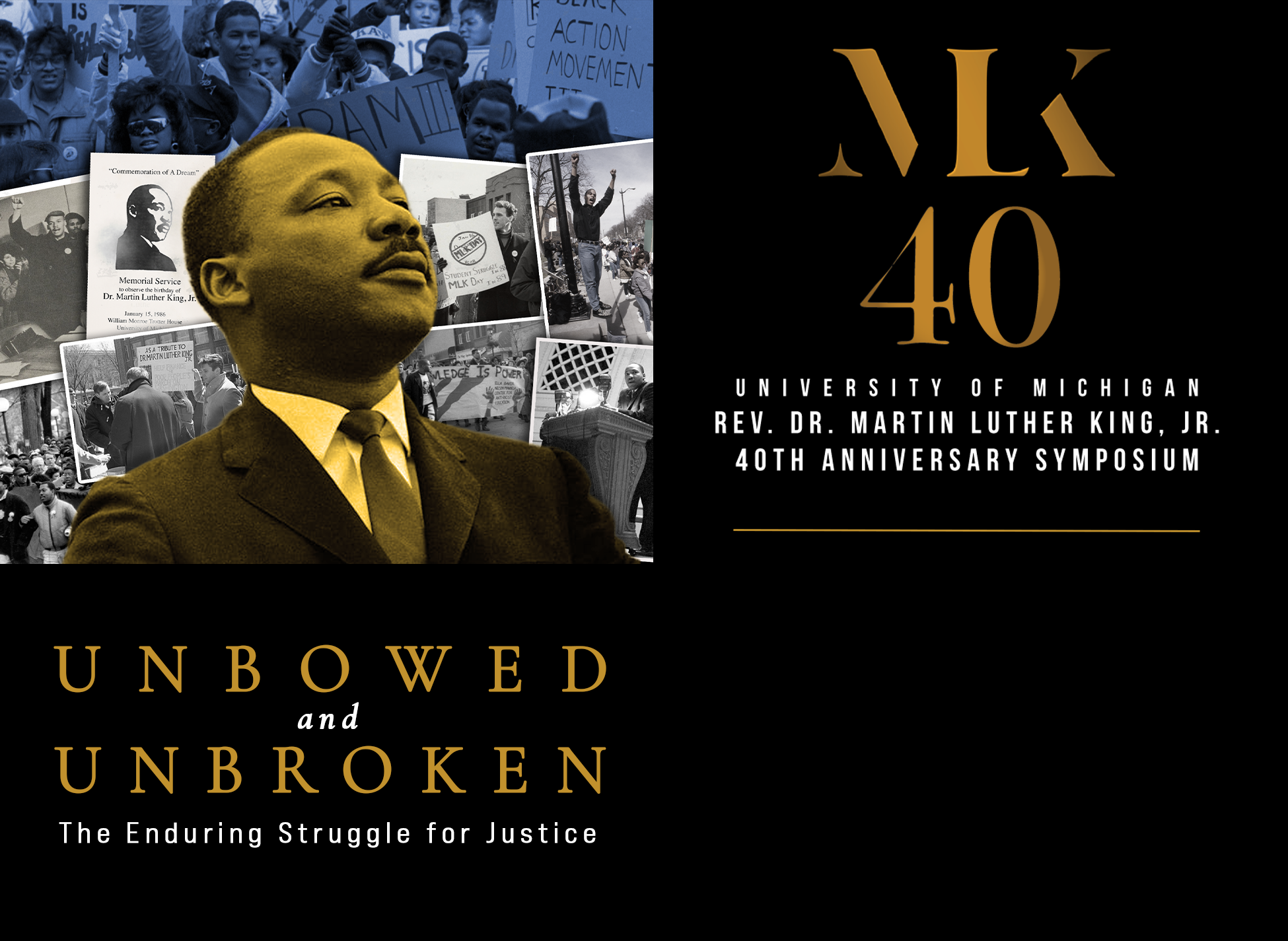
Four decades honoring MLK
U-M’s suspension of classes in observance of the MLK Day holiday, along with the creation of an annual symposium, were direct results of student activism in the late 1980s. Today, the symposium is coordinated by OAMI under the Vice Provost of Access and Opportunity.
With each year’s theme chosen by the faculty and staff of the MLK planning committee, the symposium addresses current social and political issues, drawing connections to the values, experiences and leadership of King and his peers. The event is one of the country’s largest university celebrations in honor of King, and the keynote address serves as the cornerstone of the cross-campus schedule of events.
Departments and units across campus will also host activities to foster the review of the symposium’s theme. Departments that would like their events included on the MLK symposium’s website can submit the event information online.