History of U-M website features expanded resources
A redesigned and expanded History of the University of Michigan website brings together more than two centuries of campus life — from the university’s 1817 founding to student movements that reshaped its identity — into one searchable, comprehensive resource.
“U-M can feel decentralized, and this is an attempt to pool some of the university’s historical resources together and give people a one-stop shop,” said Lara Zielin, associate director of advancement at the Bentley Historical Library.
MORE INFORMATION
The idea for the recently launched website came from the 2017 bicentennial celebration and features a database of over 150 historical projects and 900 publications highlighting multifaceted stories of the university’s past.
A collaboration between the Bentley, the Inclusive History Project and the History Department, the website aims to provide a comprehensive resource to explore the university’s past that includes previously overlooked histories and projects.
“Inclusive history is meant to be expansive,” said Jennifer Brady, managing director of the IHP. “It is meant to include voices that may not always have been included in the history of the university.”
Users can explore the site’s searchable database to find materials on topics ranging from student activism to the experiences of racial, ethnic and gender minorities at U-M.
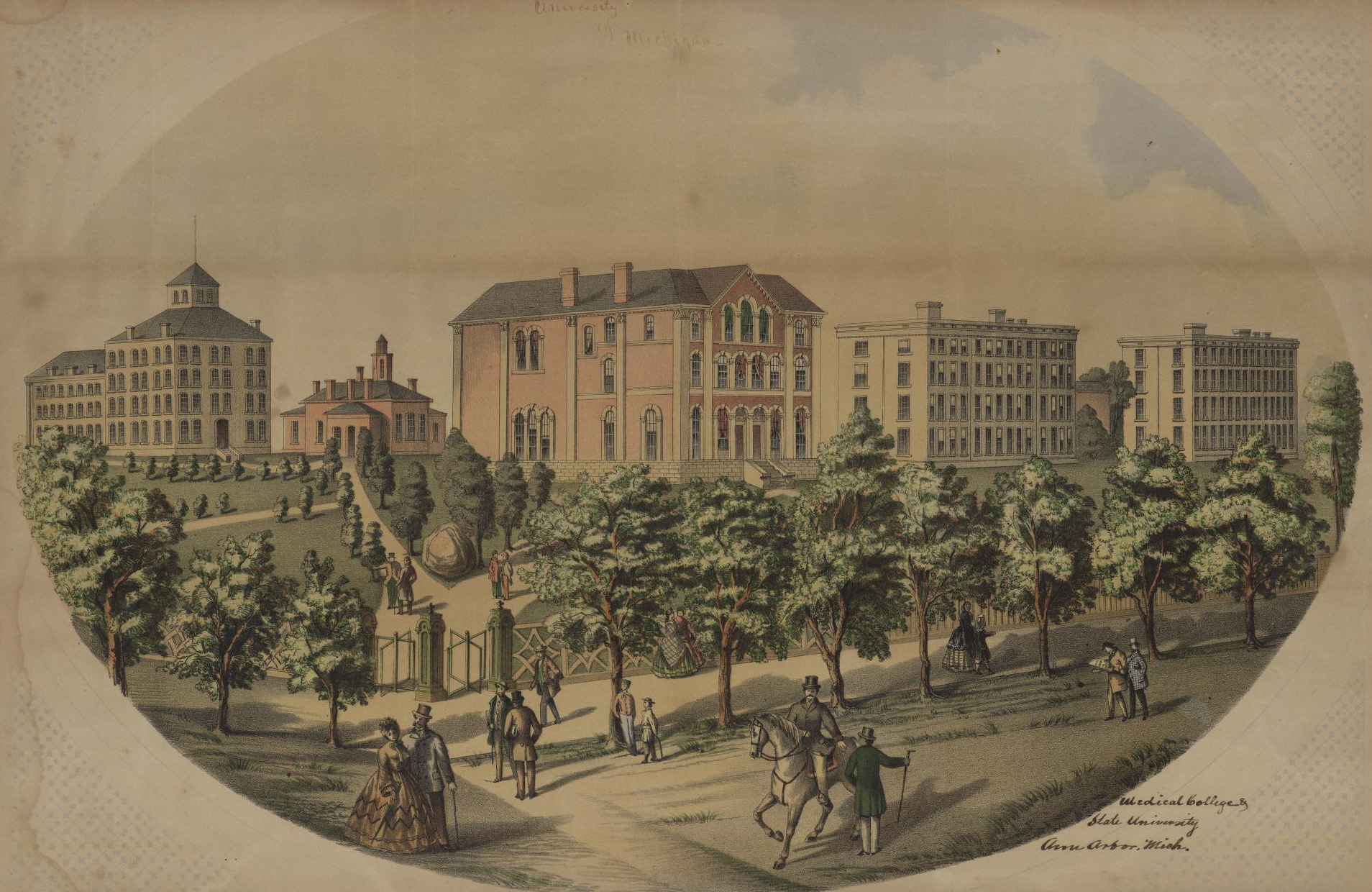
Featured examples include:
- Unprecedented: A Campus Community Reflects on Life in Pandemic.
- As to the Woman Question: The Admission of Women to the University of Michigan.
- ReConnect/ReCollect, which examines the university’s complex relationship with the Philippines.
“We’re really interested in stories that have more intersectionality, projects that showcase multiple perspectives and underrepresented voices,” Zielin said.
The IHP, which was launched in 2022, is an initiative from the Office of the President that aims to document the history of the university at its best and more challenging times.
“There are parts of history that are harder to reckon with,” Brady said. “But we think of those aspects of the university’s past as being work that we can all learn from and build on.”
For Zielin, one such project that highlights a challenging moment in history was the 2014 “Being Black at Michigan” movement.
“That hashtag absolutely went viral and it forced the university to have difficult conversations about race and underrepresentation at a tough time, and it was powerful,” Zielin said.
Featuring such complex projects into a history of U-M website fits within the mission of the IHP — to expand knowledge and understanding of the university’s full past. But before the IHP could begin that work, its team first needed to understand what history had already been told.
“From the start we wanted to make sure we knew what work already existed on the university’s past so we could see how the IHP could add to that knowledge,” Brady said. “But that was tricky because that work existed in a lot of different places and could be difficult to find.”
Another layer of complexity in creating a comprehensive site was capturing the stories of the university’s three campuses.
“Part of the inclusivity that the IHP is seeking is to recognize the university as a tri-campus endeavor,” Brady said. “Each of those campuses has its own unique identity and objectives and histories, but they are all part of the university.”
The current website builds on early efforts by Gary Krenz, who retired as director of the Judy & Stanley Frankel Detroit Observatory and directed planning for the university’s bicentennial.
While leading that celebration, Krenz began compiling online exhibits that would evolve into the first History of U-M site. In the beginning Krenz sought to tell one overarching story of the university’s history, but quickly found that to be limiting.
“It became apparent that there is no one narrative about U-M,” Krenz said. “There are many narratives and the idea was largely to encourage people to develop different narratives from different perspectives.”
Krenz’s early vision of an expansive view of U-M’s history is echoed by the creators of the current version of the site.
Gregory Parker, former manager of the Eisenberg Institute of Historical Studies, led the History Department’s wing of the site’s creation. Parker’s team — which included Henry Cowles, associate professor of history in LSA, and Christopher DeCou, a graduate student in the History Department — sought out diverse stories.
“Working on this project reinforced the need to have as many voices as possible, not only represented in the history itself, but in creating those histories,” said Parker, who is now director of the Detroit Observatory.
Another way the website’s creators seek to collect a wide range of voices is with a “contribute” tab where users can submit input and suggestions.
“One of the tenets of doing a project of this nature, you have to allow people a mechanism to contribute,” Parker said. “We can’t be right 100% of the time.”
For Parker, the website isn’t just for the U-M community, it should have broader appeal.
“U-M history shouldn’t be interesting just for U-M people,” Parker said. “It’s a public institution and the things that happen here impact people that are not part of the immediate community. I think there’s an obligation to make it relevant to everyone.”