Fit for life: A personal story
In this very personal Health Yourself, Victor Katch discusses how being fit can literally save your life. He shares the experience of how the fitness status of one of his best friends is aiding his recovery from a series of catastrophic medical events.
A commitment to physical health
The surgeon, a kind, indefatigable, and compassionate man, looked in the ICU room where my good friend was sleeping quietly following his third major open-heart-related surgery. As our eyes met, the doctor said, “We just can’t seem to kill him, can we?” My friends and I looked at each other and smiled. (We had said good-bye to the sleeping patient on three different occasions in the last three weeks.)
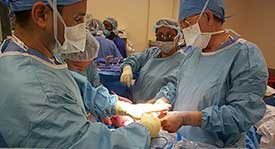 I ran after the doctor as he slipped out of the room. “Doctor, why do you think my friend has been able to survive all he’s been through?” I asked. The doctor told me he’d been in this “business” (I assume he meant saving lives) for more than 30 years. He’d seen it all, he said, noting that almost without exception those who seem to survive these types of catastrophic medical events — and recover well — share common traits. Powerful ones.
“Your friend is an incredibly resilient person,” he said. “He’s been able to create causes and conditions that give him the greatest opportunity to survive and continue to live … I expect to see your friend swimming again within the year.” With that, he turned and walked away.
WOW, we’re keeping our fingers crossed.
Resilience
The ability to overcome negative experiences, whether physical, mental, or emotional, requires preparation: creating the best possible conditions to be able to respond to any adverse situation, even life-threatening surgeries. Even though it’s impossible to separate physical resilience from mental and emotional resilience – they’re intimately tied together; there is impressive research that focuses on physical resilience and the ability to health yourself.
Besides feeling better, improving one’s physical fitness (even a little) increases resilience and improves chances of recovering from unexpected medical setbacks. My friend happens to be a physically active person. He is a swimmer who makes time every day — even when he’s traveling — to get in a pool and swim for an hour or more. His commitment to physical health empowers him to be as fit as he can be.
He is always moving, getting up and down, taking care of things. I rarely see him sit for long periods of time. Even at work, he can barely sit still for 15 minutes! He’s always getting up to write down ideas and check items off his lengthy to-do list. He walks around to engage colleagues on how to “make sh’t happen” (his favorite slogan for everything). He is very animated and involved. In short, he’s a doer! I’m sure his physical resilience is saving his life right this moment. And it could save yours! Start moving and improve your fitness NOW!
The scary truth
At every age we’re becoming a nation of sloths. Recent research on patterns of physical activity among children is horrifying. A new study from the Centers for Disease Control and Prevention reports our youth are becoming more out of shape with every passing year, regardless of economic status.
Less than a third of young people ages 12-18 achieve recommended levels of physical activity – about an hour a day of moving; not heavy exercise, just moving! The data show physical activity peaks among American youngsters before age 10, and perhaps as early as age 2, and begins a steady and accelerating decline thereafter. By some reports, children typically spend eight to 10 hours a day in front of a television or computer screen, with screen time rising during the summer. These statistics do not predict future resilience for our youth. Quite the opposite: They portend increasing health care costs we cannot afford and foreshadow personal tragedies that need not happen.
Data on older adults are equally discouraging. The latest statistics from the U.S. Census, as well as other longitudinal research from laboratories around the world, reveal the following:
- More than 38 percent of people age 65 and over have one or more disabilities, with the most common difficulties being walking, climbing stairs, and doing errands alone.
- For people 60 years and older, the leading health conditions are arthritis or other musculoskeletal disorders, heart or other circulatory conditions, lung conditions, and diabetes, all of which relate to lifestyle.
- Starting at about age 40, there has been a steady decline in fitness status of Americans, with most people 60 and older unable to walk one mile without stopping.
Physical inactivity is detrimental to your health
Based on more than a decade of historical evidence, we now know that physical inactivity is detrimental to health and normal organ function. And, we can say with certainty that being physically active represents primary prevention against the following medical conditions:
Accelerated biological aging/premature death, Sarcopenia, metabolic syndrome, obesity, insulin resistance, prediabetes, type 2 diabetes, nonalcoholic fatty liver disease, coronary heart disease, peripheral artery disease, hypertension, stroke, congestive heart failure, endothelial dysfunction, arterial dyslipidemia, hemostasis, deep vein thrombosis, cognitive dysfunction, depression and anxiety, osteoporosis, osteoarthritis, balance, bone fracture/falls, rheumatoid arthritis, colon cancer, breast cancer, endometrial cancer, gestational diabetes, pre-eclampsia, polycystic ovary syndrome, erectile dysfunction, pain, diverticulitis, constipation, and gallbladder diseases.
What are you waiting for?
Best estimates suggest doctors perform nearly 52 million inpatient surgeries in the U.S. per year. That’s about 17 percent of the nation’s population. If you are between the ages of 40 and 50, the number who will require inpatient surgery jumps to about 30 percent of the population, and it’s over 50 percent of the population among those over 60 years of age. So, chances are high that you will be visiting your nearby surgeon, and not by choice, sooner or later.
So, what are you waiting for? Be like my friend, an inspiration to all of us. Prepare yourself now – get up, get moving, get fit, and give yourself the best chance for survival and a fast recovery.
[NOTE: Personal thanks to everyone at the University of Michigan’s Frankel Cardiovascular Centers’ ICU Division for their professional, compassionate, and remarkable care of my friend; they are the LEADERS and BEST!]
References:
- http://www.nytimes.com/2010/01/20/education/20wired.html?_r=2&
- http://www.cdc.gov/nchs/data/databriefs/db153.htm – [NCHS Data Brief Number 153, May 2014: Cardiorespiratory fitness levels among U.S. youth aged 12–15 years: United States, 1999–2004 and 2012].
- Booth F.W., et al. Lack of exercise is a major cause of chronic diseases. Comprehensive Physiology, 2(2):1143-211, 2012.
- Booth F.W., et al. Understanding multi-organ pathology from insufficient exercise. Journal of Applied Physiology, 111(4):1199-200, 2011.
- http://www.cdc.gov/nchs/fastats/inpatient-surgery.htm