Who wants to see the future, anyway?
Blast from the past
In my December column, I wrote about the James Webb Space Telescope and the joy and excitement that comes with powerful technology. Since then, NASA has released many amazing images that have captured our collective imagination.
The telescope speaks to the human desire to experience “the unknown” by bringing it into focus. Imagine if a tool could do the same thing in climate science.
Astronomers measure distance in terms of light years, literally the distance that light travels in a year. Using light years to measure distance explicitly links distance to time. That is, when we look farther and farther away, we are looking farther back in time. When we look farther back in time, we get headlines like “Webb telescope spots super old, massive galaxies that shouldn’t exist.”
Climate science does not enjoy the benefit of a telescope that can look back in time. To “view” the past, scientists rely on observations using thermometers, tree rings, gases trapped in kilometers-deep ice cores, and many others. To complement and interpret these observations, scientists use models that represent the physics that describe Earth’s climate.
Bringing the past into focus
Today, the observations of Earth are vast in number. Satellites deliver billions of daily observations about temperature; we rely on many other tools and variables to offer insight and understanding about the climate. This incredible observing capacity began in 1979.
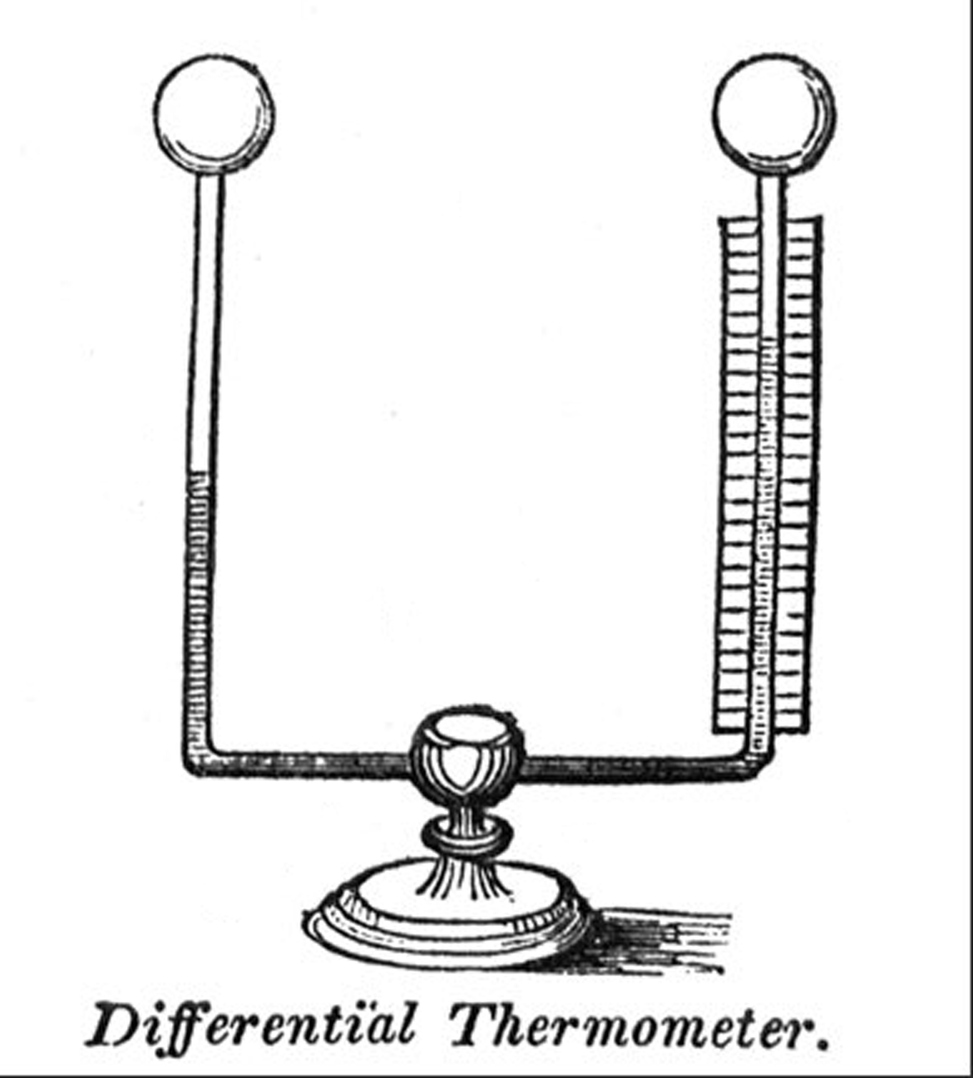
Looking back, we have high confidence in knowing the average temperature all the way to 1850 because we covered the Earth’s surface in thermometers. We even have a few thermometer measurements dating back to the 1600s. However, prior to 1850, we increasingly rely on proxy measurements such as tree rings and ice cores.
The certainty with which we can characterize Earth’s climate is, here and now, very high. The farther back we look, the less certain we are. As with telescopes, we can look at close objects, like the Moon with far more detail than galaxies millions of light years away. We can say that the longer back in time we look at the climate, the less focused our view.
Grounded in the present
The rich set of observations we have now help us ground models in reality.
When we use the models to look at past observations, they are tools to analyze and synthesize information to assist in understanding the observations and evaluating and calibrating the models. The accuracy and precision — the ability to “focus” the model — are high with the modern suite of observations. As we look farther back in time, we move from high degrees of certainty to a set of plausible explanations to describe the more scant and uncertain observations.
All science is challenged when attempting to predict the future. It does not yet exist and can’t be observed. Our ability to bring details into meaningful focus becomes difficult. Intuitively and factually, a weather forecast of seven days is more accurate than a seasonal forecast of nine months. At 100 years, even though the details of individual weather events are unknowable, the attributes of the collective of simulated weather events provide guidance about the state of the planet. With models serving the role of our telescope into the future, near-term events are in focus, and long-term events are not.
Major differences between a far-looking telescope and a long-term climate model lie in the physical processes that are required to describe the observations. Climate science relies on laws of energy conservation (and momentum and mass) that are applied to phenomena on Earth. These laws are established to describe processes ranging from flying an airplane to throwing a watermelon off a highrise.
The Webb telescope is designed to interrogate problems for which the physical processes are both less well-known and evaluated. We are not looking at earthly processes with the Webb. In fact, we are looking for places where such forces as intuitive as gravity, for example, do not behave as they do on Earth. We look in realms where even the definition of time becomes alien to us. We look to challenge our physical understanding — with first glimpses. Uncertain physics and scant observations are expected to lead to headlines like “The James Webb Space Telescope discovers enormous distant galaxies that should not exist.”
No relief in sight
The rich sets of observations, and the simple, well-tested physical representations available to describe our climate give us high confidence about many aspects of our planet’s future. Earth is warming, sea levels are rising, and ice sheets are melting. We also can conclude with confidence that the warming is due to fossil fuels, which means we know how to limit and reverse the warming. Though we know that the weather will change, the details of how the weather will change remain unfocused and uncertain.The fact that we have observations of this unfolding story both enforces our knowledge and improves our models. When we align the observations, simulations, and improvement of our representations of simple, known physics, we arrive at a physical climate model that is a telescope into the future. That telescope’s focus is always improving. And though the focus will tell us many new things, it is unlikely that we will find, as the Webb Telescope might, any violations of our physical understanding that will tell us that a future of planetary warming will not occur.
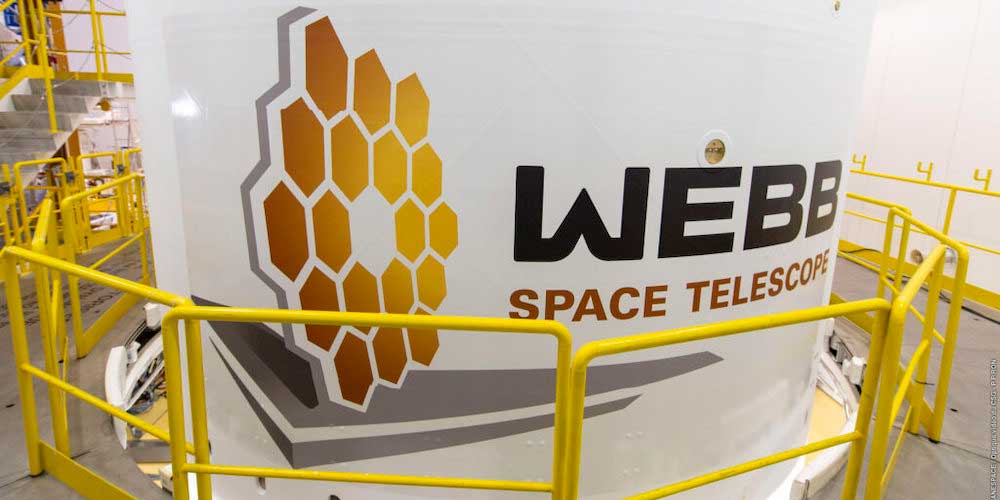
(Lead image: The James Webb Space Telescope at Europe’s Spaceport in French Guiana in 2021, prior to being encapsulated inside this 17 meter-high, 5.4-meter diameter fairing, which provides protection from the thermal, acoustic, and aerodynamic stresses during the ascent to space. (Image credit: ESA/CNES/Arianespace.)