If those walls could talk
May I come in?
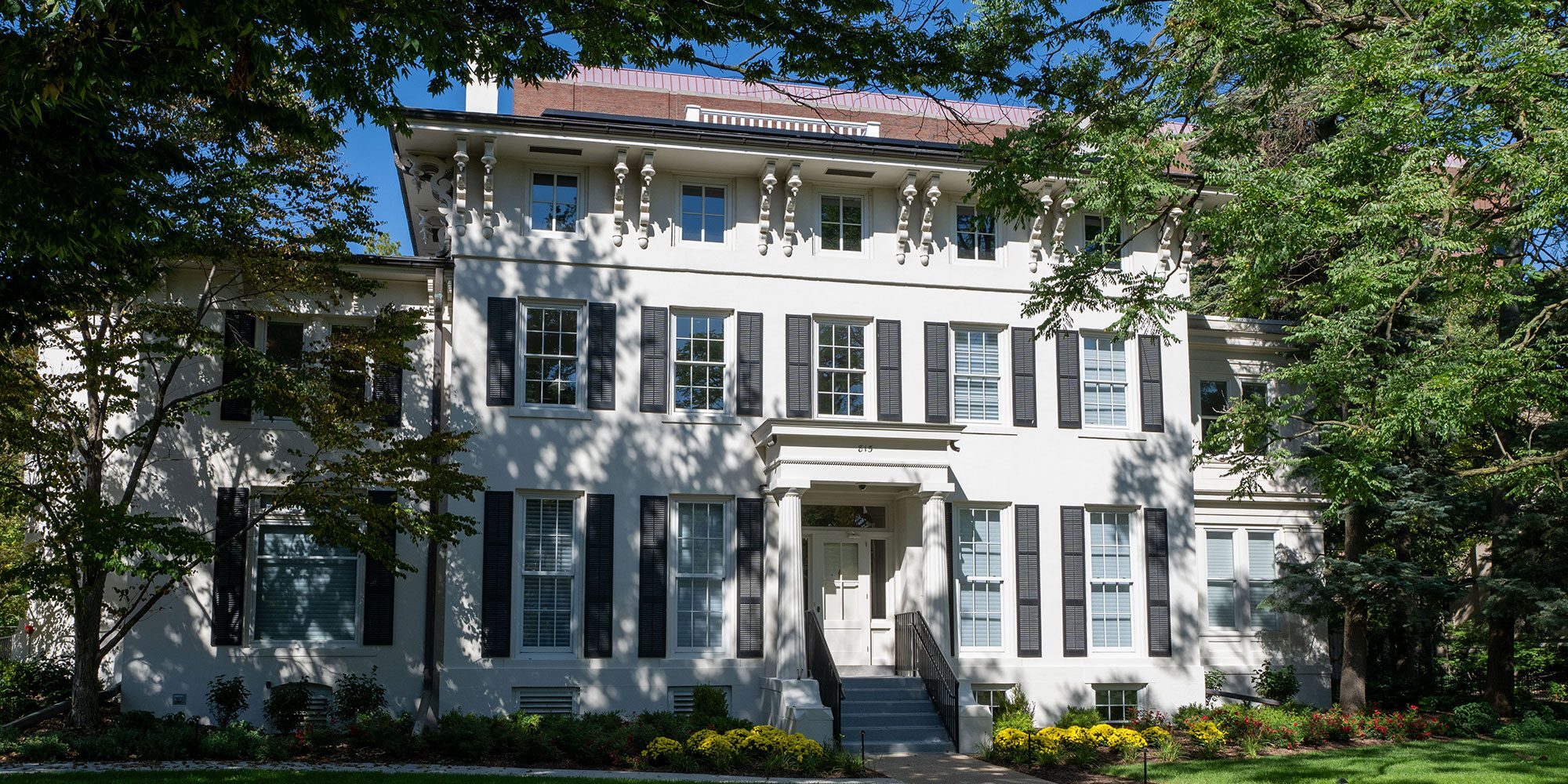
Like most Michigan students, Domenico Grasso, PhD ’87, walked past the president’s residence on South University Avenue almost daily. “I never thought I would be invited inside, much less live there,” he says.
The three-story home was built between 1839-40 as one of “four buildings for the use of the Professors of the University” on the fledgling Ann Arbor campus. It is the sole survivor among those four original structures. As the oldest building on campus, the house is listed on the National State Registers of Historic Places.
Grasso took the helm at U-M on May 8, following Santa Ono’s resignation. Today, he literally walks in the footsteps of such campus luminaries as Henry Philip Tappan, Erastus O. Haven, James B. Angell, and Alexander G. Ruthven, to name a few. The history permeating the home’s walls is palpable.
“Well, I have to say there are some odd noises at nighttime,” he says. “And I often think about all the things that could have transpired there, both in conversation and in actual reality. It’s remarkable.”
A house becomes a home
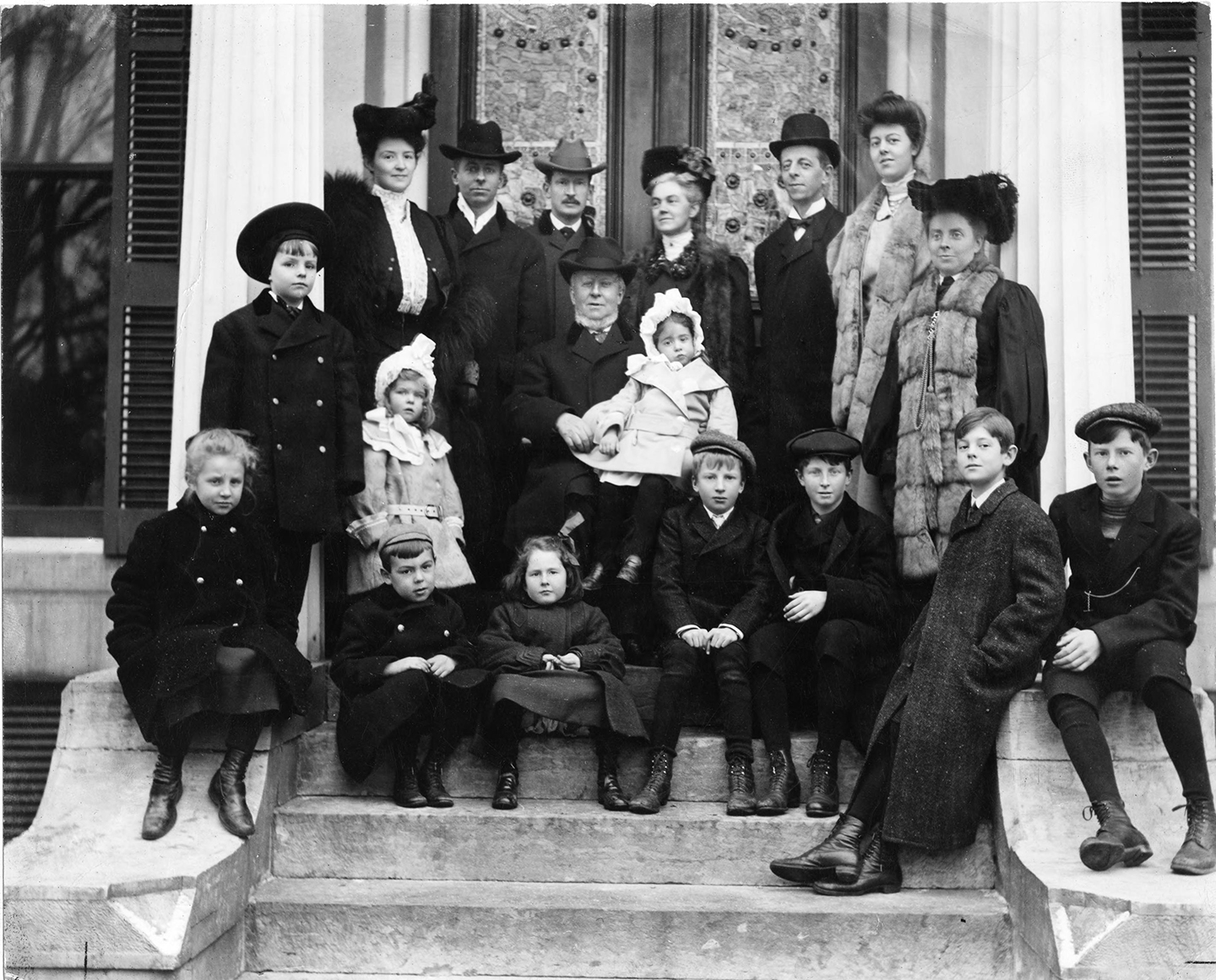
Grasso feels a special kinship with President Angell as they each spent part of their careers at the University of Vermont. “I love his philosophy about an uncommon education for the common individual,” he says in the lead feature this month, “The view from 70,000 feet.”
In fact, U-M’s newest president can thank his predecessor Angell for the indoor plumbing he currently enjoys at the residence. In 1869, as Angell was being recruited by the Board of Regents, he insisted that Michigan match the modern amenities to which he and his family had grown accustomed in Vermont. Negotiating such an upgrade to the residence was nearly as significant as finalizing a presidential salary.
“[The house] seems to me to need absolutely paper and paint, bathroom with hot and cold water, water closet, and some arrangement for a dining room closet, and a furnace,” Angell wrote to the regents at the time. “My family has never lived in a house without the above-named conveniences, which the house lacks, and composed as it is of persons from very advanced age to infancy, I should not feel willing to ask them to dispense with them, unless there were an absolute necessity.”
The president’s residence was 4,800 square feet when doors opened in 1840. Four significant additions between 1864 and 1933 increased its size to about 14,000 square feet. While Angell was in residence in 1891, a library wing was added to the western side of the house. A sun porch, garage, and an extension to the kitchen were completed in time for President Marion LeRoy Burton’s arrival in 1920. And in 1933, during Ruthven’s presidency, a study was added to the house’s northeast corner.
Significant upgrades have occurred over the decades, including a $15-million renovation by SmithGroup Inc. in 2023.