Is there such a thing as a ‘healthy-eating’ disorder?

Order up
During a recent meal with my older brother in Santa Barbara, Calif., I was reminded of an ongoing pattern between us. As always, he ordered the classic Reuben sandwich. As always, I ordered a fresh salad with beans, peas, radishes, nuts, and grilled tofu. When the food arrived, my brother began to needle me, as he always does, about my eating habits. He jokes (tongue-in-check) that I’ve switched to the dark side where I’ve joined a Vegan Cult that only allows me to eat rabbit food.

When it comes to my health, I am passionate. (My brother would say I’m obsessed.) I eat a healthy diet, backed by consensus science. I’m a plant-based eater and do my best to avoid eating animal-based products, although I do consume limited quantities of eggs, cheese, and milk when they are included in certain prepared foods. Also, I try to limit (or avoid) ultra-processed foods, added salt, added sugar, unnecessary sweets, and alcohol.
I started to wonder: Could my brother be on to something? Am I at the cusp of some sort of obsessive-compulsive disorder (OCD) centered around healthy eating? To find out, I delved into the literature to see if there really is such a thing as a “healthy-eating disorder.”
A little history
In 1996-7, alternative medicine practitioner Steven Bratman observed that some of his patients were inadvertently harming themselves, psychologically, through an excessive fixation with healthy eating. He found they were assigning unwarranted meaning and importance to the food they ate.
While these people were mostly eating healthy, Bratman felt they were exhibiting compulsive behaviors with restrictive dietary practices and self-imposed dietary rules. They experienced an exaggerated fear of disease and a sense of personal impurity. They also reported feeling negative physical sensations, accompanied by anxiety and shame.
Bratman also observed these dietary restrictions escalated over time, and included elimination of entire food groups, severe “cleanses,” and partial fasting practices, leading to extreme weight loss.
Bratman coined this condition “Orthorexia Nervosa (ON).” The term comes from the Greek (for “right” and “appetite”) to describe this fixation with “correct” eating and an extreme desire for a healthier lifestyle. Bratman argued when this type of eating behavior becomes obsessive, it can cause negative consequences, such as malnutrition and extreme anxiety, similar to what occurs in other OCD-cyclic behaviors.
What is Orthorexia?
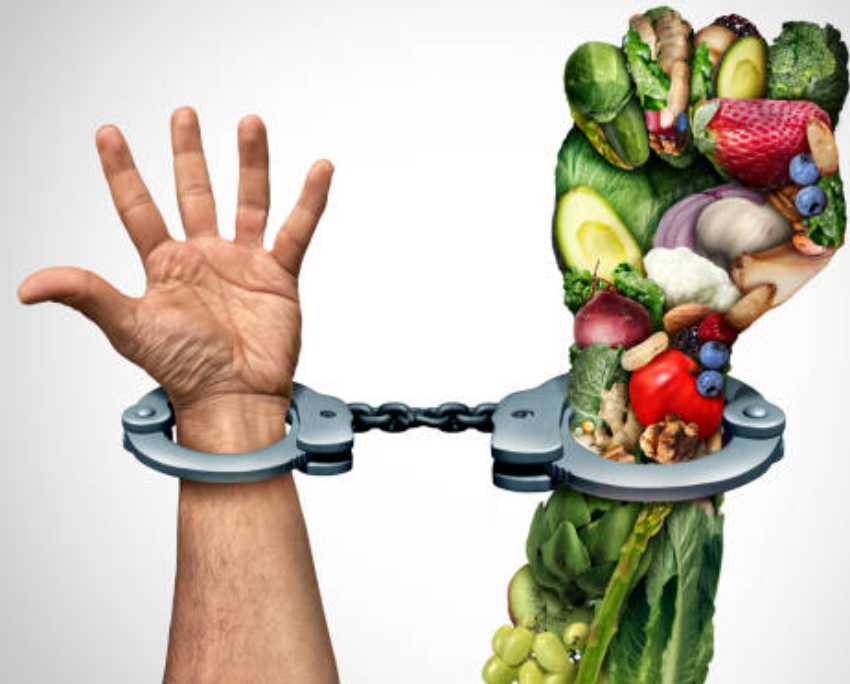
Eating nutritious food is good, but those with orthorexia exhibit habits that reject eating a variety of foods for not being “pure” enough. Eventually, people with orthorexia begin to avoid whole meals that don’t meet their standards, or that they don’t prepare themselves.
Since the 1990s, much to my surprise, peer-reviewed research related to orthorexia includes more than 2,500 papers. However, orthorexia is not recognized in the most recent Diagnostic and Statistical Manual of Mental Disorders (DSM-5-TR) or International Classification of Diseases (ICD-11), and there is some debate whether orthorexia is even a distinct mental disorder. As a result, estimating the prevalence of orthorexia is challenging. Nevertheless, understanding orthorexia has gained widespread interest among medical professionals.
Accounting for orthorexia
Experts criticize the most commonly used orthorexia diagnostic questionnaire, the ORTO-15, for being unreliable and and not effectively distinguishing between healthy and unhealthy eating behaviors. As a result, the tool may overestimate orthorexia’s prevalence, they say. Other diagnostic tools seem to illustrate wide inconsistency as well.
Nevertheless, some estimates indicate that orthorexia affects between 1%-7% of the general population. A recent meta-analysis indicates approximately three out of 10 participants showed some orthorexia behavioral signs (see below). Individuals in health- or fitness-related fields (dietitians, nutrition students, athletes, yoga instructors) may have a higher prevalence. In one study, 86% of yoga instructors surveyed exhibited more than two orthorexia symptoms, and in another study, 49.5% of registered dietitians/nutritionists were found to be at risk of orthorexia, exhibiting three or more symptoms. College students are also at higher risk – with one study reporting over 25% experiencing multiple symptoms of orthorexia.
Orthorexia diagnosis
Since orthorexia is not yet a recognized medical condition or disease, most research attempts to document common diagnostic criteria in three domains — behavioral, psychological, and physical — to better understand this condition.
Behavioral signs
- Avoidance of certain foods believed to be “unhealthy.” These may include foods containing fat, preservatives, food additives, animal products, or other ingredients considered by the person to be unhealthy.
- Consuming a nutritionally unbalanced diet because of beliefs regarding food “purity.”
- Food neophobia (extreme and/or irrational fear or dislike of anything new or unfamiliar).
- Excessive amounts of time (three or more hours per day) spent reading about, acquiring, and preparing specific types of foods based on their perceived quality and composition. (This does not apply to chefs and other professionals in the food industry.)
- Assigning greater importance to certain foods, without scientific verification.
- Becoming judgmental of other people’s diets.
- Obsessive fixation on ingredients.
- Only eating self-prepared foods.
- Spending excessive amounts of money relative to one’s income on certain foods because of perceived quality and composition.
- Social isolation, or preferring to be alone while eating.
Psychological signs
- High degree of worry about food quality and food sources leading to anxiety about shopping and eating.
- Singular focus on food quality that interferes with other areas of life, such as relationships or work.
- Rigidity around personal rules regarding what can and cannot be eaten.
- Emotional wellbeing dependent on eating only the “right” food.
- Fear and anxiety of food-borne illnesses.
- Increased bouts of depression.
Physical signs
- Weight loss
- Muscle weakness
- Tiredness
- Delayed illness recovery
Summary
Orthorexia nervosa, first described in the late 1990s, appears to be a poorly understood disorder, perhaps best summarized as an obsession with healthy eating characterized by associated restrictive behaviors, similar to OCD. The condition has an uncertain etiology, with imprecise assessment tools and no formal diagnostic criteria or classification. Nevertheless, orthorexia does appear to be a real condition of unspecified prevalence.
Certainly, further research is needed to develop valid diagnostic tools that determine whether orthorexia should be classified as a unique illness or a variation of other eating or anxiety disorders.
References
- American Psychiatric Association. “Diagnostic and Statistical Manual of Mental Disorders.” 5th ed. Arlington, VA: American Psychiatric Publishing; 2013. Feeding and eating disorders; pp. 329.
- Barnes, M.A., Caltabiano, M.L. “The interrelationship between orthorexia nervosa, perfectionism, body image, and attachment style.” Eating and Weight Disorders. 2017;22(1):177.
- Bratman, S., Knight, D. “Health food junkies: Orthorexia nervosa: Overcoming the obsession with healthful eating.” Journal of the American Medical Association. 2001;285:2255.
- Bratman, S. “The health food eating disorder.” Yoga. 1997;42:50.
- Bratman, S. “Orthorexia vs. theories of healthy eating.” Eating and Weight Disorders. 2017;22,381.
- Bundros, J., et al. “Prevalence of orthorexia nervosa among college students based on Bratman’s test and associated tendencies.” Appetite. 2016;101:86.
- Cena, H., et al. “Definition and diagnostic criteria for orthorexia nervosa: A narrative review of the literature.” Eating and Weight Disorders. 2019;24:209–246.
- Dell’Osso, L., et al. “Historical evolution of the concept of anorexia nervosa and relationships with orthorexia nervosa, autism, and obsessive-compulsive spectrum.” Neuropsychiatric Disease and Treatment. 2016;12:1651.
- Dunn, T.M., Bratman, S. “On orthorexia nervosa: A review of the literature and proposed diagnostic criteria.” Eating Behaviors. 2016;21:11–17.
- Dunn, T.M., et al. “Prevalence of orthorexia nervosa is less than 1 %: data from a US sample.” Eating and Weight Disorders. 2016;22(1):185.
- Eckley, T., et al. “Prevalence of orthorexia nervosa: A systematic review and meta-analysis protocol.” BMJ Open. 2025;15(5):e096802.
- Gregson, R., et al. “Against the cult of veganism: Unpacking the social psychology and ideology of anti-vegans.” Appetite. 2022;178:106143.
- Lucka, I., et al. “Orthorexia as an eating disorder spectrum — A Review of the Literature.” Nutrients. 2024;16(19):3304.
- Moroze, R.M., et al. “Microthinking about micronutrients: A case of transition from obsessions about healthy eating to near-fatal ‘orthorexia nervosa’ and proposed diagnostic criteria.” Psychosomatics. 2015;56:397–403.
- Qin Xiang., Ng, et al. “On Orthorexia Nervosa: A systematic review of reviews.” Psychopathology. 2024;57(4):345.
- Vandereycken, W. “Media hype, diagnostic fad, or genuine disorder? Professionals’ opinions about night eating syndrome, orthorexia, muscle dysmorphia, and emetophobia.” PubMed. 2011;19(2):145.
- Valente, M., et al. “Shedding light upon various tools to assess orthorexia nervosa: A critical literature review with a systematic search.” Eating and Weight Disorders. 2019;24(4):671.
- World Health Organization (WHO) (2022) ICD-11, “International classification of diseases for mortality and morbidity statistics.” World Health Organization, Geneva.