A hot take on propaganda

Reality check
As a university professor teaching about climate science, nothing challenged me more than grappling with misinformation, disinformation, propaganda, and lies.
Misinformation is the term for statements that are unintentionally incorrect. It is rampant on social media, where it is often believed and widely distributed.
Disinformation is insidious. It is treacherous, intentional, and easily disguised as misinformation.
Propaganda is organized and systematic, created with the intent to influence and control others. The goal is to convince people to support an ideological, political, or personal agenda.
Propaganda distorts information and sets people up for coercion. This can lead to behaviors that stand in stark contrast with what we know to be true, perhaps just.
As a professor, I had good resources for identifying misinformation and disinformation in my classroom. I taught about logical fallacies — how to identify them, preempt them, and counter them.
However, if people were simply going to lie, and others chose to believe those lies, I lacked effective strategies to counter that attack.
As I neared the end of my teaching career, the organized disinformation increased, seeking to discredit and stigmatize the science of climate change and the efficacy of renewable energy. I worked case studies into the curriculum to satisfy students who wanted to know more about countering disinformation.
But the disinformation turned into propaganda and escalated from one year to the next.
Down the rabbit hole
On July 23, 2025, the Department of Energy (DOE) published “A Critical Review of Impacts of Greenhouse Gas Emissions on the U.S. Climate.”
To be explicit, this is propaganda with imprimatur of government. And it has been a long time coming.
There have been responses from the science community. There will be many more. For those interested, here is a compendium of what is wrong with the Critical Review.
I take this column, however, down a different path.
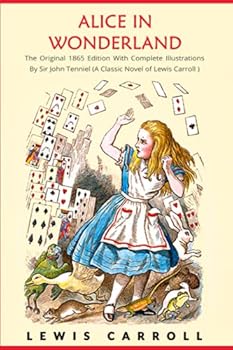
It starts with Alice in Wonderland and a scene in which Alice asks the Cheshire Cat:
“Would you tell me, please, which way I ought to go from here?”
“That depends a good deal on where you want to get to,” said the Cat.
“I don’t much care where—” said Alice.
“Then it doesn’t matter which way you go,” said the Cat.
“—so long as I get somewhere,” Alice added as an explanation.
“Oh, you’re sure to do that,” said the Cat, “if you only walk long enough.”
Alice felt that this could not be denied, so she tried another question. “What sort of people live about here?”
“In that direction” the Cat said, waving its right paw round, “lives a Hatter. And in that direction,” waving the other paw, “lives a March Hare. Visit either you like: they’re both mad.”
“But I don’t want to go among mad people,” Alice remarked.
“Oh, you can’t help that,” said the Cat. “We’re all mad here. I’m mad. You’re mad.”
The ultimate proof of her madness lies with this logic:
“How do you know I’m mad?” said Alice.
“You must be,” said the Cat, “or you wouldn’t have come here.”
Alice didn’t think that proved it at all; however, she went on, “And how do you know that you’re mad?”
“To begin with,” said the Cat, “a dog’s not mad. You grant that?”
“I suppose so,” said Alice.
“Well, then,” the Cat went on, “you see, a dog growls when it’s angry, and wags its tail when it’s pleased. Now I growl when I’m pleased, and wag my tail when I’m angry. Therefore I’m mad.”
Curiouser and curiouser
This logic, this absurdity, this nonsense has remained with me for decades.
No lies are being told. Each sentence makes sense. But as the sentences build from one to the next there is increasing discomfort in the message that is emerging.
We know that it is not right, that it makes no sense.
But what do we do with this?
If we examine what the Cat says, the sentences are short, with narrow focus. The Cat is intent on its words being taken literally. The Cat takes Alice’s words literally. The Cat does not seek context.
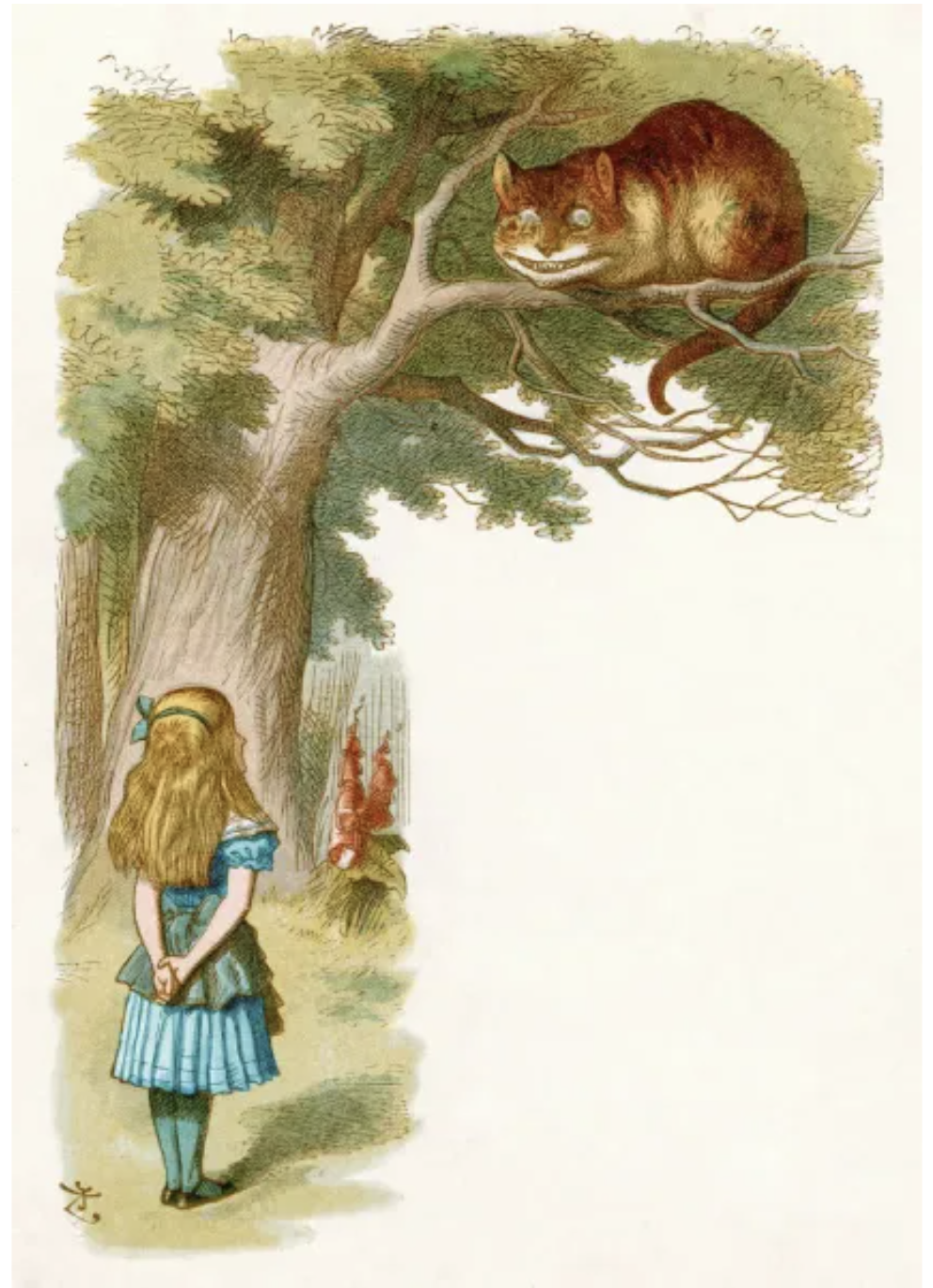
The Cat poses simple propositions and requests agreement. The Cat lays out the premise that dogs are not mad. Alice ambiguously agrees.
What of Alice? It is clear from her internal narrative that she does not buy the Cat’s conclusions. On the other hand, she does not challenge them in an outspoken way.
Alice posed her first question with, perhaps, absolute uncertainty, asking which way to go without knowing where she wants to go.
Alice is a participant in the nonsense.
Though at this point, Alice may seem resistant to the nonsense, one can reason that if immersed in a culture of nonsense, she might lose contact with the world she has always perceived as right.
Through the looking glass
The nature of DOE’s Critical Review has much in common with the Cheshire Cat. Efforts are made to assure that statements are narrow and correct. Any effort on seeking context is also narrow, because if the context is widened the document falls apart. The argument relies on specific observations, specific concepts that are valued above all others.
There is perhaps madness implied, as the work of others is interpreted in the narrow framing of the authors.
The document provides plenty of opportunities for lawyers and politicians to extract simple statements and compel agreement.
We are easily led to a place, much like Alice’s, where we have to decide: Do we quietly accept that the logic is nonsense and move on with our own counsel? Do we peacefully meld ourselves into the logic of the alternative culture, complete with its smudged view of reality?Are the issues important enough that we fight the nonsense?
In a large group of people, all of these options exist. All of the choices will occur.
Propaganda is full of premises, images, and reasoning designed to remove complex realities from their context.
Once reality is narrowed, it is easy to ignore all that hangs around it, and to pursue simple, indelicate, incomplete, and badly flawed policies framed as solutions.
It is easy to lie when you dismiss the evidence around you.
The purpose of propaganda is to unleash these flawed solutions. Sometimes this is for personal enrichment. Other times it is to eliminate things leaders hate or view as uncomfortable to their wellbeing.
It can be simply to support the expression of power, the elevation of self.
Complexity killed the Cat
I realize there are those who will cast the climate science community as having run its own propaganda campaign for the past four decades. I have heard the National Climate Assessments described as propaganda documents designed to cause fear and anxiety.In the absurd world — where we dismiss the appeal to reason in favor of the appeal to emotion and the appeal to values — we can cast all of those we disagree with as propagandists.
There are many differences between the Critical Review and the National Climate Assessments.
The National Climate Assessments seek to encompass evidence, place that evidence in context, reconcile inconsistencies, describe uncertainty, and seek critical review. The work takes on the harrowing job of trying to describe and explain our climate’s complexity and the consequences of its warming.
The assessments are produced following a process anchored in law. They seek to report results to the public, objectively, rather than through the lens of ideology.
The results are not required to align with what we want to believe or want to be true.
Go ask Alice
I am continually frustrated by my lack of strategies for managing propaganda. I hold on to my self-counsel that there is growing absurdity, and I need to ground myself.
I see the appeal in propaganda framing a simple world, with narrowed truth, that people find more suitable.
I see the requirement that an evidence-based reality, with all of its messiness, ultimately serves our ability to strive, thrive, and survive.
I believe that recognizing the absurdity in propaganda provides value. It makes it easier to remove oneself and avoid being drawn into a world where reality is being distorted.