James Craig Watson, shooting star
A genius, for better and worse
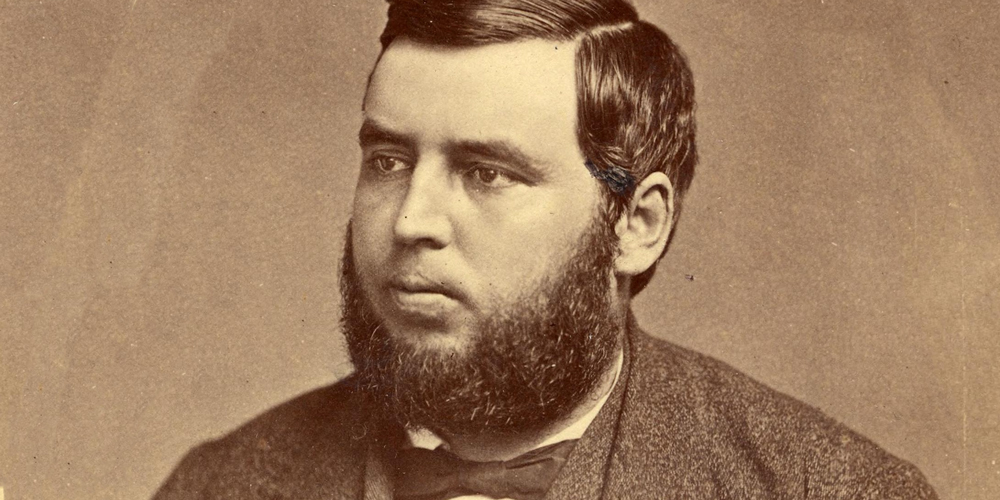
James Craig Watson was a bit like one of the meteors he spotted through Michigan’s first telescope, streaking across the night sky in a flash that vanished almost before you knew you had seen it.
He was a brilliant young astronomer when astronomy itself was young. He was an explorer and a faker. He was a popular man who wronged his friends. He pursued scientific truth and money with equal ardor. To his teacher and mentor, he was a once-in-a-lifetime student; then Watson stole his mentor’s work. To his wife, who helped him study the heavens, a colleague said he was “simply abominable.”
And yet when he was dead at 42, many mourned and praised him. Henry Simmons Frieze, the classics professor who served the University twice as interim president, said Watson was “the most brilliant man we have ever raised up here.”
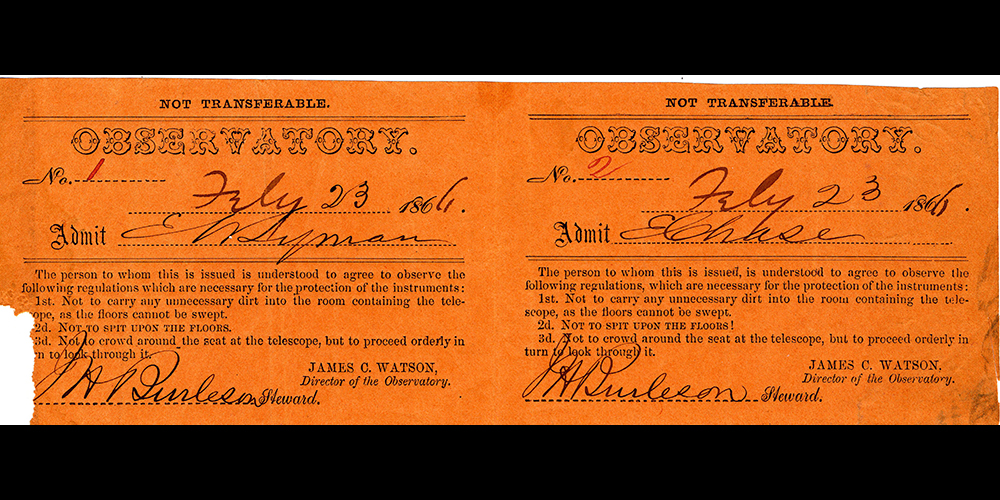
Born in Ontario in 1838, Watson grew up in Ann Arbor, where his teachers realized he was a math prodigy. In his early teens he earned money as a self-taught machinist, then entered U-M at 15. He earned a bachelor’s degree in classical languages but shifted to science. Soon he was training with the German-born astronomer Franz Brünnow, director of the University’s brand new Detroit Observatory (named for the Detroit donors who funded it), the first such installation west of the Appalachians.
For a time, Watson was Brünnow’s only student. When the older man was asked to account for teaching a class of one, Brünnow replied: “That class consists of Watson.” He became Brünnow’s assistant before he completed the master’s degree and soon succeeded him as director of the observatory — and was appointed professor of physics and instructor in mathematics — by the time he was 25.
Bagging asteroids
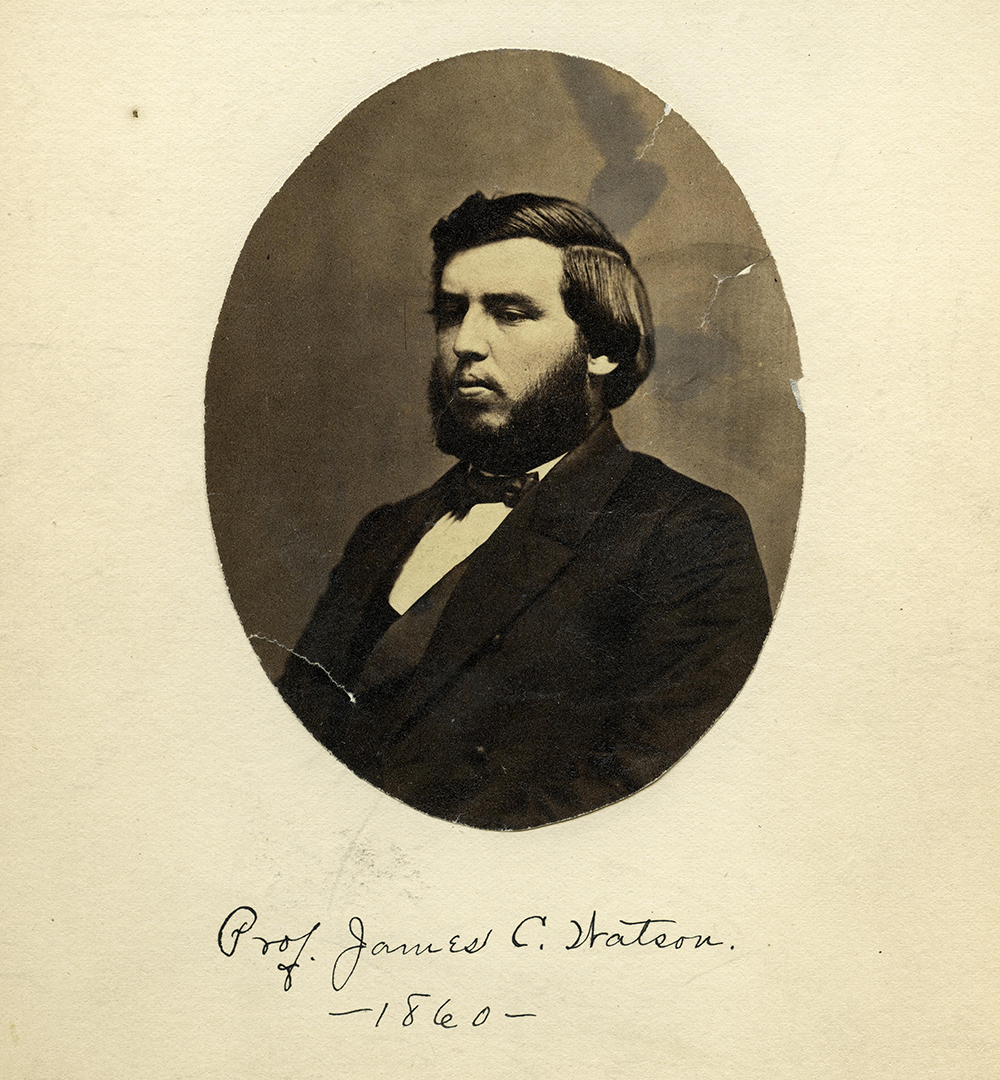
Watson quickly became an international star in the game that was obsessing astronomers of the day. He called it “bagging asteroids.” He discovered 22 of these space rocks orbiting the sun, many of them through the lens of Michigan’s world-class telescope. He spotted six in 1868 alone. Colleagues attributed his skill in the competition to his meticulous plotting of star charts and a superb memory; he was uncanny in his ability to distinguish an unfamiliar celestial object for ones already known.
Watson ventured to the American West, Egypt, and China to study the skies. For a time it was thought he had bagged the biggest prize in his field — confirmation of the “phantom planet” Vulcan, which astronomers suspected was circling the sun inside the orbit of the first planet, Mercury. In Wyoming, where he traveled with a party (including Thomas Edison) to observe a total eclipse of the sun, Watson thought he spied the fugitive Vulcan racing across the eclipse. As it turned out, what he saw was either a star or an optical illusion — and there is no Vulcan — but the report inflated Watson’s global reputation.
His published findings mounted swiftly, culminating in a textbook, Theoretical Astronomy, that experts and students relied on for 30 years. Honors rained down from both sides of the Atlantic. His most mellifluous recognition: Knight Commander of the Imperial Order of the Medjidie of the Ottoman Empire. After he measured the Pyramids, the Khedive of Egypt loaned him a houseboat to cruise up the Nile.
‘He does not shrink from adorning himself’
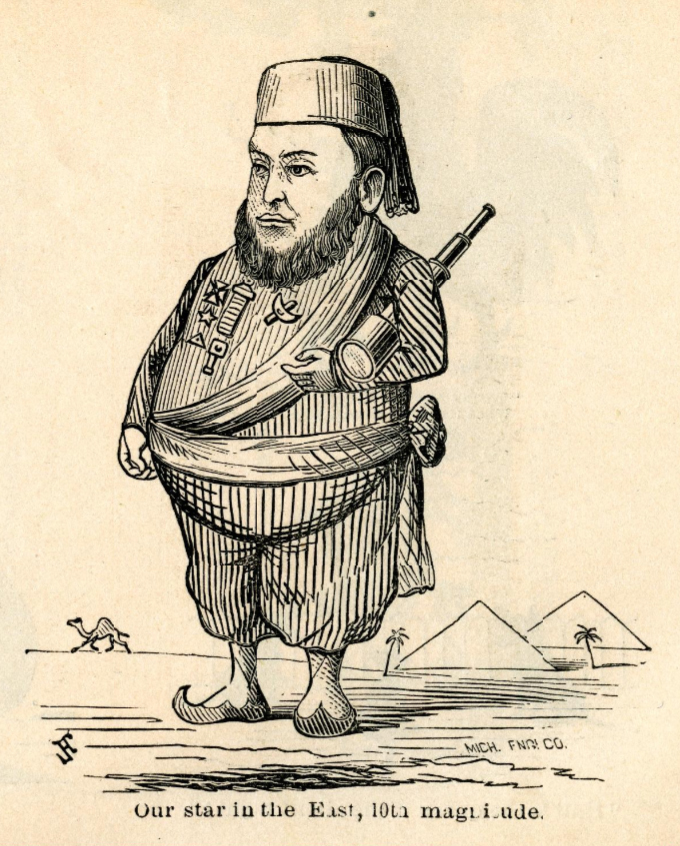
People liked Watson wherever he went, at least until they got to know him better. Burly and black-bearded, with a booming voice, he made a big impression. He was funny and playful. He bubbled over with self-confidence. As a student, he would decorate his lab notebooks with his own autograph, once appending the title “Astronomer Royal.” In a write-up to promote a telescope he designed, he blythely referred to himself as “one of the greatest astronomers that this country has ever produced to whom … science owes some of its greatest blessings.”
Watson was stingy about letting students use the observatory’s telescopes, but they loved him anyway. (For one thing, he was an easy grader; he once awarded a “pass” to a student who had died mid-semester.) When he asked the University’s Board of Regents to build him a house by the Observatory, they agreed, just to keep him happy.
Yet many associates realized quite soon that something was awry in Watson’s character.
No one had done more for him than his mentor, Professor Brünnow, who nurtured Watson’s prodigious abilities and greased the path to his faculty appointment. But not long after Brünnow left Ann Arbor to teach in Germany, he found himself reading some of his own formulae published under Watson’s name in an American scientific journal. They were straight from Brünnow’s classroom lectures, yet unattributed.
In sadness, Brünnow reported the incident to a former colleague at Michigan. If Watson had asked his permission, Brünnow said, he would have warned his former student that “it would injure his reputation with European Astronomers at least, who would see that he does not shrink from adorning himself with the merits of others.”
‘Dreadfully in debt’
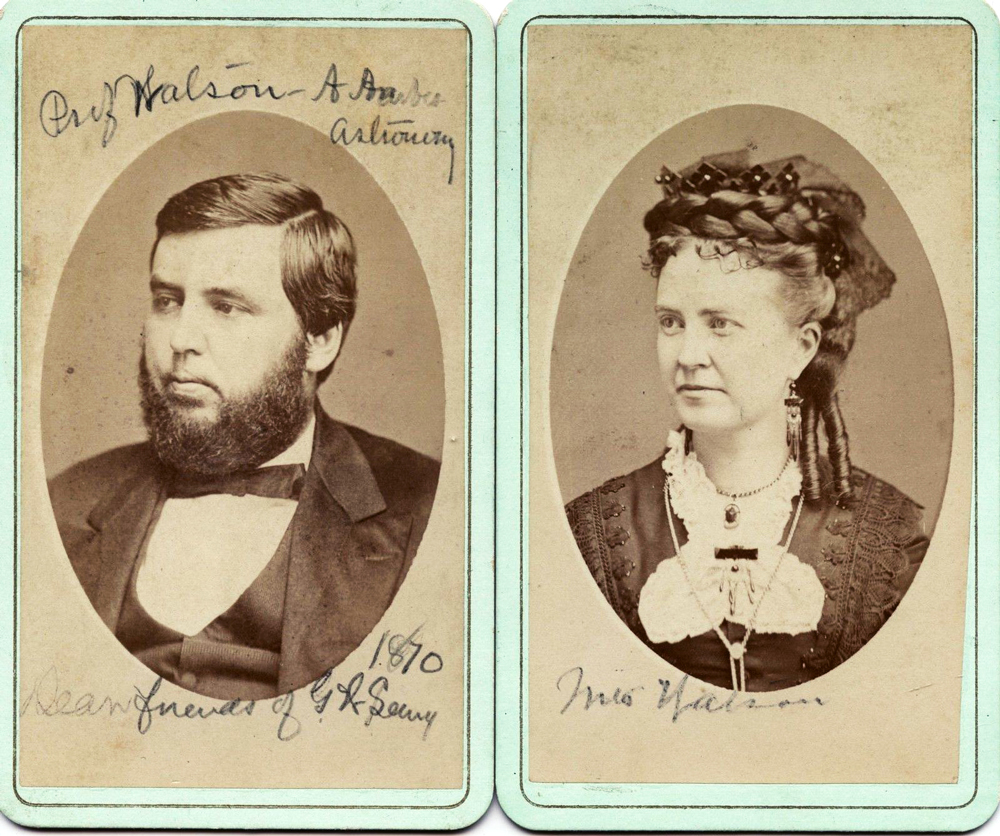
It became clear, too, that Watson was at least as devoted to feathering his nest as he was to advancing science.
He had barely joined the faculty and gotten married when he bought four lots on South University for $5,000, a very large sum in the 1860s and far more than he could afford. He begged wealthier faculty colleagues for loans. He reneged on deals. An Ann Arborite wrote to a friend that “Prof. Watson’s affairs are much talked of now … He is dreadfully in debt and tradesmen of all kinds are crying out against him … It is a great pity for I suppose no young man ever began life with greater prospects than he did.”
Somehow he sidestepped disaster by pursuing business endeavors on the side. He sold his services as a mathematician to the U.S. Coast Survey. He speculated in real estate. He hawked life insurance.
President Henry Philip Tappan knew Watson well, not least because he was Franz Brünnow’s father-in-law and had founded the Detroit Observatory to help make Michigan’s name. He was flummoxed by the young prodigy’s recklessness.
“I had a free and kind conversation with him … and advised him to devote himself to his proper pursuits,” Tappan wrote later. “He replied that he was bound to make money …. I reminded him that if he were faithful to science, science would take care of him. He replied that he could do both.”
While Watson’s reputation soured at home, it flourished elsewhere, bringing more honors, and in 1879, he left U-M for the University of Wisconsin, which promised him better equipment for new explorations. Just a year later, he contracted peritonitis and died. His remains were returned for burial in Forest Hill Cemetery, within sight of the Detroit Observatory.
He was “one of the most energetic and able men I ever knew,” the Princeton astronomer C.A. Young confided to a friend at Wisconsin after Watson’s death, but “selfish and unscrupulous in pursuing his own interests … There is no need to expose his faults; but they should not be replaced by virtues he did not possess.”
(Lead image of James Watson is courtesy of U-M’s Bentley Historical Library. Editorial sources included Patricia S. Whitesell, A Creation of His Own: Tappan’s Detroit Observatory (1998), and Kevin Brown, “Vulcan’s Muddy Light,” University of Michigan Heritage Project.)