Keep it moving
Pack it in
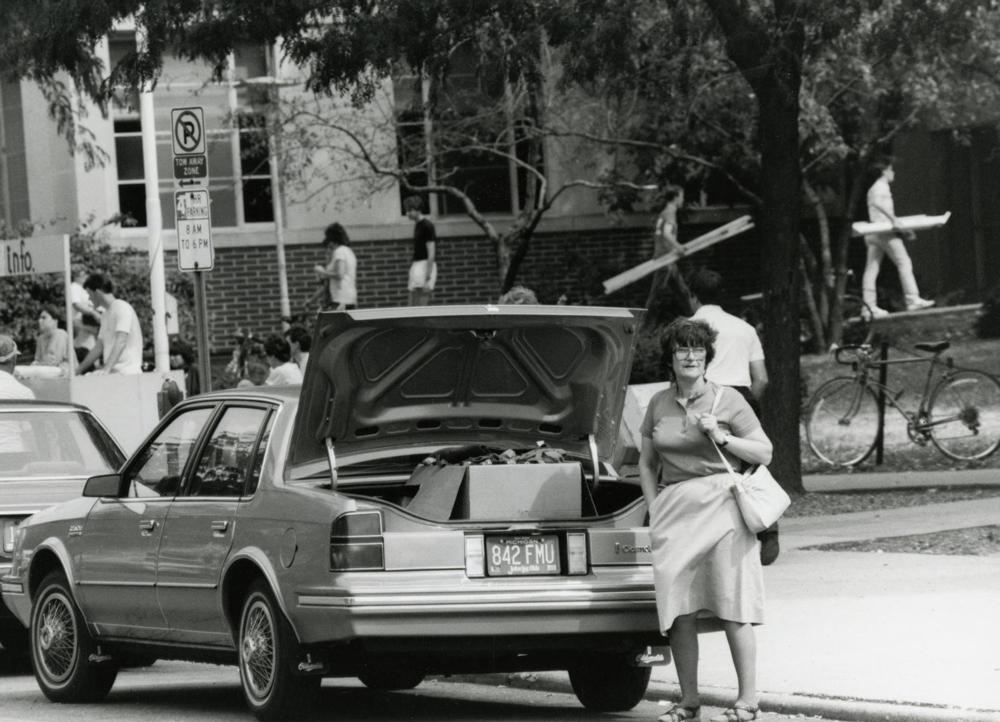
It’s a sight that defines the college campus each fall: the harried parent guarding the double-parked car. The elder looks hot, tired, and overwhelmed after a long day hauling the younger’s belongings from the childhood bedroom to the college digs. Each August, it’s the same routine in our little town — just swap out the car, the parent, and the kid to reflect this year’s model.
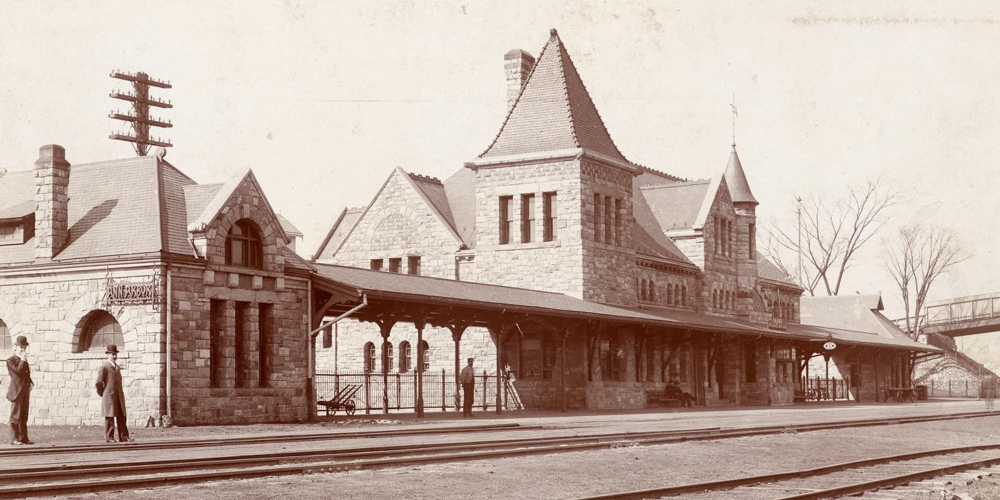
But long before the car craze took over campus, much of the annual move-in frenzy was confined to the Michigan Central Railroad station at 401 Depot St. Today we know it as the Gandy Dancer restaurant, but in 1886, the elegant location opened as a lively hub for some of the earliest scholars arriving in A2.
Detroit architect Frederick Spier, who also designed the original Kelsey Museum (in Newberry Hall on State Street), favored the popular Richardsonian Romanesque style for the station. The building’s exterior featured glacial stones quarried from Four Mile Lake between Chelsea and Dexter and cut at Foster’s Station on Huron River Drive near Maple Road.
The train station’s elegant interior boasted stained-glass windows, red oak ceilings and trim, and French tile floors. Ivy grew up the side of the building and a fountain sparkled just east of the shed where, each fall, burly “baggage smashers” handled thousands of student steamer trunks arriving on campus.
Junk in the trunk
For decades the station served as a bustling way station for passing politicians, dignitaries and artists. William Revelli, director of the Michigan Marching Band from 1935–71, enjoyed seeing off many of the musicians who performed on campus, including Victor Borge, Gene Krupa, and Benny Goodman. In 1960, John F. Kennedy and Richard Nixon each addressed crowds from their campaign trains. Theodore Roosevelt and William Jennings Bryan had been there before them.
Once the interstate highway system opened cross-country travel to automobiles, train travel declined dramatically. In 1969, the C.A. Muer Corporation purchased the train station from the Penn Central Railroad and converted it into the fine-dining restaurant we’ve come to love. The Gandy Dancer — slang for the early railroad workers who engaged in the delicate dance of laying track — maintains much of the original site’s integrity, right down to the baggage scale that sits in one dining area.
Modern-day travelers now catch the train at Ann Arbor’s far less glamorous Amtrak station, just steps from its elegant ancestor. And those harried parents who’ve successfully placed their offspring in their new homes-away-from-home can now decamp to the Gandy Dancer, not to meet the baggage smashers, but to imbibe a refreshing reward after yet another hectic move-in day.
(Lead image: Michigan Central Railroad station in 1890. Today it is the Gandy Dancer restaurant. Image courtesy of U-M’s Bentley Historical Library.)