Is your optimism bias threatening your health?
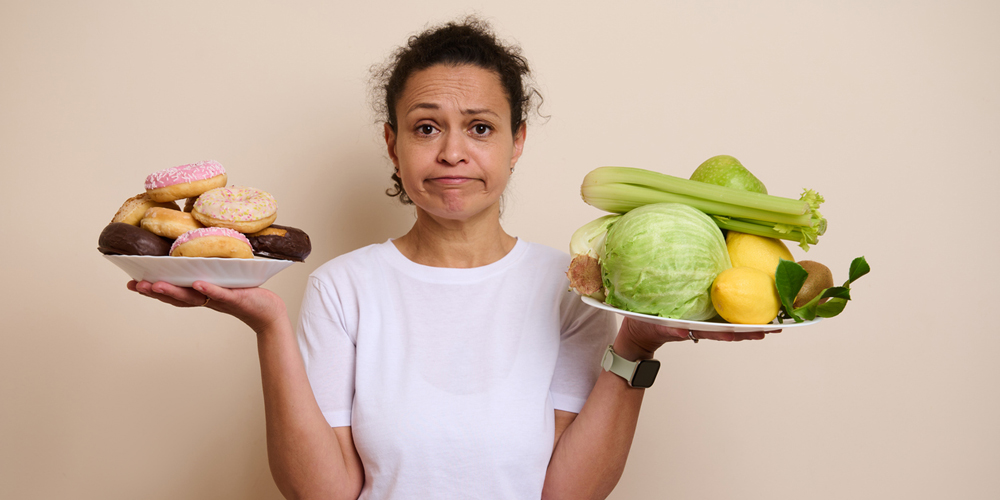
The fables we tell ourselves
Raise your hand if you think any of the following personal behaviors are OK.
- Drinking 1-2 cans of carbonated sugar drinks per day.
- Eating meat-based products at every meal every day.
- Drinking 2 alcoholic drinks (beer, wine, spirits) per day.
- Eating only 1 serving of vegetables per day.
- Smoking at least 1 cigarette per day.
Most people know these behaviors do not promote good health or prevent common chronic diseases like diabetes, heart disease, stroke, or even Alzheimer’s disease. Survey after survey reveals most people know the difference between health-promoting behaviors and adverse behaviors… so why don’t people eat healthier, exercise regularly, and refrain from deleterious health behaviors?
In other words, why don’t people translate their knowledge into action?
Lost in translation
Research shows there are two main reasons people have difficulty changing personal health behaviors.
- Conflicting health messages that confuse and promote risky health behaviors.
- People do not (or cannot) recognize the need to change: They underestimate the effects of their current health behaviors.
Conflicting health messages

Ever since the internet and social media reinvented how we consume news and entertainment, people have increasingly turned to online content as their go-to source for health information. Today’s content creators, regardless of expertise or qualifications, can publish and distribute information, misinformation, and disinformation with the click of a mouse. Thus, consumers are inundated with a deluge of options ranging in quality and accuracy.
With limited time on their hands, few can properly scrutinize or understand what they are consuming. Even media-literate readers with critical thinking skills may find it challenging to identify legitimate content from misinformation. In a previous Health Yourself column, I discuss the risks this paradigm presents.
It’s no wonder health-information-seeking consumers are bewildered and make risky health choices.
Below are some examples of conflicting health information.
Nutrition misinformation
A 2023 report that evaluated the quality and accuracy of online content published at 47 nutrition-related web pages found nearly 50% of the content was both of low quality and dubious accuracy. The vast majority of this web content, disguised as science, was produced by companies selling products accompanied by inaccurate or false nutrition information, misleading food labels, advertisements, and celebrity endorsements.
Most nutrition “rip-offs” include one or all of the following:
- One product “does it all,” from curing a wide range of diseases to promoting healthy aging.
- Personal testimonials claiming to cure diseases (diabetes, COVID-19), often complete with 5-star reviews.
- The promise of quick fixes for certain conditions like weight loss, even skin cancer!
- Descriptions like “all natural,” “clean,” or “ancient cure,” which lack scientific credibility.
- The use of terms like “miracle cure,” “guaranteed results,” or “secret ingredients,” all of which are impossible.
Exercise misinformation
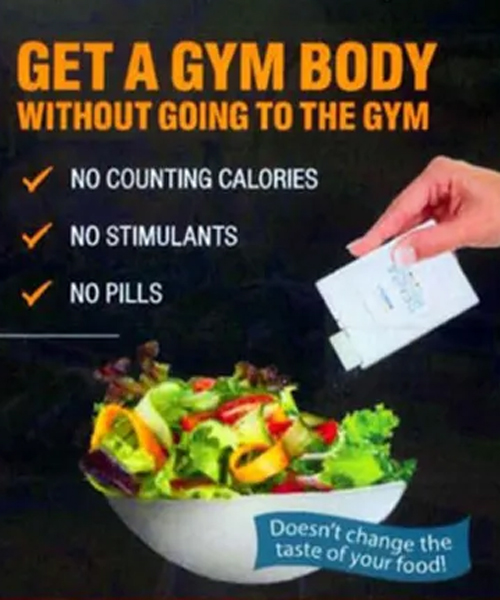 Avoid the ads, infomercials, and social media posts touting “effortless” exercise; they are not based on science. Promises of significant results without hard work and consistent effort are patently false. Common examples of exercise products that don’t measure up include a resistance device for the neck and chin that claims to eliminate a double chin, a flex belt with electrical stimulation promising “washboard abs” with no effort, and all products that promise or claim successful spot reduction.
Overwhelming evidence confirms that for strength or cardio training to be effective, it must involve consistent effort over a prolonged period of time and become part of a person’s lifestyle. See my Health Yourself column “Nurturing your inner athlete.”
Recognizing the need to change
If you ask someone to calculate how often they consume meat, eggs, sweets, alcohol, butter, or greasy food, they consistently claim to eat less than the average person (of their same age). So, if people believe they have a lower health risk than their peers, they usually dismiss advice to change their behavior.
In one study, researchers presented individuals who held inflated opinions of their own eating behaviors with the reality of what the average person eats. Researchers found when people were confronted with this information, they actually reduced the estimates of how often they engaged in unhealthy behaviors to make themselves appear as though they were still eating healthier than the average person.
Not only do people change their answers, but they also change the significance of their behaviors. For example, it’s a famous refrain of individuals who consume alcohol: “A few beers are not that bad for you.” In reality, alcohol consumption is not healthy, as I noted in my column “A toast to your health.”
Optimism bias
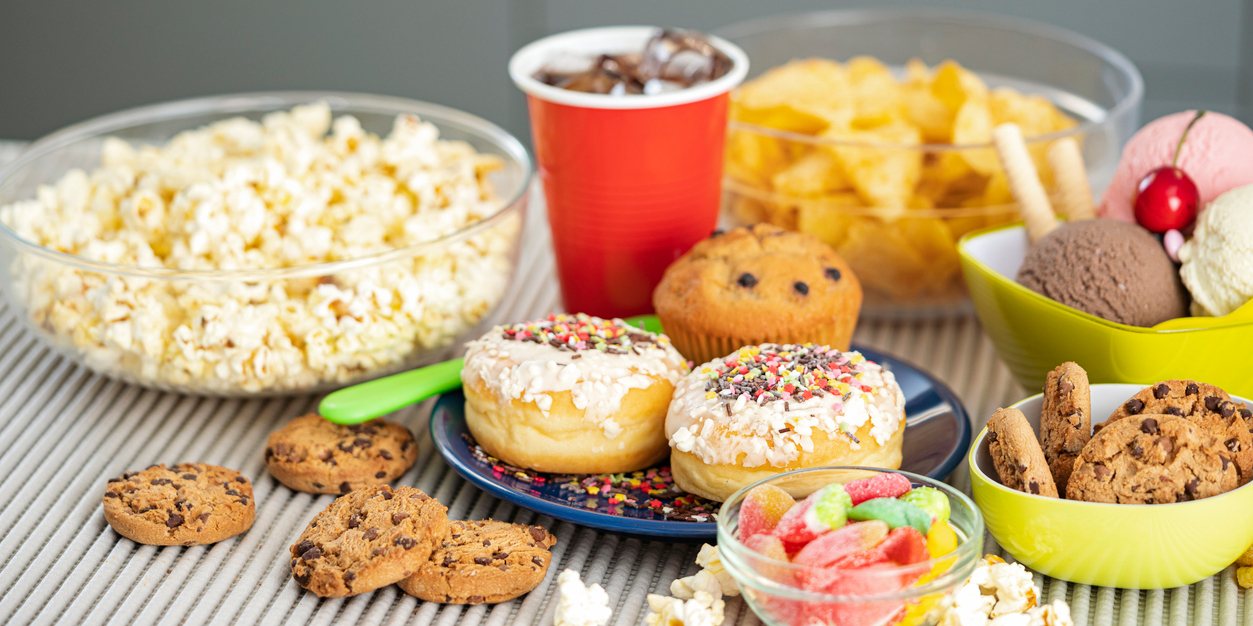
Other studies also show that most people who engage in risky health behaviors tend to underestimate their health risks; they develop a series of illusions and false beliefs to support their choice to keep on doing what they do. This is termed optimism bias.
Optimism bias helps explain why so many people continue to eat unhealthy food. The data show that people convince themselves they are less at-risk than others who engage in the same behavior. Unhealthy food consumers underestimate the extent to which their behaviors elevate their actual health risk. Drinking a few sugar-fueled sodas per day isn’t that bad, they tell themselves. They have convinced themselves that most chronic diseases, like diabetes, are mainly determined by genes. Of course, the truth is that genetic factors are not the major causes of chronic diseases.
The truth is the truth
The good news is that all of us have the power to control our personal health behaviors and lower our risk of developing most chronic diseases. We all have to face the truth about our health behaviors and be responsible for the choices we make. It’s best to start making better food and exercise choices as soon as possible, before we reach a critical horizon and are diagnosed with a chronic disease that directly relates to our actual behaviors, rather than the fables we tell ourselves.
References
- Barton, C.C. “Critical literacy in the post-truth media landscape.” Policy Futures in Education. 2019;17:1024.
- Brooks, A. “Miracle cures advertised on the internet.” BMJ. 1998;317(7161):769.
- Chen, Y., et al. “News in an online world: The need for an ‘automatic crap detector.’” Proceedings of the Association for Information Science and Technology. 2015;52:1.
- Denniss, E., et al. “Quality and accuracy of online nutrition-related information: A systematic review of content analysis studies.” Public Health Nutrition. 2023;26(7):1345.
- Fox, S. “The social life of health information,” Pew Research Center, Sept. 2025.
- Goldberg, J.P., Hellwig, J.P. “Nutrition research in the media: The challenge facing scientists.” The Journal of the American College of Nutrition. 1997;16(6):544.
- Klein, W.M., Kunda, Z. “Maintaining self-serving social comparisons: Biased reconstruction of one’s past behaviors.” Personality and Social Psychology Bulletin. 1993;19(6):732.
- Klein, W.M. “Maintaining self-serving social comparisons: Attenuating the perceived significance of risk-increasing behaviors.” Journal of Social and Clinical Psychology. 1996;15(1):120-42.
- Masiero, M., et al. “Optimistic bias in young adults for cancer, cardiovascular and respiratory diseases: A pilot study on smokers and drinkers.” Journal of Health Psychology. 2018;23(5):645.
- Masiero, M., et al. “Personal fable: Optimistic bias in cigarette smokers.” International Journal of High Risk Behaviors and Addiction. 2015;4(1):e20939.
- Miles, S., Scaife, V. “Optimistic bias and food.” Nutrition Research Reviews. 2003;16(1):3.
- Pollard, C.M., et al. “Who uses the internet as a source of nutrition and dietary information? An Australian population perspective.” The Journal of Medical Internet Research. 2015;17:e209.
- Rappaport, S.M. “Genetic factors are not the major causes of chronic diseases.” PLoS One. 2016;11(4):e0154387.
- Sproesser, G., et al. “Comparative optimism about healthy eating.” Appetite. 2015;90:212.
- Wang, Y., McKee, M., Torbica, A., et al. “Systematic literature review on the spread of health-related misinformation on social media.” Social Science & Medicine. 2019;240:112552.
- Weinstein, N.D., et al. “Smokers’ unrealistic optimism about their risk.” Tobacco Control. 2005;14(1):55.
(Lead image: iStock.)