Garrett’s Space: Alumni break ground with a peer-focused perspective on mental health
Mind the gap
It’s a deadly gap in the nation’s broken health care system. And it’s one of the most ill-timed.
Research shows in the 30 days following a young adult’s treatment for a mental health crisis, their risk for completed suicide is tremendously high, says Victor Hong, MD, medical director of Psychiatric Emergency Services at Michigan Medicine.
Too often, he says, patients are discharged from a clinical setting without a comprehensive plan — or any plan, for that matter — to manage their mental health and well-being. Many return to toxic scenarios that contributed to the crisis in the first place. And they do so without the support, tools, and services they received during treatment.
“They are sort of kicked out in the cold after having been wrapped in a warm blanket of care,” Hong says. “And this is when people are most vulnerable.”
It’s not uncommon for Hong and his U-M colleagues to treat up to 15 youths per day, many of whom are at increased risk for suicide.
“We have a pediatric mental health crisis in this country,” says Hong, who also is a clinical associate professor of psychiatry and the associate director of adult hospital services in the Department of Psychiatry.
“Health services continue to contract rather than expand,” he continues. “And there are so many gaps in our mental health system that we need to approach this crisis from every angle, including angles that are not traditional.”
Risk management
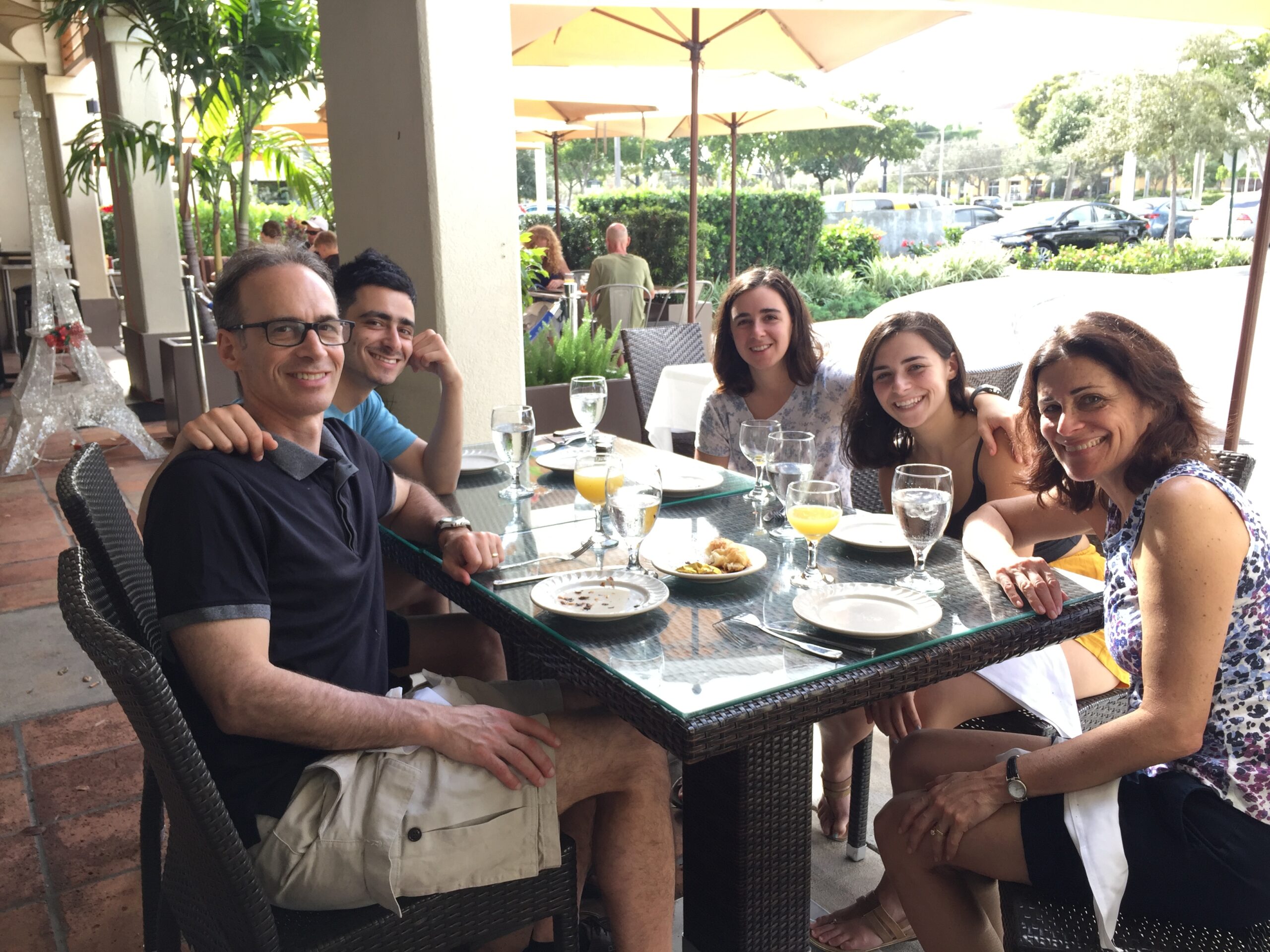
Michigan alumni Scott Halpert, BA ’83, and Julie Halpert, BA ’84, agree. In 2019, they founded Garrett’s Space, a nontraditional mental health and wellness nonprofit named for their son, Garrett, a 2016 Michigan graduate who died by suicide in 2017. His parents describe him as a bright, quick-witted, and compassionate soul who was always there to listen.
“He was just so genuine and so warm,” says Scott Halpert. “You were instantly taken in by him. And he just cared about you. The only person he was ever hard on was himself.
“Parents who’ve lost someone to suicide spend a lot of time thinking about how things could have gone differently,” Scott continues. “We thought about how Garrett lost perspective regarding his challenges before he lost hope. And we tried to imagine him in a space with others his own age where they could support each other and put those challenges into perspective.”
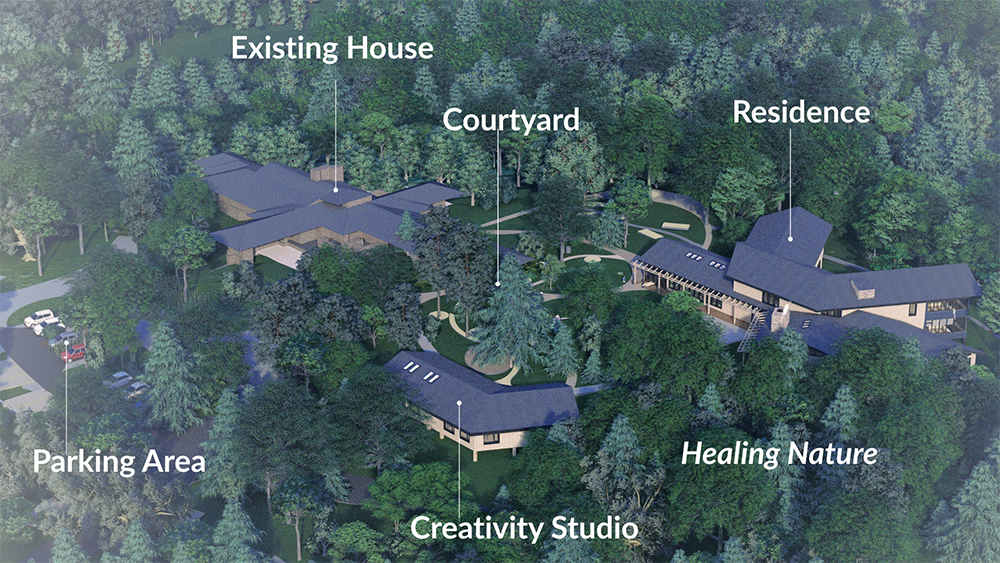
Modeled on their own wish list, Garrett’s Space will deliver nonclinical residential and outpatient support in the kind of healing environment that eluded the Halperts during their son’s life. A residential campus under construction on 76 wooded acres in Superior Township is set to open in early 2027. On-site activities are now underway at an existing house on the campus. Customizable services are tailored to young adults aged 18-28.
Short-term residential stays eventually will accommodate about 20 individuals at a time, plus 10 more for day programming. The goal is to offer young adults a haven, not to escape their situation, but to reclaim the tools and clarity to manage it. Individuals will maintain their existing treatment plans (which might include medication, psychiatric care, and psychotherapy) while experiencing adjunctive, wraparound services like peer support, meditation, physical fitness, creative pursuits, and nature walks, which Garrett found therapeutic.
“We know these things are good for the soul, right?” says Hong, an early advocate of the Halperts’ approach and a former member of the Garrett’s Space board of directors. “But as psychiatrists, we don’t necessarily prescribe them.”
Garrett’s Legacy
“A Glimpse of Garrett” was released shortly after Garrett’s Space launched about four years ago. Hosted at garrettsspace.org, it showcases how Garrett’s essence permeates the organization. (Produced by U-M graduate Erin Burke.)
Brain trust
The Halperts never anticipated founding a mental health nonprofit, but their combined skills help navigate the infinite unknowns. Julie is a longtime journalist and self-described “resource seeker.” Scott is a retired attorney.
Proximity to U-M and its health care system accelerated their progress as they began researching and assembling specialists in the mental health field and beyond: experienced therapists, educational consultants, social workers, academics, psychiatrists, psychologists, researchers, substance abuse experts, medical administrators, camp directors, and more. They interviewed managers of residential facilities and experts in everything from insurance compliance to program design.
“It’s an ambitious vision, but our supporters believe we’re going to make a positive difference for our community and that spurs us on,” Julie Halpert says.
Outreach began in 2019 as volunteers distributed some 30,000 hang tags to doorknobs throughout the county. The tags listed community crisis resources and mental health services, while introducing Garrett’s Space as a new option. In 2021, a donor funded the Halperts’ foray into online wellness programming through virtual groups facilitated on Zoom by licensed social workers and other trained professionals. Live social gatherings followed, setting the groundwork for on-site programming when the campus opens.
Connection to the University offers myriad synergies to align future coursework and research driven by students, faculty, and volunteers, from creative writing to psychology.
Breaking ground
U-M graduate Jake Primak produced this 2025 video of the Garrett’s Space groundbreaking. Learn more at garrettsspace.org.
Step by step
As alumni and long-time residents of Ann Arbor, the Halperts also have been buoyed by a sprawling network of local professionals to help manage the logistics of land acquisition, zoning, and licensing. In 2023, Garrett’s Space received $4 million in federal funding secured by U.S. Rep. Debbie Dingell (D-Ann Arbor) and supported by U.S. Sen. Debbie Stabenow (D-Michigan).
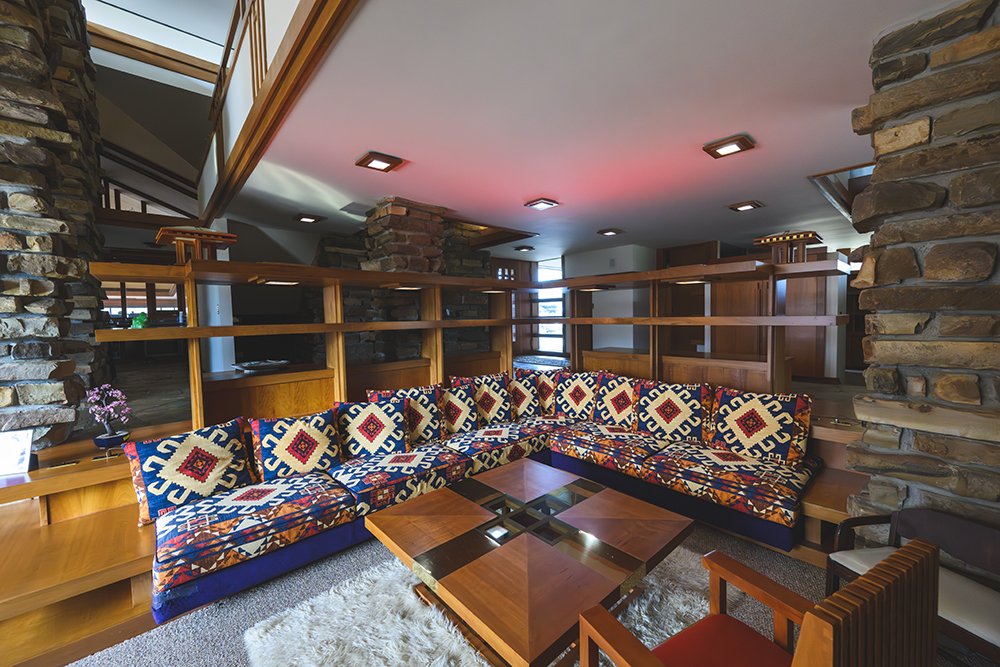
In July 2023, a land-use arrangement and rezoning approval by Superior Township secured a forested property, which includes a Frank Lloyd Wright-inspired home once owned by the late Dennis Serras, founder of Main Street Ventures, and his widow, Ellie Serras, a “huge ally,” says Julie Halpert. The home will host administrative offices and day programming, notably cooking classes in the industrial kitchen installed by the longtime restaurateur. Grants and fundraising will support continued progress toward completing the residential facility and other buildings. To date Garrett’s Space has reached over $9.2 million of its $15 million goal.
Not all feedback has been positive. Neighbors mounted an unsuccessful campaign in early 2023 to keep Superior Township from locating the mental health center so close to area residents. Locals filed a subsequent lawsuit against the township after the approvals came through. That effort also failed. Garrett’s Space is responding by prioritizing screening protocols that can help alleviate community concerns.
“We’re optimistic the skeptics will see that not only are we a good neighbor, but that we’re helping people,” Julie Halpert says, “and that one day, maybe we can help one of them.”
If you build it …
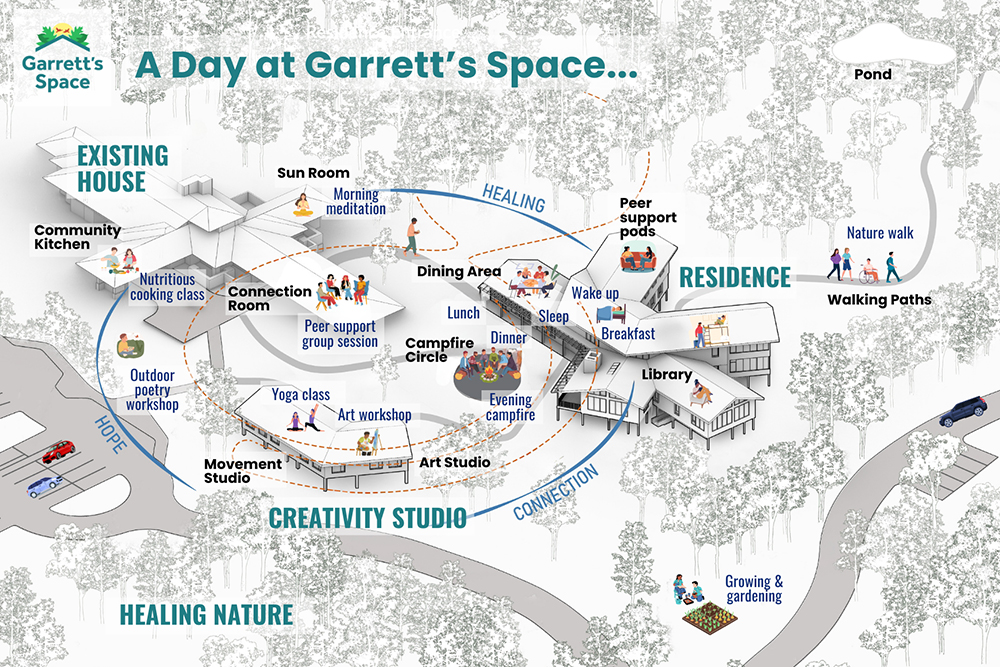
Mostly the Halperts envision a cocoon of support that fosters mutual trust and friendship and gives young adults the coping skills, resiliency and hope they need to make it through their most challenging times. Participants will remain on their existing care plans, even as they find refuge in Garrett’s Space.
“We’re creating a new type of non-medically focused resource for depression and anxiety with evidence-informed modalities,” says Scott Halpert.
The focus on peer support and community-building appealed to alumnus Brandon Bond, BA ’20, MPH/MSW ’22. He is a first-generation U-M graduate and a mental health and well-being advocate in the College of Literature, Science & the Arts. He joined the Garrett’s Space board in 2023 after completing a project management/consulting course with the organization as his client. He helped set financial strategies to pursue grants, resources, fundraising, and more.
“I saw the rendering and everything clicked,” Bond says. “It’s important for people to know their experience is both unique to them but not isolated to them.”
He compares the organization to a stop sign on the mental health journey.
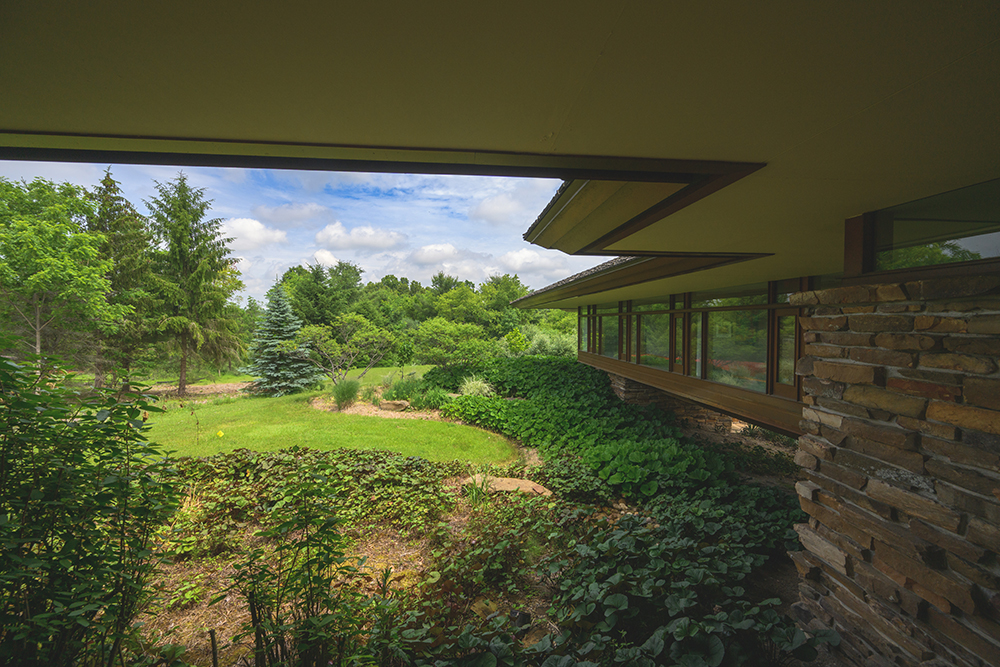
“This exposes young adults to the benefits of pausing to invest in some of those foundational connection opportunities, whether that’s with other people or in nature,” he says. “It’s a humane approach to mental health and well-being as opposed to, ‘Here’s the problem, here’s the diagnosis, now go solve it.'”
As the board’s youngest member, Bond brings context and experience to the youth perspective. He advocates for participants’ insight and voices to be included in the decision-making process and favors a public health approach that prioritizes crisis prevention.
For him, moving forward means recognizing how we arrived at this mental health crisis in the first place: housing instability, food insecurity, racial discrimination, and other social inequities.
“No amount of yoga or walks through the woods is going to prevent or even heal that,” Bond says. “But I really appreciate the work Garrett’s Space is doing to expose things connected to our humanity that can be therapeutic to people. Too often, things like that are considered luxuries, and that should not be the case.”
… They will come
Garrett’s Space board member Lindsay Bornheimer, PhD/LCSW, associate professor of social work and associate professor of psychiatry at U-M, has been a suicide researcher and clinician for 13 years. Throughout her career she has focused on developing a comprehensive protocol to identify people at risk for suicide.
Personal characteristics and genetic predispositions play a role, but so do environmental, social, economic, and political factors, she says. Social media, school shootings, and environmental crises have taken a toll that previous generations didn’t experience. With the pandemic came unprecedented isolation and a loss of connection to friends, family, and role models.
Bornheimer conducted a literature review of existing options in the wellness space as the Halperts’ team codified its holistic approach, asking: What do people need beyond their existing treatment, and how can we tailor approaches to make them meaningful for individuals?
“We want to empower people to choose what they want to do,” Bornheimer says. “It’s not a one-size-fits-all.”
She applauds the Halperts’ emphasis on community building through shared experiences and peer support.
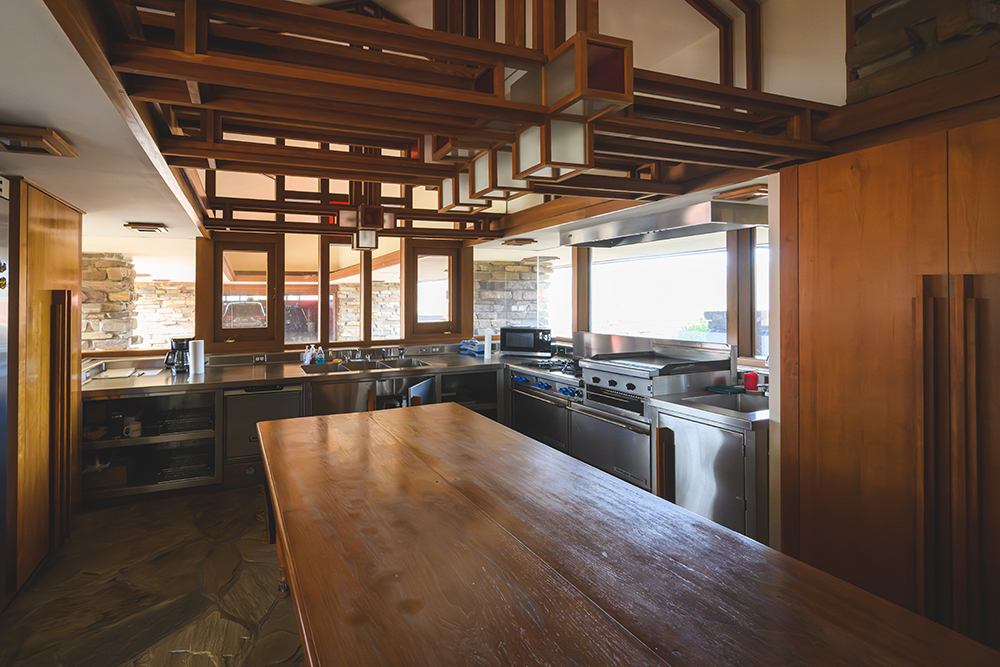
“The sense of belonging — that ‘all of us in this cooking class are going through something’ — goes a long way,” she says. “That’s a huge protective factor for many people, and a lot of times it’s missing, especially for young adults.”
Bornheimer has been building out risk management protocols and plans from an ethical, clinical, and process perspective, particularly regarding the Garrett’s Space residential component and potential group dynamics. Considerations range from the most extreme to the most mundane: What if someone puts others at risk in the residence? Should residents do their own laundry?
Bornheimer has experience launching studies and following up with program assessment and evaluation, as well as documentation and dissemination. Proving the efficacy of the Garrett’s Space model is critical for generating additional funding and support.
“Our center is intentionally small and we want to draw on best practices and make it a model that can be replicated nationwide,” Julie Halpert says.
Longer-term, data will be used to pitch and scale the concept to other communities that may resonate with their approach.
“As this grows,” Bornheimer says, “I’ll be the person saying, ‘Let’s evaluate this, let’s see how we’re doing, and let’s share this with the world.'”
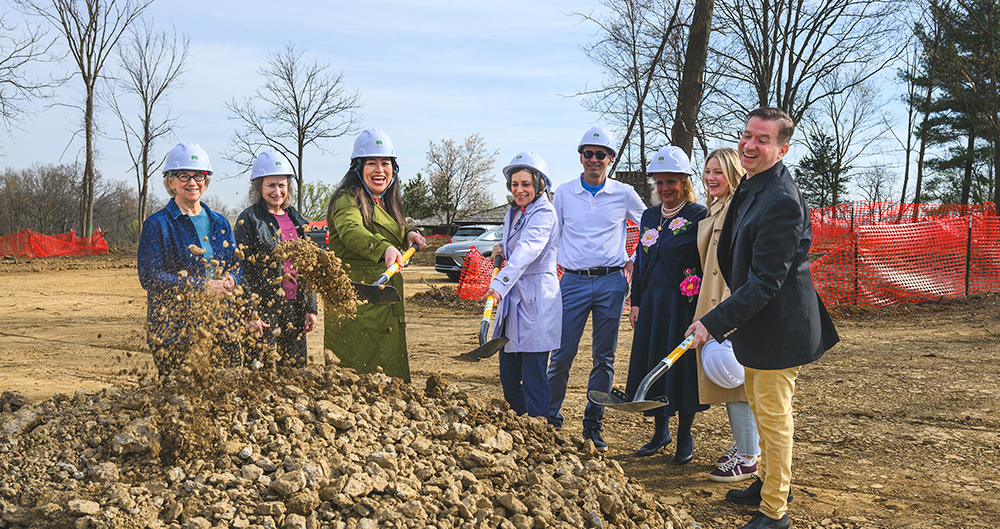
(Lead image: Garrett’s Space groundbreaking in Superior Township, April 2025.)