The value in planning ahead
New purpose
One of the roles I play in my career is strategist. And a particular subject that I have focused on more than others is model strategy, both weather forecast and climate models.
My efforts have always been motivated by scientific and organizational goals — the desire to increase the scientific quality of model products by better integrating related, scattered activities.
I have been an advocate and practitioner of disruptive management within organizations. And I have always emphasized organizational priorities over individual goals.
I have experienced some successes, but progress has been slow and fragile.
In the past four years, I have made several presentations and written several articles on the need for a new modeling strategy. With the upheaval in U.S. climate science in the past year, we have an opportunity to think in new ways about what we need from climate models and from climate science.
Understanding ‘understanding’
Much of our historical effort in climate modeling has been focused on understanding our climate — how it responds to increasing greenhouse gas concentrations and how it may respond to different policy decisions. This is, by its nature, a problem focused on the next century. Multiple institutions — perhaps too many institutions — have similar missionsWe need to continue such research. However, we also need to be exploring more completely, and more rigorously, what will be happening in the next 10-50 years. We need a more precise focus than “understanding.”
More to the point: We need to be understanding some very specific problems.
We need purpose-driven, use-driven, or application-driven investigation that includes simulation, observation, identification, and scrutiny of key physical, chemical, and biological processes.
The following applications are essential and I suggest, largely, distinct. These applications have some things in common but benefit by being differentiated from each other.
- Adaptation and Non-stationarity
- Mitigation and Policy
- Tipping Points
- Geo-engineering/Climate intervention
There is an important scientific, philosophical, and ethical point to be made here. The models used in these investigations are designed for a specific application, and they are evaluated to determine their fitness for that application. Observational programs are aligned to address the key uncertainties of these applications.
We need to move away from the current practice of taking modeling systems that were designed for one purpose and trying to re-purpose them for another.
Likewise, we need to realize the “we are doing the best science” argument does not necessarily lead to outcomes appropriate for these applications. The applications are so important we cannot rely on serendipity to address them.
Understanding the applications
It is difficult to measure “understanding” and to determine “the best science.”
Let’s start by getting a better understanding of the applications.
Adaptation and Non-stationarity: This requires a strong focus on what is happening now and for the next 50 years. The easiest adaptation problems to conceive are sea level rise, floods, droughts, and fires. Non-stationarity relates to the statistics, means, and extremes regarding the changing weather and climate. The climate is changing rapidly, and we need better knowledge of how fast. We need to be able to analyze, quickly, such unfolding phenomena as the warming surge in 2023 and 2024.
Mitigation and Policy: In this application, we focus on 100 years and longer; it is the most like our historical and current modeling priorities. The focus is on exploring how our climate responds to increasing greenhouse gas concentrations, and how the climate would respond to different policy decisions. This would include past climates and how they inform current
warming.
Tipping Points: There are many tipping points to be concerned about: the melting of West Antarctica’s ice sheets, changes to long-stable ocean currents, and releasing of large stores of carbon dioxide and methane present at polar latitudes. Crossing these tipping points would cause rapid climate change, taking us to extremes we cannot manage. We need to focus on the processes and triggers of these tipping points and how best to avoid them. If they are coming, we need better exploration of what they will mean.
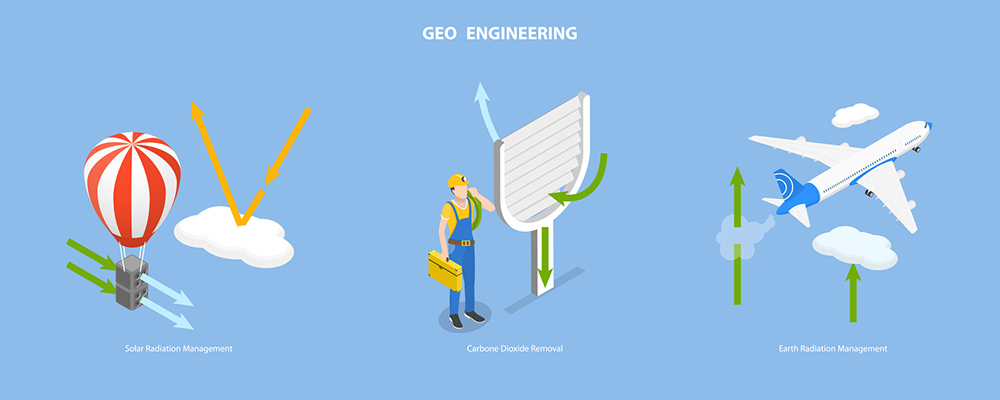
Geo-engineering/Climate intervention: We seem increasingly comfortable with the likelihood of managing warming by decreasing the amount of radiation we get from the sun. This is called solar radiation management. There are numerous other regional and global interventions that people talk about, which are feasible to carry out. We need to focus on the processes of how such interventions would alter our environment. We need to know better the unintended consequences. We are not ethically prepared to make these decisions, and we do not have adequate tools to study them.
Focus, focus, focus
By differentiating these problems, we can focus on the observations, descriptions, and model representations that are important to the specific applications. We do not encumber the problems of flooding in the next 20 years with how the oceanic absorption of carbon dioxide will change in 150 years.
By differentiating these problems, we spread out the political risk of catching all of climate science in a political attack on one application. We don’t require everyone to do everything.
Likewise, we can diversify and reduce the financial and funding risk by relying on distributed but integrated centers.Presently, in the U.S., it is difficult to imagine the funding and policy environment that can support these applications. However, as the consequences of warming emerge, there will come a time when the U.S. will require and demand attention to all of them. They will be important to our economy and national security, and we will refuse to rely on non-U.S. models.
Though difficult to imagine the funding structure at this moment, we need to be developing plans and identifying what we will need. Having a plan when opportunity emerges is one of the best ways to find success.
(The lead graphic illustrates such geo-engineering concepts as solar radiation management, carbon dioxide removal, and earth radiation management. Credit: TarikVision, iStock.)